An update on brain zapping

This 2017 general-audience article entitled Ultrasound for the brain provided a hyped update on brain zapping:

“Ultrasound could potentially treat other movement disorders, as well as depression, anxiety and a host of intract­able neuropsychiatric disorders..

This could be a breakthrough..

Researchers hope one day to help people with neuropsychiatric conditions by repairing or resetting the relevant neural pathways..

The potential advantages, especially for deep brain areas, are huge..”

Though not the main thrust of the article, another potential use of ultrasound would be to activate drugs delivered to a specific area, as this image portrays:


Vanderbilt University was again at the forefront of brain zapping, as noted in What’s an appropriate control group for a schizophrenia study? for example. I hope the disclosures for subjects participating in Vanderbilt’s brain-zapping studies made it clear that:

“At high intensities, such as those used to relieve essential tremor, ultrasound’s effects are largely thermal: the tissue heats up and cells die.”


Comments are disabled because this post has somehow become a target for spammers. Readers can click the above control group link to comment.

Epigenetic mechanisms regulate bone growth

This 2017 Baltimore/China rodent study found:

“MSPC [Mesenchymal stem/progenitor cell] senescence is epigenetically controlled by the polycomb histone methyltransferase enhancer of zeste homolog 2 (Ezh2) and its trimethylation of histone H3 on Lysine 27 (H3K27me3) mark. Ezh2 maintains the repression of key cell senescence inducer genes through H3K27me3.

Our work establishes the role of Ezh2-H3K27me3 as a key epigenetic regulator that controls the onset and progression of MSPC senescence during the transition of fast- to slow-growing phase of long bones.

The self-renewal and proliferative capacity of cells in primary spongiosa of fast-growing bones are maintained by a high level of Ezh2-H3K27me3, whereas loss of Ezh2-H3K27me3 during late puberty leads to cell senescence.”

One of the experiments led to this note in the Discussion section:

“An epidemiologic study demonstrated that 60% of the risk of osteoporosis can be explained by the bone mineral acquired by early adulthood.

Our finding that deletion of Ezh2 in nestin+ cells during early puberty increases the risk of osteoporosis in later adulthood suggests that premature cellular senescence in the primary spongiosa region during the prepubertal or early pubertal phase may also be a major cause of osteoporosis/bone loss in later life.”


The study was short of explanations in several areas. For example, causes for the effect of “loss of Ezh2-H3K27me3 during late puberty” weren’t specified.

In another example, this statement referenced nestin-positive cells:

“Because these cells are likely no longer required in this particular region during adulthood, they stop proliferating and undergo senescence during late puberty.”

but what caused the cells to be “no longer required” wasn’t specified.

The “programmed” and “fate” words were used in the Abstract:

“Our data reveals a programmed cell fate change in postnatal skeleton..”

but not explained until the Discussion section:

“The senescence process is program[m]ed by a conserved mechanism because it restricts in a particular region of long bone and follows a specific time course.”

https://www.nature.com/articles/s41467-017-01509-0 “Programmed cell senescence in skeleton during late puberty”

Does a societal mandate cause DNA methylation?

This 2017 worldwide meta-analysis of humans of recent European ancestry found:

“Here we provide evidence on the associations between epigenetic modifications-in our case, CpG methylation and educational attainment (EA), a biologically distal environmental factor that is arguably among the most important life-shaping experiences for individuals. Specifically, we report the results of an epigenome-wide association study [EWAS] meta-analysis of EA based on data from 27 cohort studies with a total of 10,767 individuals.”

These researchers found no association between the societal mandate of educational attainment and the most widely studied category of epigenetic marks.


Society mandates year after year of school attendance. This mandate continues on to require a four-year degree just to get an entry-level job in many lines of work.

The researchers stated:

“Our EWAS associations are small in magnitude relative to EWAS associations reported for more biologically proximal environmental factors.”

educational attainment

Panels a and b display the same results but with a different scaling of the y axis in order for smaller effect sizes to be visible.

Smoking, alcohol consumption, and maternal smoking were measured to have detrimental effects. BMI was fun with numbers.

Would a study categorize it as detrimental when an individual breaks from expectations about what they should do, and terminates their educational attainment? One individual I know didn’t go to graduate school after Princeton University although they were capable of quality graduate and doctorate work. It would be detrimental to their life if they stopped a software development career that pays a million dollars a year to go back to school.

Would a study evaluate it as beneficial when an individual lengthens their educational attainment past society’s thirteen-year educational requirement? Would these extra four years still be considered beneficial when – after foregoing four more years of full-time income, and accumulating tens of thousands of dollars of nondischargeable debt – they achieve an expected outcome of an entry-level job, and then can’t unassistedly provide for their basic needs?

Are further epigenetic studies of educational attainment as an environmental factor really worthwhile?

Why not use research funds and efforts on more promising topics like human transgenerational epigenetic inheritance? Suitable subjects may already be selected for this research, as several of the “27 cohort studies” that provided data for this meta-analysis included at least three human generations.

http://www.nature.com/mp/journal/vaop/ncurrent/full/mp2017210a.html “An epigenome-wide association study meta-analysis of educational attainment”


These authors preregistered their analysis plan. This practice discourages fishing expeditions that researchers are so often tempted to go on when study data provides evidence for the null hypothesis, as this meta-analysis did.

I was puzzled that they described part of the preregistered analysis plan to be:

“Hypothesis-free as it is performed genome-wide without an expected direction of effect for individual CpG loci.”

Their abstract, though, declared:

“If our findings regarding EA can be generalized to other biologically distal environmental factors, then they cast doubt on the hypothesis that such factors have large effects on the epigenome.”

Was this meta-analysis “hypothesis-free” or did it have “the hypothesis that such factors have large effects on the epigenome”?

Here’s 48 minutes of Brian Nosek, a co-founder of the Open Science Framework (where this meta-analysis was preregistered):

http://rationallyspeakingpodcast.org/172-why-science-needs-openness-brian-nosek/

“Transgenerationally” inherited epigenetic effects of fetal alcohol exposure

The fourth paper of Transgenerational epigenetic inheritance week was a 2016 German rodent study of of improperly-termed “transgenerational” epigenetic effects of alcohol:

“We investigated 2 generations of offspring born to alcohol-treated mothers. Here, we show that memory impairment and reduced synthesis of acetylcholine occurs in both F1 (exposed to ethanol in utero) and F2 generation (never been exposed to ethanol). Effects in the F2 generation are most likely consequences of transgenerationally transmitted epigenetic modifications in stem cells induced by alcohol.

The results further suggest an epigenetic trait for an anticholinergic endophenotype associated with cognitive dysfunction which might be relevant to our understanding of mental impairment in neurodegenerative disorders such as Alzheimer’s disease and related disorders.”

F0 generation mothers modeled human fetal alcohol syndrome. They were exposed to ethanol gradually up to 20%, then mated. The 20% ethanol intake level was maintained until the F1 generation pups were born, then gradually diminished to 0%. After a ten-day wait, an eight-week handling and shaping period started, followed by five weeks of behavioral testing.

The F1 children and F2 grandchildren started an eight-week handling and shaping period after young adulthood, followed by five weeks of behavioral testing. The F1 children were mated after behavioral testing.

The F0 parents showed no significant differences in working memory and reference memory compared with controls. Both the F1 children and F2 grandchildren were significantly impaired in the same tests compared with controls, with the F1 children performing worse than the F2 grandchildren. No sex-dependent differences were noted.

After behavioral impairments due to intergenerational epigenetic modifications were established, the F2 grandchildren received treatments to ascertain the contribution of cholinergic dysfunction in their behavioral impairments. It was confirmed, as an acetylcholine esterase inhibitor that crosses the blood-brain barrier almost completely erased working-memory and reference-memory performance deficits.

Items in the Discussion section included:

  • A dozen studies from 2014-2016 were cited for epigenetic mechanisms of inheritance stemming from parental alcohol consumption; and
  • Transgenerational inheritance of alcohol-induced neurodevelopmental deficits may involve epigenetic mechanisms that are resistant to developmental clearance.

As argued in Transgenerational effects of early environmental insults on aging and disease and A review of epigenetic transgenerational inheritance of reproductive disease, testing of F3 great-grandchildren was needed in order to establish transgenerational vs. intergenerational results. A F3 generation necessarily controls for the variable of F2 direct germline exposure.

http://www.neurobiologyofaging.org/article/S0197-4580(16)30303-7/pdf “Transgenerational transmission of an anticholinergic endophenotype with memory dysfunction” (not freely available)

Transgenerational pathological traits induced by prenatal immune activation

The third paper of Transgenerational epigenetic inheritance week was a 2016 Swiss rodent study of immune system epigenetic effects:

“Our study demonstrates for, we believe, the first time that prenatal immune activation can negatively affect brain and behavioral functions in multiple generations. These findings thus highlight a novel pathological aspect of this early-life adversity in shaping disease risk across generations.”

The epigenetic effects noted in the initial round of experiments included:

  • F1 child and F2 grandchild impaired sociability;
  • F1 and F2 abnormal fear expression;
  • F1 but not F2 sensorimotor gating deficiencies; and
  • F2 but not F1 behavioral despair associated with depressive-like behavior.

These transgenerational effects emerged in both male and female offspring. The prenatal immune activation timing corresponded to the middle of the first trimester of human pregnancy.

The effects were found to be mediated by the paternal but not maternal lineage. The researchers didn’t develop a maternal lineage F3 great-grandchild generation.

The next round of experiments done with the paternal lineage F3 great-grandchildren noted these epigenetic effects:

  • The F3 great-grandchildren had impaired sociability, abnormal fear expression and behavioral despair; and
  • The F3 great-grandchildren had normal sensorimotor gating.

Since the first round of tests didn’t show sex-dependent effects, the F3 great-grandchildren were male-only to minimize the number of animals.

Samples of only the amygdalar complex were taken to develop findings of transcriptomic effects of prenatal immune activation.

Items in the Discussion section included:

  1. The F2 grandchild and F3 great-grandchild generations’ phenotype of impaired sociability, abnormal fear expression and behavioral despair demonstrated that prenatal immune activation likely altered epigenetic marks in the germ line of the F1 children which resisted erasure and epigenetic reestablishment during germ cell development.
  2. Abnormal F1 child sensorimotor gating followed by normal F2 grandchild and F3 great-grandchild sensorimotor gating demonstrated that prenatal immune activation may also modify somatic but not germ cells.
  3. Non-significant F1 child behavioral despair followed by F2 grandchild and F3 great-grandchild behavioral despair demonstrated that prenatal immune activation may modify F1 germ cells sufficiently to develop a transgenerational phenotype, but unlike item 1 above, somatic cells were insufficiently modified, and the phenotype skipped the F1 children.
  4. Studies were cited that prenatal immune activation later in the gestational process may produce different effects.

The initial round of experiments wasn’t definitive for the maternal lineage. As argued in Transgenerational effects of early environmental insults on aging and disease and A review of epigenetic transgenerational inheritance of reproductive disease, testing of maternal lineage F3 great-grandchildren was needed to control for the variable of direct F2 grandchild germ-line exposure.

Also, effects that didn’t reach statistical significance in the maternal lineage F1 children and F2 grandchildren may have been different in the F3 great-grandchildren. The researchers indirectly acknowledged this lack by noting that these and other effects of immune challenges in a maternal lineage weren’t excluded by the study.

https://www.nature.com/mp/journal/v22/n1/pdf/mp201641a.pdf “Transgenerational transmission and modification of pathological traits induced by prenatal immune activation” (not freely available)


The study’s lead researcher authored a freely-available 2017 review that placed this study in context and provided further details from other studies:

http://www.nature.com/tp/journal/v7/n5/full/tp201778a.html “Epigenetic and transgenerational mechanisms in infection-mediated neurodevelopmental disorders”

Experience-induced transgenerational programming of neuronal structure and functions

The second paper of Transgenerational epigenetic inheritance week was a 2017 German/Israeli review focused on:

“The inter- and transgenerational effects of stress experience prior to and during gestation..the concept of stress-induced (re-)programming in more detail by highlighting epigenetic mechanisms and particularly those affecting the development of monoaminergic transmitter systems, which constitute the brain’s reward system.

We offer some perspectives on the development of protective and therapeutic interventions in cognitive and emotional disturbances resulting from preconception and prenatal stress.”

The reviewers noted that human studies have difficulties predicting adult responses to stress that are based on gene expression and early life experience. Clinical studies that experimentally manipulate the type, level and timing of the stressful exposure aren’t possible. Clinical studies are also predicated on the symptoms being recognized as disorders and/or diseases.

The researchers noted difficulties in human interventions and treatments. Before and during pregnancy, and perinatal periods are where stress effects are largest. But current human research hasn’t gathered sufficient findings to develop practical guidelines for early intervention programs.


I’m not persuaded by arguments that cite the difficulties of performing human research on transgenerational epigenetic inheritance. There are overwhelming numbers of people who have obvious stress symptoms: these didn’t develop in a vacuum.

Researchers:

  • Design human studies to test what’s known from transgenerational epigenetic inheritance animal studies that will include documenting the subjects’ detailed histories with sufficient biometric samples and data obtained from their lineage.
  • Induce pregnant subjects to at least temporarily avoid what’s harmful for them and/or the offspring, in favor of what’s beneficial.
  • Document the subjects’ actions with history and samples.

I acknowledge that economic incentives may not be enough to get people to participate. I’m familiar with a juvenile sickle-cell study that didn’t get enough subjects despite offering free transportation and hundreds of dollars to the caregivers per visit. The main problem seemed to be that the additional income would be reported and threaten the caregivers’ welfare benefits.

Stop whining that your jobs are difficult, researchers. Society doesn’t owe you a job. EARN IT – get yourself and the people in your organization motivated to advance science!

http://www.sciencedirect.com/science/article/pii/S014976341630731X “Experience-induced transgenerational (re-)programming of neuronal structure and functions: Impact of stress prior and during pregnancy” (not freely available)

Does living near a forest keep your amygdala healthier?

A thought-provoking post from A Paper a Day Keeps the Scientist Okay entitled “Living Near a Forest Keeps Your Amygdala Healthier” referenced a 2017 German human study which found:

“..a relationship between place of residence and brain health: those city dwellers living close to a forest were more likely to show indications of a physiologically healthy amygdala structure and were therefore presumably better able to cope with stress.”

The researchers accomplished the imperative of meeting the study’s stated objective:

“We set out to identify and characterize the geographical elements of a city that are associated with these brain structures following a suggestion by Kennedy and Adolph that studies should begin to derive recommendations for urban planning and architecture.

The results of our study may suggest that forests in and around the cities are a valuable resource that should be promoted. However future longitudinal studies are needed to investigate the causal directionality of the effect in order to disentangle whether more forest in ones habitat facilitates brain structural integrity or potentially those people with better brain structural integrity choose to live closer to forests. Moreover we need to investigate whether living close to the forest is associated with an absence of risk factors such as noise, air pollution or stress and thereby has beneficial effects or whether the forest itself constitutes a salutary factor that promotes well-being.”

https://www.nature.com/articles/s41598-017-12046-7 “In search of features that constitute an “enriched environment” in humans: Associations between geographical properties and brain structure”


A major limitation of this study’s methodology was intentional non-use of an available data source. Referring to Do we need to study the brain to understand the mind? posted earlier this week:

“Self-report is still the gold standard for assessing emotional experience and the contents of thought. Isn’t it easier just to ask?”

These researchers put the forest before the trees, and designed a study that didn’t ask subjects important questions such as why they lived where they lived. The researchers inferred sketchy fMRI-geography associations because they didn’t solicit relevant primary information via individual self-reports.


I don’t live in Berlin, and I’m not part of the selected cohort, but I otherwise generally meet this study’s subject parameters. Something in my past causes me to actively select housing that isn’t in a noisy environment. If I were asked why I lived where I lived, my answer would have included:

  • A deciding factor in why I sold my second house was traffic noise in wintertime;
  • A deciding factor in why I bought my fourth house was its location in the housing development’s center, away from street noise; and
  • A deciding factor in why I live where I now live is the house’s orientation away from both direct and reflective traffic noise sources.

Processing my hypothetical fMRI data with my self-reported historical housing choices may or may not have found:

“Geographical features in the proximal participants’ habitat are associated with brain integrity.”

Using better-quality information of self-reports, though, it’s unlikely that an association this study would have found to be significant – a chance fact that I live within one kilometer of a forest – would have been deemed significant.

A study of perinatal malnutrition where the paradigm excluded epigenetic inheritance

This 2017 New York/Swedish rodent study subject was the epigenetic effects on the F1 children of maternal low protein diet during pregnancy and lactation:

“Male, but not female, offspring of LPD [low protein diet] mothers consistently displayed anxiety– and depression-like behaviors under acute stress.

Our proposed pathway connecting early malnutrition, sex-independent regulatory changes in Egr1 [an Early growth response gene], and sex-specific epigenetic reprogramming of its effector gene, Npy1r [neuropeptide Y receptor Y1 gene], represents the first molecular evidence of how early life risk factors may generate sex-specific epigenetic effects relevant for mental disorders.”


The study was purposely incomplete regarding transgenerational epigenetic effects that may be transmitted from the F1 children to their F2 grandchildren and F3 great-grandchildren. Similar to How one person’s paradigms regarding stress and epigenetics impedes relevant research, the paradigm continued by one of this study’s coauthors restricted inquiry into epigenetic inheritance.

How can the other coauthors respond when a controller of funding publishes the paper referenced in What is epigenetic inheritance? and otherwise makes his narrow views regarding epigenetic inheritance well-known? If the controller’s restricted views won’t allow the funding scope to extend testing to study F2 grandchildren and F3 great-grandchildren, the experiments end, and our understanding of epigenetic inheritance isn’t advanced.

This purposely incomplete study showed that the coauthor only gave lip service to advancing science when he made statements like:

“Further work is needed to understand whether and to what extent true epigenetic inheritance of stress vulnerability adds to the well-established and powerful influence of genetics and environmental exposures.”

The papers of Transgenerational epigenetic inheritance week show the spectrum of opportunities to advance science that were intentionally missed.

https://www.nature.com/articles/s41598-017-10803-2 “Perinatal Malnutrition Leads to Sexually Dimorphic Behavioral Responses with Associated Epigenetic Changes in the Mouse Brain”

Parental lying thwarted both their children and researchers

This 2017 German human study explored the relationship between birth stress and handedness. The authors summarized previous research which, among other points, estimated epigenetic contributions to handedness as great as 75%.

The research hypothesis itself was worthwhile based on the prior studies cited and elsewhere such as Group statistics don’t necessarily describe an individual. But the study hit a snag in its reliance on the sixty participants (average age 24) completing, with the assistance of their parents and medical records, a 24-item questionnaire of maternal health problems during pregnancy, substance use during pregnancy, and birth complications.

It’s extremely unlikely that the sixty subjects provided accurate information. For example:

  • Only one of the subjects reported maternal alcohol use during pregnancy. An expected number would have been twenty-six!
  • None of the subjects reported maternal mental illness during pregnancy. An expected number would have been at least seven!

I’d guess that the subjects’ parents willingly misled their children about facts of their child’s important earliest development periods. It’s my view that parental lies and omissions are not only unethical to the children, but also, whenever the lies and omissions became recognized, they potentially diminish or destroy the society among family members.

As mentioned on the Welcome page, lies and omissions ruin the standard scientific methodology of surveying parents and caregivers. The absence of reliable evidence made it impossible for the current study’s researchers to determine causes of epigenetic effects still present in the subjects’ lives.

Parental lies and omissions also diminish or destroy the society between the sources of information – the research subjects – and the users of the information. Such lies and omissions adversely affect anyone who values evidence-based research.

http://www.tandfonline.com/doi/full/10.1080/1357650X.2017.1377726 “DNA methylation in candidate genes for handedness predicts handedness direction” (not freely available)

Epigenetic effects on genetic diseases

This 2017 review provided evidence for epigenetic effects on a disease widely considered to be of genetic origins:

“For a T1D [type 1 diabetes] identical twin the concordance rate (both twins affected) is consistently less than 100%, which implies a non-genetically determined effect. However, the concordance rate declines with age at diagnosis of the index twin, indicating that in adult-onset T1D the genetic impact is limited, and certainly lower than that in childhood-onset disease.

Genes associated with T1D are well-established and have four broad functions. However, T1D is unlikely to be a single disease since there is disease heterogeneity. The incidence of T1D has even increased several-fold in the last 30 years-a timeframe which rules out genetic evolution. In addition, studies of the incidence of T1D in migrant populations have shown a convergence towards the risk of the host population.

Alongside histone modifications and transcription factors, several cis-regulatory elements, including enhancers, promoters, silencers and insulators, are crucial to the function of the genome. There are more than a million enhancers; therefore, many more than there are genes, so that a number of genes are regulated by the same enhancer, which may co-localise with CpGs. Gene enhancers can be found upstream or downstream of genes and do not necessarily act on the closest promoter. Enhancers may be accompanied by insulators, which are located between the enhancers and promoters of adjacent genes and can limit phenotypic gene expression despite genetic activation.”


The review was weak in a few areas:

1. The authors repeated a laughable claim for gross national product as a non-genetic effect for Type 1 diabetes.

2. They also made other hyperbolic statements such as “This observation illustrates the power of epigenetic analysis to identify those cells which are actively using the genes associated with a given tissue, given that all cells contain every gene.” that were out of place with the review’s evidential bases.

https://link.springer.com/article/10.1007/s11892-017-0916-x “The Role of Epigenetics in Type 1 Diabetes”

What do our time preferences reveal about our pasts?

This 2016 Swedish human study found:

“Time discounting significantly predicts criminal activity and that high discount rates predict crime more strongly at the extensive margin rather than for total crime. The link is much stronger for property crime and among males with low intelligence.”

The subjects were 13-year-old students in Stockholm County who were asked as a part of a school survey in 1966:

“If you had to choose between SEK 900 [USD 138] now versus SEK 9,000 [USD 1,380] in five years, what would you choose?

  1. Certainly SEK 900 now
  2. Probably SEK 900 now
  3. Cannot choose
  4. Probably SEK 9,000 in five years
  5. Certainly SEK 9,000 in five years”

A choice of Answer 1 to get something immediately and not get ten times the nominal value in five years corresponds to a 58.4% annual discount rate.

These answers to a hypothetical monetary trade-off were correlated to other measures such as intelligence and father’s income. However, the researchers didn’t investigate possible origins:

“We focus on the predictive value of time discounting and avoid claims about causality.”


We know from proper economic theory that time preferences are part of human nature. Discount rates and money don’t necessarily have to be involved because humans will value something today more than a similar item in the future.

I’d guess that most of the answers reflected conditioned behaviors. Did the 13-year olds who answered #1 even roughly calculate the problem? I wonder if they felt they would still be alive at age 18?

http://www.pnas.org/content/113/22/6160.full “Time discounting and criminal behavior”

The persistence of epigenetic marks in Type 1 diabetes

This 2016 California human study found:

“A persistency of DNA methylation over time at key genomic loci associated with diabetic complications. Two sets of DNAs collected at least 16–17 years apart from the same participants are used to show the persistency of DNA-me over time.

Twelve annotated differentially methylated loci were common in both WB [whole blood] and Monos [blood monocytes], including thioredoxin-interacting protein (TXNIP), known to be associated with hyperglycemia and related complications.

The top 38 hyperacetylated promoters in cases included 15 genes associated with the nuclear factor kappa-light-chain-enhancer of activated B cells (NF-κB) inflammatory pathway, which is strongly associated with diabetic complications.”

The researchers built on a series of studies that showed how subjects with early intensive interventions didn’t develop further complications, whereas subjects with later intensive interventions:

“Continued to develop complications, such as nephropathy, retinopathy, and macrovascular diseases, at significantly higher rates.

This persistence of benefit from early application of intensive therapy, called ‘metabolic memory,’ is an enigma.”


These researchers needed to also consider a point of Enduring memories? Or continuous toxic stimulation? that:

“The lasting epigenomic effect would not be due to memory, but continuous stimulation by persistent pathogens or persistent components.”

Other studies that involved specific genes of this study include:

http://www.pnas.org/content/113/21/E3002.full “Epigenomic profiling reveals an association between persistence of DNA methylation and metabolic memory in the DCCT/EDIC type 1 diabetes cohort”

A limited study of parental transmission of anxiety/stress-reactive traits

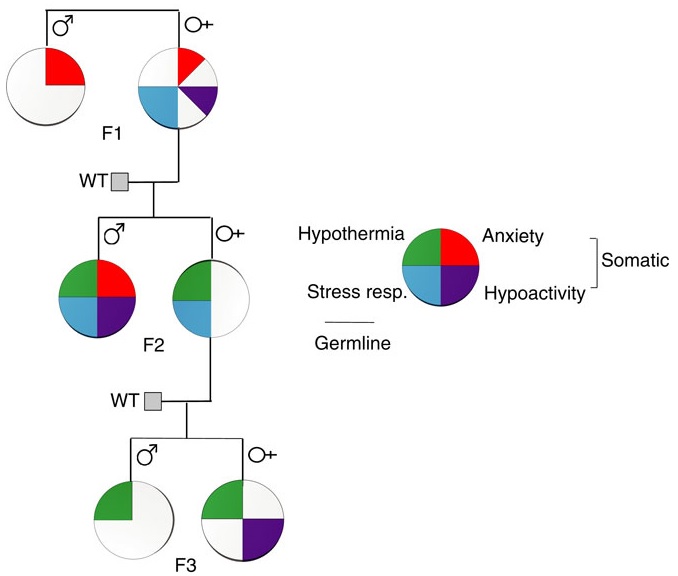
BehavioralTraitsThis 2016 New York rodent study found:

“Parental behavioural traits can be transmitted by non-genetic mechanisms to the offspring.

We show that four anxiety/stress-reactive traits are transmitted via independent iterative-somatic and gametic epigenetic mechanisms across multiple generations.

As the individual traits/pathways each have their own generation-dependent penetrance and gender specificity, the resulting cumulative phenotype is pleiotropic. In the context of genetic diseases, it is typically assumed that this phenomenon arises from individual differences in vulnerability to the various effects of the causative gene. However, the work presented here reveals that pleiotropy can be produced by the variable distribution and segregated transmission of behavioural traits.”


A primary focus was how anxiety was transmitted from parents to offspring:

“The iterative propagation of the male-specific anxiety-like behaviour is most compatible with a model in which proinflammatory state is propagated from H [serotonin1A receptor heterozygote] F0 to F1 [children] females and in which the proinflammatory state is acquired by F1 males from their H mothers, and then by F2 [grandchildren] males from their F1 mothers.

We propose that increased levels of gestational MIP-1β [macrophage inflammatory protein 1β] in H and F1 mothers, together with additional proinflammatory cytokines and bioactive proteins, are required to produce immune system activation in their newborn offspring, which in turn promotes the development of the anxiety-like phenotype in males.

In particular, increase in the number of monocytes and their transmigration to the brain parenchyma in F1 and F2 males could be central to the development of anxiety.”


The researchers studied transmission of behavioral traits and epigenetic changes. Due to my quick take on the study title – “Behavioural traits propagate across generations..” – I had expectations of this study that weren’t born out. What could the researchers have done versus what they did?

The study design removed prenatal and postnatal parental behavioral transmission of behavioral traits and epigenetic changes as each generation’s embryos were implanted into foster wild-type (WT) mothers.

The study design substituted the foster mothers’ prenatal and postnatal parental environments for the biological parents’ environments. So we didn’t find out, for example:

  • To what extents the overly stress-reactive F1 female children’s prenatal environments and postnatal behaviors induced behaviors and/or epigenetic changes in their children; and
  • Whether the F2 grandchildren’s parental behaviors subsequently induced behaviors and/or epigenetic changes in the F3 great-grandchildren.

How did the study meet the overall goal of rodent studies: to help humans?

    1. Only a minority of humans experienced an early-life environment that included primary caregivers other than our biological parents.
    2. Very, very few of us experienced a prenatal environment other than our biological mothers.
    3. The study’s thorough removal of parental behavior was an outstanding methodology to confirm by falsifiability whether parental behavior was both an intergenerational and transgenerational epigenetic inheritance mechanism.
    4. Maybe the researchers filled in some gaps in previous rodent studies, such as determining what is or isn’t a “true transgenerational mechanism.”

As an example of a rodent study that more closely approximated human conditions, the behavior of a mother whose DNA was epigenetically changed by stress induced the same epigenetic changes to her child’s DNA when her child was stressed per One way that mothers cause fear and emotional trauma in their infants:

“Our results provide clues to understanding transmission of specific fears across generations and its dependence upon maternal induction of pups’ stress response paired with the cue to induce amygdala-dependent learning plasticity.”


How did parental behavioral transmission of behavioral traits and epigenetic changes become a subject not worth investigating? These traits and effects can be seen everyday in real-life human interactions, and in every human’s physiology.

But when investigating human correlates with behavioral epigenetic changes of rodents in the laboratory, parental behavioral transmission of behavioral traits is often treated the way this study treated it: as a confounder.

I doubt that people who have reached some degree of honesty about their early lives and concomitant empathy for others would agree with this prioritization. The papers of Transgenerational epigenetic inheritance week show the spectrum of opportunities to advance science that were intentionally missed.

http://www.nature.com/ncomms/2016/160513/ncomms11492/full/ncomms11492.html “Behavioural traits propagate across generations via segregated iterative-somatic and gametic epigenetic mechanisms”

A study of genetic imprinting and neurodevelopmental disorders

This 2016 UK human study assessed the roles of genetic imprinting on diseases that may originate from a certain interval on chromosome 15:

“The 15q11.2-q13.3 region contains a cluster of imprinted genes, which are expressed from one parental allele only as a consequence of germline epigenetic events.

The importance of epigenetic status of duplications at this interval was further underlined by analysis of a number of families. Duplications in two unaffected mothers had a DNA-methylation pattern indicative of being paternally derived, whereas their offspring, who possessed a maternally derived duplication, suffered from psychotic illness.

We clearly implicate 15q11.2-q13.3 interstitial duplications of paternal origin in the aetiology of DD [developmental delay], but do not find them at increased rates in SZ [schizophrenia], which is significantly associated only with duplications of maternal origin.

This study refines the distinct roles of maternal and paternal duplications at 15q11.2-q13.3, underlining the critical importance of maternally active imprinted genes in the contribution to the incidence of psychotic illness.”

The researchers analyzed other studies for better estimates of paternal involvement:

“We show for the first time that paternal duplications are pathogenic. One reason why paternal duplications have been regarded as non-pathogenic in the past is their rare occurrence in patients. Here we demonstrate that they are also rare in the general population as a whole.

Paternal duplications should be less efficiently eliminated from the population by negative selection pressure, due to their lower penetrance for neurodevelopmental disorders. Secondly, some maternal duplications will change to paternal when transmitted from male carriers.

We now suggest one further explanation for their rarity: male patients with SZ and other neurodevelopmental disorders have lower fecundity. Men suffering with SZ have only half the number of offspring compared to women with SZ.”


I would have liked further discussion of the “germline epigenetic events” that apparently contribute to the studied problems. These epigenetic abnormalities may have the potential to be prevented or treated, or at least used as early biomarkers.

The reviewers instead focused on:

“This work will have tangible benefits for patients with 15q11.2-q13.3 duplications by aiding genetic counseling.”

http://journals.plos.org/plosgenetics/article?id=10.1371%2Fjournal.pgen.1005993 “Parental Origin of Interstitial Duplications at 15q11.2-q13.3 in Schizophrenia and Neurodevelopmental Disorders”

Does childhood trauma influence offspring’s birth characteristics?

This 2016 Swedish human study investigated the effects of one specific childhood trauma, parental death:

“Parental (G1) death during (G2) childhood predicts prematurity and lower birthweight in the offspring generation (G3). This response is dependent on G2 gender, G2 age at exposure and G3 parity, but not on G3 gender.

Offspring of women who lost their parent at the age of 0-2 or at the age of 13-17 had an increased risk for prematurity.

Offspring of men who lost a parent at ages 8-12 had an increased risk of prematurity.

For women exposed to a parent’s death at age 0-2, there was no significant deficit in their offspring’s birthweight in any parity class. For women exposed at later ages we observed a deficit in birthweight.

Among children whose fathers experienced parental loss..experiencing parental death at ages 8-12 in particular, or at ages 13-17, but not at ages 0-2 or 3-7, did predict having lighter offspring.”


The study design was unable to produce causal evidence for the putative intergenerational effects. An example of the limitations was:

“We had no information about behaviours and biological markers or genes.”

Its findings were best summarized as:

“Our study fails to refute the hypothesis that a male-line epigenetic mechanism exists which may be triggered by trauma during boys’ slow growth period.”

Still, the study had a firmer foundation than did A problematic study of oxytocin receptor gene methylation, childhood abuse, and psychiatric symptoms, which speciously produced politically-correct results from childhood trauma surveys of adults.

http://ije.oxfordjournals.org/content/early/2016/05/03/ije.dyw048.full “Does childhood trauma influence offspring’s birth characteristics?”