What is a father’s role in epigenetic inheritance?

The agenda of this 2017 Danish review was to establish a paternal role in intergenerational and transgenerational epigenetic inheritance of metabolic diseases:

“There are four windows of susceptibility which have major importance for epigenetic inheritance of acquired paternal epigenetic changes:

  1. paternal primordial germ cell (PGC) development,
  2. prospermatogonia stages,
  3. spermatogenesis, and
  4. during preimplantation.”

The review was a long read as the authors discussed animal studies. When it came to human studies near the paper’s end, though, the tone was of a “we know this is real, we just have to find it” variety. The authors acknowledged:

“To what extent the described DNA methylation changes influence the future health status of offspring by escaping remodeling in the preimplantation period as well as in future generations by escaping remodeling in PGC remodeling has yet to be determined.

These studies have not yet provided an in-depth understanding of the specific mechanisms behind epigenetic inheritance or exact effect size for the disease risk in offspring.

Pharmacological approaches have reached their limits..”

before presenting their belief that a hypothetical series of future CRISPR-Cas9 experiments will demonstrate the truth of their agenda.


The review focused on 0.0001% of the prenatal period for what matters with the human male – who he was at the time of a Saturday night drunken copulation – regarding intergenerational and transgenerational epigenetic inheritance of metabolic diseases.

The human female’s role – who she was at conception AND THEN what she does or doesn’t do during the remaining 99.9999% of the prenatal period to accommodate the fetus and prevent further adverse epigenetic effects from being intergenerationally and transgenerationally transmitted  – wasn’t discussed.

Who benefits from this agenda’s narrow focus?

If the review authors sincerely want to:

“Raise societal awareness of behavior to prevent a further rise in the prevalence of metabolic diseases in future generations..”

then EARN IT! Design and implement HUMAN studies to test what’s already known from epigenetic inheritance animal studies per Experience-induced transgenerational programming of neuronal structure and functions. Don’t disguise beliefs with the label of science.

http://jme.endocrinology-journals.org/content/early/2017/12/04/JME-17-0189.full.pdf “DNA methylation in epigenetic inheritance of metabolic diseases through the male germ line”

Epigenetic mechanisms regulate bone growth

This 2017 Baltimore/China rodent study found:

“MSPC [Mesenchymal stem/progenitor cell] senescence is epigenetically controlled by the polycomb histone methyltransferase enhancer of zeste homolog 2 (Ezh2) and its trimethylation of histone H3 on Lysine 27 (H3K27me3) mark. Ezh2 maintains the repression of key cell senescence inducer genes through H3K27me3.

Our work establishes the role of Ezh2-H3K27me3 as a key epigenetic regulator that controls the onset and progression of MSPC senescence during the transition of fast- to slow-growing phase of long bones.

The self-renewal and proliferative capacity of cells in primary spongiosa of fast-growing bones are maintained by a high level of Ezh2-H3K27me3, whereas loss of Ezh2-H3K27me3 during late puberty leads to cell senescence.”

One of the experiments led to this note in the Discussion section:

“An epidemiologic study demonstrated that 60% of the risk of osteoporosis can be explained by the bone mineral acquired by early adulthood.

Our finding that deletion of Ezh2 in nestin+ cells during early puberty increases the risk of osteoporosis in later adulthood suggests that premature cellular senescence in the primary spongiosa region during the prepubertal or early pubertal phase may also be a major cause of osteoporosis/bone loss in later life.”


The study was short of explanations in several areas. For example, causes for the effect of “loss of Ezh2-H3K27me3 during late puberty” weren’t specified.

In another example, this statement referenced nestin-positive cells:

“Because these cells are likely no longer required in this particular region during adulthood, they stop proliferating and undergo senescence during late puberty.”

but what caused the cells to be “no longer required” wasn’t specified.

The “programmed” and “fate” words were used in the Abstract:

“Our data reveals a programmed cell fate change in postnatal skeleton..”

but not explained until the Discussion section:

“The senescence process is program[m]ed by a conserved mechanism because it restricts in a particular region of long bone and follows a specific time course.”

https://www.nature.com/articles/s41467-017-01509-0 “Programmed cell senescence in skeleton during late puberty”

Beliefs about genetic and environmental influences in twin studies

This 2017 Penn State simulation found:

“By taking advantage of the natural variation in genetic relatedness among identical (monozygotic: MZ) and fraternal (dizygotic: DZ) twins, twin studies are able to estimate genetic and environmental contributions to complex human behaviors.

In the standard biometric model when MZ or DZ twin similarity differs from 1.00 or 0.50, respectively, the variance that should be attributed to genetic influences is instead attributed to nonshared environmental influences, thus deflating the estimates of genetic influences and inflating the estimates of nonshared environmental influences.

Although estimates of genetic and nonshared environmental influences from the standard biometric model were found to deviate from “true” values, the bias was usually smaller than 10% points indicating that the interpretations of findings from previous twin studies are mostly correct.”

The study model’s input was five phenotypes that varied the degrees of:

  1. Genetic and epigenetic heritability;
  2. Shared environmental factors; and
  3. Nonshared environmental factors.

Item 1 above was different than the standard model’s treatment of heritable factors, which considers only additive genetic influences.

The authors cited studies for moderate and significant shared environmental influences in child and adolescent psychopathology and parenting to support the model’s finding that overall, item 2 above wasn’t underestimated.


I wasn’t satisfied with the simulation’s description of item 1 above. With

  1. Environmental influences accounted for elsewhere, and
  2. No references to transgenerational epigenetic inheritance,
  3. Randomness seemed to be the only remaining explanation for an epigenetic heritability factor.

Inserting the model’s non-environmental randomness explanation for epigenetic heritability into the abstract’s statement above exposed the non sequitur:

In the standard biometric model when MZ or DZ twin similarity differs from 1.00 or 0.50, respectively, the variance that should be attributed to genetic [and non-environmental stochastic heritability] influences is instead attributed to nonshared environmental influences, thus deflating the estimates of genetic [and non-environmental stochastic heritability] influences and inflating the estimates of nonshared environmental influences.

Why did the researchers design their model with an adjustment for non-environmental epigenetic heritability? Maybe it had something to do with:

“Estimates of genetic and nonshared environmental influences from the standard biometric model were found to deviate from “true” values.”

In any event, I didn’t see that this simulation was much more than an attempt to reaffirm a belief that:

“The interpretations of findings from previous twin studies are mostly correct.”


Empirical rather than simulated findings in human twin study research are more compelling, such as The primary causes of individual differences in DNA methylation are environmental factors with its finding:

“Differential methylation is primarily non-genetic in origin, with non-shared environment accounting for most of the variance. These non-genetic effects are mainly tissue-specific.

The full scope of environmental variation remains underappreciated.”

https://link.springer.com/article/10.1007/s10519-017-9875-x “The Impact of Variation in Twin Relatedness on Estimates of Heritability and Environmental Influences” (not freely available)

Does a societal mandate cause DNA methylation?

This 2017 worldwide meta-analysis of humans of recent European ancestry found:

“Here we provide evidence on the associations between epigenetic modifications-in our case, CpG methylation and educational attainment (EA), a biologically distal environmental factor that is arguably among the most important life-shaping experiences for individuals. Specifically, we report the results of an epigenome-wide association study [EWAS] meta-analysis of EA based on data from 27 cohort studies with a total of 10,767 individuals.”

These researchers found no association between the societal mandate of educational attainment and the most widely studied category of epigenetic marks.


Society mandates year after year of school attendance. This mandate continues on to require a four-year degree just to get an entry-level job in many lines of work.

The researchers stated:

“Our EWAS associations are small in magnitude relative to EWAS associations reported for more biologically proximal environmental factors.”

educational attainment

Panels a and b display the same results but with a different scaling of the y axis in order for smaller effect sizes to be visible.

Smoking, alcohol consumption, and maternal smoking were measured to have detrimental effects. BMI was fun with numbers.

Would a study categorize it as detrimental when an individual breaks from expectations about what they should do, and terminates their educational attainment? One individual I know didn’t go to graduate school after Princeton University although they were capable of quality graduate and doctorate work. It would be detrimental to their life if they stopped a software development career that pays a million dollars a year to go back to school.

Would a study evaluate it as beneficial when an individual lengthens their educational attainment past society’s thirteen-year educational requirement? Would these extra four years still be considered beneficial when – after foregoing four more years of full-time income, and accumulating tens of thousands of dollars of nondischargeable debt – they achieve an expected outcome of an entry-level job, and then can’t unassistedly provide for their basic needs?

Are further epigenetic studies of educational attainment as an environmental factor really worthwhile?

Why not use research funds and efforts on more promising topics like human transgenerational epigenetic inheritance? Suitable subjects may already be selected for this research, as several of the “27 cohort studies” that provided data for this meta-analysis included at least three human generations.

http://www.nature.com/mp/journal/vaop/ncurrent/full/mp2017210a.html “An epigenome-wide association study meta-analysis of educational attainment”


These authors preregistered their analysis plan. This practice discourages fishing expeditions that researchers are so often tempted to go on when study data provides evidence for the null hypothesis, as this meta-analysis did.

I was puzzled that they described part of the preregistered analysis plan to be:

“Hypothesis-free as it is performed genome-wide without an expected direction of effect for individual CpG loci.”

Their abstract, though, declared:

“If our findings regarding EA can be generalized to other biologically distal environmental factors, then they cast doubt on the hypothesis that such factors have large effects on the epigenome.”

Was this meta-analysis “hypothesis-free” or did it have “the hypothesis that such factors have large effects on the epigenome”?

Here’s 48 minutes of Brian Nosek, a co-founder of the Open Science Framework (where this meta-analysis was preregistered):

http://rationallyspeakingpodcast.org/172-why-science-needs-openness-brian-nosek/

One example of how experience changes the brain

This 2017 California rodent study found:

“Neural representations within the mouse hypothalamus, that underlie innate social behaviours, are shaped by social experience.

In sexually and socially experienced adult males, divergent and characteristic neural ensembles represented male versus female conspecifics [members of the same species]. However, in inexperienced adult males, male and female intruders activated overlapping neuronal populations.

Sex-specific neuronal ensembles gradually separated as the mice acquired social and sexual experience. In mice permitted to investigate but not to mount or attack conspecifics, ensemble divergence did not occur. However, 30 minutes of sexual experience with a female was sufficient to promote the separation of male and female ensembles.

These observations uncover an unexpected social experience-dependent component to the formation of hypothalamic neural assemblies controlling innate social behaviours. More generally, they reveal plasticity and dynamic coding in an evolutionarily ancient deep subcortical structure that is traditionally viewed as a ‘hard-wired’ system.”

Hat tip to Neuroskeptic for both alerting me to the study and simplifying its overly-dense graphics.

http://www.nature.com/nature/journal/v550/n7676/full/nature23885.html “Social behaviour shapes hypothalamic neural ensemble representations of conspecific sex” (not freely available)

Do preventive interventions for children of mentally ill parents work?

The fifth and final paper of Transgenerational epigenetic inheritance week was a 2017 German/Italian meta-analysis of psychiatric treatments involving human children:

“The transgenerational transmission of mental disorders is one of the most significant causes of psychiatric morbidity. Several risk factors for children of parents with mental illness (COPMI) have been identified in numerous studies and meta-analyses.

There is a dearth of high quality studies that effectively reduce the high risk of COPMI for the development of mental disorders.”


I found the study by searching a medical database on the “transgenerational” term. The authors fell into the trap of misusing “transgenerational” instead of “intergenerational” to describe individuals in different generations.

Per the definitions in A review of epigenetic transgenerational inheritance of reproductive disease and Transgenerational effects of early environmental insults on aging and disease, for the term “transgenerational transmission” to apply, the researchers needed to provide evidence in at least the next 2 male and/or 3 female generations of:

“Altered epigenetic information between generations in the absence of continued environmental exposure.”

The meta-analysis didn’t provide evidence for “transgenerational transmission of mental disorders.”


Several aspects of the meta-analysis stood out:

  1. Infancy was the earliest period of included studies, and studies of treatments before the children were born were excluded;
  2. Parents had to be diagnosed with a mental illness for the study to be included;
  3. Studies with children diagnosed with a mental illness were excluded; and
  4. Studies comparing more than one type of intervention were excluded.

Fifty worldwide studies from 1983 through 2014 were selected for the meta-analysis.

Per item 1 above, if a researcher doesn’t look for something, it’s doubtful that they will find it. As shown in the preceding papers of Transgenerational epigenetic inheritance week, the preconception through prenatal periods are where the largest epigenetic effects on an individual are found. There are fewer opportunities for effective “preventive interventions” in later life compared with these early periods.

Science provides testable explanations and predictions. The overall goal of animal studies is to help humans.

Animal studies provide explanations and predictions for the consequences of environmental insults to the human fetus – predictable disrupted neurodevelopment with subsequent deviated behaviors and other lifelong damaging effects in the F1 children. The first four papers I curated during Transgenerational epigenetic inheritance week provided samples of which of these and/or other harmful effects may be predictably found in F2 grandchildren, F3 great-grandchildren, and future human generations.

When will human transgenerational epigenetic inheritance be taken seriously? Is the root problem that human societies don’t give humans in the fetal stage of life a constituency, or protection against mistreatment, or even protection against being arbitrarily killed?


The default answer to the meta-analysis title “Do preventive interventions for children of mentally ill parents work?” is No. As for the “dearth of high quality studies” complaint: when treatments aren’t effective, is the solution to do more of them?

No.

The researchers provided an example of the widespread belief that current treatments for “psychiatric morbidity” are on the right path, and that the usual treatments – only done more rigorously – will eventually provide unquestionable evidence that they are effective.

This belief is already hundreds of years old. How much longer will this unevidenced belief infect us?

http://journals.lww.com/co-psychiatry/Abstract/2017/07000/Do_preventive_interventions_for_children_of.9.aspx “Do preventive interventions for children of mentally ill parents work? Results of a systematic review and meta-analysis” (not freely available)

“Transgenerationally” inherited epigenetic effects of fetal alcohol exposure

The fourth paper of Transgenerational epigenetic inheritance week was a 2016 German rodent study of of improperly-termed “transgenerational” epigenetic effects of alcohol:

“We investigated 2 generations of offspring born to alcohol-treated mothers. Here, we show that memory impairment and reduced synthesis of acetylcholine occurs in both F1 (exposed to ethanol in utero) and F2 generation (never been exposed to ethanol). Effects in the F2 generation are most likely consequences of transgenerationally transmitted epigenetic modifications in stem cells induced by alcohol.

The results further suggest an epigenetic trait for an anticholinergic endophenotype associated with cognitive dysfunction which might be relevant to our understanding of mental impairment in neurodegenerative disorders such as Alzheimer’s disease and related disorders.”

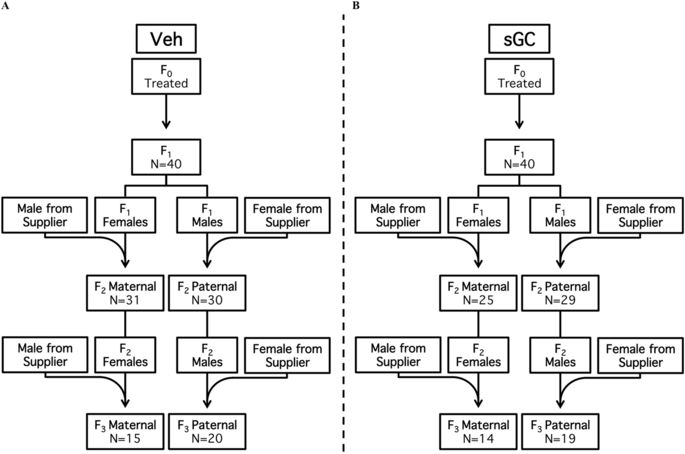
F0 generation mothers modeled human fetal alcohol syndrome. They were exposed to ethanol gradually up to 20%, then mated. The 20% ethanol intake level was maintained until the F1 generation pups were born, then gradually diminished to 0%. After a ten-day wait, an eight-week handling and shaping period started, followed by five weeks of behavioral testing.

The F1 children and F2 grandchildren started an eight-week handling and shaping period after young adulthood, followed by five weeks of behavioral testing. The F1 children were mated after behavioral testing.

The F0 parents showed no significant differences in working memory and reference memory compared with controls. Both the F1 children and F2 grandchildren were significantly impaired in the same tests compared with controls, with the F1 children performing worse than the F2 grandchildren. No sex-dependent differences were noted.

After behavioral impairments due to intergenerational epigenetic modifications were established, the F2 grandchildren received treatments to ascertain the contribution of cholinergic dysfunction in their behavioral impairments. It was confirmed, as an acetylcholine esterase inhibitor that crosses the blood-brain barrier almost completely erased working-memory and reference-memory performance deficits.

Items in the Discussion section included:

  • A dozen studies from 2014-2016 were cited for epigenetic mechanisms of inheritance stemming from parental alcohol consumption; and
  • Transgenerational inheritance of alcohol-induced neurodevelopmental deficits may involve epigenetic mechanisms that are resistant to developmental clearance.

As argued in Transgenerational effects of early environmental insults on aging and disease and A review of epigenetic transgenerational inheritance of reproductive disease, testing of F3 great-grandchildren was needed in order to establish transgenerational vs. intergenerational results. A F3 generation necessarily controls for the variable of F2 direct germline exposure.

http://www.neurobiologyofaging.org/article/S0197-4580(16)30303-7/pdf “Transgenerational transmission of an anticholinergic endophenotype with memory dysfunction” (not freely available)

Transgenerational pathological traits induced by prenatal immune activation

The third paper of Transgenerational epigenetic inheritance week was a 2016 Swiss rodent study of immune system epigenetic effects:

“Our study demonstrates for, we believe, the first time that prenatal immune activation can negatively affect brain and behavioral functions in multiple generations. These findings thus highlight a novel pathological aspect of this early-life adversity in shaping disease risk across generations.”

The epigenetic effects noted in the initial round of experiments included:

  • F1 child and F2 grandchild impaired sociability;
  • F1 and F2 abnormal fear expression;
  • F1 but not F2 sensorimotor gating deficiencies; and
  • F2 but not F1 behavioral despair associated with depressive-like behavior.

These transgenerational effects emerged in both male and female offspring. The prenatal immune activation timing corresponded to the middle of the first trimester of human pregnancy.

The effects were found to be mediated by the paternal but not maternal lineage. The researchers didn’t develop a maternal lineage F3 great-grandchild generation.

The next round of experiments done with the paternal lineage F3 great-grandchildren noted these epigenetic effects:

  • The F3 great-grandchildren had impaired sociability, abnormal fear expression and behavioral despair; and
  • The F3 great-grandchildren had normal sensorimotor gating.

Since the first round of tests didn’t show sex-dependent effects, the F3 great-grandchildren were male-only to minimize the number of animals.

Samples of only the amygdalar complex were taken to develop findings of transcriptomic effects of prenatal immune activation.

Items in the Discussion section included:

  1. The F2 grandchild and F3 great-grandchild generations’ phenotype of impaired sociability, abnormal fear expression and behavioral despair demonstrated that prenatal immune activation likely altered epigenetic marks in the germ line of the F1 children which resisted erasure and epigenetic reestablishment during germ cell development.
  2. Abnormal F1 child sensorimotor gating followed by normal F2 grandchild and F3 great-grandchild sensorimotor gating demonstrated that prenatal immune activation may also modify somatic but not germ cells.
  3. Non-significant F1 child behavioral despair followed by F2 grandchild and F3 great-grandchild behavioral despair demonstrated that prenatal immune activation may modify F1 germ cells sufficiently to develop a transgenerational phenotype, but unlike item 1 above, somatic cells were insufficiently modified, and the phenotype skipped the F1 children.
  4. Studies were cited that prenatal immune activation later in the gestational process may produce different effects.

The initial round of experiments wasn’t definitive for the maternal lineage. As argued in Transgenerational effects of early environmental insults on aging and disease and A review of epigenetic transgenerational inheritance of reproductive disease, testing of maternal lineage F3 great-grandchildren was needed to control for the variable of direct F2 grandchild germ-line exposure.

Also, effects that didn’t reach statistical significance in the maternal lineage F1 children and F2 grandchildren may have been different in the F3 great-grandchildren. The researchers indirectly acknowledged this lack by noting that these and other effects of immune challenges in a maternal lineage weren’t excluded by the study.

https://www.nature.com/mp/journal/v22/n1/pdf/mp201641a.pdf “Transgenerational transmission and modification of pathological traits induced by prenatal immune activation” (not freely available)


The study’s lead researcher authored a freely-available 2017 review that placed this study in context and provided further details from other studies:

http://www.nature.com/tp/journal/v7/n5/full/tp201778a.html “Epigenetic and transgenerational mechanisms in infection-mediated neurodevelopmental disorders”

Experience-induced transgenerational programming of neuronal structure and functions

The second paper of Transgenerational epigenetic inheritance week was a 2017 German/Israeli review focused on:

“The inter- and transgenerational effects of stress experience prior to and during gestation..the concept of stress-induced (re-)programming in more detail by highlighting epigenetic mechanisms and particularly those affecting the development of monoaminergic transmitter systems, which constitute the brain’s reward system.

We offer some perspectives on the development of protective and therapeutic interventions in cognitive and emotional disturbances resulting from preconception and prenatal stress.”

The reviewers noted that human studies have difficulties predicting adult responses to stress that are based on gene expression and early life experience. Clinical studies that experimentally manipulate the type, level and timing of the stressful exposure aren’t possible. Clinical studies are also predicated on the symptoms being recognized as disorders and/or diseases.

The researchers noted difficulties in human interventions and treatments. Before and during pregnancy, and perinatal periods are where stress effects are largest. But current human research hasn’t gathered sufficient findings to develop practical guidelines for early intervention programs.


I’m not persuaded by arguments that cite the difficulties of performing human research on transgenerational epigenetic inheritance. There are overwhelming numbers of people who have obvious stress symptoms: these didn’t develop in a vacuum.

Researchers:

  • Design human studies to test what’s known from transgenerational epigenetic inheritance animal studies that will include documenting the subjects’ detailed histories with sufficient biometric samples and data obtained from their lineage.
  • Induce pregnant subjects to at least temporarily avoid what’s harmful for them and/or the offspring, in favor of what’s beneficial.
  • Document the subjects’ actions with history and samples.

I acknowledge that economic incentives may not be enough to get people to participate. I’m familiar with a juvenile sickle-cell study that didn’t get enough subjects despite offering free transportation and hundreds of dollars to the caregivers per visit. The main problem seemed to be that the additional income would be reported and threaten the caregivers’ welfare benefits.

Stop whining that your jobs are difficult, researchers. Society doesn’t owe you a job. EARN IT – get yourself and the people in your organization motivated to advance science!

http://www.sciencedirect.com/science/article/pii/S014976341630731X “Experience-induced transgenerational (re-)programming of neuronal structure and functions: Impact of stress prior and during pregnancy” (not freely available)

Transgenerational effects of early environmental insults on aging and disease

The first paper of Transgenerational epigenetic inheritance week was a 2017 Canadian/Netherlands review that’s organized as follows:

“First, we address mechanisms of developmental and transgenerational programming of disease and inheritance. Second, we discuss experimental and clinical findings linking early environmental determinants to adverse aging trajectories in association with possible parental contributions and sex-specific effects. Third, we outline the main mechanisms of age-related functional decline and suggest potential interventions to reverse negative effects of transgenerational programming.”

A transgenerational phenotype was defined as an epigenetic modification that was maintained at least either to F2 grandchildren in the paternal lineage, or to F3 great-grandchildren in the maternal lineage.

The reviewers noted that mechanisms of transgenerational programming are complex and multivariate.  Severity, timing, and type of exposure; lineage of transmission; germ cell exposure; and gender of an organism were the main factors that may determine consequences. Mechanisms reviewed were:

  1. Parental exposure to an adverse environment;
  2. Altered maternal behavior and care of offspring; and
  3. Experience-dependent modifications of the epigenome.

There was a long list of diseases and impaired functionalities that were consequences of ancestral experiences and exposures. Most studies were of animals, but a few were human, such as those done on effects of extended power outages during a Quebec ice storm of January 1998.


One intervention that was effective in reversing a transgenerational phenotype induced by deficient rodent maternal care was to place pups with a caring foster female soon after birth. It’s probably unacceptable in human societies to preemptively recognize all poor-care human mothers and remove the infant to caring foster mothers. But researchers could probably find enough instances to develop studies of the effectiveness of such placements in reversing a transgenerational phenotype.

The review didn’t have suggestions for reversing human transgenerational phenotypes, just “potential interventions to reverse negative effects of transgenerational programming.” Interventions suggested for humans – exercise, enriched lifestyle, cognitive training, dietary regimens, and expressive art and writing therapies – only reduced impacts of transgenerational epigenetic effects.

Tricky wording of “reverse negative effects of transgenerational programming” showed that research paradigms weren’t aimed at resolving causes. The review was insufficient for the same reasons mentioned in How one person’s paradigms regarding stress and epigenetics impedes relevant research, prompting my same comment:

Aren’t people interested in human treatments of originating causes so that their various symptoms don’t keep bubbling up? Why wouldn’t research paradigms be aligned accordingly?

When reversals of human phenotypes aren’t researched, problems may compound by being transmitted to the next generations.

http://www.sciencedirect.com/science/article/pii/S014976341630714X “Transgenerational effects of early environmental insults on aging and disease incidence” (not freely available)

It’s transgenerational epigenetic inheritance week!

Transgenerational epigenetic inheritance is a subject whose time has come. This week I sequentially curated two 2017 reviews and two 2016 studies of the subject, and ended with a meta-analysis of human preventive treatments:


It’s the opposite of advancing science for those in the funding chain to give lip service to the subject, and then create an atmosphere where proposals to extend experiments to subsequent generations to study possible transgenerational epigenetic effects are neither encouraged nor funded.

Epigenetic effects of early life stress exposure

This 2017 Netherlands review subject was the lasting epigenetic effects of early-life stress:

“Exposure to stress during critical periods in development can have severe long-term consequences.

One of the key stress response systems mediating these long-term effects of stress is the hypothalamic-pituitary-adrenal (HPA) axis.

Early life stress (ELS) exposure has been reported to have numerous consequences on HPA-axis function in adulthood.

ELS is able to “imprint” or “program” an organism’s neuroendocrine, neural and behavioral responses to stress. Research focuses along two complementary lines:

  1. ELS during critical stages in brain maturation may disrupt specific developmental processes (by altered neurotransmitter exposure, gene transcription, or neuronal differentiation), leading to aberrant neural circuit function throughout life.
  2. ELS may induce modifications of the epigenome which lastingly affect brain function.

These epigenetic modifications are inducible, stable, and yet reversible, constituting an important emerging mechanism by which transient environmental stimuli can induce persistent changes in gene expression and ultimately behavior.”


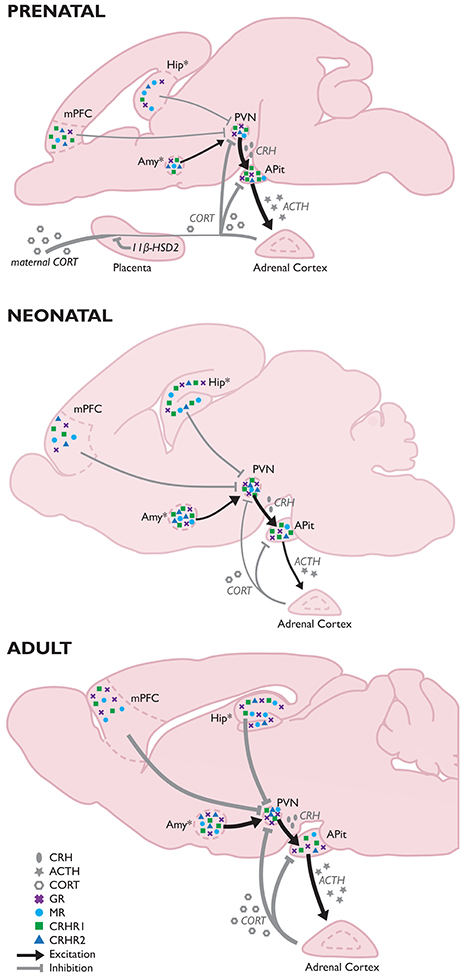
In early life, the lower brain and limbic system brain structures are more developed and dominant, whereas the cerebrum is less developed (use the above rodent graphic as a rough guide). Stress and pain generally have a greater impact on a fetus than an infant, and a greater impact on an infant than an adult.

The reviewers cited 50+ studies from years 2000-2015 in the “Early Life Stress Effects in a “Matching” Stressful Adult Environment” section to argue for the match / mismatch theory:

“Encountering ELS prepares an organism for similar (“matching”) adversities during adulthood, while a mismatching environment results in an increased susceptibility to psychopathology, indicating that ELS can exert either beneficial or disadvantageous effects depending on the environmental context.

Initial evidence for HPA-axis hypo-reactivity is observed for early social deprivation, potentially reflecting the abnormal HPA-axis function as observed in post-traumatic stress disorder.

Experiencing additional (chronic) stress in adulthood seems to normalize these alterations in HPA-axis function, supporting the match / mismatch theory.”

Evidence for this theory was contrasted with the allostatic load theory presented in How one person’s paradigms regarding stress and epigenetics impedes relevant research.


The review mainly cited evidence from rodent studies that mismatched reactions in adulthood may be consequences of early-life events. These events:

“Imprint or program an organism’s neuroendocrine, neural and behavioral responses..leading to aberrant neural circuit function throughout life..which lastingly affect brain function.”

Taking this research to a personal level:

  • Have you had feelings that you were unsafe, although your environment was objectively safe?
  • Have you felt uneasy when people are nice to you?
  • Have you felt anxious when someone pays attention to you, even after you’ve acted to gain their attention?

Mismatched human feelings are one form of mismatched reactions. These may be consequences of early-life experiences, and indicators of personal truths.

If researchers can let go of their biases and Advance science by including emotion in research, they may find that human subjects’ feelings produce better evidence for what actually happened during the subjects’ early lives than do standard scientific methods of:

Incorporating feeling evidence may bring researchers and each individual closer to discovering the major insults that knocked their development processes out of normally robust pathways and/or induced “persistent changes in gene expression and ultimately behavior.”

https://www.frontiersin.org/articles/10.3389/fncel.2017.00087/full “Modulation of the Hypothalamic-Pituitary-Adrenal Axis by Early Life Stress Exposure”


I came across this review as a result of it being cited in http://www.sciencedirect.com/science/article/pii/S1084952117302884 “Long-term effects of early environment on the brain: Lesson from rodent models” (not freely available)

Epigenetic similarities between placental and cancer cells

This 2017 New Zealand review compared and contrasted epigenetic evidence from placental and cancer research:

“Placental and cancer cells are globally hypomethylated and share an epigenetic phenomenon that is not well understood – they fail to silence repetitive DNA sequences (retrotransposons) that are silenced (methylated) in healthy somatic cells.

In the placenta, hypomethylation of retrotransposons has facilitated the evolution of new genes essential for placental function. In cancer, hypomethylation is thought to contribute to activation of oncogenes, genomic instability, and retrotransposon unsilencing; the latter, we postulate, is possibly the most important consequence.

Activation of placental retrotransposon-derived genes in cancer underpins our hypothesis that hypomethylation of these genes drives cancer cell invasion.”

http://onlinelibrary.wiley.com/doi/10.1002/bies.201700091/abstract “The Genes of Life and Death: A Potential Role for Placental-Specific Genes in Cancer” (not freely available)


The review cited a 2014 study from the same research group that covered some of the same points and is freely available:

http://journals.plos.org/plosone/article?id=10.1371/journal.pone.0095840 “Retrotransposon Hypomethylation in Melanoma and Expression of a Placenta-Specific Gene”

Epigenetic effects of THC differ between female adolescents and adults

This 2017 Italian rodent study found:

“THC [delta9-tetrahydrocannabinol, the psychoactive compound of cannabis] exposure affects histone modifications in the brain of female rats in a region- and age-specific manner. Specifically, THC acts on different targets depending on the considered brain area and, remarkably, the adolescent brain is generally more sensitive to THC than the adult brain.

Adolescent exposure to THC, or to synthetic cannabinoids, induced sex-dependent brain and behavioral alterations at adulthood. In female rats, the phenotype was more complex, as both depressive-like and psychotic-like signs were present.

Development of the depressive/psychotic-like phenotype is restricted to adolescent THC exposure. Not only the behavioral phenotype developed after adolescent, and not adult, exposure, but also changes in both histone modifications and gene expression were more widespread and intense after adolescent treatment, further confirming a specific adolescent susceptibility.

The primary effect in the adolescent brain was represented by changes leading to transcriptional repression, whereas the one observed after adult treatment led to transcriptional activation. Moreover, only in the adolescent brain, the primary effect was followed by a homeostatic response to counterbalance the THC-induced repressive effect, except in the amygdala.”

The authors’ interpretation of the brain area results was:

“The amygdala is more responsive in adult than adolescent animals. Since it has been established that the amygdala is activated during exposure to aversive stimuli, functioning as a “behavioral brake”, different response between adult and adolescent animals could represent the biological bases of the adolescent propensity for risk-taking and novelty-seeking behaviors. Also in adolescent humans, neuroimaging studies have shown a weaker involvement of the amygdala, and a greater contribution of the NAc [nucleus accumbens], in response to negative and positive stimuli compared to adults.”

http://www.mdpi.com/1422-0067/18/10/2094 “Chronic Δ9-THC Exposure Differently Affects Histone Modifications in the Adolescent and Adult Rat Brain”

Dr. Arthur Janov passed away

Dr. Janov passed away October 1, 2017 at the age of 93.

I remember him as always helping others.

I’ll add more as time goes by. Today, I’ll repeat the last of his 10 comments he made on this blog:

Beyond Belief: What we do instead of getting well

“I do thank you over and over because who quote the essence of my work which pleases me a lot. art janov”


Dr. Janov’s comment on Beyond Belief: Symptoms of hopelessness was:

“i thank you for your help art”

and I replied:

“Thank you for giving me a lens to more clearly see!”


Dr. Janov’s comment on Beyond Belief: Why do we accept being propagandized? was:

“good good art janov”

but my post wasn’t really good. I worked on it, and replied the next day:

“Thanks for helping me improve this post!”


I remember and miss Dr. Janov when I read research and curate studies from what I interpret would be his viewpoint. For example, were he still alive and well, I feel that he would have provided favorable feedback on my Epigenetic effects of early life stress exposure post.

He often noted that aspects of Primal Therapy were proven by subsequent research – especially topics in epigenetics, where research didn’t really start in earnest until the 1980s.

http://cigognenews.blogspot.com/2017/10/the-passing-of-great-man.html


This post has somehow become a target for spammers, and I’ve disabled comments. Readers can comment on other posts and indicate that they want their comment to apply here, and I’ll re-enable comments.