Plasmalogens Week #8 – Experience

Wrapping up Plasmalogens Week with a summary of my plasmalogen-related experiences over the past two years since Plasmalogens, Part 3 in November 2023.

I took detailed plasmalogen measurements on July 24, 2025, with Dr. Goodenowe’s BioScan product. I’d guess that the populations against which BioScan personal Z-scores are derived are from Dr. Goodenowe’s research during this century, many frozen samples of which he’s kept. If so, I’d guess that these populations’ data probably don’t have bell-shaped curves, and that their data’s means and standard deviations may be skewed as they’re representing people who were diseased and/or old.

Here’s my peroxisomal function panel:

I wasn’t taking ProdromeNeuro or ProdromeGlia at the BioScan blood draw time. ProdromeNeuro and ProdromeGlia supplements contain plasmalogen precursors that bypass peroxisome organelles’ normal plasmalogen synthesis functions. I haven’t reordered these supplements in 2025, but took them until my supplies ran out in January 2025. Don’t know to what extent their effects may have continued for six months.

Every day for months before the BioScan, I took a fish oil capsule with 690 mg EPA and 310 mg DHA, and a flax seed oil capsule (700 mg alpha linolenic acid omega-3, 154 mg linoleic acid omega-6, and 168 mg oleic acid omega-9). I also ate 3 eggs a day.

These practices influenced the above peroxisomal function results. My Z-scores of DHA and EPA ethanolamine plasmalogens (DHA +1.3, EPA +1.7) are more than one standard deviation above their respective population means.

The next step of plasmalogen synthesis after peroxisomes takes place in endoplasmic reticulum organelles. Among other papers describing these steps in the ER link’s results, Improving peroxisomal function states:

“Proper functioning of peroxisomes in metabolism requires the concerted interaction with other subcellular organelles, including the endoplasmic reticulum (ER), mitochondria, lipid droplets, lysosomes, and the cytosol. A striking example of peroxisome-ER metabolic cooperation is de novo biosynthesis of ether phospholipids.”

ER stress involves the unfolded protein response, a protein homeostasis-maintaining system that monitors ER conditions by sensing inadequacy in ER protein folding capacity. ER stress is a very common occurrence for humans, in part because ER protein folding has an over 80% failure rate per Every hand’s a winner, and every hand’s a loser.

I haven’t read papers about ER stress directly influencing plasmalogen abundance. But I’ve curated papers, including several during this Plasmalogens Week, that demonstrate how oxidative stress reduces plasmalogens.

Here’s my BioScan inflammation / oxidative stress panel:

I don’t have a history of these measurements except for hsCRP, which has been below 1 for over five years since I started eating broccoli sprouts every day, along with taking taurine and betaine. That oxidative stress interventions may influence ER stress has been curated in papers such as Eat broccoli sprouts for stress, Part 2 of Eat broccoli sprouts for your eyes, Taurine week #7: Brain, Betaine and diabetes, and All about the betaine, Part 2.

Back to my peroxisomal function panel: I don’t consider my negative Z-scores (below the population mean) of Total PEs and Total PCs to be actionable. Both of them produced positive Z-scores (above the population mean) of their respective total plasmalogens (Total PLEs +1.3, Total PLCs +0.5). I view Total PEs and Total PCs as pools of raw materials for plasmalogen synthesis that are used when needed.

My July 2025 BioScan shows that my current practices provide adequate plasmalogens as compared with unknown populations. It indicates that to produce adequate plasmalogens, I don’t need ProdromeNeuro and ProdromeGlia plasmalogen precursor supplements that bypass normal peroxisomal function plasmalogen synthesis.

This year’s BioScan was a one-time event. I don’t agree with advocates for constantly tweaking health parameters, or obtaining frequent test results for ‘youthful’ targets, or competing with or conforming to other people’s measurements, or unfounded longevity beliefs. It’s every human’s choice whether or not we take responsibility for our own one precious life. Being overly obsessed about one’s health can be among the many symptoms of what’s ruining a person’s life.

I might use a future version of BioScan along with ProdromeNeuro and ProdromeGlia plasmalogen precursor supplements if I had to recover from an accident or some other health emergency that creates a substantial demand for plasmalogens’ antioxidant activities. But I’d first return to past practices I’ve found to be successful in combating oxidative stress, like increasing the frequency of Nrf2 activation by eating broccoli sprouts twice a day rather than once daily.


Practice what you preach, or shut up

A 2025 review subject was sulforaphane and brain health. This paper was the latest in a sequence where the retired lead author self-aggrandized his career by citing previous research.

He apparently doesn’t personally do what these research findings suggest people do. The lead author is a few weeks older than I am, and has completely white hair per an interview (Week 34 comments). I’ve had dark hair growing in (last week a barber said my dark hair was 90%) since Week 8 of eating broccoli sprouts every day, which is a side effect of ameliorating system-wide inflammation and oxidative stress.

If the lead author followed up with what his research investigated, he’d have dark hair, too. Unpigmented white hair and colored hair are both results of epigenetics.

Contrast this lack of personal follow-through of research findings with Dr. Goodenowe’s protocol where he compared extremely detailed personal brain measurements at 17 months and again at 31 months. He believes enough in his research findings to personally act on them, and demonstrate to others how personal agency can enhance a person’s life.

It’s every human’s choice whether or not we take responsibility for our own one precious life. I’ve read and curated on this blog many of this paper’s references. Five years ago for example:

So do more with their information than just read.

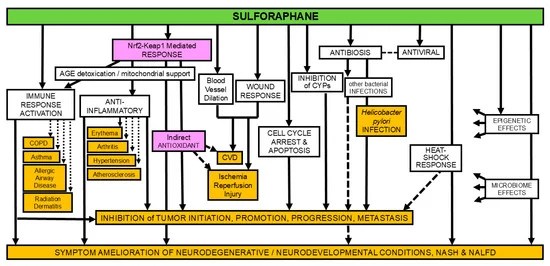
https://www.mdpi.com/2072-6643/17/8/1353 “Sulforaphane and Brain Health: From Pathways of Action to Effects on Specific Disorders”

A sulforaphane review

Here’s a 2025 review where the lead author is a retired researcher whose words readers might interpret as Science. As a reminder, unlike study researchers, reviewers are free to:

  • Express their beliefs as facts;
  • Over/under emphasize study limitations; and
  • Disregard and misrepresent evidence as they see fit.

Reviewers also aren’t obligated to make post-publication corrections for their errors and distortions. For examples:

1. After the 7. Conclusions section, there’s an 8. Afterword: I3C and DIM section. The phrase “As detailed in our earliest work on broccoli sprouts..” indicated a belief carried over from last century of the low importance of those research subjects.

Then, contrary to uncited clinical trials such as Our model clinical trial for Changing to a youthful phenotype with broccoli sprouts and Eat broccoli sprouts for DIM, “Broccoli sprouts had next to no indole glucosinolates.” And in the middle of downplaying I3C and DIM research, they stated: “There are 149 clinical studies on DIM and 11 on I3C listed on clinicaltrials.gov, suggesting a good safety profile. Potential efficacy and mode of action in humans are a subject of intense current investigation, though definitive answers will not come for some time.” 🧐

2. In the 3. Sulforaphane section, they asserted: “Glucosinolates such as glucoraphanin are ‘activated’ or converted to isothiocyanates such as sulforaphane by an enzyme called myrosinase, which is present in that same plant tissue (e.g., seed, sprout, broccoli head, or microgreen) and/or in bacteria that all humans possess in their gastrointestinal tracts.” and cited a 2016 book they coauthored that I can’t access.

The first 2021 paper of Broccoli sprout compounds and gut microbiota didn’t assert that “all humans” had certain gut microbiota that converted glucosinolates to isothiocyanates. That paper instead stated: “Human feeding trials have shown inter-individual variations in gut microbiome composition coincides with variations in ITC absorption and excretion, and some bacteria produce ITCs from glucosinolates.”

3. Nearly half of their cited references were in vitro cancer papers. I rarely curate those types of studies because of their undisclosed human-irrelevant factors. For example, from the second paper of Polyphenol Nrf2 activators:

Bioavailability studies reveal that maximum concentrations in plasma typically do not exceed 1 µM following consumption of 10–100 mg of a single phenolic compound, with the maximum concentration occurring typically less than 2 h after ingestion, then dropping quickly thereafter. In the case of the in vitro studies assessed herein, and with few exceptions, most of the studies employed concentrations >10 µM with some studies involving concentrations in the several hundred µM range, with the duration of exposure typically in the range of 24–72 h, far longer duration than the very short time interval of a few minutes to several hours in human in vivo situations.

applsci-15-00522-g001-550

https://www.mdpi.com/2076-3417/15/2/522 “The Impact of Sulforaphane on Sex-Specific Conditions and Hormone Balance: A Comprehensive Review”

A visible act of God

I’ve seen four acts of God in my life. This post is about the third.

The first two happened to me. It’s been one month since we all saw the fourth. The recipient characterized it last night when prompted by Elon Musk:

“It’s very much an act of God. It’s a miracle that it happened, and I’m honored by it, I’m honored by it.”

Forty years ago, when on my third submarine, I was in the control room, standing watch as the contact coordinator. I didn’t have much to do because we were on the surface at nighttime, rolling and pitching in heavy seas, and no other ships were crazy enough to be near us.

The officer on deck KD was alone topside in the sail. The lookout normally stationed with him had been sent below decks because of the seas.

The ship’s captain KS was on the #1 periscope scanning the horizon. The chief-of-the-boat was in the control room monitoring water coming through the latched-open hatch.

After one pitch, a hundred gallons gushed into the control room, followed by the unlatched hatch slamming shut. I remember thinking KD had a minute to live if he wasn’t already drowned.

The COB and the captain immediately started to crank open the hatch. Although there were hundreds of pounds of sea water on top pressing it shut, it couldn’t wait to be drained.

After what seemed like a long time, the COB and captain drenched themselves opening the hatch. They ran up the ladder, unhooked KD’s safety harness, and lowered him thirty feet into the control room.

The ship’s hospital corpsman checked KD’s vital signs as satisfactory, and he and the COB took KD below decks. After closing the hatch, the captain reversed course, and informed the chain of command of his decision.


I was raised to be religious. My first impulse is to not necessarily interpret what I see as coincidental.

Back to July 13: I haven’t understood viewpoints contrary to a visible act of God during this past month. Can people discard what we’ve all seen? Have we been propagandized sufficiently to believe what we’re told and not our lying eyes?


It may seem from studies I’ve curated on this blog that I think there’s something people can individually do about extending our lifespans. But I don’t believe that. And why is almost everybody doing things in their lives that encourage reducing their healthspans that may shorten their putative lifespans?

I don’t have an opinion as to whether an individual’s life has a determinable purpose revealed by an act of God. I didn’t get purposeful revelations the first two times acts of God happened to me like what happened to my namesake on the road to Damascus. It just wasn’t my time to die. I lost track of KD and KS before timely soliciting their opinions.

PXL_20240729_102521615

How to choose your medical professional

Two+ decades ago (before smart phones) I wrote a series of short books entitled How To Choose Your  Lawyer, ..Accountant, ..Financial Advisor. My customers were mainly public libraries.

This is a short post on choosing doctors, although I’ve fired all my doctors and don’t have one. Everything that’s happened this decade has made me wonder why I trusted doctors in the first place.

1. It takes certain behavioral quirks for doctors to assert they know better than you do about what is good for you. These behaviors usually have nothing to do with these doctors’ patients, but patients somehow believe doctors.

These behaviors are almost always doctors’ act-outs of early-life traumas of unfulfilled needs. Pain keeps people from feeling their actual histories, though, so we don’t deal with our real histories therapeutically until we absolutely have to.

If your doctor listens to you at all, it’s only because they are constantly vigilant for some way to fulfill their own unsatisfied needs. But that neither resolves anything for them, as an early need can’t be satisfied years later, nor has anything to do with what you need from a medical professional.

2. If you’ve read extensively about an area and have questions, a doctor may know less than you. That won’t keep them from gaslighting you due to 1. above, but it does keep you from getting what you need from them. Discussing facts you know with a medical professional who is intentionally ignorant about a medical subject gets you nowhere.

3. If your doctor has not publicly disclaimed their advocacy of this decade’s misguided genetic therapy, they are compromised and can’t be trusted. It doesn’t matter what else they said, because they weren’t honest about what they knew or should have known, as revealed by their actions or inactions.

For example, two studies published in June 2024 established that:

  • Neurologic issues (68% increase in depression, and a 44% increase in anxiety / dissociative / stress-related / somatoform disorders) followed COVID gene therapy: https://www.nature.com/articles/s41380-024-02627-0 “Psychiatric adverse events following COVID-19 vaccination: a population-based cohort study in Seoul, South Korea” (2,027,353 people)
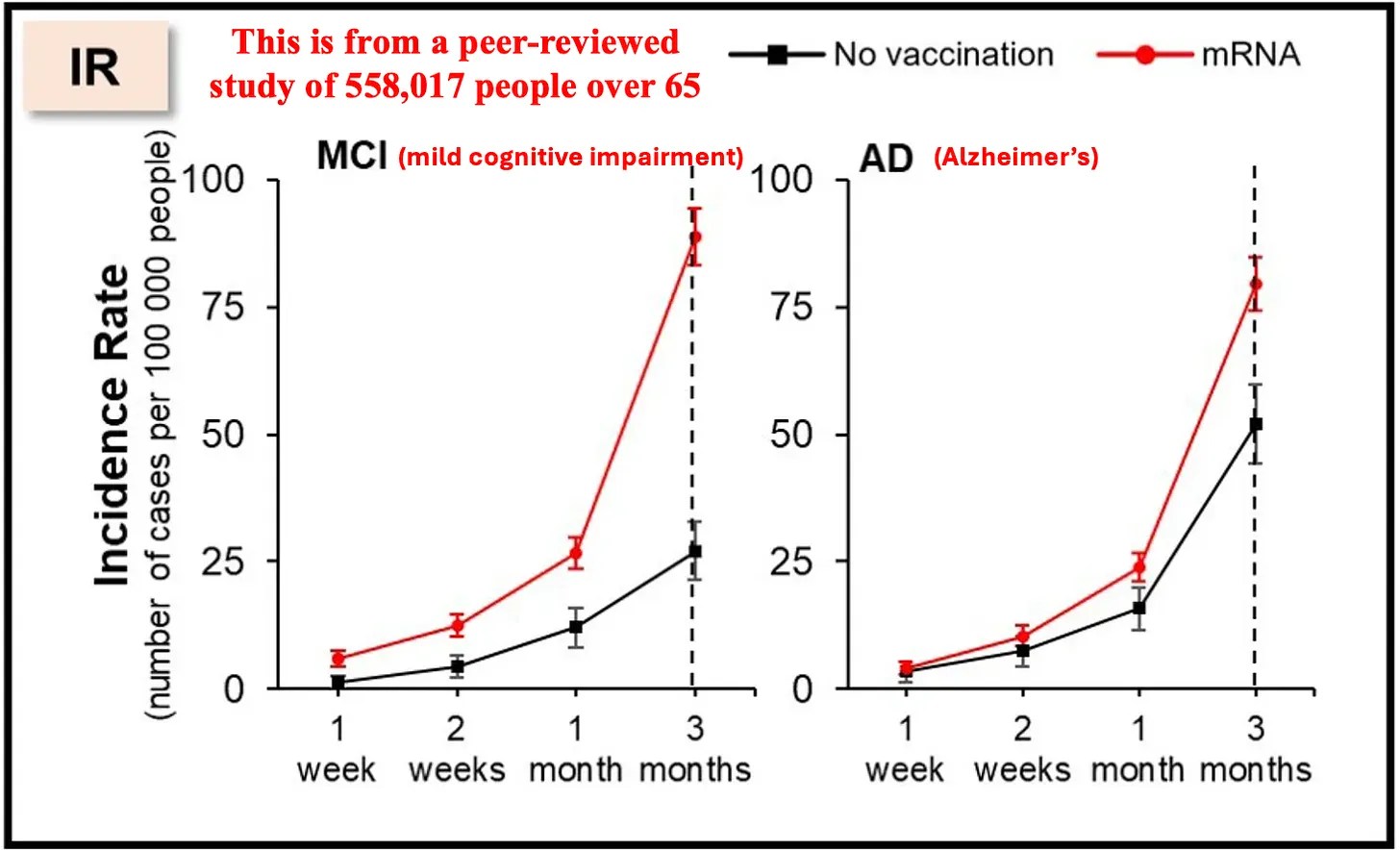
  • COVID gene therapy increased the risk of mild cognitive impairment 138% and the risk of Alzheimer’s by 23%: https://academic.oup.com/qjmed/advance-article-abstract/doi/10.1093/qjmed/hcae103/7684274 “A potential association between COVID-19 vaccination and development of Alzheimer’s disease” (558,017 people). These graphics showed rapidly increasing MCI and AD incidences. The study’s analysis showed incidence increases could not have happened by chance.

ea3f75cb-a071-4cc9-9bd8-0609d0ad8961_1466x890

A doctor’s only honest response to this malfeasance is to publicly apologize, and tell their trusting patients they will make it up to them by providing free healthcare to help mitigate results of their unprofessional conduct. If they tell you something else, it’s a distraction from consequences that are beyond words.

What can be done today to fulfill early unmet needs?

Got agitated earlier this week watching Tucker Carlson’s freely-available interview with a maniac who thinks he’s graduated into a higher state by worshiping the Great AI (Artificial Intelligence, aka Automated Internet, inhabited solely by robots) which will dictate every aspect of what to do with his life. Nevermind that behind the Great AI curtain are the same people who have lied to billions of us, especially during every day of this decade.

Are his current set of beliefs better than previous ones he had of putting a chip into everybody’s brain? What’s wrong with getting to live your own life?

5000

What I saw expressed in the interview was an exhausting pursuit of substitutes for feeling loved. I doubt that many others saw the same, because feeling unloved is so devastating we’ll do anything to avoid it.

But re-experiencing early memories and feelings of unmet needs in a therapeutic setting is the way to keep them from subsequently running our lives. Otherwise, we’ll develop unfulfilling substitutes for what we missed, with misdirected ideas and beliefs accompanied by their unconscious act-outs.

While speaking with a mother who is doing a terrific job of meeting her six-month-old’s needs, I attempted to contrast this interview with the experiences she and her husband are giving their child. Maybe if they read this post, my poor explanation will become clearer.


Wild persimmon trees’ eclipse shadows

PXL_20240408_192336638

Year Four of Changing to a youthful phenotype with sprouts

1. I’ve continued daily practices from Year Three to experience another year without being sick. I’ll get a set of Labcorp tests in two weeks to see if anything is sneaking up on me.

Foods are the same as Week 189 except I eat two raw eggs in the morning after Avena sativa oat sprouts. Supplements are the same except I stopped the ProdromeGlia plasmalogen precursor supplement due to it being out-of-stock.

It’s annoying because after a few days, my sense of smell and taste improvements reverted without ProdromeGlia. I’ve continued ProdromeNeuro, but it seems that its combination with ProdromeGlia was essential for stopping my left ulnar nerve elbow pain, which returned after a week without ProdromeGlia.

2. You may have noticed that earlier this month, a U.S. government agency was forced by a lawsuit to delete their 2021 propaganda pieces against a medication that’s safer than acetaminophen. I had a prescription that local pharmacies suddenly wouldn’t fill in August 2021.

Plenty of workarounds have been available, though. I hadn’t mentioned it before, but a prophylactic weekly intake may have played a part in me not being sick even one day this decade.

Another part was that my living and working in the Washington DC area for 30+ years through 2017 taught me, as an initial response, to not believe a single word of what a government employee said. I’ve since extended that to many other types of compromised people, such as medical professionals.

3. Our ancestors evolved to deal with everyday bacteria, viruses, and other pathogens. Train your immune system every day! disclosed that I was in Milan, Italy on the same February 22-23, 2020 weekend that ten towns were closed south of Milan. I still haven’t experienced any symptoms.

  • One factor in immune response was that fifteen years previous, I’d taken daily steps with yeast cell wall β-glucan to guard against the phenotypical immune system collapse of old age.
  • Another factor was that I’d ridden the filthy Washington DC Metro twice a day to-and-from work for years, and had already been exposed to who knows what.

Treat your gut microbiota well. Give them what they want – including cruciferous sprouts – and expect reciprocity.


what

Herding humans

Three recent papers cited a 2009 Herding in humans paper, starting with a 2024 modeling study by one of its coauthors showing that people have trouble purposefully acting randomly:

“In many tasks, human behavior is far noisier than is optimal. Yet when asked to behave randomly, people are typically too predictable.

Randomness is produced by inhibition of habitual behavior, striving for unpredictability. We verify these predictions in two experiments: people show the same deviations from randomness when randomly generating from non-uniform or recently-learned distributions.

While local sampling has previously explained why people are unpredictable in standard cognitive tasks, here it also explains why human random sequences are not unpredictable enough.”

https://journals.plos.org/ploscompbiol/article?id=10.1371/journal.pcbi.1011739 “Explaining the flaws in human random generation as local sampling with momentum”


A 2023 study tested extents to which people could be influenced to change their food preferences:

“We examined the effect of a descriptive norm on the choice between two similar products (vegetables or fruits). Participants were exposed to a norm promoting vegetables, fruits, or no norm.

A descriptive norm signaling that a greater proportion of previous participants had chosen a vegetable over a generally preferred fruit basket tripled the odds of participants choosing vegetables. These findings support the concept that descriptive norms act as heuristics that influence behavior in a relatively automatic manner.

The norm may have acted as a social proof heuristic to which participants conformed with little deliberation. Given that they were asked to add their name to a list of previous participants’ names and choices, they may have inferred that their choice would be visible to participants after them.

psif_a_2261178_f0001_oc

We found no to small effects of norms on intentions to consume fruits and vegetables or on taste expectations and experiences in a taste test, suggesting that these may not be key in explaining how descriptive norms lead to behavior change. Although the fruit norm did not affect choice, it did reduce negative fruit taste experiences compared to the no norm group.”

psif_a_2261178_f0002_oc

https://www.tandfonline.com/doi/full/10.1080/15534510.2023.2261178 “I’ll have what they’re having: a descriptive social norm increases choice for vegetables in students”


I selected this 2023 modeling study from many other modeling studies because it provided details about what researchers consider herding’s underlying premises to be:

“Herding does not come about because a central actor tells the agents to herd, but rather it is an emergent phenomenon of many local decisions, wherein the beliefs and thoughts of individuals become aligned. Herding is a form of social contagion, where one individual adopts the views of another, primarily because it increases their confidence in a decision they were making.

Herding is related to conformity, an important behavior in humans’ social learning, being a tendency to act as the majority of the individuals do. Conformity is defined as choosing the most frequent strategy observed by the player, instead of being guided by maximizing their personal payoffs.

The cost of herding occurs when someone decides to make the opposite decision of the rest of the herd. It is important to realize that these costs are only incurred if the actor has adopted a herd mentality. If they do not care about the herd, they do not suffer social costs.

In cases where everyone is herding, cooperation will prevail. Having a herding mentality has a positive overall effect, and can explain why cooperation prevails even without altruism, kin selection, tags, and reciprocity.”

https://www.cell.com/iscience/fulltext/S2589-0042(23)02004-7 “The evolution and social cost of herding mentality promote cooperation”

I’d guess that these coauthors never told their children that wrong is wrong even when everyone else is doing it.

It made me laugh that both the 2009 paper and this paper defined herding as solely happening on its own without any herders’ involvement. I have no doubts that researchers are not allowed to investigate and/or publish factual evidence on more advanced techniques of herding humans, especially those that have been widely used during this decade.

A good activity for bad weather days

A free educational series recorded in 2021-2022 available at https://drgoodenowe.com/dr-goodenowes-educational-seminars/ takes the viewer through underlying research and principles of Dr. Goodenowe’s approach to health. It’s advertised as lasting four hours, but took me two days to view.

The series’ discussions and references are background material to better understand later presentations and interviews. Points of interest included:

  • Seminar B100 shows that the metabolomic profile of people who regularly eat broccoli is different than others.
  • B109 clarifies how peroxisomal function is improved through resistance exercise and intermittent fasting.
  • C103 and C104 show how plasmalogens act against neurodegeneration (Parkinson’s disease and multiple sclerosis).

Texts below videos are additional information, not transcripts. C101 text is historically informative.


The B200 ProdromeScan tutorial will take more study. But unlike Labcorp tests, ordering a ProdromeScan requires using a practitioner in Dr. Goodenowe’s network.

I sent the following to Prodrome customer service earlier this month:

Please add me to your approved list for ProdromeScan.

Customer service replied:

“We only add health professionals to an approved list, not individuals.”

I responded:

Good morning. I looked at the websites of doctors who are associated with Dr. Goodenowe who are near me. All of them are too compromised for me to establish a doctor / patient relationship. But I’m glad they left up their blog posts from earlier this decade so I could see who they really were before I reached out to them.

I request an exception to the policy.

Customer service replied:

“There is no exception that can be made to this policy. You need to be a patient of a certified practitioner.”

I’ll escalate my request before my 90-day trial of Prodrome Glia and Neuro products ends so I can get an appropriate metabolomic status. Right now, I won’t involve someone I can’t trust just to know my ProdromeScan information that’s additional to next week’s Labcorp tests.

My treatment-result metabolomic data is probably not mature today on Day 29 of ProdromeGlia and ProdromeNeuro supplementation, resistance exercise, and intermittent fasting. I otherwise wouldn’t have experienced these two events:


I have a quibble with the series’ recommendations for taking N-acetyl cysteine. Relevant views and research:

Switch on your Nrf2 signaling pathway pointed out:

“We use NAC in the lab all the time because it stops an Nrf2 activation. So that weak pro-oxidant signal that activates Nrf2, you switch it off by giving a dose of NAC. It’s a potent antioxidant in that right, but it’s blocking signalling. And that’s what I don’t like about its broad use.”

If someone bombs themself everyday with antioxidants, they’re doing nothing to improve training of their endogenous systems’ defensive functions. What happens when they stop bombing? One example was a 2022 human study that found GlyNAC-induced improvements dissolved back to baseline after supplements stopped.

Also, Precondition your defenses with broccoli sprouts highlighted NAC’s deleterious effects on autophagy and lysosome functions:

“TFEB activity is required for sulforaphane (SFN)-induced protection against both acute oxidant bursts and chronic oxidative stress. SFN-induced TFEB nuclear accumulation was completely blocked by pretreatment of cells by N-acetyl-cysteine (NAC), or by other commonly used antioxidants. NAC also blocked SFN-induced mRNA expression of TFEB target genes, as well as SFN-induced autophagosome formation.”

If a secondary goal of taking NAC per is also necessary for the formation of glutathione, taurine can do that without an antioxidant bomb. Taurine supplementation will free up cysteine to do things other than synthesize taurine, like synthesize glutathione.


PXL_20231123_194849211.MP

An ulnar nerve anecdote

Two 2023 papers demonstrated the weak-sauce treatments currently offered to resolve elbow ulnar nerve pain:

“This case report investigated the use of ultrasound-guided nerve hydrodissection and platelet releasate injection for treating ulnar neuritis at the elbow.

  • The patient’s symptoms were first managed with home exercise and ulnar nerve hydrodissection at the elbow, which decreased but did not resolve her pain.
  • Platelet releasate injection of the ulnar nerve at the elbow was subsequently performed. Six weeks post-procedure, the patient reported additional pain improvement.

Despite these results, the patient was not completely symptom-free. Persistent symptoms were attributed to her concomitant neurogenic thoracic outlet syndrome.”

https://www.cureus.com/articles/133241-platelet-releasate-injection-as-a-novel-treatment-for-ulnar-neuritis-at-the-elbow-a-case-report/ “Platelet Releasate Injection as a Novel Treatment for Ulnar Neuritis at the Elbow: A Case Report”

When a diagnosis concludes with the word ‘syndrome’, we can be assured that medical professionals don’t know any specific cause. Expect physical therapy and/or drugs and/or surgery to be recommended, which will only address symptoms, not causes.

These practitioners proposed two experimental treatments, and somehow, the patient agreed to be a lab rat for both. If they were repeatedly questioned as to whether those two treatments would address causes, I’d expect responses similar to “That’s all we can do for you.”

In line with this decade’s revelations about the medical profession, the patient was also gaslighted. These practitioners asserted “changes to the patient’s lifestyle” as a reason neither treatment worked, although no such lifestyle changes were indicated.

Medical professionals are people whose early life experiences impel them to control other people with a license, among other driving factors. They won’t discuss items outside their ideas and beliefs, because these are defenses against their and their patients’ realities.


Next is a study of 111 elbow neuropathy patients (average age 55, median follow-up period of 880 days), one third of whom had various surgeries:

“There are three main potential mechanisms of recovery after nerve lesion: (1) resolution of conduction block, (2) collateral reinnervation, and (3) nerve regeneration.

  • Nerve function in chronic focal compression/entrapment neuropathies seems to improve mainly due to resolution of the conduction block and collateral reinnervation.
  • Contribution of nerve regeneration seems to be minor.

The majority of axons lost in chronic focal neuropathies probably never recover. Further studies using quantitative methods are needed to validate present findings.”

https://www.mdpi.com/2077-0383/12/12/3906 “No Major Nerve Regeneration Seems to Occur during Recovery of Ulnar Neuropathy at the Elbow”


Another interesting thing may have unexpectedly started with my 90-day trial of Prodrome Glia and Neuro products. Here’s an abbreviated look at what I’m tracking that omits intermittent fasting data:

day 7-25

Left ulnar nerve pain stayed the same or decreased two hours after a ProdromeGlia loading dose from Days 11-21. After adding a ProdromeNeuro loading dose at Day 22, my left ulnar nerve pain has unexpectedly stopped.

Any resistance exercise I’ve done during the past month would have aggravated my left ulnar nerve prior to the current regimen. Yesterday I clumped together reverse curls, regular bicep curls, bench presses, and triceps extensions, in that order, two sets each. I used lower weights than in the past, squeezed at the top of concentric motion, and returned slowly with eccentric motion for each rep.

Today on Day 25 the exercised muscles burn as expected, especially due to eccentric motion. But my left ulnar nerve is fine.

At the beginning, I thought that ProdromeGlia might eventually have an effect on left ulnar nerve pain, but not ProdromeNeuro. The first paper noted “The ulnar nerve begins in the axilla as a continuation of the medial cord of the brachial plexus, originally arising from the C8 and T1 nerve roots of the spinal cord.” I’ll guess that something upstream of my left ulnar nerve may also be involved in recent results.

Don’t agree with the second paper’s unevidenced assertion that “The majority of axons lost in chronic focal neuropathies probably never recover.” I’ve had intermittent left ulnar nerve numbness and pain for over five years, which is a lot longer than the 880-day median follow-up period of that paper.

Dr. Goodenowe presented his combined daily plasmalogen precursor dose as ~100 mg/kg. My analogous combined daily plasmalogen precursor loading doses are 7200 mg, appropriate for a person who weighs 72 kg. I weigh 155 lbs. / 70 kg.

More testing is warranted, of course. Maybe I’m just in-between an intermittent occurrence of left ulnar pain. So far, the way my current regimen is playing out, every day has something to make it Thanksgiving Day.

Brain restoration with plasmalogens

In this 2023 presentation for a professional audience, Dr. Dayan Goodenowe showed an example of what could be done (in the form of what he personally did at ages 53-54) to restore and augment brain structure and function over a 17-month period by taking plasmalogens and supporting supplements:

https://drgoodenowe.com/recording-of-dr-goodenowes-presentation-from-the-peptide-world-congress-2023-is-now-available/

Follow the video along with its interactive transcript. Restorative / augmentative supplements included:

1. Nutritional Supplementation Strategy

Forms of MRI used to document brain structure and function changes were:

2. Advanced MRI Technologies

Brain volume decreases are the rule for humans beginning at age 40. Dr. Goodenowe documented brain volume increases, which aren’t supposed to happen, but did per the below slide of overall results:

3. Reversing Brain Shrinkage

“From a global cortical volume and thickness perspective, 17 months of high-dose plasmalogens reversed ~15 years of predicted brain deterioration.”


Specific increased adaptations in brain measurements over 17 months included:

  1. Cortical thickness .07/2.51 = +3%.
  2. White matter microstructure fractional anisotropy +8%.
  3. Nucleus accumbens volume +30%.
  4. Dopaminergic striatal terminal fields’ volume +18%.
  5. Cholinergic cortical terminal fields’ volume +10%.
  6. Occipital cortex volume +10%.
  7. Optic chiasm volume +225%.
  8. Nucleus basalis connectivity.
  9. Neurovascular coupling signal controlled by noradrenaline integrity.
  10. Amygdala volume +4% and its connectivity to the insula, indicating ongoing anxiety and emotional stress response.
  11. Parahippocampus volume +7%.
  12. Hippocampus fractional anisotropy +5%.

No changes:

  1. Amygdala connectivity to the ventral lateral prefrontal cortex, the same part of the brain that relates to placebo effect.
  2. Hippocampus connectivity.

Decreased adaptations in brain measurements included:

  1. White matter microstructure radial diffusivity -10%.
  2. Amygdala connectivity to the anterior cingulate cortex to suppress / ignore / deny anxiety response.
  3. Amygdala connectivity to the dorsal lateral prefrontal cortex.
  4. Entorhinal cortex volume -14%.
  5. Hippocampus volume -6%.
  6. Hippocampus mean diffusivity (white matter improved, with more and tighter myelin) -4%.

The other half of this video was a lively and wide-ranging Q&A session.


The referenced 2023 study of 653 adults followed over ten years showed what brain deterioration could be expected with no interventions. Consider these annual volume decrease rates to be a sample of a control group:

etable 3

https://jamanetwork.com/journals/jamanetworkopen/fullarticle/2806488 “Characterization of Brain Volume Changes in Aging Individuals With Normal Cognition Using Serial Magnetic Resonance Imaging”

Also see a different population’s brain shrinkage data in Prevent your brain from shrinking.


The daily plasmalogen precursor doses Dr. Goodenowe took were equivalent to 100 mg softgel/kg, double the maximum dose of 50 mg softgel/kg provided during the 2022 clinical trial of cognitively impaired old people referenced in Plasmalogens Parts 1, 2, and 3.

He mentions taking 5 ml in the morning and 5 ml at night because he used the Prodrome oil products. 1 ml of a Prodrome oil plasmalogen precursor product equals 900 mg of their softgel product.


“My brain is trying to minimize long-term effects of pain/stress by suppressing my memory of it. But this can only go on for so long before it becomes an entrenched state.

I have solved the sustenance side of the equation. I need to work harder to solve the environmental side.”

While I agree that we each have a responsibility to ourselves to create an environment that’s conducive to our health, the above phenomenon isn’t necessarily resolvable by changing an individual’s current environment. My understanding is that long-term effects of pain, stress, and related human experiences are usually symptoms of causes that started much earlier in our lives.

Adjusting one’s present environment may have immediate results, but probably won’t have much therapeutic impact on long-term issues. Early life memories and experiences are where we have to gradually go in order to stop being driven by what happened back then.

See Dr. Arthur Janov’s Primal Therapy for its principles and explanations. I started Primal Therapy at a similar age, 53, and continued for three years.


Continued with Part 2.

Three years after

A delayed commemoration of Week 9 of Changing to a youthful phenotype with broccoli sprouts:

Yes, Awakening continues to be a common occurrence due to continuous broccoli compound intake. Understanding what I didn’t understand yesterday. Noticing what I couldn’t see yesterday. I’m sure there’s more to go.

Appreciate last week’s experiences with people associated with my fourth grandchild’s birth. So miraculous, so beautiful that everything happened when it needed to. She’s perfect.

The current idiocracy prohibits saying anymore.


Ripe wild persimmons. They really taste good if you wait until they’re completely ripened.

PXL_20231003_111355807

Acetyl-L-carnitine dosing

Haven’t curated acetyl-L-carnitine papers recently. Here are three 2023 studies, beginning with a human case report:

“It is believed that 75% of the required amount of carnitine is taken from diet and the remaining 25% is synthesized in the body. Long-term use of a carnitine-free diet is thought to increase the risk of carnitine deficiency.

Dosage for long-term tube-fed patients with disorders of consciousness and convulsive seizures, such as in the present cases, is not specified. Instructions accompanying the medication list gastrointestinal symptoms such as nausea, vomiting, and diarrhea as side effects of L-carnitine. They indicate a maximum dosage of 3 g/day, and a maximum single dose of 1 g.

L-Carnitine is efficiently absorbed in the gastrointestinal tract when taken in small amounts, but when taken in large amounts, the transporter is saturated and bioavailability is only about 10%–20%. Although safety of oral L-carnitine administration is considered high because there is an upper limit to the amount that can be absorbed, clinicians should remain aware of side effects noted above.

To the best of our knowledge, this is the first report in which L-carnitine was administered to a patient with impaired consciousness after stroke with the result that symptoms improved. It is possible that carnitine deficiency is overlooked in some patients in rehabilitation wards, and measurement of ammonia may be useful in its detection. Because carnitine deficiency might interfere with active rehabilitation, nutritional management with attention to carnitine deficiency is important in rehabilitation wards.”

https://www.jstage.jst.go.jp/article/prm/8/0/8_20230019/_html/-char/en “Disorders of Consciousness after Subacute Stroke Might Partly be Caused by Carnitine Deficiency: Two Case Reports”

I currently take one gram of acetyl-L-carnitine three times a day.


Next is a clinical trial with amyotrophic lateral sclerosis (ALS) patients that used two different doses of acetyl-L-carnitine:

“Our findings did not confirm an effect of ALCAR 3 g/day on survival in ALS subjects at 24 months. An effect was observed in those treated with ALCAR 1.5 g/day.

In addition, we did not detect an effect on self-sufficiency at 12 months as previously seen in the pilot trial. These differences could be explained by:

  • The study design (retrospective observational study vs prospective randomized trial);
  • Selection bias (subjects from the real-world clinical practice are less selected than those included in a clinical trial); and
  • Drug compliance (subjects enrolled in a clinical trial perform several onsite evaluations in which compliance is verified by tablets accounting, while in clinical practice this is not done).

Our hypothesis is that the presence of residual confounding might explain our unexpected results. Residual confounding refers to the presence of an unmeasured or uncontrolled variable that could affect the relationship between treatment (ALCAR) and outcome.

This study provided additional information on the potential effect of ALCAR on disease progression and survival, and adds evidence to justify the use of ALCAR in ALS subjects.”

https://link.springer.com/article/10.1007/s00415-023-11844-6 “Retrospective observational study on the use of acetyl-L-carnitine in ALS”

This study’s dosing method wasn’t clear on exactly how doses were administered every day. I’ll guess that if both 1.5 and 3 grams were given all at once, they might have been roughly equivalent doses per the first paper’s cited bioavailability saturation effect.


Next is a rodent aging study:

“The aim of this study was to examine effects of long-term L-Carnitine (β-hydroxy-γ-trimethylaminobutyric acid, LC) administration on cardiomyocyte contraction and intracellular Ca2+ transients in aging rats. LC (50 mg/kg body weight/day) was dissolved in distilled water and orally administered for a period of 7 months.

LC increased cardiomyocyte cell shortening and resting sarcomere length. LC supplementation led to a reduction in resting [Ca2+]i level and an increase in the amplitude of [Ca2+]i transients, indicative of enhanced contraction. Consistent with these results, decay time of Ca2+ transients also decreased significantly in the LC-treated group.

Long-term administration of LC may help restore Ca2+ homeostasis altered during aging, and could be used as a cardioprotective medication in cases where myocyte contractility is diminished.”

https://link.springer.com/article/10.1007/s00418-023-02215-3 “L-Carnitine improves mechanical responses of cardiomyocytes and restores Ca2+ homeostasis during aging” (not freely available)

A human equivalent of this study’s daily dose is (50 mg x .162) x 70 kg = 567 mg. A human equivalent of this study’s duration using the maximum lifespan method is (7 months x 32.2) = 225.4 months. The subjects began at 11 months old (human equivalent age 29.5 years) and ended at 18 months old (human equivalent age 48.3 years).

This study illustrated how heart dysfunctions with subclinical symptoms advance with aging, and that starting to do something preventative before human equivalent age 30 may work.


PXL_20230814_101039592

The era of following wise old men ended a long time ago

I try to stay away from papers that waste resources or detract from science. This 2023 lab study irked me by emphasizing risks of home sprouting without also pointing out the many benefits.

These researchers, who obviously don’t home sprout, used the supplier I get organic broccoli seeds from as a punching bag. They consulted a broccoli sprouts expert to recommend bleaching seeds before sprouting.

Fine. Do these people ever eat a salad without also bleaching those ingredients? Do they risk eating at restaurants? How do they get motivated to take the risk of leaving their dwelling/dormitory?

What did our ancestors eat? Was it luck that they didn’t exterminate themselves with their food hygiene? Or have humans adapted to dealing with all types of pathogens?

The expert is a few weeks older than I am, and has completely white hair. I’ve had dark hair since Week 8 of eating broccoli sprouts every day, which reflects ameliorating system-wide inflammation and oxidative stress. Next month will be three and a half years of this daily practice.

If the expert followed what their research investigated, they’d have dark hair, too. White hair and dark hair are both epigenetic. It’s every human’s choice whether or not we take responsibility for our own one precious life.

https://www.mdpi.com/2304-8158/12/4/747 “Seed Disinfestation Practices to Control Seed-Borne Fungi and Bacteria in Home Production of Sprouts”


PXL_20230802_094654487

Week 120 of Changing to a youthful phenotype with sprouts

It was time for an annual physical last Wednesday. My focus was to see whether reducing sulforaphane intake per Week 87 had the desired effect on thyroid measurements.

That and other adjustments did! Readings of TSH 2.91 (0.45 – 4.50 uIU/mL), free T4 1.22 (0.82 − 1.77 ng/dL), and free T3 2.4 (2.0 – 4.4 pg/mL) were all in-range. 🙂

thyroid


I won’t repeat the Week 63 workbook calculations done after last year’s annual physical. To me, that’s another form of magical thinking.

Every explanation of those reference ranges, and optimal ranges built from all-cause mortality statistics, requires a suffix “of people who didn’t positively change their healthspan and lifespan.” What value is there in optimizing (pick a measurement) against those outcomes? Why compare my efforts, or results, or any other aspect of my life, to people who didn’t actionably care about their one precious life?

I’m not deflecting with poor measurements:

  • 3 of the 5 values in last year’s optimal ranges got better, and the other 2 stayed the same; and
  • 2 of the 4 values that weren’t in last year’s optimal ranges came into those ranges, and the other 2 got better but stayed outside an optimal range.

We each have a lot at stake. Bad things like diseases of old age happen on their own. If we want good things to happen, we have to make them happen.

Consider this from The impact of transgenerational epigenetic inheritance and early life experiences:

“Every disease is connected to the immune system.”

Are people making good choices every day for their immune systems?

PXL_20220731_093534095.NIGHT