Epigenetic clocks and entropy

Two epigenetic clock papers, starting with a 2022 rodent study:

“We tested performance of new pan-tissue and liver-specific epigenetic mouse clocks, evaluating how these related to metabolic states, genotype-dependent life expectancy, and methylome entropy.

Entropy, a measure of noise and information loss, increases as a function of time and age. In context of the methylome, higher entropy represents a tendency for the highly organized hypo- and hypermethylated landscape to erode towards a more hemi-methylated [discordant] state.

This increase in disorder, particularly across CpGs that are highly conserved, could have important functional consequences. Entropy of age-gain CpGs was increased by high fat diet, and predicted strain lifespan.

Overall, we find that mice belonging to longer-lived BXD strains had a more youthful methylome with lower entropy at age-gain CpGs. Entropy of age-loss CpGs on the other hand, was related to body weight.

entropy associations

(h) Residual plot (adjusted for age, diet, BWF [final body weight], glucose, cholesterol, and batch) shows an inverse association between entropy at age-gain sites, and lifespan. (i) A similar residual plot shows the association between BWF and age-loss entropy.

The rate of noise accumulation, an aspect of epigenomic aging, can vary between individuals. Resilience or susceptibility to higher noise may be partly modulated by diet as well as genetic factors.

Convergence of evidence from genetic and gene expression analyses indicates that genes involved in metabolism and energy balance contribute to age-dependent restructuring of the methylome, which in turn forms the basis of epigenetic clocks.”

https://elifesciences.org/articles/75244 “Genetic loci and metabolic states associated with murine epigenetic aging”


Reference 28 was a 2021 human study cited for “identified the APOE locus as the strongest GWAS hit for two measures of biological age acceleration”

“We observed inverse APOE e2 and e4 associations and unique pathway enrichments when comparing two biological age measures. Genes associated with BioAgeAccel were enriched in lipid related pathways, while genes associated with PhenoAgeAccel showed enrichment for immune system, cell function, and carbohydrate homeostasis pathways, suggesting the two measures capture different aging domains.

Our study reaffirms that aging patterns are heterogeneous across individuals, and the manner in which a person ages may be partly attributed to genetic predisposition. Understanding personalized aging susceptibility phenotypes has important implications for primary and secondary disease interventions.”

https://onlinelibrary.wiley.com/doi/10.1111/acel.13376 “Genetic associations for two biological age measures point to distinct aging phenotypes”

PXL_20220322_191309272

Epigenetic components for evaluating a person’s physical fitness

This 2022 human study incorporated DNA methylation measures of four physical fitness parameters into a new epigenetic clock:

“Our work introduces new DNAm biomarkers for fitness parameters of gait speed (walking speed), hand grip strength, forced expiratory volume in one second (FEV1), and maximal oxygen uptake (VO2max). These DNAm biomarkers represent new tools for researchers with access to blood samples and interest in epigenetic components to fitness.

Our DNAm biomarker fitness parameter biomarkers are not intended to replace true physical fitness measurements. Instead, these DNAm biomarker estimates provide an epigenetic component to evaluating a person’s physical fitness. This biomarker integrates the established DNAm prediction of mortality risk GrimAge.

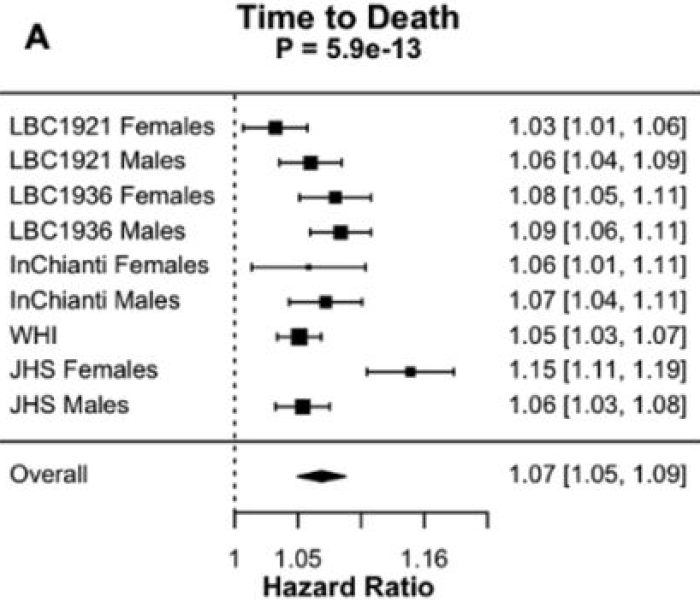
DNAmFitAge provides an easily interpretable tool to relate physical fitness to biological age. Adjusting DNAmFitAge for chronological age generates a novel measure of epigenetic age acceleration, FitAgeAcceleration, which is informative for physical activity level, mortality risk, coronary heart disease risk, comorbidities, and disease-free status across several large validation datasets.

ttd

The age-adjusted version FitAgeAcceleration provides a novel measure of epigenetic age acceleration explained through physical fitness. This research demonstrates biological age can be estimated using DNAm fitness parameter biomarkers which are dependent on exercise lifestyle.”

https://www.medrxiv.org/content/10.1101/2022.03.21.22272043v1.full-text “DNAmFitAge: Biological Age Indicator Incorporating Physical Fitness”


I walk quickly on the beach almost every day at > 3 mph. I occasionally see younger people eclipse my gait speed, which makes me try harder. 🙂

Advanced glycation / lipoxidation end products

Three papers on what can be expected from AGEs, beginning with a 2022 review:

“Carbonyl stress is a condition characterized by an increase in the steady-state levels of reactive carbonyl species (RCS) that leads to accumulation of their irreversible covalent adducts with biological molecules. In addition to causing damage directly, the RCS adducts advanced glycation end-products (AGEs) and advanced lipoxidation end-products (ALEs) elicit chronic inflammation through receptor-mediated mechanisms.

Endogenously formed RCS and AGEs/ALEs accumulation induced by hyperglycemia, hyperlipidemia, and oxidative stress have been long recognized as critical factors in pathogenesis of cardiovascular, renal, and eye complications. The role of dietary glyco/lipotoxins in vascular complications is debated, as the metabolic fate of most ingested AGEs/ALEs and RCS remains unknown, and their contribution to systemic carbonyl stress is uncertain.

rcs ages ales

Plasma glucose spikes after a meal rich in readily absorbable carbohydrates, particularly in association with an unfavorable lipid composition, may promote proinflammatory and pro-oxidant responses by inducing a transient increase in RCS levels and consequent AGE formation. As protein-bound AGEs are not easily eliminated from the body, they can eventually accumulate in vascular and metabolic tissues because of repeated cycles of nutrient-induced carbonyl stress, favoring establishment of systemic low chronic inflammation.

Post-challenge glucose excursions are associated with a transient increase in circulating RCS levels, particularly in diabetic and prediabetic individuals. Diet-induced weight loss is associated with decreases in postprandial carbonyl stress in obese subjects. Data on lean and metabolically healthy individuals are limited.”

https://www.mdpi.com/2072-6643/14/5/1061/htm “Food-Related Carbonyl Stress in Cardiometabolic and Cancer Risk Linked to Unhealthy Modern Diet”

I understand that researchers feel obligated to end papers with suggestions for future research. It’s a little irritating, though, when these are pie-in-the-sky.

People who wait for endogenous vs. exogenous AGE / ALE questions to be answered in their lifetimes are at risk for giving themselves diseases.


A second paper is a 2021 human cell study:

“Sulforaphane (SFN) found in cruciferous vegetables is a potent activator of the Nrf2 transcription factor, the master regulator of redox biology in mammalian cells. Nrf2 modulates expression of several antioxidant enzymes, such as γ-glutamylcysteine ligase (γ-GCL). This is the rate-limiting step in synthesis of the major non-enzymatic antioxidant glutathione (GSH). Silencing of Nrf2 or inhibition of GSH synthesis abolished SFN-promoted mitochondrial protection in cells exposed to methylglyoxal (MG), a pro-oxidant agent whose levels are high in several human diseases.

sfn vs mg

MG is a reactive dicarbonyl presenting both endogenous (e.g. glycolysis) and exogenous (e.g. food cooking) sources. MG induces neurotoxicity, at least in part, by affecting mitochondrial function, including a decline in oxidative phosphorylation (OXPHOS) system activity, bioenergetics failure, and redox disturbances.

We found that SFN prevented MG-induced OXPHOS dysfunction and mitochondrial redox impairment. SFN protected mitochondria of MG-challenged cells by a mechanism involving the Nrf2/γ-GCL/GSH axis.”

https://link.springer.com/article/10.1007/s11064-020-03204-x “The Isothiocyanate Sulforaphane Depends on the Nrf2/γ‑GCL/GSH Axis to Prevent Mitochondrial Dysfunction in Cells Exposed to Methylglyoxal” (not freely available)

Although this study’s 5 µM sulforaphane treatment is achievable in human plasma, that level isn’t sustainable for 24 hours as the study did in vitro. Would sulforaphane’s in vivo effects likewise prevent methylglyoxal from inducing AGEs?


A third paper is a 2022 human study:

“AGEs have been widely reported to play an important role in osteoporosis (OP). We investigated the effect of AGEs on osteoblast function and underlying mechanisms.

op lumbar vertebrae

Levels of bone mineral density (BMD), serum AGEs, and fasting blood glucose (FBG) were measured in patients with OP and healthy individuals:

  • Patients with OP had a higher level of serum AGEs and FBG compared with healthy individuals.
  • The level of serum AGEs in patients with OP was negatively correlated with BMD, but was positively correlated with FBG.
  • AGEs and serum from patients with OP markedly inhibited hFOB1.19 osteoblast cell proliferation, alkaline phosphatase production, and mineralized nodule formation.
  • Apoptosis and ferroptosis were significantly promoted by AGEs and serum from patients with OP.
  • Serum from OP patients with T2DM caused stronger effect than that from OP patients with normal FBG.

Collectively, AGEs could disrupt functions of osteoblasts by inducing cell ferroptosis, thus contributing to OP.”

https://www.spandidos-publications.com/10.3892/mmr.2022.12656 “Advanced glycation end products promote osteoporosis by inducing ferroptosis in osteoblasts”

Reversing hair greying

I’ll highlight this 2021 human study’s findings regarding stress:

“We profiled hair pigmentation patterns (HPPs) along individual human hair shafts, producing quantifiable physical timescales of rapid greying transitions. White/grey hairs that naturally regain pigmentation across sex, ethnicities, ages, and body regions, quantitatively define reversibility of greying in humans.

A systematic survey of two-colored hairs on the scalp of a 35-year-old Caucasian male with auburn hair color over a 2-day period yielded five two-colored hair shafts (HSs) from the frontal and temporal scalp regions. Unexpectedly, all HSs exhibited reversal. HPP analysis further showed that all HSs underwent reversal of greying around the same time period.

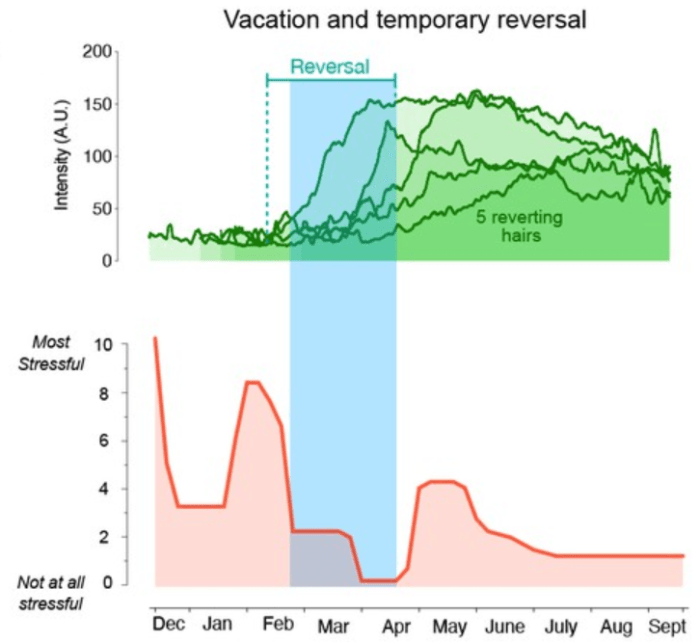
A retrospective assessment of psychosocial stress levels using a time-anchored visual analog scale (participants rate and link specific life events with start and end dates) was then compared to HPPs. Reversal of greying for all hairs coincided closely with decline in stress and a 1-month period of lowest stress over the past year (0 on a scale of 0–10) following a 2-week vacation.

vacay

We were also able to examine a two-colored hair characterized by an unusual pattern of complete HS greying followed by rapid and complete reversal plucked from the scalp of a 30-year-old Asian female participant with black hair. HPP analysis of this HS showed a white segment representing approximately 2 cm.

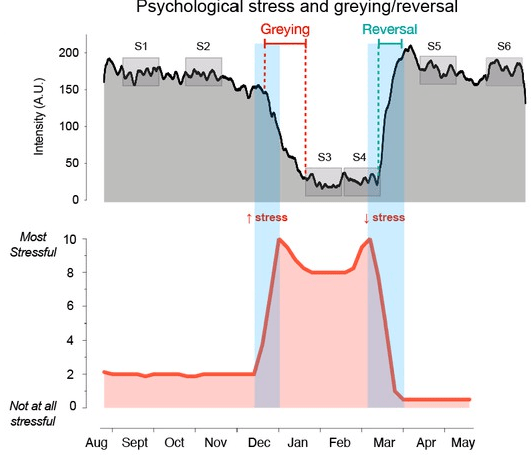
Quantitative life stress assessment revealed a specific 2-month period associated with an objective life stressor (marital conflict and separation, concluded with relocation) where the participant rated her perceived stress as highest (9–10 out of 10) over the past year. The increase in stress corresponded in time with complete but reversible hair greying.

separation

We document a complete switch-on/off phenomena during a single anagen cycle. Proteomic features of hair greying directly implicate multiple metabolic pathways that are both reversible in nature and sensitive to stress-related neuroendocrine factors.

This new method to quantitatively map recent life history in HPPs provides an opportunity to longitudinally examine the influence of recent life exposures on human biology. Additional prospective studies with larger sample sizes are needed to confirm robust reproducibility and generalizability of our findings.”

https://elifesciences.org/articles/67437 “Quantitative mapping of human hair greying and reversal in relation to life stress”

See Reversing hair greying, Part 2 for selected papers through 2024 that cited this study.

Predicting atherosclerosis

Starting this blog’s eighth year with a 2022 epigenetic clock study that assessed young people’s common blood tests fifteen and twenty years later:

GrimAge acceleration (GAA), an epigenetic marker that represents physiologic aging, is associated with atherosclerotic cardiovascular disease. We used multivariable regression models to examine associations of Y15 and Y20 GAA estimates with plasma lipid levels measured at prior examination years (Y0, Y5, and Y10) and concurrently: triglycerides (TG), low-density lipoprotein cholesterol (LDL-C), and high-density lipoprotein cholesterol (HDL-C) levels:

  • Each 1-SD higher cumulative TG level was associated with an average 0.73 ± 0.12 years older GAA;
  • Each 1-SD higher cumulative HDL-C level was associated with an average 0.57 ± 0.17 years younger GAA;
  • Associations between TG and GAA were stronger among female and Black participants; and
  • Associations between HDL-C and GAA were stronger among female and White participants.

lipid-profiles-and-GrimAge-acceleration

We observed that elevated TG and low HDL-C levels in young adulthood are associated with accelerated midlife epigenetic aging, and epigenetic aging mediates some of the well-described associations between elevated TG levels in early life and subclinical atherosclerosis in middle age. These findings suggest that maintaining optimal lipid levels in early adulthood may help to slow epigenetic aging, which reflects delays in the onset of age-related diseases like atherosclerosis.”

https://clinicalepigeneticsjournal.biomedcentral.com/articles/10.1186/s13148-021-01222-2 “Plasma lipid profiles in early adulthood are associated with epigenetic aging in the Coronary Artery Risk Development in Young Adults (CARDIA) Study”


Which is better for resolving a health situation?

  • Hope for luck / providence before subclinical symptoms become clinical problems?
  • Do nothing constructive, and depend on interventions after problems occur?
  • Take responsibility for your own one precious life?

PXL_20220131_201832917

An epigenetic regulator of vascular aging

This 2022 rodent and human cell study investigated the smooth muscle cell mineralocorticoid receptor:

“Vascular stiffness increases with age and independently predicts cardiovascular disease risk. Epigenetic changes, including histone modifications, accumulate with age, but the global pattern has not been elucidated nor are the regulators known.

Rising mineralocorticoid receptor (MR) in aging vascular smooth muscle cells downregulates EZH2 to globally shift to a more open chromatin thereby allowing MR to be recruited to promoters to transcriptionally upregulate target genes involved in vascular stiffness. This mechanism provides multiple potential targets to prevent vascular stiffness in aging humans.

cvac007f8

We demonstrate for the first time that:

  1. MR expression increases with age in primary, low passage, human aortic smooth muscle cell (SMC) and correlates with age in whole aortic tissue from aging humans;
  2. The global proteomic profile of histone modifications in mouse vessels changes profoundly with aging with a significant overall decrease in H3K27 methylation;
  3. Expression of H3K27 methyltransferase EZH2 decreases with age in mouse vessels and in human SMCs in a MR-dependent manner and negatively correlates with MR expression in whole human aortic tissue;
  4. The aging-induced decline in EZH2 associates with reduced H3K27 methylation and increased H3K27 acetylation in vitro and in vivo;
  5. These epigenetic changes in aging human SMC and mouse vessels correspond with increased expression of the vascular stiffness genes, CTGF and integrin-α5, previously identified vascular MR target genes;
  6. Induction of an aging phenotype in human SMC associates with increased MR enrichment and H3K27 acetylation at these stiffness gene promoters; and
  7. Inhibition of MR in aged mice and aged human aortic SMCs reverses the entire process; increasing EZH2 and H3K27 methylation, increasing locus-specific EZH2 enrichment and decreasing H3K27 acetylation at stiffness gene promoters, decreasing vascular expression of CTGF and integrin-α5, and decreasing the stiffness and adhesiveness of aged human SMC in vitro and mouse aortic stiffness and fibrosis in vivo.”

https://academic.oup.com/cardiovascres/advance-article-abstract/doi/10.1093/cvr/cvac007/6502304 “Smooth muscle mineralocorticoid receptor as an epigenetic regulator of vascular ageing” (not freely available) Thanks to Dr. Seung Kyum Kim for providing a copy.

Lifespan Uber Correlation

This 2022 study developed new epigenetic clocks:

“Maximum lifespan is deemed to be a stable trait in species. The rate of biological function decline (i.e., aging) would be expected to correlate inversely with maximum species lifespan. Although aging and maximum lifespan are intimately intertwined, they nevertheless appear in some investigations to be distinct processes.

Some cytosines conserved across mammals exhibit age-related methylation changes so consistent that they were used to successfully develop cross-species age predictors. In a similar vein, methylation levels of some conserved cytosines correlate highly with species lifespan, leading to the development of highly accurate lifespan predictors. Surprisingly, little to no commonality is found between these two sets of cytosines.

We correlated the intra-species age correlation with maximum lifespan across mammalian species. We refer to this correlation of correlations as Lifespan Uber Correlation (LUC).

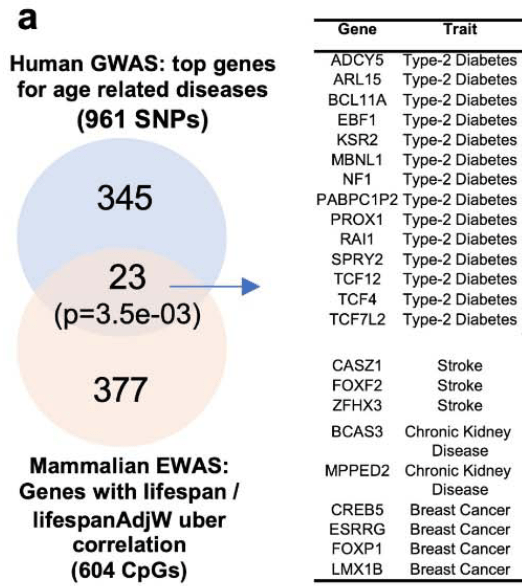
We overlapped genes from the LUC signature with genes found in human genome-wide association studies (GWAS) of various pathologies and conditions. With all due caution, we report that some genes from the LUC signature were those highlighted by GWAS to be associated with type II diabetes, stroke, chronic kidney disease, and breast cancer.

Human aging genes vs mammalian LUC

We used the subset of CpGs found to be significant in our LUC to build age estimators (epigenetic clocks). We demonstrated that these clocks are able to capture effects of interventions that are known to alter age as well as lifespan, such as caloric restriction, growth hormone receptor knockout, and high-fat diet.

We found that Bcl11b heterozygous knockout mice exhibited an increased epigenetic age in the striatum. BCL11B is a zinc finger protein with a wide range of functions, including development of the brain, immune system, and cardiac system.

This gene is also implicated in several human diseases including, but not limited to, Huntington disease, Alzheimer’s diseases, HIV, and T-cell malignancies. BCL11B plays an important role in adult neurogenesis, but is less studied in the context of lifespan disparities in mammals.

Bcl11b knockout affected both DNA methylation and mRNA expression of LUC genes. Our current study does not inform us about the potential role of Bcl11b in aging processes during adulthood since observed patterns could be attributed to developmental defects.

We are characterizing other genetic and non-genetic interventions that perturb the LUC clocks. These we will feature in a separate report that will uncover biological processes regulated by LUC cytosines and their associated genes.”

https://www.biorxiv.org/content/10.1101/2022.01.16.476530v1 “Divergent age-related methylation patterns in long and short-lived mammals”


PXL_20220106_201346155

Gut microbiota’s positive epigenetic effects

Three papers with the first a 2021 review:

“Gut microbiota along with their metabolites are involved in health and disease through multiple epigenetic mechanisms including:

  • Affecting transporter activities, e.g. DNA methyltransferases (DNMTs), histone methyltransferases (HMTs), histone acetyltransferases (HATs), and histone deacetylases (HDACs);
  • Providing methyl donors to participate in DNA methylation and histone modifications; and
  • miRNAs that can lead to gene transcriptional modifications.

ijms-22-06933-g003

These mechanisms can participate in a variety of biological processes such as:

  • Maturation of intestinal epithelial cells (IECs);
  • Maintenance of intestinal homeostasis;
  • Inflammatory response;
  • Development of metabolic disorders; and
  • Prevention of colon cancer.”

https://www.mdpi.com/1422-0067/22/13/6933/htm “Dissecting the Interplay Mechanism between Epigenetics and Gut Microbiota: Health Maintenance and Disease Prevention”


A second 2022 review added subjects such as crotonate (aka unsaturated butyrate):

“Studies are carving out potential roles for additional histone modifications, such as crotonylation and ethylation, in facilitating crosstalk between microbiota and host. Lysine crotonylation is a relatively less studied histone modification that is often enriched at active promoters and enhancers in mammalian cells.

While addition or removal of crotonyl motifs can be catalyzed by specialized histone crotonyltransferases and decrotonylases, HATs and HDACs have also been reported to exhibit histone crotonyl-modifying activity. Microbiota stimulate multiple types of histone modifications and regulate activity of histone-modifying enzymes to calibrate local and extra-intestinal chromatin landscapes.”

https://www.tandfonline.com/doi/full/10.1080/19490976.2021.2022407 “Epigenetic regulation by gut microbiota”


A third 2021 review added subjects such as broccoli sprout compounds’ epigenetic effects:

“Glucosinolates are converted into isothiocyanates (ITCs) by bacteria that regulate host epigenetics. Levels of ITCs produced following broccoli consumption are highly dependent on the functional capacity of individual microbiomes, as much interindividual variability exists in gut microbiota composition and function in humans.

Sulforaphane inhibits HDAC activity both in vitro and in vivo, and protects against tumor development. Microbial-mediated production of ITCs represents a strong diet-microbe interaction that has a direct impact on host epigenome and health.”

https://www.sciencedirect.com/science/article/pii/S0955286321000516 “The interplay between diet, gut microbes, and host epigenetics in health and disease”


Clearing the channel

PXL_20220118_203446833

The aryl hydrocarbon signaling pathway

I’ll emphasize this densely packed 2021 review’s broccoli sprout compounds / gut microbiota / health interactions:

“The aryl hydrocarbon receptor (AhR) senses cues from environmental toxicants and physiologically relevant dietary/microbiota-derived ligands. AhR signaling mediates bidirectional host-microbiome interactions in a wide range of cellular functions in a ligand-, cell type-, species-, and context-specific manner.

Brassicaceae family plants are rich sources of glucobrassicin, the glucosinolate precursor of indole-3-carbinol (I3C). Glucobrassicin can be enzymatically hydrolyzed and converted into I3C by myrosinase, which is present in intact plant cells and gut microbiota.

I3C activates AhR but exhibits low binding affinity. However, in acidic conditions found in the stomach, I3C undergoes acid condensation reaction to generate a variety of more potent AhR ligands, such as 3,3′-diindolylmethane (DIM).

AhR activation by natural AhR ligands (e.g., I3C) has been shown to prevent pathogenic gut microbial dysbiosis by altering gut microbiome composition in mice with colitis. Depletion of AhR ligands in the diet decreased α diversity of gut microbiota, while I3C supplementation restored microbiota composition.

I3C treatment is effective for treating IBD patients, partly by upregulating IL-22. Targeting AhR could modulate the amplitude and duration of IL-22 signaling to treat IBD patients.

Administration of I3C or DIM significantly reduced the number of tumors in the cecum and small intestine. Supplementation of I3C reduces the number of colorectal tumors in WT, but not in AhR null mice.

nihms-1759454-f0003

Gut microbiota and diet are major sources of AhR ligands that influence the whole body, including gut, liver, brain, and the immune system. Many human diseases are associated with decreased circulating levels of AhR ligands, partly due to dysbiosis.

The ability of AhR signaling to regulate self-renewal and differentiation of intestinal stem cells intrinsically or extrinsically has recently been brought into the spotlight.”

https://www.ncbi.nlm.nih.gov/labs/pmc/articles/PMC8667662/ “Diet–Host–Microbiota Interactions Shape Aryl Hydrocarbon Receptor Ligand Production to Modulate Intestinal Homeostasis”


Young hawk

PXL_20220109_195611152

Your lungs and Nrf2 activity

Two 2021 papers of Nrf2 activation effects on lung diseases, with the first a McGill University review:

“Oxidative stress and subsequent activation of Nrf2 have been demonstrated in many human respiratory diseases. The purpose of this review is to summarize involvement of Nrf2 and its inducers in acute respiratory distress syndrome, chronic obstructive pulmonary disease (COPD), asthma, and lung fibrosis in both human and experimental models.

fphys-12-727806-g004

These inducers have proven particularly effective at reducing severity of oxidative stress-driven lung injury in various animal models. In humans, these compounds offer promise as potential therapeutic strategies for management of respiratory pathologies associated with oxidative stress, but there is thus far little evidence of efficacy through human trials.

Perhaps, by analogy with biologics, patients with demonstrated deficient antioxidant responses to their disease should be selected for study in future clinical trials.”

https://www.frontiersin.org/articles/10.3389/fphys.2021.727806/full “Role of Nrf2 in Disease: Novel Molecular Mechanisms and Therapeutic Approaches – Pulmonary Disease/Asthma”


A second paper was a human/rodent study of COPD:

“We investigated Nrf2 expression and epigenetic regulation, and mechanisms by which the Nrf2 signaling pathway in ferroptosis is related to COPD. These findings elucidated pathways of ferroptosis in bronchial epithelial cells in COPD, and revealed Nrf2 as a potential target for COPD treatment.

COPD_A_340113_t0001

DNA hypermethylation at specific CpG sites of the Nrf2 promoter in primary epithelial cells and in clinical lung tissues is correlated with decreased Nrf2 expression, which is related to COPD occurrence and development.”

https://www.ncbi.nlm.nih.gov/pmc/articles/PMC8684379/ “Hypermethylation of the Nrf2 Promoter Induces Ferroptosis by Inhibiting the Nrf2-GPX4 Axis in COPD”


Similar to this second paper’s CpG findings, Eat broccoli sprouts for your heart found:

“Sulforaphane (SFN) reduced Ang II‐induced CpG hypermethylation and promoted Ac‐H3 [histone H3 acetylation] accumulation in the Nrf2 promoter region, accompanied by inhibition of global DNMT [DNA methyltransferase] and HDAC [histone deacetylase] activity, and a decreased protein expression of key DNMT and HDAC enzymes. Overall, DNA methylation and histone deacetylation are considered to inhibit gene transcription with a synergistic effect.

Nrf2 can also be regulated independently of Keap1. Evidence indicates that SFN may indirectly activate Nrf2 by affecting activity of several upstream kinases.”

However, this second paper didn’t measure DNMT and HDAC inhibition, although their therapeutic effects in reducing oxidative injury and inflammation may have been present.

PXL_20211225_193439146

Inevitable individual differences

This 2021 review subject was individual differences:

“We will focus on recent findings that try to shed light on the emergence of individuality, with a particular interest in Drosophila melanogaster.

fphys-12-719038-g001

Another possible source of potential behavioral variability might come from the interaction of individuals with environmental microbes, from Wolbachia infections to changes in the gut microbiome. In this particular case, no genetic variation or neural circuit alteration would be responsible for the change in behavior.

Finally, from an evolutionary point of view, individuality might play an essential role in providing an adaptive advantage. For example, we have described that animals might use diversified bet-hedging as a mechanism to produce high levels of variation within a population to ensure that at least some individuals will be well-adapted when facing unpredictable environments.”

https://www.frontiersin.org/articles/10.3389/fphys.2021.719038/full “Behavior Individuality: A Focus on Drosophila melanogaster


Other papers on this subject include:

PXL_20211218_192020643

Immune system aging

This 2021 review by three coauthors of Take responsibility for your one precious life – Trained innate immunity cast a wide net:

“Non-specific innate and antigen-specific adaptive immunological memories are vital evolutionary adaptations that confer long-lasting protection against a wide range of pathogens. However, these mechanisms of memory generation and maintenance are compromised as organisms age.

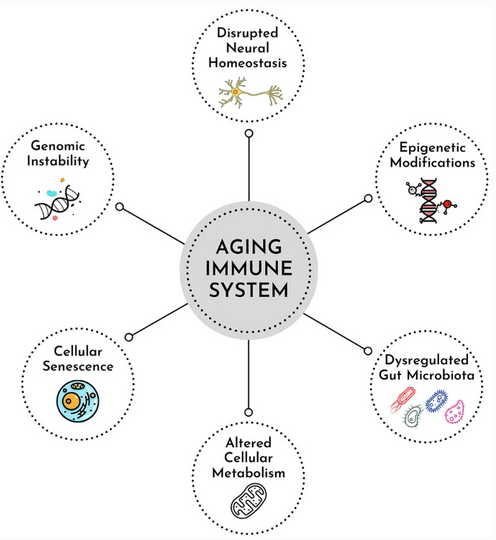
This review discusses how immune function regulates and is regulated by epigenetics, metabolic processes, gut microbiota, and the central nervous system throughout life. We aimed to present a comprehensive view of the aging immune system and its consequences, especially in terms of immunological memory.

aging immune system

A comprehensive strategy is essential for human beings striving to lead long lives with healthy guts, functional brains, and free of severe infections.”

https://link.springer.com/article/10.1007/s12016-021-08905-x “Immune Memory in Aging: a Wide Perspective Covering Microbiota, Brain, Metabolism, and Epigenetics”


Attempts to cover a wide range of topics well are usually uneven. For example, older information in the DNA Methylation In Adaptive Immunity section was followed by a more recent Histone Modifications in Adaptive Immunity section.

This group specializes in tuberculosis vaccine trained immunity studies, and much of what they presented also applied to β-glucan trained immunity. A dozen previously curated papers were cited.

PXL_20211218_190653401

Glutathione primes β-glucan-trained immunity

Two 2021 papers on glutathione interactions with β-glucan, with the first studying human cells from healthy donors:

“(1→3)-β-D-Glucan stimulation induces epigenetic and transcriptomic changes in monocytes associated with increased glutathione (GSH) synthesis and metabolism. Intracellular glutathione levels were crucial in regulating several monocyte antifungal functions including resilience to oxidative stress, immunometabolism, nitric oxide production, phagocytosis, and cytokine production.

Our findings demonstrate an important role for GSH in immunity, and outline a better understanding of the acute response of monocytes to infections.”

https://www.frontiersin.org/articles/10.3389/fimmu.2021.694152/full “Glutathione Metabolism Is a Regulator of the Acute Inflammatory Response of Monocytes to (1→3)-β-D-Glucan”


A second study investigated the subject with a dozen rodent experiments:

“We demonstrated that antioxidation by GSH supported an environment essential for β-glucan-induced metabolic and epigenetic changes in monocytes. We found that GSH induced glycolysis and glutaminolysis in β-glucan-trained immunity in a mTOR-dependent manner.

These results uncovered the GSH/mTOR/c-Myc signaling axis as the central effector of metabolic reprogramming in trained immunity. We revealed that the delicate GSH/ROS redox balance determines discrete, long lasting metabolic modifications that are causal to β-glucan-trained immunity.

Our results suggest that H3K27me3 demethylation is a necessary event. We identified H3K27me3 demethylation as a novel histone modification mark that was impaired by GSH deficiency in β-glucan-trained bone marrow derived macrophages.

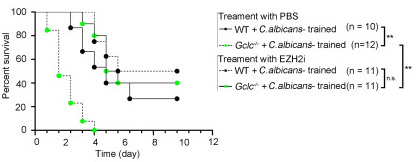
We identified EZH2 as a potential tool to boost trained immunity under GSH deficiency conditions, or to enhance trained immunity in clinical settings where excessive inflammatory responses could be beneficial.

ezh2 survival

Overall, these insights contribute to unraveling metabolic and epigenetic changes during trained immunity.”

https://www.sciencedirect.com/science/article/pii/S2213231721003669 “Glutathione synthesis primes monocytes metabolic and epigenetic pathway for β-glucan-trained immunity”


The second paper of Remembering encounters provides future benefits also explored this subject.

PXL_20211215_183316335

The impact of transgenerational epigenetic inheritance and early life experiences

A 2021 interview with McGill University’s Moshe Szyf:

There is a rejection of transgenerational inheritance as it goes against progressive thinking because it ties us to previous generations. The theory faces rejection because it sounds deterministic.

But if you understand what epigenetics is, it’s not deterministic. There is stability, and there’s also room for dynamic change.

The only way things change in the body for the long term is via epigenetics. We don’t know everything yet, new discoveries are yet to happen, and then we will just say, ‘Wow, it’s so obvious!’

The immune system is tightly connected to the brain and is directly affected by early adversity. Even though we will not be able to learn what’s going on in the brain, as far as epigenetics in living people, we will gain a lot of information from how the immune system responds to early adversity, and how this is correlated with behavioral phenotype and with mental health.

This brings into question the whole field of neuroimmunology, of which there is a lot of data. But it seems that a lot of psychiatrists are totally oblivious to these data, which is astounding, because the glucocorticoid hormone – the major player in this mechanism due to its involvement in early life stress as well as control of behavior – also controls immune function.

Nobody can live long enough to oversee a human transgenerational study. In humans, correlations are usually in peripheral tissue, where changes are small. The jury’s not out yet, but if evolution used it for so many different organisms, some of which are very close to us in the evolutionary ladder, it’s impossible that humans don’t use it.

How are current findings in animal models relevant to humans? How do we develop human paradigms that will allow us to achieve a higher level of evidence than what we have now?

  • One way is the immune-inflammatory connection to other diseases. I think this is where the secret of epigenetic aging lies, as well as epigenetics of other diseases.
  • Every disease is connected to the immune system. The brain translates the behavioral environment to the immune system, and then the immune system sends chemical signals across the body to respond to these challenges.

We need to understand that epigenetic programs are a network. Move beyond candidate genes, understand the concept of a network, and really understand the challenge: Reset the epigenetic network.

Epigenetics is going to be rapidly translated to better predictors, better therapeutics, and more interesting therapeutics. Not necessarily the traditional drug modeled against a crystal structure of an enzyme, but a more networked approach. Ideas about early life stress are critical and have impacted the field of childcare by highlighting the importance of early childhood relationships.”

https://www.futuremedicine.com/doi/10.2217/epi-2021-0483 “The epigenetics of early life adversity and trauma inheritance: an interview with Moshe Szyf”


Week 87 of Changing to a youthful phenotype with sprouts

This week I dialed back eating microwaved 3-day-old broccoli / red cabbage / mustard sprouts from twice a day to once a day. For my reasoning, here are two papers on broccoli sprouts and thyroid function, with the first a 2018 human study:

“We analyzed biochemical measures of thyroid function and thyroid autoimmunity in a subset of participants in a broccoli sprout clinical trial. The present work is a retrospective analysis of a subset of serum samples collected during a clinical trial conducted from mid-October 2011 to early January 2012.

130 individuals received placebo beverage, and 137 received broccoli sprout beverage for 84 consecutive days (12 weeks). Blood samples from day 0 and day 84 were analyzed in a subset of 45 female participants (19 placebo, 26 broccoli sprout beverage) for serum thyroid-stimulating hormone (TSH), free thyroxine (fT4), thyroglobulin (TG), anti-TG, and anti-thyroid peroxidase (anti-TPO) antibodies.

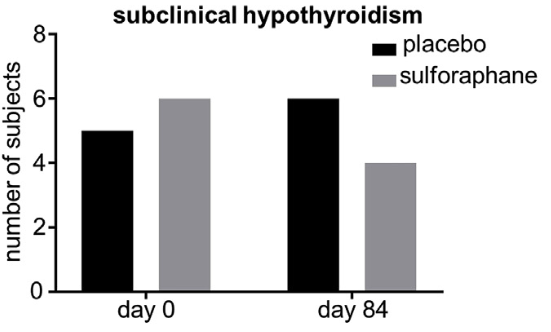
The percentage of patients with subclinical hypothyroidism (elevated TSH with normal fT4) was not significantly different between the two groups either before or after treatment.

subclinical hypothyroidism

Daily ingestion of a broccoli sprout extract beverage over 84 days had no deleterious effect on thyroid function tests or measures of thyroid autoimmunity. It may be prudent to evaluate thyroidal safety of plant-based food supplements on a case-by-case basis.”

https://www.sciencedirect.com/science/article/abs/pii/S0278691519300547 “Broccoli sprout beverage is safe for thyroid hormonal and autoimmune status: Results of a 12-week randomized trial” (not freely available)


A 2020 review by three of these coauthors summarized further details:

“One difference between the thyroid and other tissues is that ROS are not primarily a byproduct of its physiology, but an indispensable part of it. Thyroid follicular cells actively produce H2O2 to facilitate a cascade of redox reactions that sequentially oxidize iodide, iodinate tyrosine residues within Tg, and couple iodinated tyrosine residues of Tg to each other to form T4 and T3 (triiodothyronine).

There exists a fail-safe mechanism in which specific combinations of four Keap1 cysteines can form a disulfide bond to sense H2O2. This sensing mechanism appears to be distinct from that triggered by other Nrf2 inducers, such as electrophiles.

Findings from Keap1KD mice suggest that chronic genetic activation of Nrf2 signaling may have negative consequences for the thyroid gland. However, analysis of data from a clinical trial has shown that consumption of a broccoli sprout beverage (yielding pharmacologically active amounts of the Nrf2-activating compound sulforaphane) is safe for thyroid hormonal and autoimmune status during a 12-week administration period.

Nevertheless, it appears prudent to monitor thyroid function and thyroid volume (at least by palpation) in patients treated with Nrf2-modulating compounds in clinical trials or clinical practice.”

https://www.mdpi.com/2076-3921/9/11/1082/htm “The Keap1/Nrf2 Signaling Pathway in the Thyroid—2020 Update”


My Day 70 lab results for inflammation markers were great:

IL-6 2020

A year later, IL-6 was below the test’s detection limit, and high-sensitivity C-reactive protein could hardly have been better at 0.24 mg/L.

But TSH (reference interval 0.45 – 4.50 μIU/mL) increased from 3.01 to 7.50. Here’s what Labcorp Technical Review L8186 said:

“The panel concluded that despite the fact that serum TSH concentrations higher than 2.5 μIU/mL but less than 4.5 μIU/mL may identify some individuals with the earliest stage of hypothyroidism, there is no evidence for associated adverse consequences. Additionally, consequences of subclinical hypothyroidism with serum TSH levels between 4.5 μIU/mL and 10 μIU/mL are minimal, and the panel recommends against routine treatment of patients with TSH levels in these ranges.”

I went in last weekend to retest. Although the provider verbally agreed to test TSH, free T3, and free T4, a different test was ordered.

TSH was still high at 5.85 μIU/mL. Other measurements (Total T4, T3 Uptake, and Free Thyroxine Index) aren’t suitable substitutes for free T3 and free T4. I’ll specify Labcorp test numbers next time.


My hypothesis is that preconditioning my endogenous ARE system twice daily worked alright elsewhere, but not for my thyroid. We’ll find out in 2022 whether halving the electrophilic activations of my Nrf2 signaling pathway has any effect on thyroid measurements.

I don’t take anything with, or an hour before or after these very reactive isothiocyanates. I continue to eat 3-day-old oat sprouts twice a day with other foods.

PXL_20211125_171335252