Transcendental experiences

Among the everyday repetitive experiences and challenges, there are moments when I have to stop working, or pull into a parking lot, or just stop. Most of the time it’s when I’m listening to the transcendental music of Mozart written in the later years of his short life.

Start this next piece, and go about your business while listening. Even played at this modern pace, you may soon find the textures make you sit down, close your eyes, and wonder at places like from 12:00 to 12:30 and 22:30 to 23:00 what went on with Mozart and his audiences 233 years ago that evoked what’s still enjoyed today:

https://app.idagio.com/recordings/22495241

“I’ve been playing this symphony in the orchestra this week, alongside a symphony by Mozart’s contemporary, Antonio Salieri. It’s impossible to define fully what sets Mozart’s music apart from the well-crafted but ordinary Salieri. But the array of voices and motives swirling around in the “Prague” Symphony make this music come alive in a unique and sublime way.”

At other times, it’s listening to music Beethoven composed when he was almost deaf:

Hear the brook flow

Take responsibility for your one precious life – β glucan

From the main page of https://www.betaglucan.org/, a compilation for researchers:

“Beta Glucan extracted from yeast cell wall, can be a potent immune response potentiator and modulator. A common test to determine a glucan’s immune response potentiation effectiveness is the measure of the degree to which a glucan increases the nitric oxide burst, a pathogen killing agent.

Determinants of immune response activation and effectiveness are beta glucan source, processing, sizing and uniformity of beta glucan particles ingested. Particle size of 1-4 microns is optimum. Ingestion is optimized to prevent reaggregation.”


A sample of research:

“The tested (and suggested) daily dose remains in the range of 100–500 mg for stimulation of the immune system, whereas for a decrease in cholesterol levels a daily dose of 3 g is recommended.

Glucan supplementation prevents or even treats metabolic syndrome and decreases insulin resistance, dyslipidemia, and obesity. Glucan supplementation is a highly promising and inexpensive method of treatment for chronic respiratory problems.

Reactions known to be influenced by glucan are represented in white, reactions where glucan has no confirmed effects are shown in black.”

https://www.mdpi.com/1420-3049/24/7/1251/htm “Beta Glucan: Supplement or Drug? From Laboratory to Clinical Trials”


“Supplementation with glucan and vitamin D resulted in significant increase of vitamin D levels, improvements of HDL levels, and strong decrease of the total level of cholesterol.”

https://www.ncbi.nlm.nih.gov/pmc/articles/PMC5897984/ “Effects of β-glucan and Vitamin D Supplementation on Inflammatory Parameters in Patients with Diabetic Retinopathy”


“β-glucan inhibits tumor growth through induced systemic tumor-antigen specific T cell response, increased activity of T-cells in tumor, and decreased number of tumor-caused immunosuppressive cells. Sulforaphane inhibits CRC [colorectal cancer] carcinogenesis by modulating Nrf2 activity and inhibition of HDAC enzymes.

In a women’s health initiative prospective cohort during their 11.7-year follow up of dietary fiber and omega-3, -6 fatty acids, the results pointed out a reduced incidence of CRC for the association between a low dose of soluble fiber, a high dose of insoluble fiber, and a high dose of EPA and DHA.”

https://www.ncbi.nlm.nih.gov/pmc/articles/PMC6321468/ “Chemoprevention of Colorectal Cancer by Dietary Compounds”


I first curated the above review and graphic in Train your immune system every day! 12 days into a self-quarantine after coming back from Milano, Italy, Monday, February 24, 2020. There’s a substantial probability that my traveling companion and I were exposed to COVID-19.

Yet neither of us had any symptoms then or since. My β-glucan, Vitamin D3, and zinc amounts were the same as described in that post, in Take responsibility for your one precious life – Vitamin D3, and in Take responsibility for your one precious life – Zinc.

Take responsibility for your one precious life – Vitamin D3

Where to start among 6,489 studies and reviews published during the past five years, results from a PubMed search of “dihydroxyvitamin D3.” How about:

“Vitamin D plays a fundamental role in body calcium and phosphorous homeostasis, ensuring proper functioning of the skeletomuscular system. Pleiotropic activities include:

  • Anti-inflammatory and immunomodulatory properties (predominantly downregulation of adaptive and upregulation of innate immunity);
  • An important role in reproduction, pregnancy, placental functions and fetal and child development;
  • Important in neurodevelopment as well as in the functioning of the adult central and peripheral nervous system;
  • Regulation of global metabolic and endocrine homeostasis and the functions of different endocrine organs, as well as in the functioning of the cardiovascular system;
  • Inhibits malignant transformation, tumor progression and has anti-cancer properties on a variety of tumors;
  • Formation of the epidermal barrier and hair cycling; and
  • Ameliorating effects on skin cancer and on proliferative and inflammatory cutaneous diseases.”

https://www.ncbi.nlm.nih.gov/pmc/articles/PMC6342654/ “The serum vitamin D metabolome: What we know and what is still to discover”


Or maybe:

“A study in 6,275 American children and adolescents aged 1–21 years showed that 61% were 25-(OH)D3 insufficient and 9% deficient. In adults, up to 40% are 25-(OH)D3 insufficient and 6% deficient.

Once adequate vitamin D values are reached, to further preserve adequate vitamin D levels in adults, the IOM [Institute of Medicine] recommends a daily dose of 600 IU per day, while the Endocrine Society recommends a dose of 600–2000 IU per day (according to the amount of sunlight the individual is exposed to). There seems to be no additional health benefit in doses higher than 4000 IU/day.

Vitamin D supplementation was protective against acute respiratory tract infections in a 25-(OH)D3 deficient population, especially in those receiving daily or weekly supplementation. However, in children this protective effect could not be reproduced.”

https://www.ncbi.nlm.nih.gov/pmc/articles/PMC7281985/ “Vitamin D’s Effect on Immune Function”


Not to forget Advanced glycation end products alter steroidogenic gene expression by granulosa cells: an effect partially reversible by vitamin D:

“This study suggests that there is a relationship between AGEs (advanced glycation end products) and their receptors (RAGE and sRAGE) with vitamin D. Understanding the interaction between AGEs and vitamin D in ovarian physiology could lead to a more targeted therapy for the treatment of ovarian dysfunction.”


Or similarities to broccoli sprouts’ main effect of Nrf2 signaling pathway activation:

“1,25(OH)2D3 plays a role in delaying aging by upregulating Nrf2, inhibiting oxidative stress and DNA damage, inactivating p53‐p21 and p16‐Rb signaling pathways, and inhibiting cell senescence and SASP.”

https://www.ncbi.nlm.nih.gov/pmc/articles/PMC6516172/ “1,25‐Dihydroxyvitamin D exerts an antiaging role by activation of Nrf2‐antioxidant signaling and inactivation of p16/p53‐senescence signaling”


Why do we insist on giving ourselves non-communicable diseases?

I recently paid $22.53 after tax for a nearly two-year supply:

A better use of one’s money would be..?

My June 2020 serum 25-OH Vitamin D measurement was 76 on a scale of 0 to 100 from taking a total of 3,400 IU daily. It’s fat-soluble, so I take it along with 1 gram flax oil each time.

Take responsibility for your own one precious life.

What should be is different than what is

A view from Hong Kong:

“If you read the explanations put forward by MMT advocates you could come away with the impression that the ‘theory’ is a discovery or original insight, but nothing could be further from the truth. What MMT actually does is employ accounting tautologies and a very superficial view of how monetary inflation affects the economy to justify theft on a grand scale.

When government creates money out of nothing and then exchanges that money for real resources, it is exchanging nothing for something. In effect, it is diverting resources to itself without paying for them. This is a form of theft, but it is surreptitious because the seller of the resources does not incur the cost of the theft.

MMT being bad from both ethical and economics perspectives probably won’t get in the way of its implementation. It has great appeal to the political class. For all intents and purposes MMT is already being put into practice in the US.

There is now a high probability of systemic collapse during this decade. What comes next could be worse.”

https://tsi-blog.com/2020/07/the-brave-new-world-of-mmt/ “The Brave New World of MMT”


Gold sniffs this out, rising from $1,400 to over $1,600, $1,700, $1,800, $1,900, $2,000 USD / oz. in 2020. How much higher will government theft take it?

mark-600x375

Image from Gold Switzerland.

Children playing with stacks of hyperinflated currency during the Weimar Republic, 1922

“Children playing with stacks of hyperinflated currency during the Weimar Republic, 1922” from Rare Historical Photos.

Take responsibility for your one precious life – Zinc

This 2020 review highlighted earlier clinical data on zinc:

  • “Zinc is known to modulate antiviral and antibacterial immunity and regulate inflammatory response.
  • Zinc possesses anti-inflammatory activity by inhibiting NF-κB signaling and modulation of regulatory T-cell functions.
  • The most critical role of zinc is demonstrated for the immune system.
  • Zinc regulates proliferation, differentiation, maturation, and functioning of leukocytes and lymphocytes.

Alteration of zinc status significantly affects immune response resulting in increased susceptibility to inflammatory and infectious diseases including acquired immune deficiency syndrome, measles, malaria, tuberculosis, and pneumonia. Zinc status is associated with the prevalence of respiratory tract infections in children and adults.

In view of the high prevalence of zinc deficiency worldwide (up to 17%), its impact on population health is considered as a significant issue. Certain groups of people, including infants, especially preterm ones, and elderly, are considered to be at high risk of zinc deficiency and its adverse effects.

Zinc was shown to have a significant impact on viral infections through modulation of viral particle entry, fusion, replication, viral protein translation and further release for a number of viruses including those involved in respiratory system pathology. Increasing intracellular Zn levels through application of Zn ionophores significantly alters replication of picornavirus, the leading cause of common cold.

The results of systematic analysis confirmed the efficiency of intake of at least 75 mg/day Zn in reduction of pneumonia symptom duration but not severity, with the response being more pronounced in adults than in children.”

https://www.ncbi.nlm.nih.gov/pmc/articles/PMC7255455/ “Zinc and respiratory tract infections: Perspectives for COVID-19”


The review noted a 2014 rodent cell study which found:

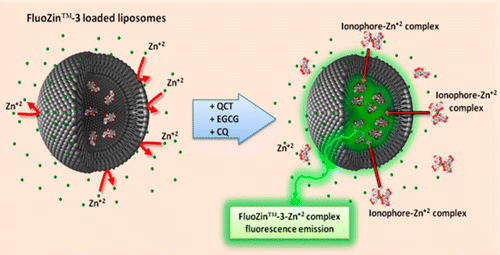
“Labile zinc, a tiny fraction of total intracellular zinc that is loosely bound to proteins and easily interchangeable, modulates the activity of numerous signaling and metabolic pathways. Dietary plant polyphenols such as the flavonoids quercetin and epigallocatechin-gallate act as antioxidants and as signaling molecules. The activities of numerous enzymes that are targeted by polyphenols are dependent on zinc.

We have demonstrated the capacity of quercetin and epigallocatechin-gallate to rapidly increase labile zinc. The polyphenols transport zinc cations across the plasma membrane independently of plasma membrane zinc transporters.

The ionophore activity of dietary polyphenols may underlay the raising of labile zinc levels triggered in cells by polyphenols and thus many of their biological actions.”

https://pubs.acs.org/doi/10.1021/jf5014633 “Zinc Ionophore Activity of Quercetin and Epigallocatechin-gallate: From Hepa 1-6 Cells to a Liposome Model” (not freely available)


I get EGCG from drinking 4-5 cups of green tea every day, and 65 mg zinc from supplements. Microwave broccoli to increase flavonoid levels demonstrated 108.5% to 129.8% increases in quercetin and kaempferol levels from microwaving grocery-store broccoli. Microwaving 3-day-old broccoli sprouts may be expected to increase my worst-case calculation of daily 134 mg total flavonoids.

I’ve taken quercetin intermittently per Preliminary findings from a senolytics clinical trial. I’m changing that to take 100 mg quercetin daily.

Take responsibility for your own one precious life.

Autism biomarkers and sulforaphane

This 2020 US human study investigated autism improvements with sulforaphane:

“Autism Spectrum Disorder (ASD) is one of the most common neurodevelopmental disorders that, in the United States, is currently estimated to affect 1 out of 59 children who are 8 years old. Despite decades of research and advances in our knowledge of etiologies of ASD, treatments and biomarkers for ASD remain limited.

The primary diagnosis of ASD still relies on observational tools that are by nature subjective. There are currently no drugs approved to treat core symptoms of ASD, nor are there any studies using SF [sulforaphane] in genetic mouse models of ASD.

In our previous placebo-controlled, double-blinded, randomized clinical trial, daily administration of SF for 4-18 weeks substantially improved behavioral abnormalities of the majority of 26 young males with moderate to severe ASD without significant toxicity. The multi-functional phytochemical sulforaphane affects many biochemical abnormalities associated with ASD.

We investigated potential molecular markers from three ASD-associated physiological pathways that can be affected by sulforaphane:

  1. Redox metabolism / oxidative stress;
  2. Heat shock response; and
  3. Immune dysregulation / inflammation

in peripheral blood mononuclear cells (PBMCs) from healthy donors and patients with ASD.

Three representative Nrf2 [nuclear factor erythroid 2-related factor 2]-dependent enzymes:

  1. AKR1C1 [aldo-keto reductase family 1 member C1];
  2. NQO1 [dehydrogenase quinone 1]; and
  3. HO-1 [heme oxygenase]

were significantly induced by 6 h of 2 μM or 5 μM SF ex vivo treatments in PBMCs from healthy donors. This time point was chosen based on our earlier observations of kinetics of upregulation of Nrf2-dependent genes by SF, and was expected to capture increased mRNA production of both very fast (HO-1) and relatively slow (NQO1) responders.

There was no concentration-dependence in induction of any genes examined, with higher (5 μM) concentration of SF even showing a slightly diminished effect for induction of AKR1C1 and NQO1. Although this concentration is achievable in vivo, more typical peak concentrations of SF (and its metabolites) in human plasma are 1-2 μM.

SF ex vivo pre-treatment significantly decreased the LPS [lipopolysaccharides]-stimulated inflammatory gene (

  • COX-2,
  • TNF-α,
  • IL-6 and
  • IL-1β

) expression levels in PBMCs from healthy donors.

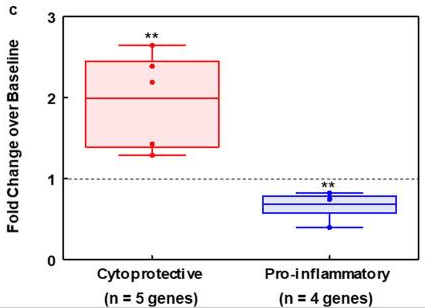
As a pilot study for a clinical trial of SF in children with ASD, we evaluated the same biomarkers from the ex vivo studies in 10 young males with ASD, 6-12 years of age, who received SF (in the form of a dietary supplement containing GR [glucoraphanin] and myrosinase), 2.2 μmol/kg/d for 14 days. Grouping by broad functionality (e.g. cytoprotective or pro-inflammatory), differences from baseline were highly significant.

asd gene expression

Individually none is sufficiently specific or sensitive, but when grouped by function as two panels, these biomarkers show promise for monitoring pharmacodynamic responses to sulforaphane in both healthy and autistic humans, and providing guidance for biomedical interventions. We conducted this study in the context of ASD, however our findings have broader implications and suggest that these biomarkers can be used in any study involving an intervention with SF.

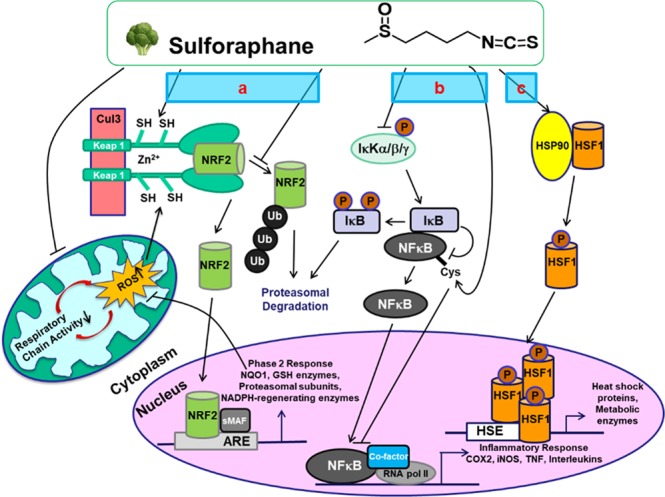
Major signaling pathways for protective mechanisms against ASD by SF:

  • (a) Keap1/Nrf2/ARE pathway,
  • (b) NF-κB inflammatory pathway,
  • (c) Heat-shock responses.”

https://www.ncbi.nlm.nih.gov/pmc/articles/PMC7118069/ “Biomarker Exploration in Human Peripheral Blood Mononuclear Cells for Monitoring Sulforaphane Treatment Responses in Autism Spectrum Disorder”


This was a pilot study. Does sulforaphane treat autism? was its follow-on clinical trial.

Broccoli sprouts and sulforaphane aren’t panaceas. Their research is becoming more intensive and focused, though.

Microwave broccoli seeds to create sulforaphane

Two sulforaphane topics came up in discussions with my traveling companion. Our first was an inference:

  1. 3-day-old broccoli sprouts have the optimal yields found that broccoli sprout sulforaphane content (after processing for analysis) ranged from 46% to 97% of broccoli seeds.
  2. Microwave broccoli to increase sulforaphane levels found that microwaving broccoli florets to 60°C (140°F) increased the sulforaphane amount from .22 to 2.45 µmol / g (1,114%!!).
  3. Wouldn’t broccoli seeds’ sulforaphane be more than broccoli sprouts by microwaving seeds up to 60°C in the same amount of water?

The 3-day study broccoli sprout measurements were relative to each variety’s seeds:

“To be comparable, the content of these bioactive compounds from 100 fresh sprouts was divided by the weight (gram) of 100 seeds, and then this value was compared with their content from one gram seeds.”

Broccoli compounds are similar among broccoli florets, sprouts, and seeds. A major difference is that broccoli sprouts and seeds have no initial sulforaphane content because hydrolization hasn’t occurred yet. The above graphic’s seed and sprout sulforaphane content was created by processing for analysis.

I’ll reason that sulforaphane would be created by:

  • Microwaving one tablespoon of broccoli seeds with a 1000W microwave in 100 ml of distilled water for 30 seconds to ≤ 60°C; then
  • Straining out the water; then
  • Allowing further myrosinase hydrolization of glucoraphanin and other glucosinolates into sulforaphane and other healthy compounds.

Broccoli seeds are dry, and microwaving acts directly on a material’s water content. The 3-day study methods “immersed [broccoli seeds] in distilled water and soaked at 30°C for 2 h” to start germination. I’ll stipulate two hours as a minimum broccoli seed soaking time before microwaving.

I’ve tried microwaving broccoli seeds five times so far to see if they’re palatable. Seeds soaked for at least two hours then microwaved for 30 seconds swell to almost twice their dry size. They’re easier to strain, chew thoroughly to ensure hydrolization, and swallow.

The 3-day study also found “total phenolic and flavonoid contents in sprouts were 1.12 to 3.58 times higher than seeds.” I won’t stop eating broccoli sprouts, but sometimes it may be expedient to reduce a 72-hour preparation time to 2 hours and still benefit from sulforaphane and other healthy broccoli compounds.

Let’s use Estimating daily consumption of broccoli sprout compounds runt-of-the-litter calculations and assumptions to make a worst-case estimate of sulforaphane content in one tablespoon of broccoli seeds:

  • Broccoli seed weight of one tablespoon is 10.7 grams.
  • Worst-case sulforaphane weight in one tablespoon of broccoli seeds (10.7 g x 2.43 mg sulforaphane per gram of seeds) = 26.0 mg.

I won’t calculate sulforaphane weight after microwaving because part of the 3-day study processing for analysis was:

“Broccoli seeds were comminuted by analysis grinder. Seed powder (0.5g) was immersed in distilled water at 55 °C for 5 min to inactivate the epithiospecifier protein.”

Grinding seeds into powder then heating it probably incorporates any effects of microwaving intact broccoli seeds up to 60°C.


Our second discussion topic came by gathering study data from Broccoli or Sulforaphane: Is It the Source or Dose That Matters?

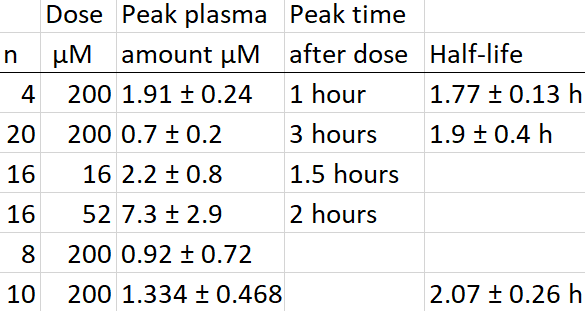
Assessing these 200 μmol amount / 35 mg weight sulforaphane supplement dose studies:

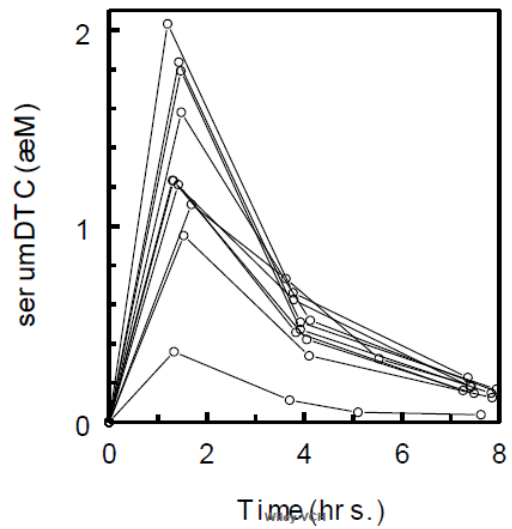
  1. Peak plasma statistics ranged from 0.5 μmol in Row 2 (n = 20) to 2.15 (n = 4) μmol in Row 1. Row 4 (n = 10) statistics don’t show it, but its individual peak plasma ranges per the below graphic were 0.359 μmol to 2.032 μmol. Coincidentally, the Row 4 subject (#2) who had the lowest peak plasma amount also had the lowest urinary % of dose excreted (also termed bioavailability) of 19.5%, and the Row 4 subject (#8) who had the highest peak plasma amount also had the highest sulforaphane bioavailability of 86.9%.
  2. From the Row 4 study: “The half-life of SF in the body was 2.07 ± 0.26 h as calculated from serum area-under-the-curve determinations.” Its Subject #2 had the longest sulforaphane half-life at 2.709 hours.
  3. The peak time after dose ranged from 1 to 3 hours. Not sure why Row 4 didn’t calculate a peak time, but eyeballing the above graphic showed that all subjects peaked between 1 and 2 hours. Row 2’s time was at the study’s first of three measurement intervals (3, 6, and 12 hours). Its peak time after dose probably also took place between 1 and 2 hours.

These four studies showed that there’s wide variation among individual responses to sulforaphane supplements. Row 4 study’s Concluding Remarks ended with:

“Innate metabolic differences must not be discounted when assessing the metabolism of SF alone, delivered in supplements.”


The first of A pair of broccoli sprout studies was Row 2 (n = 20) above. Its sulforaphane supplement statistics – repeated in the below graphic’s BSE (broccoli sprout extract) column – demonstrated how humans’ sulforaphane supplement metabolic profiles were different than our fresh broccoli sprout metabolic profiles:
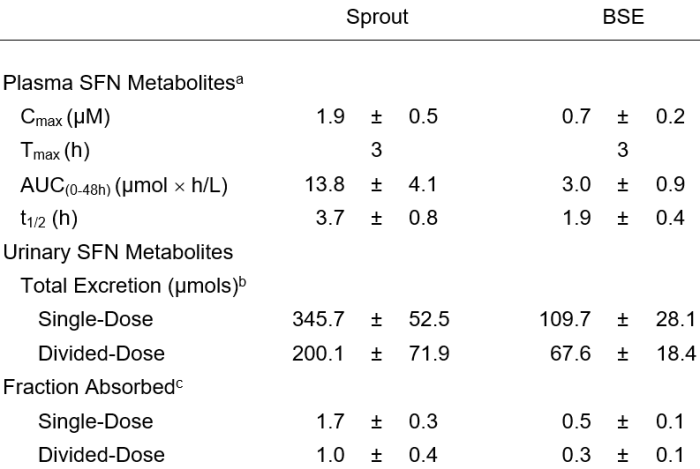
The divided dose was twelve hours apart at breakfast and dinner times. Also, its first measurements weren’t taken until 3 hours after ingesting, which explains its later times with lesser amounts than the above sulforaphane supplement studies’ earlier times with greater amounts.

During Week 9 of Changing to a youthful phenotype with broccoli sprouts I changed my practices to eat microwaved broccoli sprouts at breakfast and dinner times from its finding:

“In sprout consumers, plasma concentrations were 2.4-fold higher after consuming the second dose than after the first dose.”

A metabolic profile resulting from my current practices is probably between the Sprout and BSE divided-dose statistics:

  • Sulforaphane intake is greater than eating raw broccoli sprouts because microwaving 3-day-old broccoli sprouts creates sulforaphane in them before eating.
  • Sulforaphane uptake from microwaved broccoli sprouts is quicker than eating raw broccoli sprouts. It may not be as immediate as taking sulforaphane supplements, which are usually powders.
  • Sulforaphane dose from microwaved broccoli sprouts is less dependent on an individual’s metabolism than eating raw broccoli sprouts.
  • Sulforaphane release from microwaved broccoli sprouts probably continues on to the gut as does eating raw broccoli sprouts. Sulforaphane release from supplements may not per Does sulforaphane reach the colon?.

The microwaving study processed 10 grams of broccoli florets immersed in 500 ml water with a 950W microwave on full power for 108 seconds to achieve 60°C. I microwave 65.5 grams of 3-day-old broccoli sprouts immersed in 100 ml water with a 1000W microwave on full power for 35 seconds to ≤ 60°C.

After microwaving I wait five minutes to allow further myrosinase hydrolization of glucoraphanin and other glucosinolates into sulforaphane and other healthy compounds. Enhancing sulforaphane content provided evidence that myrosinase hydrolization peaks at one minute after achieving 60°C per the below graphic:
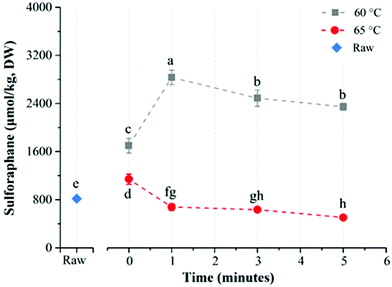
I interpret the above sulforaphane degradation from minutes 1 to 5 to be leaching caused by leaving the broccoli sample immersed in water. I strain water from broccoli sprouts after microwaving – the Time 0 mark of the above graphic – because without leaching water, further hydrolization may increase sulforaphane.


Sulforaphane supplements:

  • Are readily metabolized,
  • Blood plasma levels peak by two hours, and
  • Blood plasma levels dissipate by eight hours.

To the extent a metabolism resulting from my current practices is closer to a sulforaphane supplement profile than a raw broccoli sprouts profile, maybe that leaves the door open to a microwaved broccoli seed dose at lunch time? In any event, there are seeds in each batch that don’t germinate after soaking for 12 hours and rinsing three times a day, and I eat them after microwaving anyway.

See Caution on broccoli seed erucic acid content? if you’re concerned about that.

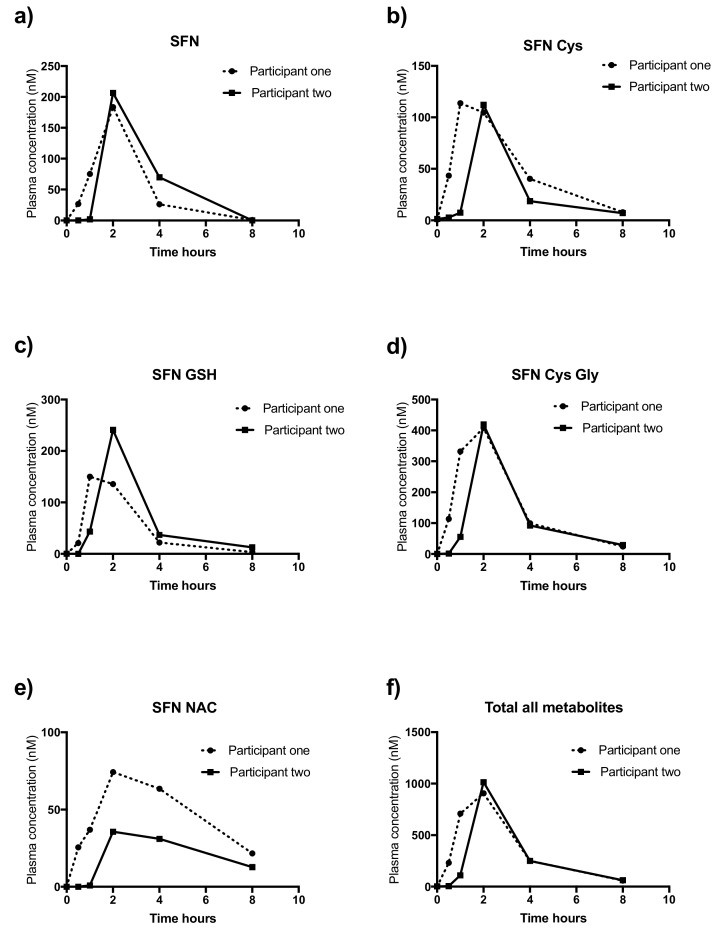
Measuring sulforaphane plasma compounds

This 2020 Australian human study investigated methods of measuring sulforaphane plasma compounds:

“A simplified methodology to allow high-throughput LC–MS [Liquid Chromatography-Mass Spectrometry] analysis of plasma samples for measurement of sulforaphane and its metabolites is described. Analysis time is greatly reduced by employing fast chromatography and simple plasma extraction procedure.

Participants were observed consuming four Broccomax capsules, each containing 30 mg of broccoli seed extract and a dose of 8 mg of sulforaphane, as per manufacturer certificate of analysis, resulting in a total dose of 32 mg of sulforaphane (120 mg of broccoli seed extract).

Mean peak of combined metabolites from our study (0.9 and 1 μM) using 120 mg of broccoli seed extract (~32 mg of SFN) was similar to work by Fahey et al. who investigated pharmacokinetics of 350 mg of purified broccoli seed powder (mean 1.3 μM ± 0.5 μM), though our dose was almost three-times less. Pharmacokinetic profiles of our study mirrored those of Fahey et al. in that excretion was complete 8 hrs after consumption. Our intervention peaked slightly later (~2hrs), than that of Fahey (~1 hr), likely due to our use of a capsule rather than liquid.”

https://www.ncbi.nlm.nih.gov/pmc/articles/PMC7070302/ “Measuring Sulforaphane and Its Metabolites in Human Plasma: A High Throughput Method”


This study was thin on comparing their n = 2 results to previous work. Here are comparables from Broccoli or Sulforaphane: Is It the Source or Dose That Matters?


These researchers set up a strawman by stating a false comparison:

“Our dose was almost three-times less.”

The compared study was the n = 10 subjects row above, which stated its dose as:

“200 μmol of SF was contained in about 350 mg of SF-αCD powder dissolved in 25 mL of distilled water, which subjects were given to drink upon arrival at the clinic.”

If the current study wanted a true comparison, they would measure and compare sulforaphane dose weights or amounts:

  • https://pubchem.ncbi.nlm.nih.gov/compound/sulforaphane lists sulforaphane’s molecular weight as 177.3 g / mol.
  • A 5.64 μmol sulforaphane amount (.001 / 177.3) equals a 1 mg weight of sulforaphane.
  • 200 μmol / 5.64 μmol = 35 mg sulforaphane used in the compared study.

But these researchers couldn’t even do that! They asserted a 32 mg sulforaphane dose “per manufacturer certificate of analysis” when they had the resources to do otherwise!

What kind of study design would go to all the trouble of measuring plasma sulforaphane metabolite outputs, but not measure their sulforaphane input dose???

Had they closely read the compared study, they may have also noticed that its commercial supplement, Prostaphane, was tested to verify stated dosage. These researchers could have done the same with Broccomax.

Are sulforaphane supplements better than microwaved broccoli sprouts?

Armando asked a good question in Upgrade your brain’s switchboard with broccoli sprouts:

“Is there any way to consume sulphorafane in a supplement form? Rather than have to jump so many hops to consume it from broccoli.”

That blog post referenced a 2017 study, whose sulforaphane amount was:

“100 µmol [17.3 mg] sulforaphane as standardized broccoli sprout extract in the form of 2 gel capsules.”

One answer in A pair of broccoli sprout studies was No:

  • “Plasma and urinary levels of total SFN [sulforaphane] metabolites were ~3–5 times higher in sprout consumers compared to BSE [broccoli sprout extract] consumers.
  • In sprout consumers, plasma concentrations were 2.4-fold higher after consuming the second dose than after the first dose.
  • Calculated SFN bioavailability from broccoli sprouts exceeded 100%.”

That study was from 2015, though. Are better products than broccoli sprout extracts available now?


Image from the US Library of Congress

During Week 5 of Changing an inflammatory phenotype with broccoli sprouts, back in May when I still believed impossible things like we would:

I contacted a distributor of a dried broccoli sprout powder for evidence of their claim:

“Independent assays confirm that EnduraCELL yields more Sulforaphane per gram and per dose than any other broccoli sprout ingredient available! These assays showed that EnduraCell yields around 3.5 times more SULFORAPHANE than the next highest broccoli sprout product.”

I’ve asked three times for the lab assays. They declined each time to provide the data. In correspondence the company founder said:

“Each 700 mg capsules yields around 15mg sulforaphane.”

The company founder has written several reviews, one of which is entitled Sulforaphane and Other Nutrigenomic Nrf2 Activators: Can the Clinician’s Expectation Be Matched by the Reality? In Section 6.5 Sulforaphane it stated:

“By calculation, MYR [myrosinase]-active whole broccoli sprout supplement yielding 1% SFN could deliver 10 mg SFN per gram of powder, corresponding to ~12 grams of fresh broccoli sprouts (dried powder retains ~8% moisture).

The 2017 study’s dosage of “100 µmol [17.3 mg] sulforaphane as standardized broccoli sprout extract” weighed a gram or less, for a 1.73% sulforaphane yield. A broccoli sprout powder may have a 15 mg / 700 mg = 2.14% sulforaphane yield.

Using calculations from Estimating daily consumption of broccoli sprout compounds and Our model clinical trial for Changing to a youthful phenotype with broccoli sprouts, I eat 131 grams of 3-day-old broccoli sprouts daily. That would be 131 g / 12 = 10.9 grams of a broccoli sprout powder.

The equivalent sulforaphane dosage would be 10.9 g x 21.4 mg per gram = 233.3 mg! That’s obviously too high. What isn’t right?

Subsequent investigation of a distributor’s site found this table:

autism sprout powder

The study referenced for equivalence was Sulforaphane treatment of autism spectrum disorder (ASD). Calculations:

  • The 100 µmol sulforaphane amount for 90 kg participants weighed 17.73 mg per https://pubchem.ncbi.nlm.nih.gov/compound/sulforaphane.
  • The equivalent broccoli sprout powder sulforaphane yield is 0.01773 / 3.6 g = 0.4925%. That’s 5 mg of sulforaphane per gram of broccoli sprout powder.
  • 0.4925% / 2.14 % = 0.23. Decrementing the above sulforaphane weight gives 233.3 mg x .23 = 54 mg.

The answer to my question What isn’t right? I relied on private correspondence rather than what a vendor publicly disclosed.


I’m not particularly concerned about analytical uncertainties for myself. Whatever the numbers are, microwaving techniques for fresh broccoli sprouts increase them.

I immerse 3-day-old broccoli sprouts in 100 ml distilled water, then microwave them on 1000W full power for 35 seconds to ≤ 60°C (140°F) per Microwave broccoli to increase sulforaphane levels. Worst-case estimates are 52 mg sulforaphane with microwaving.


My answer to Armando’s question would be No for sulforaphane supplements. I’d consider a whole broccoli sprout powder after lab assays were personally verified.

Microwave broccoli to increase flavonoid levels

This 2019 USDA study investigated representative broccoli cooking methods for their impact on kaempferol and quercetin levels:

“Understanding cooking effects on flavonoids is crucial to accurately estimate their daily intake and further investigate their health benefits. The purpose of this study was not to compare different conditions of each cooking methods, but to focus on retentions of individual flavonoids under common cooking conditions in the US:

  • For boiling, we chose to use 85 seconds.
  • A 5-minute steaming time was used.
  • Microwave treatment was carried out in a 1200W microwave at full power for 1 minute.

Seven kaempferol (Km) glycosides and one quercetin (Qn) glycoside were identified and quantified in raw and cooked broccoli by HPLC-MS:

Boiling resulted in significant loss of all flavonoids, while steaming and microwaving led to minor losses or even increases of flavonoids.

Microwaving without water or with small amount of water tended to retain or increase total phenolics and/or flavonoids. When a large amount of water was added during microwaving, to some extent resembling boiling, total phenolics and/or flavonoids decreased.

Different agriculture practices may affect flavonoids’ existence and their interactions with other compounds, which in turn alter their sensitivity to heat treatments.

Retention of nutrients in cooked foods can be calculated as apparent retention (AR) based on dry form, or true retention (TR) based on fresh/wet form. TR represents actual consumption forms and also takes weight change after cooking into consideration.

The possible explanation for TR over 100% is that thermal processing may increase extractability and/or release from binding to other compounds as a result of matrix softening.”

https://www.cell.com/heliyon/fulltext/S2405-8440(19)30568-7 “Effects of domestic cooking on flavonoids in broccoli and calculation of retention factors”


The Material and methods section didn’t state that heated products’ temperatures were measured. So there wasn’t sufficient evidence for a solely thermal explanation of only microwaving achieving percentages over 100 per:

“The possible explanation for TR over 100% is that thermal processing..”

A more plausible explanation similar to Microwave broccoli to increase sulforaphane levels may account for microwaving’s increased percentages:

“Microwave treatment causes a sudden collapse of cell structure due to the increase in osmotic pressure difference over vacuole membrane.

We didn’t expect this result, and think microwave irradiation might help to release more conjugated forms of glucosinolates and then get hydrolyzed by released myrosinase.”


I immerse 3-day-old broccoli sprouts in 100 ml distilled water, then microwave them on 1000W full power for 35 seconds to ≤ 60°C (140°F). After microwaving I transfer broccoli sprouts to a strainer, and allow further myrosinase hydrolization of glucoraphanin and other glucosinolates into sulforaphane and other healthy compounds.

Myrosinase deactivation above 60°C wasn’t a consideration, since boiling, steaming, and a 1200W microwave on full power for one minute may have produced temperatures above 60°C. I’ll guess that an active enzyme wasn’t a requirement for flavonoid contents of broccoli purchased in a Beltsville, Maryland, grocery store.

The microwave tests used:

“Broccoli florets (150 g) were put in a microwave safe bowl with a 1 tablespoon [15 ml] of water.”

I use:

  • A lesser weight of 3-day-old broccoli sprouts;
  • A greater volume of distilled water;
  • A less powerful microwave operated on full power for a lesser duration.

Before microwaving, I would expect a estimated 134 mg total flavonoids from eating 3-day old broccoli sprouts every day. This study’s findings lead me to expect that current practices with microwaving would improve flavonoid levels.

Don’t overcook broccoli

This 2020 US / Korea study set a low bar and jumped over it by finding:

“The abundance of GSL [glucosinolate] hydrolysis products in cooked samples was lower compared to the raw samples.

Regardless of different cooking methods and durations, the total GSL amount in MeJA [methyl jasmonate]-treated broccoli was still higher than in the non-treated broccoli. This suggests that the increased GSL concentration in broccoli samples was solely affected by MeJA treatment, and the effect of MeJA was not affected by cooking methods.

Effect of cooking and 250 µM MeJA treatment on (A) total aliphatic glucosinolates, (B) total indole glucosinolates, and (C) total glucosinolates in ‘Green Magic’ broccoli. * = detected significant different by Student’s T-test (p ≤ 0.05, n = 3) with a significant interaction between MeJA treatment and cooking treatment.”

https://www.mdpi.com/2304-8158/9/6/758/htm “Methyl Jasmonate Treatment of Broccoli Enhanced Glucosinolate Concentration, Which Was Retained after Boiling, Steaming, or Microwaving”


Did it advance science to only replicate mistakes in consumer broccoli cooking methods with:

“The abundance of GSL hydrolysis products in cooked samples was lower compared to the raw samples.”

No.

Did the study design have tests to provide cooking method guidance for:

“To date, methods of delivering cooked broccoli without losing its nutritional benefits are still lacking in the literature, although consuming cooked broccoli is the most common practice for consumers.”

No.

Were there cooking method and temperature recommendations to avoid:

“Cooking also inactivates myrosinase, the enzyme converting GSL into hydrolysis products, and then hinders the formation of hydrolysis products.”

No.

Were there cooking method tests to further enhance either control samples or:

“Exogenous methyl jasmonate (MeJA) treatment was known to increase the levels of neoglucobrassicin and their bioactive hydrolysis products in broccoli.”

No.

Why omit temperature measurements since:

“The major research questions of this study were to evaluate how MeJA application to broccoli plants will affect GSL concentration, myrosinase activity, GSL hydrolysis product amounts..”

Maybe Microwave broccoli to increase sulforaphane levels wasn’t yet published when this study’s design decisions were made. Still, why would a study:

  • Test microwave half power without also testing full power?
  • Select microwaving time as the sole measurement without also measuring temperature?

Table S1 and Figure 3 of the Chinese / USDA study showed a two-minute microwaving time at 50% power wouldn’t be expected to have any sulforaphane content significantly different from uncooked broccoli. Also, temperatures of a five-minute microwaving time at 50% power were guaranteed to completely deactivate myrosinase.

Supplementary material confirmed that this study’s microwaving parameters didn’t show anything of value for how to use your microwave to increase broccoli compound levels. Did the study’s findings provide much more than what not to do?

Poor design decisions created a large gap between what could have been studied and what was studied. Let’s hope there will be better use of resources next time.

One of these numbers is not like the others

117622 / 330937295 = 0.000355

or 0.0355%

.133 x 330937295 = 44,014,660

So 44+ million people were thrown out of work in the US to justify and accompany a cover story of a disease that would have to triple its death rate to reach one-tenth of one percent?

Are we a nation of math illiterates? This makes sense only to those who are impelled to gain power over people’s lives for no reason other than to have power.

No wonder the narrative changed four weeks ago to race.

What topics have your conversations been obsessed with the past four weeks? Are you running with the herd? Take caution of the herd’s destination.

A compelling review of epigenetic transgenerational inheritance

This 2020 review by coauthors of 2019’s A transgenerational view of the rise in obesity and Epigenetic transgenerational inheritance extends to the great-great-grand offspring summarized:

“The prevalence of obesity and associated diseases has reached pandemic levels.

Ancestral and direct exposures to environmental toxicants and altered nutrition have been shown to increase susceptibility for obesity and metabolic dysregulation. Environmental insults can reprogram the epigenome of the germline (sperm and eggs), which transmits the susceptibility for disease to future generations through epigenetic transgenerational inheritance.

During the 1950s, the entire North American population was exposed to high levels of the pesticide DDT, when the obesity rate was < 5% of the population. Three generations later, the obesity frequency in North America is now ~45% of the population.”

https://www.sciencedirect.com/science/article/abs/pii/S1043276020300515 “Epigenetic Transgenerational Inheritance of Obesity Susceptibility” (not freely available)


Do any of us have accurate and complete medical histories of our parents back to our great-great-grandparents? Did any of our ancestors record their exposures to environmental toxicants?

The research community has been conditioned to not trust research done primarily from one source. Dr. Michael Skinner’s labs at Washington State University are suspect by this preconception.

A researcher there addressed the situation when I asked. Their answer in A self-referencing study of transgenerational epigenetic inheritance ended with:

“We hope to see other labs contributing to this particular field and we will be delighted to cite them. In the meantime, our only option is to reference our previous work.”

It’s especially time for toxicologists to overcome their behavioral conditioning. If they don’t understand how epigenetic transgenerational inheritance impacts their field now, will they ever get a clue?

Our ancestors’ experiences have much to do with our physiologies. The biological evidence is compelling, yet it continues to be ignored and misconstrued.

Part 2 of Do broccoli sprouts treat migraines?

To follow up Do broccoli sprouts treat migraines? which used a PubMed “sulforaphane migraine” search, a PubMed “diindolylmethane” search came across a 2020 Czech human cell study Antimigraine Drug Avitriptan Is a Ligand and Agonist of Human Aryl Hydrocarbon Receptor that Induces CYP1A1 in Hepatic and Intestinal Cells that had this informative Introduction:

“The aryl hydrocarbon receptor (AhR) transcriptionally controls a wide array of genes. AhR is a critical player in human physiology (e.g., hematopoiesis) and also in many pathophysiological processes such as diabetes, carcinogenesis, inflammation, infection or cardiovascular diseases.

Suitable candidates for off-targeting AhR could be the antimigraine drugs of triptan class, which have an indole core in their structure. Indole-based compounds were demonstrated as ligands of AhR, including dietary indoles (e.g., indole-3-carbinol and diindolylmethane).”

Adding AhR to the search showed:

Changing the PubMed search to “icz migraine” pulled up a 2013 review Biomedical Importance of Indoles that described sumatriptan as an indole, and:

“Since DIM accumulates in the cell nucleus, it likely contributes to cell nuclear events that have been ascribed to I3C.”

Widening the search to “i3c ahr” added:

Changing the search to “i3c migraine” picked up a 2011 UK human study Effect of diindolylmethane supplementation on low-grade cervical cytological abnormalities: double-blind, randomised, controlled trial:

“In the study reported here, there was no statistically significant difference in serious adverse events between groups; in fact a higher proportion of women in the placebo group reported a serious adverse event. Although this study did not have sufficient power to study migraines, we did find a non-significant increase in reported headaches (18% on DIM, 12% on placebo, P=0.12).”

Returning to the original PubMed “sulforaphane migraine” search, Bioavailability of Sulforaphane Following Ingestion of Glucoraphanin-Rich Broccoli Sprout and Seed Extracts with Active Myrosinase: A Pilot Study of the Effects of Proton Pump Inhibitor Administration included one subject who took migraine medication. They weren’t a study outlier, however.


Although indole chemistry indicates a broccoli sprouts – migraine connection, I haven’t found relevant research. Maybe the known properties and actions of broccoli sprout compounds provide enough to affect causes of migraines?

See Part 3 to follow up.

Eat broccoli sprouts for DIM

This 2019 Spanish human study ran in parallel with Our model clinical trial for Changing to a youthful phenotype with broccoli sprouts. I’ll focus on the aspect of diindolylmethane (DIM) from eating broccoli sprouts:

“The aim of this study is to evaluate the effect of gender or hormonal status (menopause) on the bioavailability of broccoli sprouts in different cohorts of overweight adult subjects: men, non-menopausal women and post-menopausal women.

3,3′-diindolylmethane (DIM) was detected and quantified in all volunteers. It increased significantly during broccoli [sprouts] ingestion in men. However, a steady decrease of its urinary concentration was observed in post-menopausal women that was significant at day 50. No significant changes were observed in premenopausal women. Albeit this different behaviour, no significant differences between the three groups were detected by the different statistical tests performed.

High increases observed in SFN-metabolites in the three cohorts confirm that the fresh product is a good source of bioactive compounds bioavailable in the organism. We detected high amounts of 3,3-DIM in urine samples, which can be related to the metabolism of glucobrassicin derivatives from our broccoli sprouts.

Post-menopausal women seem to metabolize isothiocyanates in a greater extension. Hormonal status and differences in gut microbiota may influence the bioavailability of isothiocyanates from broccoli sprouts but more studies are needed to support this statement.”

https://www.sciencedirect.com/science/article/abs/pii/S1756464619303147 “Bioavailability of broccoli sprouts in different human overweight populations” (not freely available)


“Post-menopausal women seem to metabolize isothiocyanates in a greater extension. A steady decrease of its [DIM] urinary concentration was observed in post-menopausal women that was significant at day 50.”

Subjects ate 30 grams of broccoli super sprouts every day through Day 35, then stopped, and were measured again at Day 50. The only example of measurements where Day 35 was less than Day 0 was postmenopausal women metabolizing more DIM.

That Day 35 data point didn’t have an asterisk next to it to indicate a statistically significant decrease. But the overweight postmenopausal women group’s next Day 50 significant “steady decrease” finding supported an interpretation that eating broccoli sprouts supplied them with DIM that they especially needed.

Regarding the huge percentage changes above, our model clinical trial found in a longer time frame:

The decrease in IL-6 levels was significantly related to the increase in 24 h urine SFN [sulforaphane] levels. In case of C-reactive protein, the decrease was significantly related to the increases in 24 h urine SFN-NAC [SFN-N-acetylcysteine] and SFN-CYS [SFN-cysteine].

I’ll guess that these parallel trial subjects also experienced similar benefits from eating broccoli  sprouts every day for five weeks. See Day 70 results from Changing to a youthful phenotype with broccoli sprouts for another guess that even shorter time frames would be effective.


Broccoli super sprout indolic compounds were as follows:

indolic glucosinolates

Assuming that only glucobrassicin is a precursor to DIM, subjects’ DIM bioavailability can be calculated as μmol DIM / 21.61 μmol. For example, overweight postmenopausal women Day 35 average of 0.5544 μmol DIM that ranged from 0.1771 to 0.8034 μmol DIM represented an average 2.57% DIM bioavailability with a range of 0.82% to 3.72% DIM bioavailability.

See Part 2 for DIM follow-up.