Genetic imprinting, sleep, and parent-offspring conflict

This 2016 Italian review subject was the interplay of genetic imprinting and sleep regulation:

“Sleep results from the synergism between at least two major processes: a homeostatic regulatory mechanism that depends on the accumulation of the sleep drive during wakefulness, and a circadian self-sustained mechanism that sets the time for sleeping and waking throughout the 24-hour daily cycle.

REM sleep apparently contravenes the restorative aspects of sleep; however, the function of this ‘paradoxical’ state remains unknown. Although REM sleep may serve important functions, a lack of REM sleep has no major consequences for survival in humans; however, severe detrimental effects have been observed in rats.

Opposite imprinting defects at chromosome 15q11–13 are responsible for opposite sleep phenotypes as well as opposite neurodevelopmental abnormalities, namely the Prader-Willi syndrome (PWS) and the Angelman syndrome (AS). Whilst the PWS is due to loss of paternal expression of alleles, the AS is due to loss of maternal expression.

Maternal additions or paternal deletions of alleles at chromosome 15q11–13 are characterized by temperature control abnormalities, excessive sleepiness, and specific sleep architecture changes, particularly REM sleep deficits. Conversely, paternal additions or maternal deletions at chromosome 15q11–13 are characterized by reductions in sleep and frequent and prolonged night wakings.

The ‘genomic imprinting hypothesis of sleep’ remains in its infancy, and several aspects require attention and further investigation.”

http://journals.plos.org/plosgenetics/article?id=10.1371/journal.pgen.1006004 “Genomic Imprinting: A New Epigenetic Perspective of Sleep Regulation”


A commenter to the review referenced a 2014 study Troubled sleep: night waking, breastfeeding, and parent–offspring conflict that received several reactions, including one by the same commenter. Here are a few quotes from the study author’s consolidated response:

“‘Troubled sleep’ had two major purposes. The first was to draw attention to the oppositely perturbed sleep of infants with PWS and AS and explore its evolutionary implications. The involvement of imprinted genes suggests that infant sleep has been subject to antagonistic selection on genes of maternal and paternal origin with genes of maternal origin favoring less disrupted sleep.

My second major purpose was a critique of the idea that children would be happier, healthier and better-adjusted if we could only return to natural methods of child care. This way of thinking is often accompanied by a belief that modern practices put children at risk of irrevocable harm.

The truth of such claims is ultimately an empirical question, but the claims are sometimes presented as if they had the imprimatur of evolutionary biology. This appeal to scientific authority often seems to misrepresent what evolutionary theory predicts: that which evolves is not necessarily that which is healthy.

Why should pregnancy not be more efficient and more robust than other physiological systems, rather than less? Crucial checks, balances and feedback controls are lacking in the shared physiology of the maternal–fetal unit.

Infant sleep may similarly lack the exquisite organization of systems without evolutionary conflict. Postnatal development, like prenatal development, is subject to difficulties of evolutionarily credible communication between mothers and offspring.”

The author addressed comments related to attachment theory:

“Infants are classified as having insecure-resistant attachment if they maintain close proximity to their mother after a brief separation while expressing negative emotions and exhibiting contradictory behaviors that seem to both encourage and resist interaction. By contrast, infants are classified as having insecure-avoidant attachment if they do not express negative emotion and avoid contact with their mother after reunion.

Insecure-avoidant and insecure-resistant behaviors might be considered antithetic accommodations of infants to less responsive mothers; the former associated with reduced demands on maternal attention, the latter with increased demands. A parallel pattern is seen in effects on maternal sleep. Insecure-avoidant infants wake their mothers less frequently, and insecure-resistant infants more frequently, than securely attached infants.

Parent–child interactions are transformed once children can speak. Infants with more fragmented sleep at 6 months had less language at 18 and 30 months.

Infants with AS have unconsolidated sleep and never learn to speak. The absence of language in the absence of expression of one or more MEGs [maternally expressed imprinted genes] is compatible with a hypothesis in which earlier development of language reduces infant demands on mothers.”

Regarding cultural differences:

“China, Taiwan and Hong Kong have both high rates of bed-sharing and high rates of problematic sleep compared with western countries. Within this grouping, however, more children sleep in their own room but parents report fewer sleep problems in Hong Kong than in either China or Taiwan.

Clearly, cultural differences are significant, and the causes of this variation should be investigated, but the differences cannot be summarized simply as ‘west is worst’.

The fitness [genetic rather than physical fitness] gain to mothers of an extra child and the benefits for infants of longer IBIs [interbirth intervals] are substantial. These selective forces are unlikely to be orders of magnitude weaker than the advantages of lactase persistence, yet the selective forces associated with dairying have been sufficient to result in adaptive genetic differentiation among populations.

The possibility of gene–culture coevolution should not be discounted for behaviors associated with infant-care practices.”

Regarding a mismatch between modern and ancestral environments:

“I remain skeptical of a tendency to ascribe most modern woes to incongruence between our evolved nature and western cultural practices. We did not evolve to be happy or healthy but to leave genetic descendants, and an undue emphasis on mismatch risks conflating health and fitness.

McKenna [a commenter] writes ‘It isn’t really nice nor maybe even possible to fool mother nature.’ Here I disagree. Our genetic adaptations often try to fool us into doing things that enhance fitness at costs to our happiness.

Our genes do not care about us and we should have no compunction about fooling them to deliver benefits without serving their ends. Contraception, to take one obvious example, allows those who choose childlessness to enjoy the pleasures of sexual activity without the fitness-enhancing risk of conception.

Night waking evolved in environments in which there were strong fitness costs from short IBIs and in which parents lacked artificial means of birth-spacing. If night waking evolved because it prolonged IBIs, then it may no longer serve the ends for which it evolved.

Nevertheless, optimal infant development might continue to depend on frequent night feeds as part of our ingrained evolutionary heritage.

It could also be argued that when night waking is not reinforced by feeding, and infants sleep through the night, then conflict within their genomes subsides. Infants would then gain the benefit of unfragmented sleep without the pleiotropic costs of intragenomic conflict. Plausible arguments could be presented for either hypothesis and a choice between them must await discriminating evidence.”


Commenters on the 2014 study also said:

[Crespi] The profound implications of Haig’s insights into the roles of evolutionary conflicts in fetal, infant and maternal health are matched only by the remarkable absence of understanding, appreciation or application of such evolutionary principles among the research and clinical medical communities, or the general public.

[Wilkins] A mutation may be selected for its effect on the trait that is the basis of the conflict, but that mutation also likely affects other traits. In general, we expect that these pleiotropic effects to be deleterious: conflict over one trait can actually drive other traits to be less adapted. Natural selection does not necessarily guarantee positive health outcomes.

[McNamara] Assuming that AS/REM is differentially influenced by genes of paternal origin then both REM properties and REM-associated awakenings can be better explained by mechanisms of genomic conflict than by traditional claims that REM functions as an anti-predator ‘sentinel’ for the sleeping organism.

[Hinde] Given this context of simultaneous coordination and conflict between mother and infant, distinguishing honest signals of infant need from self-interested, care-extracting signals poses a challenge.

Why drugs aren’t ultimately therapeutic

This 2016 Oregon review’s concept was the inadequacy of drug-based therapies, explored with the specific subject of epilepsy:

“Currently used antiepileptic drugs:

  • [aren’t] effective in over 30% of patients
  • [don’t] affect the comorbidities of epilepsy
  • [don’t] prevent the development and progression of epilepsy (epileptogenesis).

Prevention of epilepsy and its progression [requires] novel conceptual advances.”

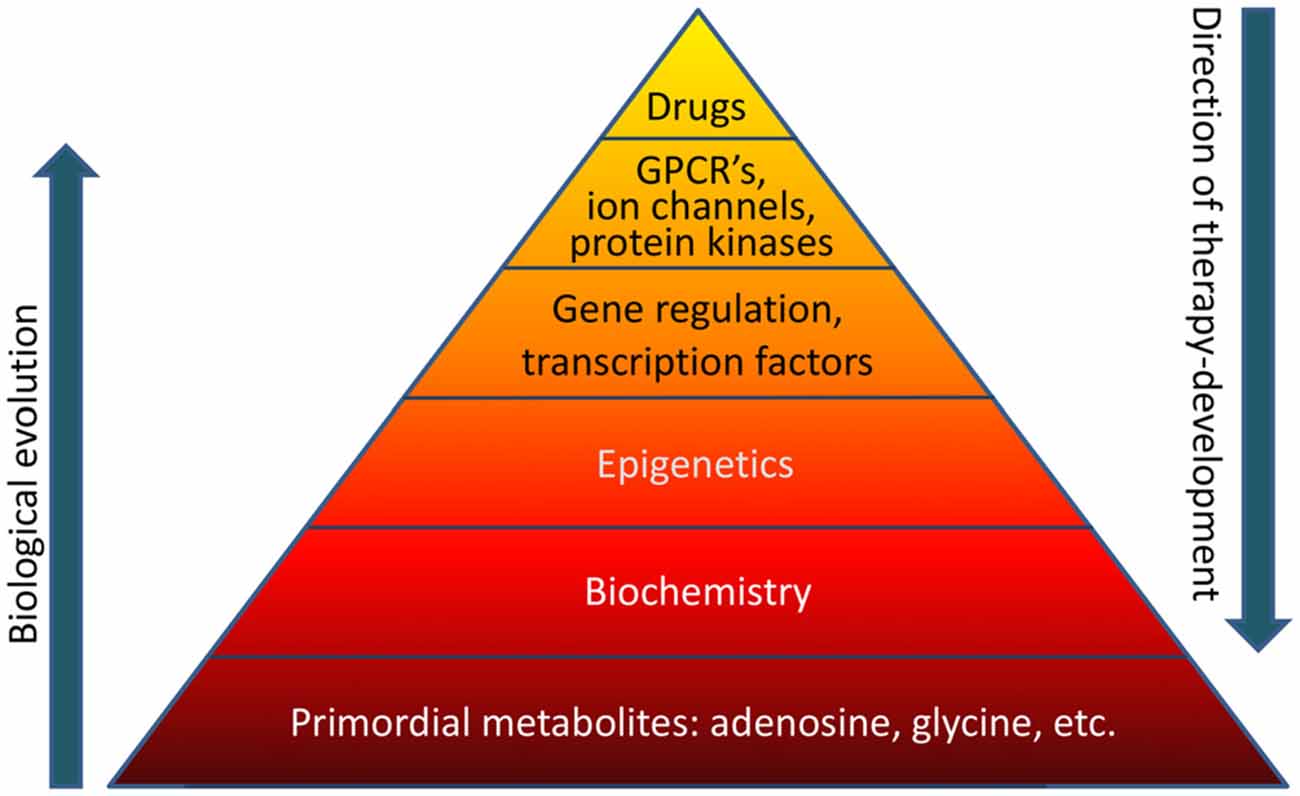
The overall concept that current drug-based therapies poorly address evolutionary biological realities was illustrated by a pyramid, with the comment that:

“If the basis of the pyramid depicted in Figure 1 is overlooked, it becomes obvious that a traditional pharmacological top-down treatment approach has limitations.”

Why drug ultimately aren't therapeutic


I would have liked the reviewer to further address the “therapeutic reconstruction of the epigenome” point he made in the Abstract:

“New findings based on biochemical manipulation of the DNA methylome suggest that:

  1. Epigenetic mechanisms play a functional role in epileptogenesis; and
  2. Therapeutic reconstruction of the epigenome is an effective antiepileptogenic therapy.”

As it was, the reviewer lapsed into the prevalent belief that the causes of and cures for human diseases will always be found on the molecular level – for example, the base of the above pyramid – and never in human experiences. This preconception leads to discounting human elements – notably absent in the above pyramid – that generate epigenetic changes.

A consequence of ignoring experiential causes of diseases is that the potential of experiential therapies to effect “therapeutic reconstruction of the epigenome” isn’t investigated.

http://journal.frontiersin.org/article/10.3389/fnmol.2016.00026/full “The Biochemistry and Epigenetics of Epilepsy: Focus on Adenosine and Glycine”

A human study of pain avoidance

This 2016 UK human study found:

“People differ in how they learn to avoid pain, with some individuals refraining from actions that resulted in painful outcomes, whereas others favor actions that helped prevent pain.

Learning in our task was best explained as driven by an outcome prediction error that reflects the difference between expected and actual outcomes. Consistent with the expression of such a teaching signal, blood-oxygen level-dependent (BOLD) responses to outcomes in the striatum were modulated by expectation.

Positive learners showed significant functional connectivity between the insula and striatal regions, whereas negative learners showed significant functional connectivity between the insula and amygdala regions.

The degree to which a participant tended to learn from success in avoiding than experiencing shocks was predicted by the structure of a participants’ striatum, specifically by higher gray matter density where the response to shocks was consistent with a prediction error signal.

Higher gray matter density in the putamen (and lower gray matter density in the caudate) predicted better learning from shocks and poorer learning from success in avoiding shocks.”

The researchers termed the subjects’ pain responses “learning” instead of conditioning. The difference between the two terms in the experimental contexts was that the subjects weren’t presented with 100%-certain choices to avoid pain.

The experiments were also rigged to force choices at similar rates among subjects because:

“Participants who learned more from painful outcomes developed a propensity to avoid gambling, whereas participants who learned more from success in preventing pain developed a propensity to gamble.”


Human responses to pain don’t arise out of nowhere. The subjects’ pain histories were clearly relevant, but weren’t investigated.

The closest the study came to considering the subjects’ histories was:

“Before the experiment, participants completed an 80-item questionnaire composed of several measures of different mood and anxiety traits. Age, sex and mood and anxiety traits did not differ between participants later classified as positive and negative learners.”

Emotional content was neither included nor solicited. Emotions were inferred:

“Participants biased in favor of passive avoidance learning (i.e., learning what gambles should be avoided), striatal response to painful outcomes was consistent with an aversive prediction error, as seen in fear conditioning.”

As a result, there weren’t causal explanations for the subjects’ differing pain responses. How, when, and why did the behavioral, functional, and structural differences develop?


I didn’t see the level of detail needed to characterize striatal regions into the Empathy, value, pain, control: Psychological functions of the human striatum segments. I’d guess that the findings of “higher gray matter density in the putamen (and lower gray matter density in the caudate)” applied to the posterior putamen and the anterior caudate nucleus.

Two of the coauthors were also coauthors of If a study didn’t measure feelings, then its findings may not pertain to genuine empathy which I rated < 0 Detracted from science. The technique of Why do we cut short our decision-making process? was referenced.

http://www.pnas.org/content/early/2016/04/06/1519829113.full “Striatal structure and function predict individual biases in learning to avoid pain”

What’s the underlying question for every brain study to answer?

Is the underlying question for every brain study to answer:

  • How do our brains internally represent the external world?

Is it:

  • How did we learn what we know?
  • How do we forget or disregard what we’ve learned?
  • What keeps us from acquiring and learning newer or better information?

How about:

  • What affects how we pay attention to our environments?
  • How do our various biochemical states affect our perceptions, learning, experiences, and behavior?
  • How do these factors in turn affect our biology?

Or maybe:

  • Why do we do what we do?
  • How is our behavior affected by our experiences?
  • How did we become attracted and motivated toward what we like?
  • How do we develop expectations?
  • Why do we avoid certain situations?

Not to lose sight of:

  • How do the contexts affect all of the above?
  • What happens over time to affect all of the above?

This 2015 UCLA paper reviewed the above questions from the perspective of Pavlovian conditioning:

“The common definition of Pavlovian conditioning, that via repeated pairings of a neutral stimulus with a stimulus that elicits a reflex the neutral stimulus acquires the ability to elicit that the reflex, is neither accurate nor reflective of the richness of Pavlovian conditioning. Rather, Pavlovian conditioning is the way we learn about dependent relationships between stimuli.

Pavlovian conditioning is one of the few areas in biology in which there is direct experimental evidence of biological fitness.”


The most important question unanswered by the review was:

  • How can its information be used to help humans?

How can Pavlovian conditioning answer: What can a human do about the thoughts, feelings, behavior, epigenetic effects – the person – the phenotype – that they’ve been shaped into?

One example of the unanswered question: the review pointed out in a section about fear extinction that this process doesn’t involve unlearning. Fear extinction instead inhibits the symptoms of fear response. The fear memory is still intact, awaiting some other context to be reactivated and expressed.

How can this information be used to help humans?

  • Is inhibiting the symptoms and leaving the fear memory in place costless with humans?
  • Or does this practice have both potential and realized adverse effects?
  • Where’s the human research on methods that may directly address a painful emotional memory?

One relevant hypothesis of Dr. Arthur Janov’s Primal Therapy is that a person continues to be their conditioned self until they address the sources of their pain. A corollary is that efforts to relieve symptoms seldom address causes.

How could it be otherwise? A problem isn’t cured by ameliorating its effects.

http://cshperspectives.cshlp.org/content/8/1/a021717.full “The Origins and Organization of Vertebrate Pavlovian Conditioning”

Does vasopressin increase mutually beneficial cooperation?

This 2016 German human study found:

“Intranasal administration of arginine vasopressin (AVP), a hormone that regulates mammalian social behaviors such as monogamy and aggression, increases humans’ tendency to engage in mutually beneficial cooperation.

AVP increases humans’ willingness to cooperate. That increase is not due to an increase in the general willingness to bear risks or to altruistically help others.”


One limitation of the study was that the subjects were all males, ages 19-32. The study’s title was “human risky cooperative behavior” while omitting subjects representing the majority of humanity.

Although the researchers claimed brain effects from vasopressin administration, they didn’t provide direct evidence for the internasally administered vasopressin in the subjects’ brains. A similar point was made about studies of vasopressin’s companion neuropeptide, oxytocin, in Testing the null hypothesis of oxytocin’s effects in humans.

A third limitation was that although the researchers correlated brain activity with social behaviors, they didn’t carry out all of the tests necessary to demonstrate the claimed “novel causal evidence for a biological factor underlying cooperation.” Per Confusion may be misinterpreted as altruism and prosocial behavior, the researchers additionally needed to:

“When attempting to measure social behaviors, it is not sufficient to merely record decisions with behavioral consequences and then infer social preferences. One also needs to manipulate these consequences to test whether this affects the behavior.”

http://www.pnas.org/content/113/8/2051.full “Vasopressin increases human risky cooperative behavior”

Advance science by including emotion in research

This 2015 analysis of emotion studies found:

“Emotion categories [fear, anger, disgust, sadness, and happiness] are not contained within any one region or system, but are represented as configurations across multiple brain networks.

For example, among other systems, information diagnostic of emotion category was found in both large, multi-functional cortical networks and in the thalamus, a small region composed of functionally dedicated sub-nuclei.

The dataset consists of activation foci from 397 fMRI and PET [positron emission tomography] studies of emotion published between 1990 and 2011.”

From the fascinating Limitations section:

“Our analyses reflect the composition of the studies available in the literature, and are subject to testing and reporting biases on the part of authors. This is particularly true for the amygdala (e.g., the activation intensity for negative emotions may be over-represented in the amygdala given the theoretical focus on fear and related negative states). Other interesting distinctions were encoded in the thalamus and cerebellum, which have not received the theoretical attention that the amygdala has and are likely to be bias-free.

Some regions—particularly the brainstem—are likely to be much more important for understanding and diagnosing emotion than is apparent in our findings, because neuroimaging methods are only now beginning to focus on the brainstem with sufficient spatial resolution and artifact-suppression techniques.

We should not be too quick to dismiss findings in ‘sensory processing’ areas, etc., as methodological artifacts. Emotional responses may be inherently linked to changes in sensory and motor cortical processes that contribute to the emotional response.

The results we present here provide a co-activation based view of emotion representation. Much of the information processing in the brain that creates co-activation may not relate to direct neural connectivity at all, but rather to diffuse modulatory actions (e.g., dopamine and neuropeptide release, much of which is extrasynaptic and results in volume transmission). Thus, the present results do not imply direct neural connectivity, and may be related to diffuse neuromodulatory actions as well as direct neural communication.”


Why did the researchers use only 397 fMRI and PET studies? Why weren’t there tens or hundreds of times more candidate studies from which to select?

The relative paucity of candidate emotion studies demonstrated the prevalence of other researchers’ biases for cortical brain areas. The lead researcher of the current study was a coauthor of the 2016 Empathy, value, pain, control: Psychological functions of the human striatum, whose researchers mentioned that even their analyses of 5,809 human imaging studies was hampered by other imaging-studies researchers’ cortical biases.

Functional MRI signals depend on the changes in blood flow that follow changes in brain activity. Study designers intentionally limit their findings when they scan brain areas and circuits that are possibly activated by human emotions, yet exclude emotional content that may activate these areas and circuits.

Here are a few examples of limited designs that led to limited findings when there was the potential for so much more:

It’s well past time to change these practices now in the current year.


This study provided many methodological tests that should be helpful for research that includes emotion. It showed that there aren’t impenetrable barriers – other than popular memes, beliefs, and ingrained dogmas – to including emotional content in studies.

Including emotional content may often be appropriate and informative, with the resultant findings advancing science. Here are a few recent studies that did so:

http://journals.plos.org/ploscompbiol/article?id=10.1371%2Fjournal.pcbi.1004066 “A Bayesian Model of Category-Specific Emotional Brain Responses”

Confusion may be misinterpreted as altruism and prosocial behavior

This 2015 Oxford human study of altruism found:

“Division of people into distinct social types relies on the assumption that an individual’s decisions in public-goods games can be used to accurately measure their social preferences. Specifically, that greater contributions to the cooperative project in the game reflect a greater valuing of the welfare of others, termed “prosociality.”

Individuals behave in the same way, irrespective of whether they are playing computers or humans, even when controlling for beliefs. Therefore, the previously observed differences in human behavior do not need to be explained by variation in the extent to which individuals care about fairness or the welfare of others.

Conditional cooperators, who approximately match the contributions of their groupmates, misunderstand the game. Answering the standard control questions correctly does not guarantee understanding.

We find no evidence that there is a subpopulation of players that understand the game and have prosocial motives toward human players.

These results cast doubt on certain experimental methods and demonstrate that a common assumption in behavioral economics experiments, that choices reveal motivations, will not necessarily hold.

When attempting to measure social behaviors, it is not sufficient to merely record decisions with behavioral consequences and then infer social preferences. One also needs to manipulate these consequences to test whether this affects the behavior.”

The researchers are evolutionary biologists who had made similar points in previous studies. They addressed possible confounders in the study and supporting information, and provided complete details in the appendix. For example, regarding reciprocity:

“Communication was forbidden, and we provided no feedback on earnings or the behavior of groupmates. This design prevents signaling, reciprocity, and learning and therefore minimizes any order effects.

It might also be argued that people playing with computers cannot help behaving as if they were playing with humans. Such ingraining of behavior would suggest a major problem for the way in which economic games have been used to measure social preferences. In particular, behavior would reflect everyday expectations from the real world, such as reputation concerns or the possibility of reciprocity, rather than the setup of the game and the true consequences of choices.”


Some of the news coverage missed the lead point of how:

“Economic experiments are often used to study if humans altruistically value the welfare of others.

These results cast doubt on certain experimental methods and demonstrate that a common assumption in behavioral economics experiments, that choices reveal motivations, will not necessarily hold.”

Here are several expressions of beliefs in one news coverage article where the author attempted to flip the discussion to cast doubt on the study. It was along the lines of “There’s something wrong with this study (that I haven’t thoroughly read) because [insert aspersion about sample size, etc.]” What motivates such reflexive behavior?


This study should inform social behavior studies that draw conclusions from flawed experimental designs. For example, both:

based their findings on a video game of popping balloons. Neither study properly interpreted their subjects’ decisions per the current study’s recommendation:

“When attempting to measure social behaviors, it is not sufficient to merely record decisions with behavioral consequences and then infer social preferences. One also needs to manipulate these consequences to test whether this affects the behavior.”

http://www.pnas.org/content/113/5/1291.full “Conditional cooperation and confusion in public-goods experiments”


This post has somehow become a target for spammers, and I’ve disabled comments. Readers can comment on other posts and indicate that they want their comment to apply here, and I’ll re-enable comments.

Lifelong effects of stress

A 2016 commentary A trilogy of glucocorticoid receptor actions that included two 2015 French rodent studies started out:

Glucocorticoids (GCs) belong to a class of endogenous, stress-stimulated steroid hormones. They have wide ranging physiologic effects capable of impacting metabolism, immunity, development, stress, cognition, and arousal.

GCs exert their cellular effects by binding to the GC receptor (GR), one of a 48-member (in humans) nuclear receptor superfamily of ligand-activated transcription factors.”

The French studies were exceedingly technical. The first GR SUMOylation and formation of an SUMO-SMRT/NCoR1-HDAC3 repressing complex is mandatory for GC-induced IR nGRE-mediated transrepression:

“GCs acting through binding to the GR are peripheral effectors of circadian and stress-related homeostatic functions fundamental for survival.

Unveils, at the molecular level, the mechanisms that underlie the GC-induced GR direct transrepression function mediated by the evolutionary conserved inverted repeated negative response element. This knowledge paves the way to the elucidation of the functions of the GR at the submolecular levels and to the future educated design and screening of drugs, which could be devoid of undesirable debilitating effects on prolonged GC therapy.”

The companion study Glucocorticoid-induced tethered transrepression requires SUMOylation of GR and formation of a SUMO-SMRT/NCoR1-HDAC3 repressing complex stated:

“GCs have been widely used to combat inflammatory and allergic disorders. However, multiple severe undesirable side effects associated with long-term GC treatments, as well as induction of glucocorticoid resistance associated with such treatments, limit their therapeutic usefulness.”

Even when researchers study causes, they often justify their efforts in terms of outcomes that address effects. Is an etiologic advancement in science somehow unsatisfactory in and of itself?


Once in a while I get a series of personal revelations while reading scientific publications. Paradoxically, understanding aspects of myself has seldom been sufficient to address historical problems.

Thoughts are only where some of the effects of problems show up, and clarifying my understanding can – at most – tamp down these effects. The causes are elsewhere, and addressing them at the source is what ultimately needs to happen.

A few glucocorticoid-related items to ponder:

  • How has stress impacted my life? When and where did it start?
  • Why do I feel wonderful after taking prednisone or other anti-inflammatories? What may be the originating causes of such effects?
  • Why have prolonged periods of my life been characterized by muted responses to stress? How did I get that way?
  • Have I really understood why I’ve reflexively put myself into stressful situations? What will break me out of that habit?
  • Why do the feelings I experience while under stressful situations feel familiar? Does my unconsciousness of their origins have something to do with “homeostatic functions fundamental for survival?”
  • Why haven’t I noticed that symptoms of stress keep showing up in my life? There are “physiologic effects capable of impacting metabolism, immunity,” etc. but I don’t do something about it?
  • How else may stress impact my biology? Brain functioning? Ideas and beliefs? Behavior?

What was not, is not, and will never be

Neuroskeptic’s blog post Genetic Testing for Autism as an Existential Question related the story of “A Sister, a Father and a Son: Autism, Genetic Testing, and Impossible Decisions.”

“I decided to put the question to my sister, Maria. Although she is autistic, she is of high intelligence.

Maria was excited to be an aunt soon, and was willing to do what she could to help my baby – even if what she was helping with was to avoid her own condition.

She is high enough functioning to know some of what she’s missing in life, and has longed her entire life to be “normal.” If she could save her niece or nephew some of the pain and awkwardness her condition had caused her, she was willing to help.”

In the concluding paragraph:

“What struck me about this story is the way in which the prospect of the genetic test confronted Maria with a very personal decision: will you do something that might help prevent someone else becoming like you?

Isn’t this very close to the ultimate existential question: all things considered, would you wish to live your life over again?”


Aren’t the majority of humans also “high enough functioning to know some of what she’s missing in life?”

Aren’t our feelings of what we’re missing one of the impetuses for us to have also “longed her entire life to be normal?”

This feeling was aired in Dr. Arthur Janov’s blog post What a Waste:

“What it was, was the feeling of great loss, something missing that could never again be duplicated.

It was no love where it could have been the opposite if the parent’s gates could have been open. But it could not be because that would have meant terrible pain and suffering for them; and their whole neurologic system militated against any conscious-awareness.”


We long for what was and is impossible:

  • For many of us, the impossibilities of having normal lives started with prenatal epigenetic changes.
  • Our experiences of our postnatal environment prompted us into adapting to its people, places, and contents. These neurological, biological, and behavioral adaptations were sometimes long-lasting deviations from developmental norms.
  • Other genetic factors combined with the above to largely make us who we were and are.

Our longing for an impossible-to-reconstruct life doesn’t go away.

We often may not be aware of our longing for what “could not be” and of its extensive impacts. Such feelings impel us into many hundreds of ideas, hundreds of beliefs, and hundreds of behaviors, a sample of which were referred to above:

  • Behaviors to “do something that might help prevent someone else becoming like you;”
  • Ideas such as existential philosophy; and
  • Beliefs that manifest the “wish to live your life over again.”

Spending our time on these ideas, beliefs, and behaviors won’t ameliorate their motivating causes. Our efforts distance us from our truths, with real consequences: a wasted life.

What keeps us from understanding our reality? I invite readers to investigate Dr. Arthur Janov’s Primal Therapy for effective therapeutic approaches.

Testing the null hypothesis of oxytocin’s effects in humans

“There are so many reports of relationships between oxytocin and social behaviors. It is impossible that not a single one of these effects is real.

Isn’t it?

When running a battery of three tasks for every subject who underwent oxytocin treatment..finding false effects becomes almost guaranteed – over 90%.”

http://theneuroeconomist.com/2016/01/the-self-justification-molecule-how-have-we-accumulated-a-vast-behavioral-oxytocin-literature-for-over-a-decade/ “The self-justification molecule: how have we accumulated a vast behavioral oxytocin literature for over a decade”


From one of the references, Why Most Published Research Findings Are False:

“For many current scientific fields, claimed research findings may often be simply accurate measures of the prevailing bias.”


Also see the researcher’s response on their blog post Does oxytocin increase trust in humans? Frequently asked questions:

“Scientists publish only positive findings and not negative ones, and I cannot think of a single study in the vast human oxytocin literature that was replicated by an independent research group.”

A problematic study of beliefs and dopamine

This 2015 Virginia Tech human study found:

“Dopamine fluctuations encode an integration of RPEs [reward prediction errors, the difference between actual and expected outcomes] with counterfactual prediction errors, the latter defined by how much better or worse the experienced outcome could have been.

How dopamine fluctuations combine the actual and counterfactual is unknown.”

From the study’s news coverage:

“The idea that “what could have been” is part of how people evaluate actual outcomes is not new. But no one expected that dopamine would be doing the job of combining this information in the human brain.”

Some caveats applied:

  • Measurements of dopamine were taken only from basal ganglia areas. These may not act the same as dopamine processes in other brain and nervous system areas.
  • The number of subjects was small (17), they all had Parkinson’s disease, and the experiment’s electrodes accompanied deep brain stimulation implantations.
  • Because there was no control group, findings of a study performed on a sample of people who all had dysfunctional brains and who were all being treated for neurodegenerative disease may not apply to a population of people who weren’t similarly afflicted.

The researchers didn’t provide evidence for the Significance section statement:

“The observed compositional encoding of “actual” and “possible” is consistent with how one should “feel” and may be one example of how the human brain translates computations over experience to embodied states of subjective feeling.”

The subjects weren’t asked for corroborating evidence about their feelings. Evidence for “embodied states of subjective feeling” wasn’t otherwise measured in studied brain areas. The primary argument for “embodied states of subjective feeling” was the second paragraph of the Discussion section where the researchers talked about their model and how they thought it incorporated what people should feel.

The study’s experimental evidence didn’t support the researchers’ assertion – allowed by the reviewer – that the study demonstrated something about “states of subjective feeling.” That the model inferred such “findings” along with the researchers’ statement that it “is consistent with how one should “feel” reminded me of a warning in The function of the dorsal ACC is to monitor pain in survival contexts:

“The more general message you should take away from this is that it’s probably a bad idea to infer any particular process on the basis of observed activity.”


The same researcher who hyped An agenda-driven study on beliefs, smoking and addiction that found nothing of substance was back again with statements such as:

“These precise, real-time measurements of dopamine-encoded events in the living human brain will help us understand the mechanisms of decision-making in health and disease.”

It’s likely that repeated hubris is one way researchers respond to their own history and feelings, such as their need to feel important as mentioned on my Welcome page.

The Parkinson’s patients were willing to become lab rats with extra electrodes that accompanied brain implantations to relieve their symptoms. Findings based on their playing a stock market game didn’t inform us about “mechanisms of decision-making in health and disease” in unafflicted humans. As one counter example, what evidence did the study provide that’s relevant to healthy humans’ decisions to remain healthy by taking actions to prevent disease?

The unwarranted extrapolations revealed a belief that the goal of research should be to explain human actions by explaining the actions of molecules. One problem caused by the preconceptions of this widespread belief is that it leads to study designs and models that omit relevant etiologic evidence embedded in each of the subjects’ historical experiences.

This belief may have factored into why the subjects weren’t asked about their feelings. Why didn’t the study’s design consider as relevant subject-provided evidence for feelings? Because the model already contrived explanations for feelings underlying the subjects’ actions.

http://www.pnas.org/content/113/1/200.full “Subsecond dopamine fluctuations in human striatum encode superposed error signals about actual and counterfactual reward”

Beliefs about medical treatments affected perceived stress

This 2015 New Zealand human study found:

“Placebo effects can be translated to a real-life setting in the short-term reduction of stress, anxiety and symptoms of depression in a non-patient population.

In treating psychological distress, placebos may be useful addition to the treatment repertoire.

The researchers provided a self-administered 3-day course of fake “anti-stress treatment spray” and told the participants the spray was either “oxytocin” or “serotonin” with these results:

“Both the ‘serotonin’ and ‘oxytocin’ treatment sprays were effective in reducing symptoms of depression; however, only those in the ‘oxytocin’ group reported less stress and anxiety as compared with controls. Overall, the ‘oxytocin’ was perceived as more effective.”


Will this study of non-patients be used to try to justify manipulating patients’ perceptions of their stress, anxiety, and depression?

http://anp.sagepub.com/content/early/2015/12/16/0004867415621390 “A take-home placebo treatment can reduce stress, anxiety and symptoms of depression in a non-patient population”

Where do our beliefs about our children come from? An autism example

A 2015 case study by Ohio physicians highlighted:

“Although only a small minority of patients with autism have a mitochondrial disease, many patients with mitochondrial myopathies have autism spectrum disorder symptoms.

These symptoms may be the presenting symptoms, which presents a diagnostic challenge for clinicians.

The case of a 15-year-old boy with a history of autism spectrum disorder and neurocardiogenic syncope, admitted to the inpatient unit for self-injury, whose young mother, age 35, was discovered to suffer from mitochondrial myopathy, dysautonomia, neurocardiogenic syncope, Ehler-Danlos syndrome, and other uncommon multisystem pathologies likely related to mitochondrial dysfunction.”

I was somewhat taken aback by the Abstract and Introduction statements:

“All autism spectrum disorders are known to be heritable, via genetic and/or epigenetic mechanisms, but specific modes of inheritance are not well characterized.

This form of ASD is known to be heritable, as are all forms of ASD, despite the previous belief to the contrary, though the mechanisms of inheritance, both genetic and epigenetic, are not well characterized.”

The definition of heritable as used was “able to be passed from parent to child before birth.” The reference provided was a 2014 French review Gene × Environment Interactions in Autism Spectrum Disorders: Role of Epigenetic Mechanisms.

I didn’t see the “known to be heritable” phrase mentioned in the referenced review. However, I also didn’t see anything stated in the review or cited from its 217 references that disproved this phrase.


I shouldn’t have been surprised by “despite the previous belief to the contrary” in the above quotation. I’d guess that the physicians frequently encountered parents who needed such beliefs when faced with their child’s condition.

A relevant hypothesis of Dr. Arthur Janov’s Primal Therapy is: a major function that our cerebrums have evolutionarily adapted is to use ideas and beliefs to repress pain and make us more comfortable.

I value this inference as an empathetic method of interpreting people’s behaviors and expressions of thoughts and feelings.

When a “known to be heritable” phrase can unleash pain, it likely won’t be understood in its appropriate context. Among the physicians’ challenges was a barrier that kept the parent’s pain from being felt – the belief.

http://innovationscns.com/autism-in-the-son-of-a-woman-with-mitochondrial-myopathy-and-dysautonomia-a-case-report/ “Autism in the Son of a Woman with Mitochondrial Myopathy and Dysautonomia: A Case Report”


2023 update – After all the medical gaslighting on display this decade, I don’t what it would take for me to trust a medical professional anymore. These doctors ‘knew’ somehow that autism was heritable, yet couldn’t describe mechanisms of inheritance? Please. Why were medical professionals trusted in the first place?

Epigenetics is gnarly and dynamic

From one of the articles in a freely-available Genome editing publication:

“Genomic studies frequently point to the important role that the full collection of epigenetic patterns in a cell nucleus has in complex diseases such as diabetes or schizophrenia, notes Tim Reddy, a genomics researcher also at Duke University. “In a lot of these cases, it really seems to be not a DNA mutation that impacts the protein sequence, but a change in how genes are regulated.”

Reddy says that he was surprised at the extent to which the expression of a target gene increased when a histone in an enhancer region was acetylated. “That result started to convince me that the acetylation of histones may be a direct cause of gene activation.”

Because of its simplicity and versatility, CRISPR–Cas9 opens up an opportunity. “If we want to target a region in the genome, we can have that targeting molecule here tomorrow for five dollars,” says Reddy.”


Reading this article and several of the publication’s other articles revealed the widespread belief that the goal of research should be to explain human conditions by explaining the actions of molecules.

One problem caused by this preconception is that it leads to study designs and models that omit relevant etiologic evidence embedded in each of the subjects’ historical experiences.

http://www.nature.com/nature/journal/v528/n7580_supp/full/528S12a.html “Epigenetics: The genome unwrapped”

A review of genetic and epigenetic approaches to autism

This 2015 Chicago review noted:

“Recent developments in the research of ASD [autistic spectrum disorder] with a focus on epigenetic pathways as a complement to current genetic screening.

Not all children with a predisposing genotype develop ASD. This suggests that additional environmental factors likely interact with the genome in producing ASD.

Increased risk of ASD is associated with mutations in genes that overlap with chromatin remodeling proteins, transcriptional regulators and synapse-associated proteins. Interestingly, these genes are also targets of environmentally induced changes in gene expression.”

Evidence was discussed for both broad and specific epigenetic ASD causes originating in the prenatal environment:

  • Maternal stress:

    “Prenatal stress exerts a profound epigenetic influence on GABAergic interneurons by altering the levels of proteins such as DNMT1 and Tet1 and decreasing the expression of various targets such as BDNF.

    Ultimately, this results in reducing the numbers of fully functional GABAergic neurons postnatally and a concomitant increased susceptibility toward hyperexcitability. The delayed migration of GABAergic interneuron progenitors results in reduced gene expression postnatally which is likely the consequence of increased amounts of DNA methylation.

    The net effect of stress during early development is to disrupt the balance of excitatory/inhibitory neuronal firing due to the loss of function associated with disrupted neuronal migration and maturation.”

  • Prenatal nutrition:

    “Exposure to a wide range of environmental toxins that impact neurodevelopment also result in global DNA hypomethylation. This model was extended to connect pathways between dietary nutrition and environmental exposures in the context of DNA hypomethylation. More recently, this hypothesis was expanded to show how dietary nutrients, environmental toxins, genome instability and neuroinflammation interact to produce changes to the DNA methylome.”

  • Maternal infections:

    “Inflammation, autoimmunity and maternal immune activation have long been suspected in the context of aberrant neurodevelopment and ASD risk.”

  • Exposure to pollutants, medications, alcohol

This was a current review with many 2015 and 2014 references. However, one word in the reviewers’ vernacular that’s leftover from previous centuries was “idiopathic,” as in:

“Idiopathic (nonsyndromic) ASD, for which an underlying cause has not been identified, represent the majority of cases.”

It wasn’t sufficiently explanatory to use categorization terminology from thousands of years ago.

Science has progressed enough with measured evidence from the referenced studies that the reviewers could have discarded the “idiopathic” category and expressed probabilistic understanding of causes. They could have generalized conditional origins of a disease, and not reverted to “an underlying cause has not been identified.”


Another word the reviewers used was “pharmacotherapeutic,” as in:

“The goal for the foreseeable future is to provide a better understanding of how specific genes function to disrupt specific biological pathways and whether these pathways are amenable to pharmacotherapeutic interventions.”

Taking “idiopathic” and “pharmacotherapeutic” together – causes for the disease weren’t specifically identified, but the goal of research should be to find specific drug treatments?

Of course reviewers from the Department of Psychiatry, The Psychiatric Institute, University of Illinois at Chicago are biased to believe that “the design of better pharmacotherapeutic treatments” will fulfill peoples’ needs.

Are their beliefs supported by evidence? Without using drugs, are humans largely incapable of therapeutic actions such as:

  • Preventing epigenetic diseases from beginning in the prenatal environment?
  • Treating epigenetic causes for and alleviating symptoms of their own disease?

http://www.futuremedicine.com/doi/full/10.2217/epi.15.92 “Merging data from genetic and epigenetic approaches to better understand autistic spectrum disorder”