Transgenerational effects of early environmental insults on aging and disease

The first paper of Transgenerational epigenetic inheritance week was a 2017 Canadian/Netherlands review that’s organized as follows:

“First, we address mechanisms of developmental and transgenerational programming of disease and inheritance. Second, we discuss experimental and clinical findings linking early environmental determinants to adverse aging trajectories in association with possible parental contributions and sex-specific effects. Third, we outline the main mechanisms of age-related functional decline and suggest potential interventions to reverse negative effects of transgenerational programming.”

A transgenerational phenotype was defined as an epigenetic modification that was maintained at least either to F2 grandchildren in the paternal lineage, or to F3 great-grandchildren in the maternal lineage.

The reviewers noted that mechanisms of transgenerational programming are complex and multivariate.  Severity, timing, and type of exposure; lineage of transmission; germ cell exposure; and gender of an organism were the main factors that may determine consequences. Mechanisms reviewed were:

  1. Parental exposure to an adverse environment;
  2. Altered maternal behavior and care of offspring; and
  3. Experience-dependent modifications of the epigenome.

There was a long list of diseases and impaired functionalities that were consequences of ancestral experiences and exposures. Most studies were of animals, but a few were human, such as those done on effects of extended power outages during a Quebec ice storm of January 1998.


One intervention that was effective in reversing a transgenerational phenotype induced by deficient rodent maternal care was to place pups with a caring foster female soon after birth. It’s probably unacceptable in human societies to preemptively recognize all poor-care human mothers and remove the infant to caring foster mothers. But researchers could probably find enough instances to develop studies of the effectiveness of such placements in reversing a transgenerational phenotype.

The review didn’t have suggestions for reversing human transgenerational phenotypes, just “potential interventions to reverse negative effects of transgenerational programming.” Interventions suggested for humans – exercise, enriched lifestyle, cognitive training, dietary regimens, and expressive art and writing therapies – only reduced impacts of transgenerational epigenetic effects.

Tricky wording of “reverse negative effects of transgenerational programming” showed that research paradigms weren’t aimed at resolving causes. The review was insufficient for the same reasons mentioned in How one person’s paradigms regarding stress and epigenetics impedes relevant research, prompting my same comment:

Aren’t people interested in human treatments of originating causes so that their various symptoms don’t keep bubbling up? Why wouldn’t research paradigms be aligned accordingly?

When reversals of human phenotypes aren’t researched, problems may compound by being transmitted to the next generations.

http://www.sciencedirect.com/science/article/pii/S014976341630714X “Transgenerational effects of early environmental insults on aging and disease incidence” (not freely available)
Parental lying thwarted both their children and researchers

This 2017 German human study explored the relationship between birth stress and handedness. The authors summarized previous research which, among other points, estimated epigenetic contributions to handedness as great as 75%.

The research hypothesis itself was worthwhile based on the prior studies cited and elsewhere such as Group statistics don’t necessarily describe an individual. But the study hit a snag in its reliance on the sixty participants (average age 24) completing, with the assistance of their parents and medical records, a 24-item questionnaire of maternal health problems during pregnancy, substance use during pregnancy, and birth complications.

It’s extremely unlikely that the sixty subjects provided accurate information. For example:

  • Only one of the subjects reported maternal alcohol use during pregnancy. An expected number would have been twenty-six!
  • None of the subjects reported maternal mental illness during pregnancy. An expected number would have been at least seven!

I’d guess that the subjects’ parents willingly misled their children about facts of their child’s important earliest development periods. It’s my view that parental lies and omissions are not only unethical to the children, but also, whenever the lies and omissions became recognized, they potentially diminish or destroy the society among family members.

As mentioned on the Welcome page, lies and omissions ruin the standard scientific methodology of surveying parents and caregivers. The absence of reliable evidence made it impossible for the current study’s researchers to determine causes of epigenetic effects still present in the subjects’ lives.

Parental lies and omissions also diminish or destroy the society between the sources of information – the research subjects – and the users of the information. Such lies and omissions adversely affect anyone who values evidence-based research.

http://www.tandfonline.com/doi/full/10.1080/1357650X.2017.1377726 “DNA methylation in candidate genes for handedness predicts handedness direction” (not freely available)

Epigenetic stress effects in preterm infants

This 2017 Italian review selected 9 human studies on the epigenetic effects of:

“One of the major adverse events in human development. Preterm infants are hospitalized in the Neonatal Intensive Care Unit where they are exposed to life-saving yet pain-inducing procedures and to protective care.”

Highlights of the referenced studies included:

  • “Early exposure to adverse events during the third trimester of pregnancy is capable to alter the epigenetic status of imprinted and placenta-related genes which have relevant implications for fetal development and preterm infants’ HPA [hypothalamic–pituitary–adrenal] stress reactivity during infancy.”
  • “There was an association between DNAm [DNA methylation] and white matter tract tissue integrity and shape inferred from dMRI [diffusion MRI], suggesting that epigenetic variation may contribute to the cerebral phenotype of preterm birth.”

Limitations of the referenced studies included:

  • “A multiple sampling design that includes parental samples, placental tissue, cord blood and extends across the life-course would be required to investigate the relative contributions of in utero and postnatal exposures to changes in DNAm, and the extent to which preterm birth leaves a legacy on the methylome.”
  • Saliva, blood, and other tissues’ DNA methylation may not produce valid links to brain tissue DNA methylation of the same gene, which may hamper conclusive inferences about behavior, etc.

http://www.sciencedirect.com/science/article/pii/S0149763417302117 “Preterm Behavioral Epigenetics: A systematic review” (not freely available)

http://www.nature.com/tp/journal/v6/n1/full/tp2015210a.html “Epigenomic profiling of preterm infants reveals DNA methylation differences at sites associated with neural function” (one of the studies selected, quoted above)

The hypothalamus couples with the brainstem to cause migraines

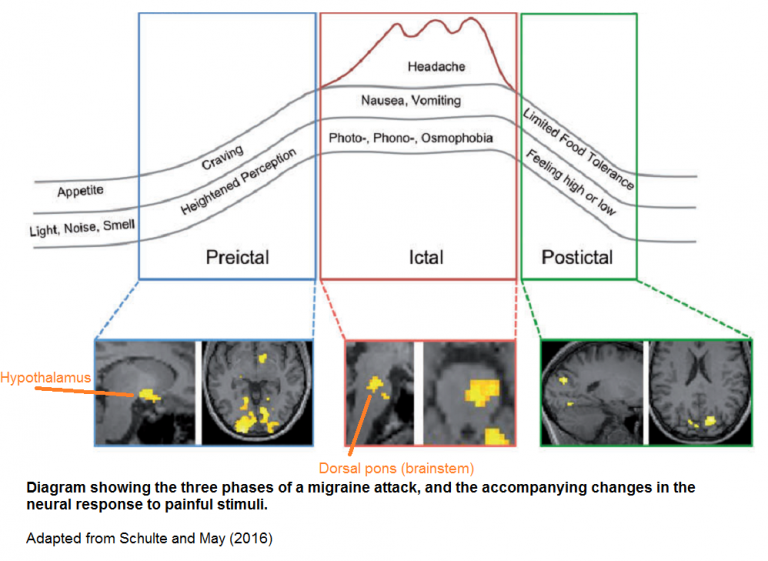
This 2016 German human study with one subject found:

“The hypothalamus to be the primary generator of migraine attacks which, due to specific interactions with specific areas in the higher and lower brainstem, could alter the activity levels of the key regions of migraine pathophysiology.”

The subject underwent daily fMRI scans, and procedures to evoke brain activity. She didn’t take any medications, and suffered three migraine attacks during the 31-day experimental period.

Neuroskeptic commented:

“The dorsal pons has previously been found to be hyperactive during migraine. It’s been dubbed the brain’s ‘migraine generator.’ Schulte and May’s data suggest that this is not entirely true – rather, it looks like the hypothalamus may be the true generator of migraine, while the brainstem could be a downstream mediator of the disorder.

A hypothalamic origin of migraines would help to explain some of the symptoms of the disorder, such as changes in appetite, that often accompany the headaches.”


The above graphic looks to me like the result of feedback mechanisms that either didn’t exist or inadequately handled the triggering event. Other examples of the hypothalamus lacking feedback or being involved in a deviated feedback loop include:

There are many unanswered questions with a one-person study, of course. Addressing the cause of this painful condition would find out when, where, and how a person’s hypothalamus became modified to express migraine tendencies.

I’d guess that migraine tendencies may appear as early as the first trimester of pregnancy, given that a highly functional hypothalamus is needed for survival and development in our earliest lives. Gaining as much familial and historical information as possible from the person would be necessary steps in therapies that address migraine causes.

http://blogs.discovermagazine.com/neuroskeptic/2016/05/22/pinpointing-origins-of-migraine/ “Pinpointing the Origins of Migraine in the Brain”

https://academic.oup.com/brain/article/139/7/1987/2464241 “The migraine generator revisited: continuous scanning of the migraine cycle over 30 days and three spontaneous attacks”


As mentioned in How to cure the ultimate causes of migraines? comments are turned off for this post due to it somehow becoming a magnet for spammers. Readers can comment on that post instead.

Observing pain in others had long-lasting brain effects

This 2016 Israeli human study used whole-head magnetoencephalography (MEG) to study pain perception in military veterans:

Our findings demonstrate alterations in pain perception following extreme pain exposure, chart the sequence from automatic to evaluative pain processing, and emphasize the importance of considering past experiences in studying the neural response to others’ states.

Differences in brain activation to ‘pain’ and ‘no pain’ in the PCC [posterior cingulate cortex] emerged only among controls. This suggests that prior exposure to extreme pain alters the typical brain response to pain by blurring the distinction between painful and otherwise identical but nonpainful stimuli, and that this blurring of the ‘pain effect’ stems from increased responses to ‘no pain’ rather than from attenuated response to pain.”


Limitations included:

  • “The pain-exposed participants showed posttraumatic symptoms, which may also be related to the observed alterations in the brain response to pain.
  • We did not include pain threshold measurements. However, the participants’ sensitivity to experienced pain may have had an effect on the processing of observed pain.
  • The regions of interest for the examination of pain processing in the pain-exposed group were defined on the basis of the results identified in the control group.
  • We did not detect pain-related activations in additional regions typically associated with pain perception, such as the anterior insula and ACC. This may be related to differences between the MEG and fMRI neuroimaging approaches.”

The subjects self-administered oxytocin or placebo per the study’s design. However:

“We chose to focus on the placebo condition and to test group differences at baseline only, in light of the recent criticism on underpowered oxytocin administration studies, and thus all following analyses are reported for the placebo condition.”


A few questions:

  1. If observing others’ pain caused “increased responses to ‘no pain’,” wouldn’t the same effect or more be expected from experiencing one’s own pain?
  2. If there’s evidence for item 1, then why aren’t “increased responses to ‘no pain'” of affected people overtly evident in everyday life?
  3. If item 2 is often observed, then what are the neurobiological consequences for affected people’s suppression of “increased responses to ‘no pain’?”
  4. Along with the effects of item 3, what may be behavioral, emotional, and other evidence of this suppressed pain effect?
  5. What would it take for affected people to regain a normal processing of others’ “‘pain’ and ‘no pain’?”

https://www.researchgate.net/publication/299546838_Prior_exposure_to_extreme_pain_alters_neural_response_to_pain_in_others “Prior exposure to extreme pain alters neural response to pain in others” Thanks to one of the authors, Ruth Feldman, for providing the full study

Empathy, value, pain, control: Psychological functions of the human striatum

This 2016 US human study found:

“A link between existing data on the anatomical and physiological characteristics of striatal regions and psychological functions.

Because we did not limit our metaanalysis to studies that specifically targeted striatal function, our results extend previous knowledge of the involvement of the striatum in reward-related decision-making tasks, and provide a detailed functional map of regional specialization for diverse psychological functions, some of which are sometimes thought of as being the exclusive domain of the PFC [prefrontal cortex].”

The analysis led to dividing the striatum into five segments:

Ventral striatum (VS):

  • Stimulus Value
  • Terms such as “reward,” “losses,” and “craving”
  • The most representative study reported that monetary and social rewards activate overlapping regions within the VS.
  • Together with the above finding of a reliable coactivation with OFC [orbitofrontal cortex] and ventromedial PFC, this finding suggests a broad involvement of this area in representing stimulus value and related stimulus-driven motivational states.

Anterior caudate (Ca) Nucleus:

  • Incentive Behavior
  • Terms such as “grasping,” “reaching,” and “reinforcement”
  • The most representative study reported a stronger blood-oxygen level-dependent (BOLD) response in this region during trials in which participants had a chance of winning or losing money in a card guessing game, in comparison to trials where participants merely received feedback about the accuracy of their guess.
  • This result suggests a role in evaluating the value of different actions, contrasting with the above role of the VS in evaluating the value of stimuli.

Posterior putamen (Pp):

  • Sensorimotor Processes
  • Terms such as “foot,” “noxious,” and “taste”
  • The most representative study reported activation of this region in response to painful stimulation at the back of the left hand and foot of participants. Anatomically, the most reliable and specific coactivation is with sensorimotor cortices, and the posterior and midinsula and operculum (secondary somatosensory cortex SII) in particular, some parts of which are specifically associated with pain.
  • Together, these findings suggest a broad involvement of this area in sensorimotor functions, including aspects of their affective qualities.

Anterior putamen (Pa):

  • Social- and Language-Related Functions
  • Terms such as “read,” “vocal,” and “empathic”
  • The most representative study partially supports a role of this area in social- and language-related functions; it reported a stronger activation of the Pa in experienced singers, but not when novices were singing.
  • It is coactivated with frontal areas anterior to the ones coactivated with the Pp, demonstrating topography in frontostriatal associations. These anterior regions have been implicated in language processes.

Posterior caudate (Cp) Nucleus:

  • Executive Functions
  • Terms such as “causality,” “rehearsal,” and “arithmetic”
  • The representative study reported this region to be part of a network that included dorsolateral PFC and ACC, which supported inhibitory control and task set-shifting.
  • These results suggest a broad, and previously underappreciated, role for the Cp in cognitive control.

The authors presented comparisons of the above striatal segments with other analyses of striatal zones.


One of the coauthors was the lead researcher of the 2015 Advance science by including emotion in research. The current study similarly used a coactivation view rather than a connectivity paradigm of:

“Inferring striatal function indirectly via psychological functions of connected cortical regions.”

Another of the coauthors was a developer of the system used by the current study and by The function of the dorsal ACC is to monitor pain in survival contexts, and he provided feedback to those authors regarding proper use of the system.


The researchers’ “unbiased, data-driven approach” had to work around the cortical biases evident in many of the 5,809 human imaging studies analyzed. The authors referred to the biases in statements such as:

“The majority of studies investigating these psychological functions report activity preferentially in cortical areas, except for studies investigating reward-related and motor functions.”

The methods and results of research with cortical biases influenced the study’s use of:

“Word frequencies of psychological terms in the full text of studies, rather than a detailed analysis of psychological tasks and statistical contrasts.”

http://www.pnas.org/content/113/7/1907.full “Regional specialization within the human striatum for diverse psychological functions”

Does vasopressin increase mutually beneficial cooperation?

This 2016 German human study found:

“Intranasal administration of arginine vasopressin (AVP), a hormone that regulates mammalian social behaviors such as monogamy and aggression, increases humans’ tendency to engage in mutually beneficial cooperation.

AVP increases humans’ willingness to cooperate. That increase is not due to an increase in the general willingness to bear risks or to altruistically help others.”


One limitation of the study was that the subjects were all males, ages 19-32. The study’s title was “human risky cooperative behavior” while omitting subjects representing the majority of humanity.

Although the researchers claimed brain effects from vasopressin administration, they didn’t provide direct evidence for the internasally administered vasopressin in the subjects’ brains. A similar point was made about studies of vasopressin’s companion neuropeptide, oxytocin, in Testing the null hypothesis of oxytocin’s effects in humans.

A third limitation was that although the researchers correlated brain activity with social behaviors, they didn’t carry out all of the tests necessary to demonstrate the claimed “novel causal evidence for a biological factor underlying cooperation.” Per Confusion may be misinterpreted as altruism and prosocial behavior, the researchers additionally needed to:

“When attempting to measure social behaviors, it is not sufficient to merely record decisions with behavioral consequences and then infer social preferences. One also needs to manipulate these consequences to test whether this affects the behavior.”

http://www.pnas.org/content/113/8/2051.full “Vasopressin increases human risky cooperative behavior”

Advance science by including emotion in research

This 2015 analysis of emotion studies found:

“Emotion categories [fear, anger, disgust, sadness, and happiness] are not contained within any one region or system, but are represented as configurations across multiple brain networks.

For example, among other systems, information diagnostic of emotion category was found in both large, multi-functional cortical networks and in the thalamus, a small region composed of functionally dedicated sub-nuclei.

The dataset consists of activation foci from 397 fMRI and PET [positron emission tomography] studies of emotion published between 1990 and 2011.”

From the fascinating Limitations section:

“Our analyses reflect the composition of the studies available in the literature, and are subject to testing and reporting biases on the part of authors. This is particularly true for the amygdala (e.g., the activation intensity for negative emotions may be over-represented in the amygdala given the theoretical focus on fear and related negative states). Other interesting distinctions were encoded in the thalamus and cerebellum, which have not received the theoretical attention that the amygdala has and are likely to be bias-free.

Some regions—particularly the brainstem—are likely to be much more important for understanding and diagnosing emotion than is apparent in our findings, because neuroimaging methods are only now beginning to focus on the brainstem with sufficient spatial resolution and artifact-suppression techniques.

We should not be too quick to dismiss findings in ‘sensory processing’ areas, etc., as methodological artifacts. Emotional responses may be inherently linked to changes in sensory and motor cortical processes that contribute to the emotional response.

The results we present here provide a co-activation based view of emotion representation. Much of the information processing in the brain that creates co-activation may not relate to direct neural connectivity at all, but rather to diffuse modulatory actions (e.g., dopamine and neuropeptide release, much of which is extrasynaptic and results in volume transmission). Thus, the present results do not imply direct neural connectivity, and may be related to diffuse neuromodulatory actions as well as direct neural communication.”


Why did the researchers use only 397 fMRI and PET studies? Why weren’t there tens or hundreds of times more candidate studies from which to select?

The relative paucity of candidate emotion studies demonstrated the prevalence of other researchers’ biases for cortical brain areas. The lead researcher of the current study was a coauthor of the 2016 Empathy, value, pain, control: Psychological functions of the human striatum, whose researchers mentioned that even their analyses of 5,809 human imaging studies was hampered by other imaging-studies researchers’ cortical biases.

Functional MRI signals depend on the changes in blood flow that follow changes in brain activity. Study designers intentionally limit their findings when they scan brain areas and circuits that are possibly activated by human emotions, yet exclude emotional content that may activate these areas and circuits.

Here are a few examples of limited designs that led to limited findings when there was the potential for so much more:

It’s well past time to change these practices now in the current year.


This study provided many methodological tests that should be helpful for research that includes emotion. It showed that there aren’t impenetrable barriers – other than popular memes, beliefs, and ingrained dogmas – to including emotional content in studies.

Including emotional content may often be appropriate and informative, with the resultant findings advancing science. Here are a few recent studies that did so:

http://journals.plos.org/ploscompbiol/article?id=10.1371%2Fjournal.pcbi.1004066 “A Bayesian Model of Category-Specific Emotional Brain Responses”

It is known: Are a study’s agendas more important than its evidence?

This 2015 Swiss human study’s Abstract began:

“It is known that increased circulating glucocorticoids in the wake of excessive, chronic, repetitive stress increases anxiety and impairs Brain-Derived Neurotrophic Factor (BDNF) signaling.”


The study had several statements that were unconvincingly supported by the study’s findings. One such statement in the Conclusions section was:

“This study supports the view that early-life adversity may induce long-lasting epigenetic changes in stress-related genes, thus offering clues as to how intergenerational transmission of anxiety and trauma could occur.”

However, the study’s evidence for “intergenerational transmission of anxiety and trauma” as summarized in the Limitations section was:

“This study did not directly associate child behavior or biology to maternal behavior and biology.”

In another example, the Discussion section began with:

“The severity of maternal anxiety was significantly correlated with mean overall methylation of 4 CpG sites located in exon IV of the BDNF promoter region as measured from DNA extracted from mothers’ saliva.

In addition, methylation at CpG3 was also significantly associated with maternal exposure to domestic violence during childhood, suggesting that BDNF gene methylation levels are modulated by early adverse experiences.”

The researchers assessed five DNA methylation values (four individual sites and the overall average). The CpG3 site was “significantly associated with maternal exposure to domestic violence during childhood” and the three other CpG sites’ methylation values were not.

IAW, the researchers found only one of four sites’ methylation values significantly associated to only one of many studied early adverse experiences. This finding didn’t provide sufficient evidence to support the overarching statement:

“BDNF gene methylation levels are modulated by early adverse experiences.”

To make such a generally applicable statement – more than one BDNF gene’s methylation levels could be directly altered by more than one early adverse experience – the researchers would, AT A MINIMUM, need to provide evidence that:

  1. The one category of significantly associated early adverse experience directly altered the one significantly associated CpG site’s DNA methylation level
  2. Other categories of early adverse experiences were fairly represented by the one significantly associated experience category
  3. Other categories of early adverse experiences could directly alter other BDNF genes’ DNA methylation levels
  4. The significantly associated DNA methylation level of only one out of four CpG sites was fairly represented by the overall average of the four sites
  5. Other BDNF gene’s methylation levels were fairly represented by the overall average of the four sites

If researchers and sponsors must have agendas, a worthwhile, evidence-supported one would be to investigate prenatal and perinatal epigenetic causes for later-life adverse effects.

As Grokking an Adverse Childhood Experiences (ACE) score pointed out, environmental factors that disrupt neurodevelopment may be the largest originators of epigenetic changes that are sustained throughout an individual’s entire lifespan.

What’s the downside of conducting studies that may “directly associate child behavior or biology to maternal behavior and biology” during time periods when a child’s environment has the greatest impact on their development?

When prenatal and perinatal periods aren’t addressed, researchers and sponsors neglect the times during which many harmful epigenetic consequences may be prevented. It is known.

http://journals.plos.org/plosone/article?id=10.1371/journal.pone.0143427 “BDNF Methylation and Maternal Brain Activity in a Violence-Related Sample”

The function of the dorsal ACC is to monitor pain in survival contexts

This 2015 California human study was of the dorsal anterior cingulate cortex (dACC):

“No neural region has been associated with more conflicting accounts of its function than the dACC.

The best psychological description of dACC function was related to pain processing—not executive, conflict, or salience processing.

We conclude by considering that physical pain may be an instance of a broader class of survival-relevant goals monitored by the dACC, in contrast to more arbitrary temporary goals, which may be monitored by the supplementary motor area.”

A related brain area – the paracingulate sulcus (PCS) – and its impact on the study’s findings was discussed in the supplementary material:

“The PCS is present in a subset of the population and thus extends the dACC further in the dorsal direction. This possible additional sulcus is relevant because, for some individuals, the ventral portion of the SMA [supplementary motor area]/pre-SMA may actually be the PCS.

The vast majority of fMRI studies overlook most individual differences in neuroanatomy and depend on the probabilistic neuroanatomy averaged across a group of participants and then on standard atlases that typically don’t take these individual differences into account.

There are two structural forms of PCS. The “prominent” form extends through the entire dACC region; however the “present” form begins in the rostral ACC and ends near the anterior border of the dACC.

Men are significantly more likely than women to have unilateral or bilateral PCS.

Additionally, six morphology studies have indicated the existence of a PCS that is left-lateralized.”

How about that? A brain area that:

  • Assists in monitoring pain in the contexts of survival goals;
  • Size, form, and placement varies widely among individuals;
  • Is missing in some people!

Here’s a long critique of the study that included dialog with the authors:

http://www.talyarkoni.org/blog/2015/12/14/still-not-selective-comment-on-comment-on-comment-on-lieberman-eisenberger-2015/

“If you observe activation in dACC..your single best guess as to what process might be involved..should be ‘motor’ by a landslide. You could also guess ‘reward’ or ‘working memory’ with about the same probability as ‘pain.’

Of course, the more general message you should take away from this is that it’s probably a bad idea to infer any particular process on the basis of observed activity.”


And the authors’ “last comment”:

https://www.psychologytoday.com/blog/social-brain-social-mind/201601/more-evidence-pain-related-description-dacc

“Based on Neurosynth evidence, is more of the dACC selective for pain than for attention, autonomic, avoidance, conflict, emotion, error, executive, fear, negative affect, response inhibition, response selection, reward, and salience? Absolutely.”

http://www.pnas.org/content/112/49/15250.full “The dorsal anterior cingulate cortex is selective for pain: Results from large-scale reverse inference”

Further limits on using monkeys to understand human brains

This 2015 Columbia human/macaque study found:

“Fundamental differences in the attention-related brain areas in the two species, including the complete absence, in monkeys, of a ventral-attention network present in humans.

We did not find functional evidence of a temporoparietal junction in macaques.

The two species last shared a common ancestor 25 million years ago, and in the intervening time the brain areas underlying cognition have likely evolved along different paths.

The results of this study indicate that macaque data should be applied to human models of cognition cautiously, and demonstrate how evolution may shape cortical networks.”

The main point of this study was the same as noted in Limits of dMRI brain studies, which advised – instead of performing studies on monkeys to understand humans:

“Assess human anatomical connections directly and comprehensively.”

We can look forward to times when using macaques in studies such as:

is no longer acceptable.

http://www.pnas.org/content/112/30/9454.full “Functional evolution of new and expanded attention networks in humans”

Do strong emotions cause our brain hemispheres to interact more closely?

This 2015 human/macaque study found:

“The functional coordination between the two hemispheres of the brain is maintained by strong and stable interactions.

These findings suggest a notable role for the corpus callosum in maintaining stable functional communication between hemispheres.”

The human subjects were asked to:

“Generate four negative autobiographical memories and create word cues that reminded them of each event. Participants then underwent a 6-min IR fMRI scan during which they were cued with the words they had created to recall the two most negative autobiographic memories generated outside the scanner.”

However, the study’s supplementary material didn’t address why the researchers used this particular technique.

Does recalling strong emotional memories that engage our limbic systems cause our brain hemispheres to interact more closely than do cerebral exercises?


This study demonstrated that including emotional content in brain studies was essential. It may have provided additional information had the researchers also used the two least-negative emotional memories.

As noted in Agenda-driven research on emotional memories, one hypothesis of Dr. Arthur Janov’s Primal Therapy is that recalling an emotional memory engages one’s brain differently than does re-experiencing an emotional memory. Asking the subjects to attempt to re-experience the two least-negative emotional memories may have provided data relevant to the study.


I didn’t understand why macaques were used as subjects. The researchers didn’t provide any tasks for the monkeys during the scans. The information this study gained only duplicated other studies.

Also, the monkeys were anesthetized throughout the experiments. An assumption that wasn’t addressed: fMRI scan data on anesthetized macaques provided comparable evidence to fMRI scan data on normal non-anesthetized humans who were recalling emotional memories?

Did the researchers use macaques simply because they were available?

http://www.pnas.org/content/112/20/6473.full “Stable long-range interhemispheric coordination is supported by direct anatomical projections”

People who donated a kidney to a stranger have a larger amygdala

This 2014 Georgetown study was of people who had donated a kidney to a stranger. The study found that the subjects had a larger right amygdala part of their limbic systems:

“Our results support the possibility of a neural basis for extraordinary altruism.

In sum, our findings suggest that individuals who have performed an act of extraordinary altruism can be distinguished from healthy controls by increased right amygdala volume, as well as heightened responsiveness in right amygdala to fearful facial expressions, which may support enhanced recognition of these expressions.”

The researchers stopped short of causal explanations. They stated in the study’s abstract that:

“Individual variation in altruistic tendencies may be genetically mediated”

but didn’t develop any evidence to support this statement.

It would have been within the scope of the study had the researchers continued on to examine:

  • What may have happened in the subjects’ lives to possibly cause their neurobiological and psychological attributes?
  • What were the causes for the subjects’ extreme altruistic behavior?
  • Were these the same causes for their larger, more sensitive amygdala?

An accompanying PNAS commentary from a Harvard researcher made other points. However, the author showed his biases that the cerebrum rules human behavior with an out-of-left-field question at the end of a paragraph in which he developed specious reasoning.

The commentator was completely off base when he stated:

“Could it be that extraordinary altruists such as Maupin [a study participant] and the 19 individuals studied by Marsh et al. [the researchers] are special, not only because of how they feel when they see people in distress, but because of how they think?”

I don’t imagine that the brilliant commentator’s attempt to upstage the study’s subjects and put the spotlight on himself for some brilliant idea was much appreciated by anyone involved.

The amygdala is the central hub of a person’s limbic system. The study’s findings had very little to say about the subjects’ cerebral activity – thinking.

To postulate that the researchers missed that there was something different about the subjects’ thinking was out of touch with the realities of both the researchers’ scientific bases and the subjects. It’s another example of the current research mindset/social meme of cerebral dominance.

http://www.pnas.org/content/111/42/15036.full “Neural and cognitive characteristics of extraordinary altruists”

Problematic research on suppressing unwanted memories

This 2014 French/UK human study found:

“Motivated forgetting mechanisms, known to disrupt conscious retention, also reduce unconscious expressions of memory, pointing to a neurobiological model of this process.”

There were multiple problems with this study.

1. The researchers excluded emotional content, although the study involved areas of the brain involved in processing emotions:

roi

How could the study’s findings apply to:

“The distressing intrusions that accompany posttraumatic stress disorder

when emotional memories were excluded? It was an unsupported assertion for one of the researchers to state:

“The better understanding of the neural mechanisms underlying this process arising from this study may help to better explain differences in how well people adapt to intrusive memories after a trauma.”

2. The term “unconscious” was used 27 times, including in the title, without defining it. The cited studies defined “unconscious” several meaningfully different ways. How could the findings achieve validity when they contained an undefined term?

3. The experiments involved short-term memories and visual perception, and the subjects took longer to visually perceive objects that they had been directed to suppress than those that they had been directed to think about. However, the researchers didn’t show that these experimental results could be extrapolated into findings about long-term unconscious memories.

4. Data manipulation:

  • The researchers noted:

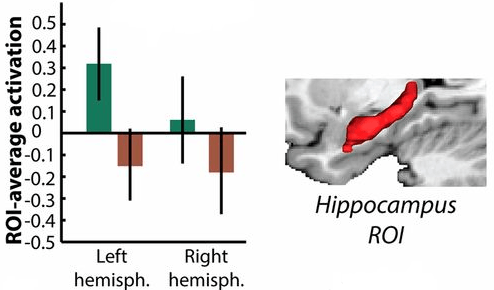
    “We did not observe less hippocampal activation during no-think than think trials.”

  • This data didn’t fit what they wanted to find, so they:

    “Restricted the search volume to anatomically defined regions of interest.”

  • They still couldn’t make their predetermined finding, so they discarded:

    “An outlier which compromised the significance of this effect.”

The above process didn’t support the statement that immediately followed:

“Thus, suppression robustly engaged the brain regions associated with memory control, and this was accompanied by reduced activation in the hippocampus.”

Didn’t the reviewer have something to say about these four problem areas?

It was a letdown to read the details of the study when its title held out such promise for informing us about the unconscious influence of memories. Per the Scientific evidence page, it would really help a person as a first step to become somewhat aware of their unconscious memories and feelings, especially when these are expressed through behavior.

http://www.pnas.org/content/111/13/E1310.full “Suppressing unwanted memories reduces their unconscious influence via targeted cortical inhibition”

Epigenetic DNA methylation of the oxytocin receptor gene affected the perception of anger and fear

This 2015 Virginia human study:

“Reveals how epigenetic variability in the endogenous oxytocin system impacts brain systems supporting social cognition and is an important step to better characterize relationships between genes, brain, and behavior.”

The researchers did a lot of things right:

  • They studied a priori selected brain areas, followed by whole brain analyses;
  • Their subjects were carefully selected

    “Because methylation levels have been shown to differ as a function of race, we restricted our sample to Caucasians of European descent”

    but they didn’t restrict subjects to the same gender;

  • They acknowledged as a limitation:

    “A lack of behavioral evidence to reveal how these epigenetic and neural markers impact the overt social phenotype.”


One thing on which I disagree with the researchers is their assessment of what needs to be done next. Their news release stated:

“When imagining the future possibilities and implications this DNA methylation and oxytocin receptor research may have, the investigators think a blood test could be developed in order to predict how an individual may behave in social situations.”

Nice idea, but the next step should be to complete the research. The next step is to develop evidence for how the oxytocin receptor gene became methylated.

The subjects had a wide range of DNA methylation at the studied gene site – from 33% to 72% methylated!

Why?

At the same gene site:

“There was a significant effect of sex such that females have a higher level of methylation than males.”

Why?

Given these significant effects, why was there no research into likely causes?

Aren’t early periods in people’s lives the most likely times when the “Epigenetic modification of the oxytocin receptor gene” that “influences the perception of anger and fear in the human brain” takes place?

Wouldn’t findings from research on the subjects’ histories potentially help other people?

http://www.pnas.org/content/112/11/3308.full “Epigenetic modification of the oxytocin receptor gene influences the perception of anger and fear in the human brain”