RNA and neurodegenerative diseases

This 2018 Chinese paper reviewed the associations among long non-coding RNA and four neurodegenerative diseases:

“lncRNAs are widely implicated in various physiological and pathological processes, such as epigenetic regulation, cell cycle regulation, cell differentiation regulation, cancer, and neurodegenerative diseases, through their interactions with chromatin, protein, and other RNAs. Numerous studies have suggested that lncRNAs are closely linked with the occurrence and development of a variety of diseases, especially neurodegenerative diseases, of which the etiologies are complicated and the underlying mechanisms remain elusive.

We focus on how lncRNA dysfunctions are involved in the pathogenesis of Alzheimer’s disease, Parkinson’s disease, Huntington’s disease, and amyotrophic lateral sclerosis.”


Table 1 showed specific lncRNAs that acted as “bodyguards” in inherited Huntington’s disease, “culprits” in Alzheimer’s disease, and as both in Parkinson’s disease. The table didn’t include lncRNAs associated with amyotrophic lateral sclerosis although the review text mentioned several.

https://www.sciencedirect.com/science/article/pii/S2162253117303104 “Long Non-coding RNAs, Novel Culprits, or Bodyguards in Neurodegenerative Diseases”

Sleep and adult brain neurogenesis

This 2018 Japan/Detroit review subject was the impact of sleep and epigenetic modifications on adult dentate gyrus neurogenesis:

“We discuss the functions of adult‐born DG neurons, describe the epigenetic regulation of adult DG neurogenesis, identify overlaps in how sleep and epigenetic modifications impact adult DG neurogenesis and memory consolidation..

Whereas the rate of DG neurogenesis declines exponentially with age in most mammals, humans appear to exhibit a more modest age‐related reduction in DG neurogenesis. Evidence of adult neurogenesis has also been observed in other regions of the mammalian brain such as the subventricular zone, neocortex, hypothalamus, amygdala, and striatum.

Adult‐born DG neurons functionally integrate into hippocampal circuitry and play a special role in cognition during a period of heightened excitability and synaptic plasticity occurring 4–6 weeks after mitosis. Adult DG neurogenesis is regulated by a myriad of intrinsic and extrinsic factors, including:

  • drugs,
  • diet,
  • inflammation,
  • physical activity,
  • environmental enrichment,
  • stress, and
  • trauma.”


Some of what the review stated was contradicted by other evidence. For example, arguments for sleep were based on the memory consolidation paradigm, but evidence against memory consolidation wasn’t cited for balanced consideration.

It reminded me of A review that inadvertently showed how memory paradigms prevented relevant research. That review’s citations included a study led by one of those reviewers where:

“The researchers elected to pursue a workaround of the memory reconsolidation paradigm when the need for a new paradigm of enduring memories directly confronted them!”

Some of what this review stated was speculation. I didn’t quote any sections after:

 “We go one step further and propose..”

The review also had a narrative directed toward:

“Employing sleep interventions and epigenetic drugs..”

It’s storytelling rather than pursuing the scientific method when reviewers approach a topic as these reviewers did.

Instead of reading a directed narrative, read this informative blog post from a Canadian researcher. The post provided scientific contexts to summarize what was and wasn’t known in 2018 about human neurogenesis.

http://onlinelibrary.wiley.com/doi/10.1002/stem.2815/epdf “Regulatory Influence of Sleep and Epigenetics on Adult Hippocampal Neurogenesis and Cognitive and Emotional Function”

Viruses target epigenetic processes

This 2018 Colorado review subject was general and specific ways viruses target epigenetic processes:

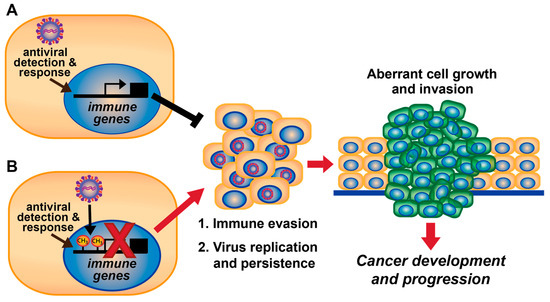
“We describe viral mechanisms and virus-host interactions by which DNA tumor viruses regulate host DNA methylation to evade antiviral immunity.

It is well known that most endogenous retroviruses and retrotransposons in the human genome are inactivated by DNA hypermethylation. In addition to endogenous retroviruses, the genomes of DNA viruses, such as human papillomavirus (HPV), herpes simplex virus 1 (HSV-1), adenovirus, and hepatitis B virus (HBV), are also frequently methylated and silenced in infected cells.

A recently described mechanism for viruses to epigenetically subvert host immunity is repression of immune-related gene expression by induction of DNA hypermethylation. Some host genes are not silenced simply through promoter hypermethylation or histone deacetylation alone, and therefore, viruses may have evolved mechanisms to ensure host gene downregulation through multiple epigenetic modifications.”

http://www.mdpi.com/1999-4915/10/2/82/htm “DNA Tumor Virus Regulation of Host DNA Methylation and Its Implications for Immune Evasion and Oncogenesis”


A second 2018 New York study focused on the Zika virus and DNA methylation:

“We studied the impact of ZIKV infection on the DNA methylation pattern across the entire genome in selected neural cell types. The virus unexpectedly alters the DNA methylome of neural progenitors, astrocytes, and differentiated neurons at genes that have been implicated in the pathogenesis of a number of brain disorders.

It remains open, however, whether the methylation changes come first or whether the viral infection dysregulates epigenetic regulatory genes prior to any epigenetic shift.”

http://msystems.asm.org/content/3/1/e00219-17 “Zika Virus Alters DNA Methylation of Neural Genes in an Organoid Model of the Developing Human Brain”

Lysine acetylation is gnarly and dynamic

This 2018 UC San Francisco cell review provided details of lysine acetylation:

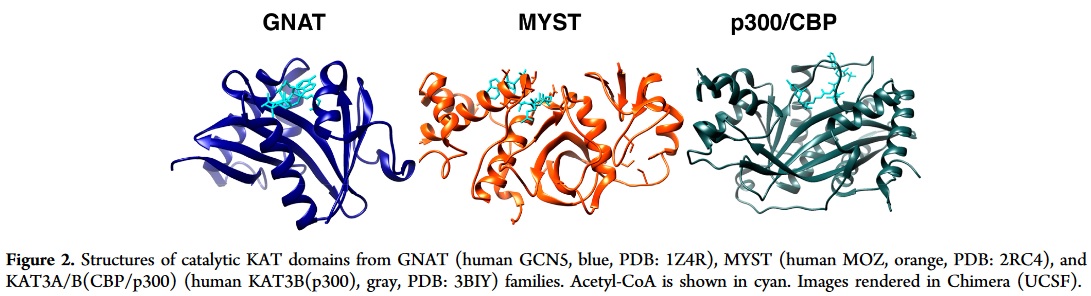
“Lysine acetylation has moved from being a specialized mark on histones to a critical modification controlling cell fate, proliferation, and metabolism.

During the lifetime of a protein there are many points at which an acetyl group may be added to influence function. The dynamic interplay between the writers, erasers, and readers of acetylation regulates critical epigenomic and metabolic processes, in addition to other major cellular functions.

Acetylation sites are well conserved, in contrast to methylation, where species-specific differences exist.”

The review included a section on mitochondrial protein acetylation:

“Mitochondria have emerged as organelles in which acetylation is more prominent than phosphorylation and plays a key role in integrating metabolic cues with the bioenergetic equilibrium of the cell.

Increased mitochondrial protein acetylation is associated with physiological conditions that result in higher levels of acetyl-CoA (e.g., fasting, calorie restriction, high-fat diet, and ethanol intoxication).”

https://pubs.acs.org/doi/full/10.1021/acs.chemrev.7b00181 “Lysine Acetylation Goes Global: From Epigenetics to Metabolism and Therapeutics” (not freely available) Thanks to lead author Ibraheem Ali for providing a full copy.

A review of human pluripotent stem cell research

Starting the fourth year of this blog with a 2018 Belgian review of human pluripotent stem cells (hPSCs):

“hPSCs are now starting to live up to the great expectations they created after their first derivation nearly twenty years ago. The first results of clinical trials to treat macular degeneration are being published, and an increasing number of clinical or preclinical trials are being started for conditions such as spinal cord injury, diabetes, and heart disease.

This imminent transition of pluripotent stem cells to the clinic has resulted in researchers and clinicians becoming acutely aware of the problems related to the genetic and epigenetic diversity of these cells, included acquired mutations.”

The review included a section on mitochondrial processes that impact the differentiation capacity of pluripotent stem cells, summarized by:

“From this overview, we also observe a more ample contribution of mtDNA in cell fate determination than is represented in many studies tackling the topic.

The transition from aerobic glycolysis to aerobic phosphorylation plays a vital role in cells’ ability to correctly proceed through differentiation, though the mtDNA is rarely evaluated.”

https://academic.oup.com/humupd/advance-article-abstract/doi/10.1093/humupd/dmx042/4825062?redirectedFrom=fulltext “Genetic and epigenetic factors which modulate differentiation propensity in human pluripotent stem cells” (not freely available) Thanks to lead author Alexander Keller for providing a copy.

Non-CpG DNA methylation

This 2017 Korean review compared and contrasted CpG and non-CpG DNA methylation:

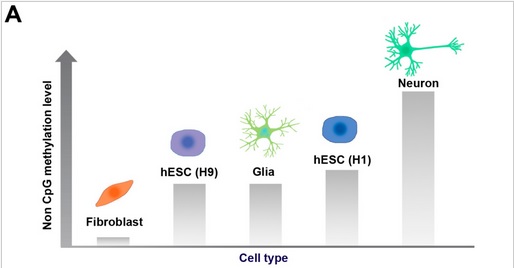
“Non-CpG methylation is restricted to specific cell types, such as pluripotent stem cells, oocytes, neurons, and glial cells. Accumulation of methylation at non-CpG sites and CpG sites in neurons seems to be involved in development and disease etiology.

Non-CpG methylation is established during postnatal development of the hippocampus and its levels increase over time. Similarly, non-CpG methylation is scarcely detected in human fetal frontal cortex, but is dramatically increased in later life. This increase in non-CpG methylation occurs simultaneously with synaptic development and increases in synaptic density.

In contrast, CpG methylation occurs during early development and does not increase over time.

Neurons have considerably higher levels of non-CpG methylation than glial cells. The human male ES [embryonic stem] cell line (H1) is more highly methylated than the female ES cell line (H9).

Among the different types of non-CpG methylation (CpA [adenosine], CpT [thymine], and CpC [another cytosine]), methylation is most common at CpA sites. For instance, in human iPS [induced pluripotent stem] cells, 5mCs are found in approximately 68.31%, 7.81%, 1.99%, and 1.05% of CpG, CpA, CpT, and CpC sites, respectively.”


The reviewers’ referenced statement:

“CpG methylation occurs during early development and does not increase over time.”

was presented outside of its context. The 2013 cited source’s statement was restricted to “selected loci” in the rodent hippocampus:

“Consistent with a recent study of the cortex, time-course analyses revealed that CpH [non-CpG] methylation at the selected loci was established during postnatal development of the hippocampus and was then present throughout life, whereas CpG methylation was established during early development.”

Epigenetic study methodologies improved in 2017 had more information on CpA methylation.

http://www.mdpi.com/2073-4425/8/6/148/htm “CpG and Non-CpG Methylation in Epigenetic Gene Regulation and Brain Function”

How to cure the ultimate causes of migraines?

Most of the spam I get on this blog comes in as ersatz comments on The hypothalamus couples with the brainstem to cause migraines. I don’t know what it is about the post that attracts internet bots.

The unwanted attention is too bad because the post represents a good personal illustration of “changes in the neural response to painful stimuli.” Last year I experienced three three-day migraines in one month as did the study’s subject. This led to me cycling through a half-dozen medications in an effort to address the migraine causes.

None of the medications proved to be effective at treating the causes. I found one that interrupted the progress of migraines – sumatriptan, a serotonin receptor agonist. I’ve used it when symptoms start, and the medication has kept me from having a full-blown migraine episode in the past year.

1. It may be argued that migraine headache tendencies are genetically inherited. Supporting personal evidence is that both my mother and younger sister have migraine problems. My father, older sister, and younger brother didn’t have migraine problems. Familial genetic inheritance usually isn’t the whole story of diseases, though.

2. Migraine headaches may be an example of diseases that are results of how humans have evolved. From Genetic imprinting, sleep, and parent-offspring conflict:

“Evolutionary theory predicts: that which evolves is not necessarily that which is healthy.

Why should pregnancy not be more efficient and more robust than other physiological systems, rather than less? Crucial checks, balances and feedback controls are lacking in the shared physiology of the maternal–fetal unit.

Both migraine causes and effects may be traced back to natural lacks of feedback loops. These lacks demonstrate that such physiological feedback wasn’t evolutionarily necessary in order for humans to survive and reproduce.

3. Examples of other processes occurring during prenatal development that also lack feedback loops, and their subsequent diseases, are:

A. Hypoxic conditions per Lack of oxygen’s epigenetic effects are causes of the fetus later developing:

  • “age-related macular degeneration
  • cancer progression
  • chronic kidney disease
  • cardiomyopathies
  • adipose tissue fibrosis
  • inflammation
  • detrimental effects which are linked to epigenetic changes.”

B. Stressing pregnant dams per Treating prenatal stress-related disorders with an oxytocin receptor agonist caused fetuses to develop a:

and abnormalities:

  • in social behavior,
  • in the HPA response to stress, and
  • in the expression of stress-related genes in the hippocampus and amygdala.”

1. What would be a treatment that could cure genetic causes for migraines?

I don’t know of any gene therapies.

2. What treatments could cure migraines caused by an evolved lack of feedback mechanisms?

We humans are who we have become, unless and until we can change original causes. Can we deal with “changes in the neural response to painful stimuli” without developing hopes for therapies or technologies per Differing approaches to a life wasted on beliefs?

3. What treatments could cure prenatal epigenetic causes for migraines?

The only effective solution I know of that’s been studied in humans is to prevent adverse conditions like hypoxia from taking place during pregnancy. The critical periods of our physical development are over once we’re adults, and we can’t unbake a cake.

Maybe science will offer other possibilities. Maybe researchers could do more than their funding sponsors expect?

Differing approaches to a life wasted on beliefs

Let’s start by observing that people structure their lives around beliefs. As time goes on, what actions would a person have taken to ward off non-confirming evidence?

One response may be that they would engage in ever-increasing efforts to develop new beliefs that justified how they spent their one precious life’s time so far.

Such was my take on beliefs embedded in https://www.ncbi.nlm.nih.gov/pmc/articles/PMC5684598/pdf/PSYCHIATRY2017-5491812.pdf “Epigenetic and Neural Circuitry Landscape of Psychotherapeutic Interventions”:

“Animal models have shown the benefits of continued environmental enrichment (EE) on psychopathological phenotypes, which carries exciting translational value.

This paper posits that psychotherapy serves as a positive environmental input (something akin to EE).”

The author conveyed his belief that wonderful interventions were going to happen in the future. However, when scrutinized, most human studies have demonstrated NULL effects of psychotherapeutic interventions on causes. Without sound evidence that treatments affect causes, his belief seemed driven by something else.

The author cited findings of research like A problematic study of oxytocin receptor gene methylation, childhood abuse, and psychiatric symptoms as supporting external interventions to tamp down symptoms of patients’ presenting problems. Did any of the 300+ cited references concern treatments where patients instead therapeutically addressed their problems’ root causes?


For an analogous religious example, a person’s belief caused him to spend years of his life trying to convince men to act so that they could get their own planet after death, and trying to convince women to latch onto men who had this belief. A new and apparently newsworthy belief developed from his underlying causes:

“The founder and CEO of neuroscience company Kernel wants “to expand the bounds of human intelligence.” He is planning to do this with neuroprosthetics; brain augmentations that can improve mental function and treat disorders. Put simply, Kernel hopes to place a chip in your brain.

He was raised as a Mormon in Utah and it was while carrying out two years of missionary work in Ecuador that he was struck by what he describes as an “overwhelming desire to improve the lives of others.”

He suffered from chronic depression from the ages of 24 to 34, and has seen his father and stepfather face huge mental health struggles.”

https://www.theguardian.com/small-business-network/2017/dec/14/humans-20-meet-the-entrepreneur-who-wants-to-put-a-chip-in-your-brain “Humans 2.0: meet the entrepreneur who wants to put a chip in your brain”

The article stated that he had given up Mormonism. There was nothing to suggest, though, that he had therapeutically addressed any underlying causes for his misdirected thoughts, feelings, and behavior.

So he developed other beliefs instead.


What can people do to keep their lives from being wasted on beliefs? As mentioned in What was not, is not, and will never be:

“The problem is that spending our time and efforts on these ideas, beliefs, and behaviors won’t ameliorate their motivating causes. Our efforts only push us further away from our truths, with real consequences: a wasted life.

The goal of the therapeutic approach advocated by Dr. Arthur Janov’s Primal Therapy is to remove the force of presenting problems’ motivating causes. Success in reaching this goal is realized when patients become better able to live their own lives.

Do you have your family’s detailed medical histories?

Imagine that you were a parent who puzzled over the mystery of your pre-teen daughter’s hyperactive behavior. Without detailed family medical histories, would anyone recognize this as a preprogammed phenotype?

Could anyone trace the daughter’s behavior back to her maternal great-grandmother being treated with glucocorticoids near the end of the second trimester of carrying her grandfather?

Such was a finding of a 2017 Canadian guinea pig study that was undertaken to better inform physicians of the transgenerationally inherited epigenetic effects of glucocorticoid treatments commonly prescribed during human pregnancies:

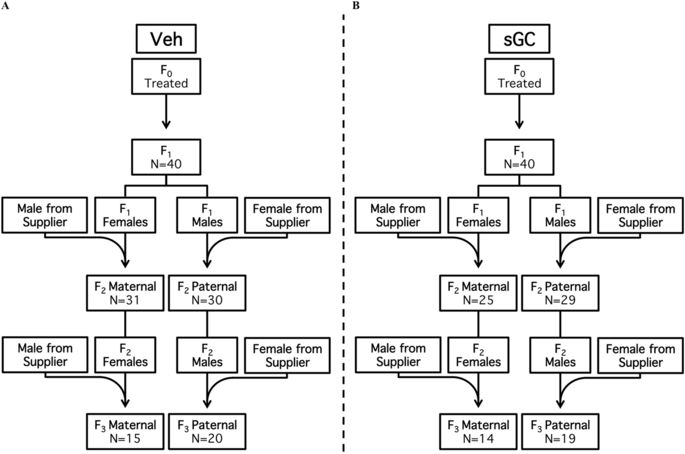
“This study presents the first evidence that prenatal treatment with sGC [synthetic glucocorticoid] results in transgenerational paternal transmission of hyperactivity and altered hypothalamic gene expression through three generations of young offspring. Female offspring appear to be more sensitive than male offspring to the programming effects of sGC, which suggests an interaction between sGC and sex hormones or sex-linked genes. Paternal transmission to F3 strongly implicates epigenetic mechanisms in the process of transmission, and small noncoding RNAs likely play a major role.”


Some details of the study included:

Veh[icle] was the control group initially treated with saline.

The study was informative and conclusive for the aspects studied. From the Methods section:

“Data from same-sex littermates were meaned to prevent litter bias. Sample sizes (N) correspond to independent litters, and not to the total number of offspring across all litters.

Power analyses based on previous studies determined N ≥ 8 sufficient to account for inter-litter variability and detect effects in the tests performed.”

https://www.nature.com/articles/s41598-017-11635-w “Prenatal Glucocorticoid Exposure Modifies Endocrine Function and Behaviour for 3 Generations Following Maternal and Paternal Transmission”

What is a father’s role in epigenetic inheritance?

The agenda of this 2017 Danish review was to establish a paternal role in intergenerational and transgenerational epigenetic inheritance of metabolic diseases:

“There are four windows of susceptibility which have major importance for epigenetic inheritance of acquired paternal epigenetic changes:

  1. paternal primordial germ cell (PGC) development,
  2. prospermatogonia stages,
  3. spermatogenesis, and
  4. during preimplantation.”

The review was a long read as the authors discussed animal studies. When it came to human studies near the paper’s end, though, the tone was of a “we know this is real, we just have to find it” variety. The authors acknowledged:

“To what extent the described DNA methylation changes influence the future health status of offspring by escaping remodeling in the preimplantation period as well as in future generations by escaping remodeling in PGC remodeling has yet to be determined.

These studies have not yet provided an in-depth understanding of the specific mechanisms behind epigenetic inheritance or exact effect size for the disease risk in offspring.

Pharmacological approaches have reached their limits..”

before presenting their belief that a hypothetical series of future CRISPR-Cas9 experiments will demonstrate the truth of their agenda.


The review focused on 0.0001% of the prenatal period for what matters with the human male – who he was at the time of a Saturday night drunken copulation – regarding intergenerational and transgenerational epigenetic inheritance of metabolic diseases.

The human female’s role – who she was at conception AND THEN what she does or doesn’t do during the remaining 99.9999% of the prenatal period to accommodate the fetus and prevent further adverse epigenetic effects from being intergenerationally and transgenerationally transmitted  – wasn’t discussed.

Who benefits from this agenda’s narrow focus?

If the review authors sincerely want to:

“Raise societal awareness of behavior to prevent a further rise in the prevalence of metabolic diseases in future generations..”

then EARN IT! Design and implement HUMAN studies to test what’s already known from epigenetic inheritance animal studies per Experience-induced transgenerational programming of neuronal structure and functions. Don’t disguise beliefs with the label of science.

http://jme.endocrinology-journals.org/content/early/2017/12/04/JME-17-0189.full.pdf “DNA methylation in epigenetic inheritance of metabolic diseases through the male germ line”

One example of how experience changes the brain

This 2017 California rodent study found:

“Neural representations within the mouse hypothalamus, that underlie innate social behaviours, are shaped by social experience.

In sexually and socially experienced adult males, divergent and characteristic neural ensembles represented male versus female conspecifics [members of the same species]. However, in inexperienced adult males, male and female intruders activated overlapping neuronal populations.

Sex-specific neuronal ensembles gradually separated as the mice acquired social and sexual experience. In mice permitted to investigate but not to mount or attack conspecifics, ensemble divergence did not occur. However, 30 minutes of sexual experience with a female was sufficient to promote the separation of male and female ensembles.

These observations uncover an unexpected social experience-dependent component to the formation of hypothalamic neural assemblies controlling innate social behaviours. More generally, they reveal plasticity and dynamic coding in an evolutionarily ancient deep subcortical structure that is traditionally viewed as a ‘hard-wired’ system.”

Hat tip to Neuroskeptic for both alerting me to the study and simplifying its overly-dense graphics.

http://www.nature.com/nature/journal/v550/n7676/full/nature23885.html “Social behaviour shapes hypothalamic neural ensemble representations of conspecific sex” (not freely available)

“Transgenerationally” inherited epigenetic effects of fetal alcohol exposure

The fourth paper of Transgenerational epigenetic inheritance week was a 2016 German rodent study of of improperly-termed “transgenerational” epigenetic effects of alcohol:

“We investigated 2 generations of offspring born to alcohol-treated mothers. Here, we show that memory impairment and reduced synthesis of acetylcholine occurs in both F1 (exposed to ethanol in utero) and F2 generation (never been exposed to ethanol). Effects in the F2 generation are most likely consequences of transgenerationally transmitted epigenetic modifications in stem cells induced by alcohol.

The results further suggest an epigenetic trait for an anticholinergic endophenotype associated with cognitive dysfunction which might be relevant to our understanding of mental impairment in neurodegenerative disorders such as Alzheimer’s disease and related disorders.”

F0 generation mothers modeled human fetal alcohol syndrome. They were exposed to ethanol gradually up to 20%, then mated. The 20% ethanol intake level was maintained until the F1 generation pups were born, then gradually diminished to 0%. After a ten-day wait, an eight-week handling and shaping period started, followed by five weeks of behavioral testing.

The F1 children and F2 grandchildren started an eight-week handling and shaping period after young adulthood, followed by five weeks of behavioral testing. The F1 children were mated after behavioral testing.

The F0 parents showed no significant differences in working memory and reference memory compared with controls. Both the F1 children and F2 grandchildren were significantly impaired in the same tests compared with controls, with the F1 children performing worse than the F2 grandchildren. No sex-dependent differences were noted.

After behavioral impairments due to intergenerational epigenetic modifications were established, the F2 grandchildren received treatments to ascertain the contribution of cholinergic dysfunction in their behavioral impairments. It was confirmed, as an acetylcholine esterase inhibitor that crosses the blood-brain barrier almost completely erased working-memory and reference-memory performance deficits.

Items in the Discussion section included:

  • A dozen studies from 2014-2016 were cited for epigenetic mechanisms of inheritance stemming from parental alcohol consumption; and
  • Transgenerational inheritance of alcohol-induced neurodevelopmental deficits may involve epigenetic mechanisms that are resistant to developmental clearance.

As argued in Transgenerational effects of early environmental insults on aging and disease and A review of epigenetic transgenerational inheritance of reproductive disease, testing of F3 great-grandchildren was needed in order to establish transgenerational vs. intergenerational results. A F3 generation necessarily controls for the variable of F2 direct germline exposure.

http://www.neurobiologyofaging.org/article/S0197-4580(16)30303-7/pdf “Transgenerational transmission of an anticholinergic endophenotype with memory dysfunction” (not freely available)

Transgenerational pathological traits induced by prenatal immune activation

The third paper of Transgenerational epigenetic inheritance week was a 2016 Swiss rodent study of immune system epigenetic effects:

“Our study demonstrates for, we believe, the first time that prenatal immune activation can negatively affect brain and behavioral functions in multiple generations. These findings thus highlight a novel pathological aspect of this early-life adversity in shaping disease risk across generations.”

The epigenetic effects noted in the initial round of experiments included:

  • F1 child and F2 grandchild impaired sociability;
  • F1 and F2 abnormal fear expression;
  • F1 but not F2 sensorimotor gating deficiencies; and
  • F2 but not F1 behavioral despair associated with depressive-like behavior.

These transgenerational effects emerged in both male and female offspring. The prenatal immune activation timing corresponded to the middle of the first trimester of human pregnancy.

The effects were found to be mediated by the paternal but not maternal lineage. The researchers didn’t develop a maternal lineage F3 great-grandchild generation.

The next round of experiments done with the paternal lineage F3 great-grandchildren noted these epigenetic effects:

  • The F3 great-grandchildren had impaired sociability, abnormal fear expression and behavioral despair; and
  • The F3 great-grandchildren had normal sensorimotor gating.

Since the first round of tests didn’t show sex-dependent effects, the F3 great-grandchildren were male-only to minimize the number of animals.

Samples of only the amygdalar complex were taken to develop findings of transcriptomic effects of prenatal immune activation.

Items in the Discussion section included:

  1. The F2 grandchild and F3 great-grandchild generations’ phenotype of impaired sociability, abnormal fear expression and behavioral despair demonstrated that prenatal immune activation likely altered epigenetic marks in the germ line of the F1 children which resisted erasure and epigenetic reestablishment during germ cell development.
  2. Abnormal F1 child sensorimotor gating followed by normal F2 grandchild and F3 great-grandchild sensorimotor gating demonstrated that prenatal immune activation may also modify somatic but not germ cells.
  3. Non-significant F1 child behavioral despair followed by F2 grandchild and F3 great-grandchild behavioral despair demonstrated that prenatal immune activation may modify F1 germ cells sufficiently to develop a transgenerational phenotype, but unlike item 1 above, somatic cells were insufficiently modified, and the phenotype skipped the F1 children.
  4. Studies were cited that prenatal immune activation later in the gestational process may produce different effects.

The initial round of experiments wasn’t definitive for the maternal lineage. As argued in Transgenerational effects of early environmental insults on aging and disease and A review of epigenetic transgenerational inheritance of reproductive disease, testing of maternal lineage F3 great-grandchildren was needed to control for the variable of direct F2 grandchild germ-line exposure.

Also, effects that didn’t reach statistical significance in the maternal lineage F1 children and F2 grandchildren may have been different in the F3 great-grandchildren. The researchers indirectly acknowledged this lack by noting that these and other effects of immune challenges in a maternal lineage weren’t excluded by the study.

https://www.nature.com/mp/journal/v22/n1/pdf/mp201641a.pdf “Transgenerational transmission and modification of pathological traits induced by prenatal immune activation” (not freely available)


The study’s lead researcher authored a freely-available 2017 review that placed this study in context and provided further details from other studies:

http://www.nature.com/tp/journal/v7/n5/full/tp201778a.html “Epigenetic and transgenerational mechanisms in infection-mediated neurodevelopmental disorders”

Experience-induced transgenerational programming of neuronal structure and functions

The second paper of Transgenerational epigenetic inheritance week was a 2017 German/Israeli review focused on:

“The inter- and transgenerational effects of stress experience prior to and during gestation..the concept of stress-induced (re-)programming in more detail by highlighting epigenetic mechanisms and particularly those affecting the development of monoaminergic transmitter systems, which constitute the brain’s reward system.

We offer some perspectives on the development of protective and therapeutic interventions in cognitive and emotional disturbances resulting from preconception and prenatal stress.”

The reviewers noted that human studies have difficulties predicting adult responses to stress that are based on gene expression and early life experience. Clinical studies that experimentally manipulate the type, level and timing of the stressful exposure aren’t possible. Clinical studies are also predicated on the symptoms being recognized as disorders and/or diseases.

The researchers noted difficulties in human interventions and treatments. Before and during pregnancy, and perinatal periods are where stress effects are largest. But current human research hasn’t gathered sufficient findings to develop practical guidelines for early intervention programs.


I’m not persuaded by arguments that cite the difficulties of performing human research on transgenerational epigenetic inheritance. There are overwhelming numbers of people who have obvious stress symptoms: these didn’t develop in a vacuum.

Researchers:

  • Design human studies to test what’s known from transgenerational epigenetic inheritance animal studies that will include documenting the subjects’ detailed histories with sufficient biometric samples and data obtained from their lineage.
  • Induce pregnant subjects to at least temporarily avoid what’s harmful for them and/or the offspring, in favor of what’s beneficial.
  • Document the subjects’ actions with history and samples.

I acknowledge that economic incentives may not be enough to get people to participate. I’m familiar with a juvenile sickle-cell study that didn’t get enough subjects despite offering free transportation and hundreds of dollars to the caregivers per visit. The main problem seemed to be that the additional income would be reported and threaten the caregivers’ welfare benefits.

Stop whining that your jobs are difficult, researchers. Society doesn’t owe you a job. EARN IT – get yourself and the people in your organization motivated to advance science!

http://www.sciencedirect.com/science/article/pii/S014976341630731X “Experience-induced transgenerational (re-)programming of neuronal structure and functions: Impact of stress prior and during pregnancy” (not freely available)

Transgenerational effects of early environmental insults on aging and disease

The first paper of Transgenerational epigenetic inheritance week was a 2017 Canadian/Netherlands review that’s organized as follows:

“First, we address mechanisms of developmental and transgenerational programming of disease and inheritance. Second, we discuss experimental and clinical findings linking early environmental determinants to adverse aging trajectories in association with possible parental contributions and sex-specific effects. Third, we outline the main mechanisms of age-related functional decline and suggest potential interventions to reverse negative effects of transgenerational programming.”

A transgenerational phenotype was defined as an epigenetic modification that was maintained at least either to F2 grandchildren in the paternal lineage, or to F3 great-grandchildren in the maternal lineage.

The reviewers noted that mechanisms of transgenerational programming are complex and multivariate.  Severity, timing, and type of exposure; lineage of transmission; germ cell exposure; and gender of an organism were the main factors that may determine consequences. Mechanisms reviewed were:

  1. Parental exposure to an adverse environment;
  2. Altered maternal behavior and care of offspring; and
  3. Experience-dependent modifications of the epigenome.

There was a long list of diseases and impaired functionalities that were consequences of ancestral experiences and exposures. Most studies were of animals, but a few were human, such as those done on effects of extended power outages during a Quebec ice storm of January 1998.


One intervention that was effective in reversing a transgenerational phenotype induced by deficient rodent maternal care was to place pups with a caring foster female soon after birth. It’s probably unacceptable in human societies to preemptively recognize all poor-care human mothers and remove the infant to caring foster mothers. But researchers could probably find enough instances to develop studies of the effectiveness of such placements in reversing a transgenerational phenotype.

The review didn’t have suggestions for reversing human transgenerational phenotypes, just “potential interventions to reverse negative effects of transgenerational programming.” Interventions suggested for humans – exercise, enriched lifestyle, cognitive training, dietary regimens, and expressive art and writing therapies – only reduced impacts of transgenerational epigenetic effects.

Tricky wording of “reverse negative effects of transgenerational programming” showed that research paradigms weren’t aimed at resolving causes. The review was insufficient for the same reasons mentioned in How one person’s paradigms regarding stress and epigenetics impedes relevant research, prompting my same comment:

Aren’t people interested in human treatments of originating causes so that their various symptoms don’t keep bubbling up? Why wouldn’t research paradigms be aligned accordingly?

When reversals of human phenotypes aren’t researched, problems may compound by being transmitted to the next generations.

http://www.sciencedirect.com/science/article/pii/S014976341630714X “Transgenerational effects of early environmental insults on aging and disease incidence” (not freely available)