Gut reaction

Two papers on broccoli compounds and gut microbiota relationships, with the first a 2021 article:

“We provide a supportive environment and a supply of nutrition and, in return, the microbiome delivers benefits to our health. What exactly are those benefits, and how can we maximise them?

Fibre component of food was thought to be completely indigestible roughage, but we now know that there is a digestible (a.k.a. soluble) component that can be fermented by bacteria resident in the large intestine, providing them with nutrition. There is also non-digestible fibre (a.k.a. insoluble fibre), which is not fermented by gut bacteria and includes plant cell walls formed from cellulose and lignin.

However, when cell walls remain intact, they encapsulate starch contained within cells and physically protect it from full digestion in the small intestine, ensuring that more passes into the large intestine where it can then be fermented by bacteria.

A bioactive is any chemical found in plant-based food that affects biological processes in the body, promoting better health or reducing risk of disease. Unlike macronutrients, such as carbohydrates and proteins, bioactive compounds are usually found in small amounts.

One class of bioactives where this has been known for some time is glucosinolates. For some compounds, including glucosinolates, we have identified particular bacteria that perform this task. For others, we still do not know which microbes are responsible.

S-methylcysteine sulphoxide (SMCSO) is found in brassicas but also in garlic and its relatives. Its metabolic breakdown products have been associated with protective effects against prostate and colon cancer, diabetes, and cardiovascular disease.

SMCSO-derived compounds are highly bioactive, so understanding how they affect the body’s central metabolic pathways could explain some of their health benefits. Only recently have we found clues to bacteria responsible.”

https://ifst.onlinelibrary.wiley.com/doi/10.1002/fsat.3501_6.x “Gut reaction”


The 2020 study cited for SMCSO was an in vitro 2020 study by their coworkers:

“We examined effects of a broccoli leachate (BL) on composition and function of human faecal microbiomes of five different participants under in vitro conditions. Bacterial isolates from these communities were then tested for their ability to metabolise glucosinolates and SMCSO.

We believe that this is the first study that shows reduction of dietary compound SMCSO by bacteria isolated from human faeces. Microbial communities cultured in vitro in BL media were observed to have enhanced growth of lactic acid bacteria, such as lactobacilli, with a corresponding increase in levels of lactate and short-chain fatty acids (SCFAs).

lactate

These results would have been strengthened by analysing soluble fibre content of BL media. As such, it is difficult to relate these results to in vivo SCFA production following consumption of broccoli.”

https://link.springer.com/article/10.1007/s00394-020-02405-y “Effects of in vitro metabolism of a broccoli leachate, glucosinolates and S-methylcysteine sulphoxide on the human faecal microbiome”


Which one of this pair is a male? I’ll guess on the right, as it subsequently turned to face me – a threat – when I walked passed them at a distance.

PXL_20210817_095617355.NIGHT

Gut microbiota strains

Three human studies investigated strains within microbiota species. The first from 2021 had obese child subjects:

“Dietary intervention is effective in human health promotion through modulation of gut microbiota. Diet can cause single-nucleotide polymorphisms (SNPs) to occur in gut microbiota, and some of these variations may lead to functional changes in human health.

Compared with normal diet, the WTP diet provided large quantities of whole-grain mix that was rich in starch, soluble and insoluble dietary fiber, protein, and amino acids, but contained a small amount of fat. When this excess and/or indigestible nutrition reached the colon, it brought environmental pressures to microbiota that stayed there.

This pressure could facilitate utilization of indigestible nutrition by causing microbial SNPs. Metabolic efficiencies of indigestible nutrition substrates would be enhanced to adapt to the shifted environment better.

Although abundance of Bifidobacterium increased significantly by the intervention and became dominant strains responsible for nutrition metabolism, they had less BiasSNPs between the pre- and post-intervention group in comparison with Faecalibacterium. Finding F. prausnitzii as important functional strains influenced by intervention highlights the superiority of applying SNP analysis in studies of gut microbiota.

Though F. prausnitzii were well known for their biodiversity, we could not find functional reports about these SNPs. Future efforts are needed to verify/discern specific effects of these SNPs on encoded protein activity, their role on metabolism under high-fiber dietary intervention, and their potential beneficial or detrimental influences on host health.”

https://www.frontiersin.org/articles/10.3389/fmicb.2021.683714/full “Gut Microbial SNPs Induced by High-Fiber Diet Dominate Nutrition Metabolism and Environmental Adaption of Faecalibacterium prausnitzii in Obese Children”


A second 2021 human study investigated strain diversity in liver cirrhosis and Crohn’s disease:

“We constructed a computational framework to study strain heterogeneity in the gut microbiome of patients with liver cirrhosis (LC). Only Faecalibacterium prausnitzii showed different single-nucleotide polymorphism patterns between LC and healthy control (HC) groups.

Strain diversity analysis discovered that although most F. prausnitzii genomes are more deficient in LC group than in HC group at the strain level, a subgroup of 19 F. prausnitzii strains showed no sensitivity to LC, which is inconsistent with the species-level result.

More experiments need to be conducted so as to confirm the hypothesis of physiological differences among subgroups of F. prausnitzii strains. Our results suggest that strain heterogeneity should receive more attention.

With rapid development of sequencing technologies and experimental approaches, an increasing number of metagenomic studies will involve strain-level analysis. Such analysis of human metagenomes can help researchers develop more reliable disease diagnoses and treatment methods from a microbiological perspective.”

https://journals.asm.org/doi/10.1128/mSystems.00775-21 “Comprehensive Strain-Level Analysis of the Gut Microbe Faecalibacterium prausnitzii in Patients with Liver Cirrhosis”


A 2018 study investigated dietary fibers’ effects on Type 2 diabetics:

“In this study, we identified a group of acetate- and butyrate-producing bacterial strains that were selectively promoted by increased availability of diverse fermentable carbohydrates in the form of dietary fibers. These positive responders are likely key players for maintaining the mutualistic relationship between gut microbiota and the human host. Promoting this active group of SCFA producers not only enhanced a beneficial function but also maintained a gut environment that keeps detrimental bacteria at bay.

Only a small number of bacteria with genetic capacity for producing SCFAs were able to take advantage of this new resource and become dominant positive responders. The response, however, was strain specific: only one of the six strains of Faecalibacterium prausnitzii was promoted.

positive responders

The 15 positive responders are from three different phyla, but they act as a guild to augment deficient SCFA production from the gut ecosystem by responding to increased fermentable carbohydrate availability in similar ways. When they are considered as a functional group, the abundance and evenness of this guild of SCFA producers correlate with host clinical outcomes.”

https://science.sciencemag.org/content/359/6380/1151.full “Gut bacteria selectively promoted by dietary fibers alleviate type 2 diabetes”


These studies favored a prebiotic approach to make gut microbiota happy and reciprocal in human health. The second study investigated 135 known strains of F. prausnitzii, and the first study found beneficial F. prausnitzii strains not yet covered in genomic databases.

I found the first two studies by them citing the third. The third study was cited in Gut microbiota guilds.

PXL_20210812_101602716

Gut microbiota functional relationships

This 2021 study investigated environmentally-organized gut microbiome functional relationships:

“There has been a substantial gap between understanding microbiome assemblage and how its functionality is organized. In this study, we demonstrated the usefulness of metaproteomics in gaining a system-level understanding of microbiome functionality.

Our current finding highlights the value of further investigation into functional hubs and hub functions in microbiome proteomic content networks. This will provide a unique and systematic insight for prediction of community functional responses, or manipulation of microbiome functioning.

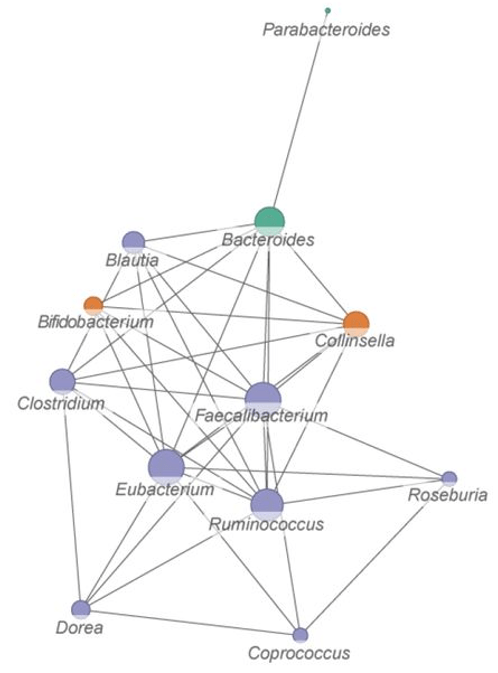
Across all metaproteomics datasets, Eubacterium, Faecalibacterium, Ruminococcus, Bacteroides, Clostridium and Coprococcus were found to be the most frequent functional hubs.

functionally related genera

Taxon-function bipartite network based on functional distances between microbial genera. Size of a node corresponds to its degree.

Highly connected functions were enriched in metabolism of carbohydrates and amino acids, suggesting that microbial acquisition of nutrients from the environment and trophic interactions between microbes could be major factors that shape their active functional organization. Our result showing robustness of between-taxa functional distances across individual microbiomes implied a more fundamental mechanism that underlies selective organization of microbiome functionalities by environment.

We observed a universal pattern of between-taxa functional distances (dij) across all analyzed datasets. Notably, this pattern was fully shifted by a global increase in dij values, and subsequently a significant decrease of normalized taxonomic diversity in a subset of inflammatory bowel disease samples mostly obtained from inflamed areas.

This finding may support, from a functional angle, the hypothesis that there are alternative stable states (bi-stability or multi-stability) in the gut ecosystem. One frequently discussed mechanism behind these alternative states has been continuous exposure of the microbiome to a altered environmental parameter:

  • An inflamed area in the gut will have a reduced mucus layer and elevated host defense responses.
  • Host mucus layer is a nutritional source of cross-feeding in the gut microbiome.
  • Loss of this layer may firstly affect network hub functions of carbohydrate and amino acid metabolism, and subsequently affect functional interactions in the whole community.

In addition, host defense responses attenuate microbial oxidative stress responses, which have been associated to microbiome dysfunction. Decrease of within-sample functional redundancy has been associated with impaired microbiome stability and resilience.

Resilient microbiota resist external pressures and return to their original state. A non-resilient microbiome is likely to shift its composition permanently and stay at an altered new state instead of restoring to its original state of equilibrium.”

https://www.biorxiv.org/content/10.1101/2021.07.15.452564v1.full “Revealing Protein-Level Functional Redundancy in the Human Gut Microbiome using Ultra-deep Metaproteomics”


My top genus Faecalibacterium – a cross-feeding, acetate-consuming, butyrate-producing commensal – would be more than twice the size of this study’s Faecalibacterium network projection in the above graphic. In this year’s efforts to make my gut microbiota happy, I’ve apparently done much to express its relevant gene network.

my genera

I came across this study by it citing Gut microbiota guilds.

PXL_20210809_101612117

Part 3 of Make your gut microbiota happy

Continuing from Part 2, my 7/15/2021 sample found that no bad bacteria needed work. Top three reasons why this may be are:

1. I’ve eaten microwaved broccoli sprouts every day for 68 weeks now. Relevant research:

helicobacter 0

2. This is the 17th year of training my immune system every day with yeast cell wall β-glucan.

acinetobacter

3. Basic hygiene practices such as brushing my teeth twice a day.

aggregatibacter 0


PXL_20210731_094258419.NIGHT

Part 2 of Make your gut microbiota happy

Continuing from Part 1, 7/15/2021 test results received 7/27 showed I was putatively below average in four gut bacteria. The most relatively deficient (percentage-wise) were populations in genus Bifidobacterium:

bifido level

Looking through Thryve’s recommended foods, eating all but one (green lentils) of twenty legumes increased genus Bifidobacterium. Here’s a sample:

legumes

I already had dried garbanzo and Adzuki beans in my pantry. One serving (35 grams, 1/4 cup) of each are soaking overnight.

Adzuki beans would be expected to improve genus Bifidobacterium populations through resistant starch 2. Garbanzo beans would be expected to improve genus Bifidobacterium populations primarily through resistant starch 3, while also improving relatively-deficient Akkermansia and Lactobacillus bacteria.

Resistant starch was curated in studies such as:

Resistant starch types and their effects were summarized in https://www.sciencedirect.com/topics/agricultural-and-biological-sciences/resistant-starch.


PXL_20210726_100958622

Eat whole oats for your gut microbiota

Two papers on whole grains, with the first a 2021 review:

“Whole grains are more complex than refined grains and are promoted as part of a healthy and sustainable diet, mainly because the contribution of indigestible carbohydrates, and their co-passenger nutrients, is significantly higher. Changing composition and availability of grain carbohydrates and phytochemicals during processing may positively affect gut microbiota and improve health.

Processing is required for virtually all cereals that humans consume. However, eliminating bran has resulted in grain-based products that contribute to a lower-quality diet.

Currently, there are no specific recommendations on relative proportions of different dietary fiber types (based on variability in fermentability or degree of solubility). Switching from refined grain to whole grain will deliver more dietary fiber and nutrients associated with bran and germ, and improve diet quality.

crf312728-fig-0001-m

Carbohydrate-rich foods that are higher in slowly digested starches, resistant starch, oligosaccharides with prebiotic potential, and dietary fiber are considered to have a higher quality. Foods can be awarded an overall carbohydrate quality index (CQI). The optimum ratio of total carbohydrate (CHO) to dietary fiber should be ≤10:1.

Mostly only oligosaccharides and polysaccharides reach the colon. Even though larger molecules were fermented slower, they were still fermented within the proximal colon.

It is not surprising that there are conflicting reports with respect to effects of whole grains on gut microbiota. Part of this is due to whole grains comprising a diverse group of staple cereal foods, including wheat, corn, rice, oats, barley and rye, and hence different effects on gut microbiota are expected. Differences in study design, with respect to dose, duration, and study populations make it difficult to compare between studies and distill overarching similarities.

Enzymes can modify less fermentable dietary fiber to improve its fermentability by microbiota. Using different enzymes, dietary fibers can contribute to fermentation throughout the colon.”

https://onlinelibrary.wiley.com/doi/10.1111/1541-4337.12728 “Health benefits of whole grain: effects on dietary carbohydrate quality, the gut microbiome, and consequences of processing”


This review cited a 2019 paper as “an elegant study where oat bran (including co-passengers) was shown to be effective in increasing Bifidobacterium populations in the gut, whereas purified bioactive β-glucans did not show a bifidogenic effect”:

“Whole grain oats are known to modulate human gut microbiota and have prebiotic properties. Research todate mainly attributes these effects to fibre content. However, oats are also a rich dietary source of polyphenols, which may contribute to positive modulation of gut microbiota.

We found that oats increased bifidobacteria, acetic acid and propionic acid. This was mediated by synergy of all oat compounds within the complex food matrix, rather than its main bioactive β-glucan or polyphenols.

While human digestive enzymes cannot degrade plant cell wall polysaccharides, gut xylanolytic bacteria can, producing SCFA with health-beneficial effects. Certain strains down-regulate gene and protein expression of pro-inflammatory cytokines, notably isoform of nitric oxide synthase and PPAR-γ and interferon-γ, resulting in reduced inflammatory status, suggesting that oat β-glucan have beneficial effects on human health.

Oats as a whole food led to the greatest impact on microbiota.”

https://www.cambridge.org/core/journals/british-journal-of-nutrition/article/oat-bran-but-not-its-isolated-bioactive-glucans-or-polyphenols-have-a-bifidogenic-effect-in-an-in-vitro-fermentation-model-of-the-gut-microbiota/B23FAE2C7EED702132FC72F1C9CE990E “Oat bran, but not its isolated bioactive β-glucans or polyphenols, have a bifidogenic effect in an in vitro fermentation model of the gut microbiota”


The Avena nuda oats I eat for breakfast start out as 81.0 grams (1/2 cup). The only processing I do from an Illinois farmer is soaking them for 16 hours, draining then changing out to 1 1/2 cups water, then cooking for 20 minutes in a 1000W microwave at 80% power. They end up weighing 154.7 g.

I eat 51.9 g of 3-day-old sprouted Avena sativa oats from a Montana farmer at the same time, and concurrently take 2.5 g inulin. Pretty sure this 154.7 + 51.9 + 2.5 = 209.1 g combination meets an “optimum ratio of total carbohydrate to dietary fiber ≤10:1.”

Also pretty sure sprouted Avena sativa oats supply enzymes that facilitate breaking down Avena nuda complex molecules. Haven’t experienced any complaints over the past 3+ months. 🙂

Week 63 of Changing to a youthful phenotype with sprouts

Finally got around to getting an annual physical this morning. Two indicators so far, with more expected in five days. They came in early, so here’s Part 2.

1. HbA1C – glycated hemoglobin – was 4.8 on a scale of 4.8 to 5.6%. That’s down from 5.1 in June 2020. HbA1C shows a two-month average blood glucose level.

I’ve eaten advanced glycation end product (AGE)-less chicken vegetable soup almost every day since July 2019. Upcoming instantaneous blood glucose measurements may be informative, but it seems that with what I’m doing, there’s little impetus to glycate that glucose. Which satisfies my intention to avoid glycative stress.

2. BMI for a normal weight is 18.5-24.9 kg/m2. Measurements over the past two years:

  • June 2019 24.8, 0.1 below range high;
  • June 2020 22.4, 2.5 below range high and 3.9 above low; and
  • June 2021 21.0, 3.9 below range high and 2.5 above low.

Annual BMI trend is going in the right direction, but it’s too squishy to be a biomarker. I usually don’t curate studies that rely on BMI.

I eat a lot of food every day! Not going to turn my kitchen into a laboratory to quantify, though. See Switch on your Nrf2 signaling pathway for what intake was on 1/1/2021.

Once or twice a week lately I’ve backed off and skipped one of a daily two (fresh and leftovers) AGE-less chicken vegetable meals when it’s been too much food. Haven’t skipped:

  • Twice-daily combined broccoli-red cabbage-mustard sprouts; or
  • Twice-daily Avena sativa oat sprouts; or
  • My Avena nuda whole oats breakfast.

Lost 11 lbs. over 12 months without trying to lose weight. Maximal food intake didn’t result in weight gain when much of its purpose was to:

  • Reduce inflammation; and
  • Make my gut microbiota happy.

PXL_20210618_094601372

Small intestine alkaline phosphatase

This 2021 rodent study used small intestine alkaline phosphatase (IAP)-overexpressed subjects on a high-fat, high-cholesterol diet to investigate effects:

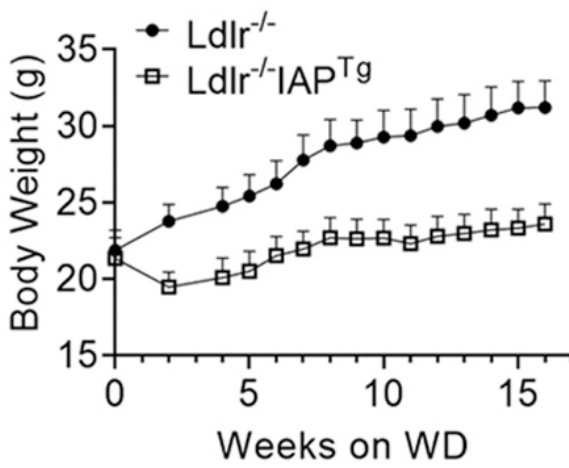
“To examine direct effects of increased IAP expression on barrier function and development of metabolic diseases, we developed intestine-specific IAP transgenic mice (IAPTg) overexpressing human chimeric IAP. We evaluated effects of intestine-specific IAP overexpression on Western-type diet (WD)–induced atherosclerosis in Ldlr−/ mice.

Diets low in fiber deprive intestinal bacteria of essential nutrients. Luminal bacteria turn to alternate sources of energy, namely, the carbohydrate-rich mucosal layer. This enhances direct contact between gut bacteria and intestinal epithelial layer, and promotes inflammation and intestinal barrier dysfunction.

Increase in IAP improves intestinal barrier function by not only dephosphorylating LPS and limiting its translocation to systemic circulation, but also by improving mucosal layer. Furthermore, IAP overexpression results in attenuated WD-induced weight gain and significantly reduced absorption of dietary lipids, leading to attenuation of total plasma cholesterol and TG levels, as well as hepatic lipids. This improved metabolic profile results in significant reduction in WD-induced atherosclerosis in Ldlr−/−IAPTg mice.

overexpressed IAP

IAP overexpression results in attenuated WD-induced weight gain and significantly reduced absorption of dietary lipids, leading to attenuation of total plasma cholesterol and TG levels, as well as hepatic lipids. This improved metabolic profile results in significant reduction in WD-induced atherosclerosis in Ldlr−/−IAPTg mice.

Increases in IAP can significantly attenuate effects of WD feeding on intestinal barrier function. It is noteworthy that IAP is also shown to be involved in innate immunity, and its activity is positively correlated to intestinal levels of IgA in mice and fecal immunoglobulins in humans.

The list of nutrients and food components/supplements that increase IAP continues to grow (galactooligosaccharides, glucomannan, vitamin D3), providing a novel opportunity to develop simple strategies for modulation of diet/nutrition to target metabolic diseases, including diabetes, fatty liver disease, atherosclerosis, or heart disease.”

https://www.ahajournals.org/doi/10.1161/CIRCRESAHA.120.317144 “Over-Expression of Intestinal Alkaline Phosphatase Attenuates Atherosclerosis”


This study used ileal samples from the small intestine’s last section for its findings. It complemented Take FOS or inulin to increase your gut’s alkaline phosphate activity which used large intestine samples to demonstrate effects of  increased IAP activity.

Eat to make your gut microbiota happy, and expect reciprocity.

Dietary fibers and the aged microbiome

This 2021 rodent study investigated effects of four different types of dietary fiber on two different types of aged human microbiota:

Individual differences in gut microbiota may influence host metabolic responses to dietary fiber in humans. Dietary fibers are edible carbohydrates resistant to host digestive enzymes, and not broken down or absorbed in the small intestine.

We colonized genetically identical germ-free mice with two distinct human fecal communities and fed them isocaloric diets containing different types of fiber. We used fecal specimens from a cohort of previously analyzed samples obtained from adults in their mid-seventies.

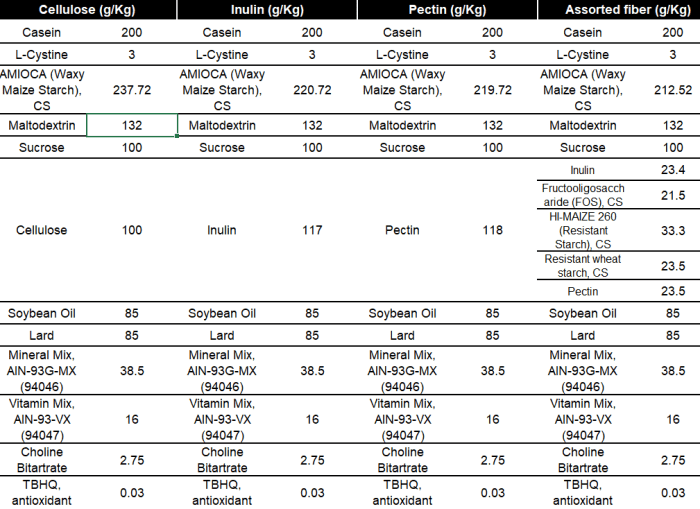
We used 10% dietary fiber and 35% kcal derived from fat as comparable to the intake level of dietary fiber in US adults:

four diets

All mice had the same assorted fiber diet for two weeks. Mice were then switched to one of four diets described above: cellulose, inulin, pectin, and assorted fiber, and maintained in these diets for another 4 weeks.

There was a ~ 4-fold range in levels of cecal butyrate among the eight groups despite all animals consuming the same diet [before switching]. Butyrate is known to vary widely among humans and has been linked with beneficial health effects on the host:

SCFA individual differences

We chose inulin and pectin as the former is commonly used as a prebiotic, while the latter has been proven to support growth of a wide variety of gut microbes, and it is commonly used as a dietary supplement. We also chose these two dietary fibers due to their distinct structures, including differences in basic units, linkages, and degree of polymerization.

Assorted fiber diet had the same total amount of dietary fiber as treatment groups used in this study, but with more diversity [FOS and two resistant starches] in fermentable substrates, which we reasoned would support engraftment of taxa relevant to all dietary treatments. Inclusion of this group in the experimental phase also served as a control to inform whether this diet used during colonization drove major differences.

Diet and its interaction with gut community showed a significant effect on serum glucose levels. While pectin diet had an overall beneficial effect on metabolic phenotypes relative to non-fermentable cellulose for SubA-colonized mice, this diet was less favorable for SubB-colonized animals, which showed the strongest benefits on inulin fiber.

In inulin diet, mice inoculated with SubB showed decreased adiposity, decreased liver triglycerides (TG) and lower serum levels of fasting glucose relative to animals colonized with SubA. In contrast, pectin-fed mice colonized with SubB accumulated more fat mass relative to SubA-colonized counterparts, whereas serum glucose and liver TG were comparable between the two community groups.

Mice colonized with SubB showed significantly lower levels of adiposity than those colonized with SubA in the assorted fiber diet, whereas serum glucose and liver TG were comparable.

We found that these two transplanted communities elicited divergent metabolic epigenetic and transcriptional responses to the same dietary fiber. Furthermore, differences between mice colonized with these two communities varied depending on type of fiber consumed.

Populations contain a significant amount of genetic variation derived from their largely individual associated microbiomes. Dissecting effects of gut microbial vs. host genetic variation while controlling environmental exposure is practically impossible to achieve in human studies.

One-size-fits-all approaches to promote health are unlikely to elicit consistent effects across individuals. Identifying gut microbial biomarkers associated with beneficial responses to common interventions may help to stratify subjects into more effective personalized treatments.”

https://microbiomejournal.biomedcentral.com/articles/10.1186/s40168-021-01061-6 “Gut microbiome variation modulates the effects of dietary fiber on host metabolism”


1. This study nailed it! You are what you eat, and The future of your brain is in your gut right now.

2. Group differences in cecal butyrate in the second graphic were instructive. But what really needed to be analyzed was each individual subject’s responses within the eight groups, and each individual’s characteristics.

What did or didn’t matter to each individual could then be applied and analyzed to what did or didn’t matter to its group. Researchers need to flip from a top-down statistics-package approach, to a bottoms-up individual paradigm for evidence.

3. Haven’t mentioned Increasing soluble fiber intake with inulin recently. I eat the labeled 2.5 grams serving. More than that runs into a 10 g “Over this dose would induce mild gastrointestinal symptoms” threshold.

I eat a half-dozen cloves of garlic in daily AGE-less chicken vegetable soup. Garlic contains ≈ 16% inulin, contributing 4-5 g inulin.

4. My dietary fiber intake of current practices is well beyond this study’s 10%. Several times more than our human ancestors’ estimated 100 g/day if Switch on your Nrf2 signaling pathway measurements are correct?

Trying to make my gut microbiota happy, expecting that they’ll reciprocally respond. Dietary fat content is < 10 %.

Eat broccoli sprouts instead of antibiotics

This 2020 cell study investigated antibiotic effects of broccoli sprout compounds:

“In this work, we asked whether isothiocyanates (ITCs) could act synergistically with each other to increase antibacterial effect. A set of aliphatic ITCs, such as iberin, iberverin, alyssin, erucin, sulforaphene, erysolin, and cheirolin was tested in combination with sulforaphane against E. coli.

All tested ITCs exhibit strong antimicrobial effect individually. Synergistic action observed for iberin, iberverin, and alyssin led to minimal inhibitory concentration necessary for antibacterial effect four- to eight-fold lower than for individual ITCs.

Effectiveness of antimicrobial effect is correlated with both type of ITC used and bacterial growth conditions. The combination of several fold lower concentration of ITCs gives a similar effect as much higher amounts of individual ITCs.

Antimicrobial action of sulforaphane analogs was impaired by specific amino acids. Antibacterial effect of ITC treatment is related to stringent response induction, which is triggered by amino acid starvation.

The use of ITCs as antibacterial agents can be advantageous, as there are very few examples of bacterial resistance to these compounds.”

https://www.frontiersin.org/articles/10.3389/fmicb.2020.591802/full “Induction of the Stringent Response Underlies the Antimicrobial Action of Aliphatic Isothiocyanates”


One of this study’s references was the 2016 Relationship between Chemical Structure and Antimicrobial Activities of Isothiocyanates from Cruciferous Vegetables against Oral Pathogens which found that broccoli and red cabbage compound indole-3-carbinol and mustard compound benzyl isothiocyanate were even more potent antibiotics than half of the aliphatic isothiocyanates in this study:

antibiotic isothiocyanates

Our ancestors evolved to deal with everyday bacteria, viruses, and other pathogens. Not sure about the current virus developed to herd humans into an agenda.

Train your immune system every day! disclosed that I was in Milan, Italy on the same February 22-23, 2020 weekend that ten towns were closed south of Milan. I’ve never experienced any symptoms.

  • One factor in immune response was that fifteen years previous, I’d taken daily steps with yeast cell wall β-glucan to guard against the phenotypical immune system collapse of old age.
  • Another factor was that I’d ridden the filthy Washington DC Metro twice a day to-and-from work for years, and had already been exposed to who knows what.

Treat your gut microbiota well. Give them what they want – including cruciferous sprouts – instead of prescription antibiotics, and expect reciprocity.

Effects of another broccoli sprout compound

This 2020 rodent study investigated effects of broccoli sprout hydrolysis compound indole-3-carbinol:

“I3C metabolites act as ligands of the aryl hydrocarbon receptor (AhR), an important sensor for environmental polyaromatic chemicals. We investigated how dietary AhR ligand supplementation influences AhR target gene expression and intestinal microbiota composition.

Environmental signals, such as dietary, microbial, or xenobiotic factors, are sensed in intestinal tissue AhR, an important regulator of metabolism. It influences immune cell homeostasis and immune activation in the intestine.

AhR activation plays an important role in intestinal immunity, contributing to intestinal homeostasis, inflammation, and host defense:

  • AhR activation through high affinity AhR ligands has been shown to stimulate production of antimicrobial peptides.
  • AhR has been shown to be an important regulator of T cell immunity.

This indicates a major role of AhR in resolving intestinal inflammation.

High fat diet and control diet lead to reduced expression of Ahrr in intestinal immune cells.

High fat diet and control diet lead to reduced expression of Ahrr in intestinal immune cells.

Mucosal surface area of the gut represents an enormous area in direct contact with the environment. In addition to occasional pathogen encounters, the intestinal immune system is constantly exposed to antigens from diet or microbiota.

Gut-associated immune cells maintain a balance between protection against harmful infections and tolerating harmless food-derived antigens and commensals.

Our findings are in agreement with reports that dietary I3C supplementation restored AhR activation in intestinal mucosa under conditions of malnutrition and deprivation of natural AhR ligands. In humans, such malnutrition may result from a severely reduced consumption of vegetables and fruit in favor of a carbohydrate rich, high fat diet.”

https://www.mdpi.com/1422-0067/21/9/3189/htm “Dietary AhR Ligands Regulate AhRR Expression in Intestinal Immune Cells and Intestinal Microbiota Composition”


Our gut microbiota outnumber our human cells. Treat them well with broccoli sprout compounds, resistant starch, and fermentable fibers, and expect reciprocity.

Oat digestibility

A reader questioned one part of Oat species comparisons of the good stuff regarding Avena nuda hull digestibility. This 2019 study partially investigated that aspect:

“We investigated effects of proteins, lipids, and β-glucan in naked oat flour on in vitro digestibility of starch. Content of rapidly digested starch increased, and content of resistant starch decreased after removing non-starch constituents.

There are three categories of starch in accordance with the rate and degree of starch digestion, namely, rapidly digested starch, slowly digested starch, and resistant starch. Resistant starch cannot be digested. Instead, it promotes growth of beneficial colonic flora.

Digestibility of starch is influenced by size and shape of starch granules, food processing method, physical and chemical modifications, viscosity, and food matrix components. Physicochemical properties of naked oat starch and naked oat flour after removing non-starch constituents were compared to study relationships between starch digestibility and intrinsic factors:


Oats contain more proteins and lipids than other common grains. Proteins can effectively reduce starch digestibility by several mechanisms:

  • Proteins can form a protection around starch granules, restricting entry of enzymes into substrates.
  • Surface proteins can block catalytic binding of enzymes on starch granule exterior.
  • α-amylase can partially bind to proteins, reducing enzyme utilization.

By contrast, effects of lipids on starch digestibility is primarily due to forming complexes with amylose, which is better able to resist amylase.

β-glucan, particularly the extracted water-soluble fraction, can lower digestion rate of starch by increasing viscosity. β-glucan can create a complex of adjacent proteins to form a robust structure that resists amylase, resulting in a decrease in starch digestibility.”

https://www.sciencedirect.com/science/article/abs/pii/S0308814619310556 “Non-starch constituents influence the in vitro digestibility of naked oat (Avena nuda L.) starch” (not freely available)


When viewing the above graphic, keep in mind that its order wasn’t sequential. So “degreased” oat flour (lipids removed, DG-NOF) wasn’t included in “deproteinized” oat flour (DP-NOF).

This in vitro study missed an opportunity to investigate human-practical aspects. Nobody eats oats without preparing them with water. But effects on digestibility from minutes and hours of soaking, boiling, microwaving, etc. weren’t analyzed.

Gut microbiota outnumber human cells. Treat them well with both Avena nuda resistant oat starch and indigestible hulls, and expect reciprocity.

The future of your brain is in your gut right now

A 2020 paper by the author of Sulforaphane: Its “Coming of Age” as a Clinically Relevant Nutraceutical in the Prevention and Treatment of Chronic Disease:

“The gut and brain communicate bidirectionally via several pathways which include:

  1. Neural via the vagus nerve;
  2. Endocrine via the HPA axis;
  3. Neurotransmitters, some of which are synthesized by microbes;
  4. Immune via cytokines; and
  5. Metabolic via microbially generated short-chain fatty acids.

How does nature maintain the gut-microbiome-brain axis? Mechanisms to maintain homeostasis of intestinal epithelial cells and their underlying cells are a key consideration.

The symbiotic relationship that exists between microbiota and the human host is evident when considering nutrient requirements of each. The host provides food for microbes, which consume that food to produce metabolites necessary for health of the host.

Consider function of the human nervous system, not in isolation but in integration with the gastrointestinal ecosystem of the host, in expectation of a favorable impact on human health and behavior.”

https://www.sciencedirect.com/science/article/pii/B9780128205938000148 “Chapter 14 – The gut microbiome: its role in brain health” (not freely available)


Always more questions:

  1. What did you put into your gut today?
  2. What type of internal environment did it support?
  3. What “favorable impact on human health and behavior” do you expect from today’s intake?
  4. How will you feel?
  5. Will you let evidence guide feeding your gut environment?

See Harnessing endogenous defenses with broccoli sprouts for further elaboration. See Switch on your Nrf2 signaling pathway for an interview with these papers’ author.

Uses of the lymphocytes-to-monocytes ratio

To follow up a presentation topic of Part 2 of Reversal of aging and immunosenescent trends with sulforaphane, here are a few papers no earlier than 2015 that address the ratio of lymphocytes to monocytes (LMR), or its reciprocal MLR. Because inquiring minds want to know. 🙂

  1. Monocyte heterogeneity and functions in cancer

    “The ratio of lymphocytes to monocytes has emerged as a prognostic factor, including for B cell lymphoma, colorectal cancer, lung cancer, and ovarian cancer. For example, in patients with stage III colon cancer, a higher lymphocyte to monocyte ratio was associated with increased time to recurrence and overall survival.”

  2. Distinct Transcriptional and Anti-Mycobacterial Profiles of Peripheral Blood Monocytes Dependent on the Ratio of Monocytes: Lymphocytes

    “Our observation of monocyte functional and transcriptional differences dependent on the ML ratio (but on neither constituent alone) suggests that qualitative differences in monocytes are better reflected by the ML ratio than by monocyte counts alone, potentially explaining epidemiologic associations of the ratio. The ML ratio was associated with mycobacterial growth in vitro (β = 2.23, SE 0.91, p = 0.02). The significant enrichment of interferon signalling we found supports a common role for type I and II interferons in altering the ML ratio and monocyte function sufficiently to explain altered disease course, consistent with the central role of interferons in mycobacterial and inflammatory diseases. In humans, myeloid-biased HSC accumulate with age and explain the relative increase in myeloid cells in blood with age. Therefore changes in ML ratio in blood are likely a marker of changes in the frequency of lineage-biased HSC.”

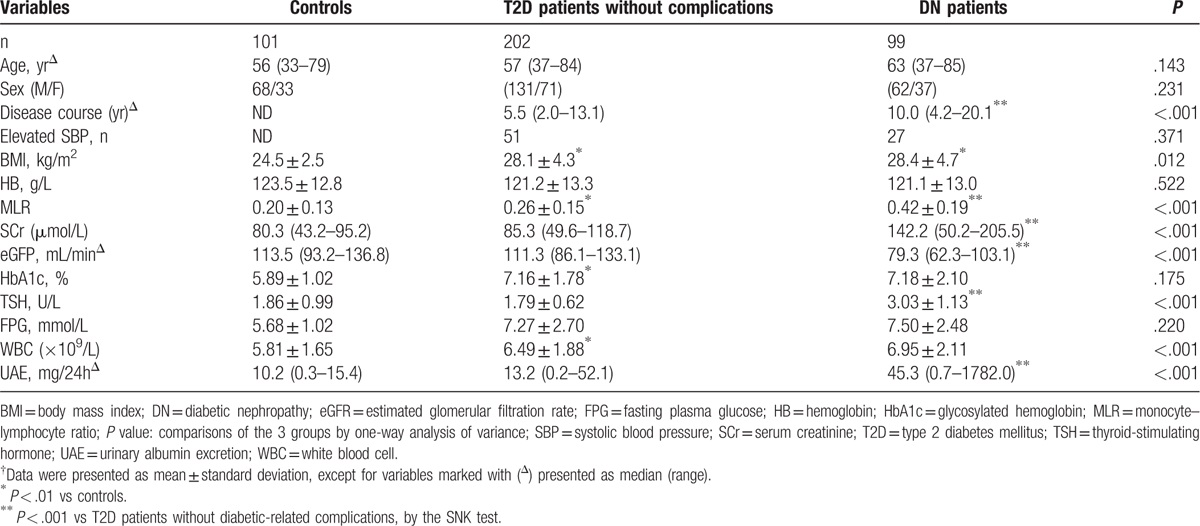
  3. Monocyte–lymphocyte ratio is a valuable predictor for diabetic nephropathy in patients with type 2 diabetes

    “T2D patients without diabetic-related complications had higher MLR than control patients. MLR was significantly higher in DN patients than in T2D patients without diabetic-related complications.”

  4. Monocyte lymphocyte ratio predicts the new-onset of chronic kidney disease: A cohort study

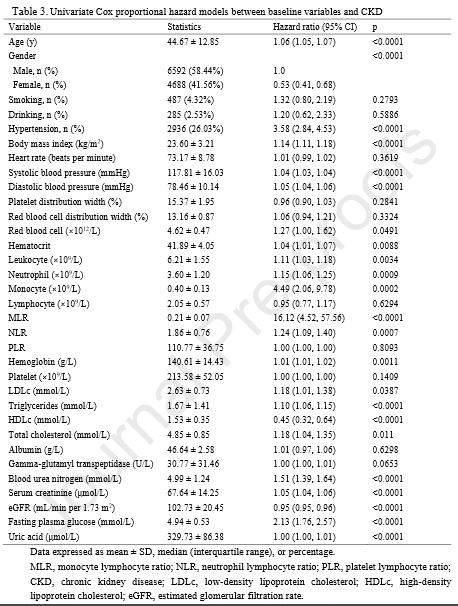
    “Increased baseline MLR is strongly associated with the risk of new-onset CKD in people with normal or near-normal kidney function at baseline. Inflammatory markers such as interleukin are difficult to be measured by primary medical care. Therefore, search for simpler inflammatory markers to predict the risk of CKD. MLR represent[s] the state of balance between inflammatory activators and inflammatory regulators. The higher the ratio, the greater the imbalance, the more severe the inflammatory response and the stronger the immune suppression. In addition to increasing the risk of new-onset CKD, our study found MLR was positively related to inflammatory factors, such as leukocytes, neutrophils, NLR, PLR and platelet distribution width. In addition, MLR was positively correlated with age, blood pressure and BMI. However, there was no significant correlation between MLR and fasting plasma glucose in non-diabetic participants. A total of 11280 participants (6592 male and 4688 female) were enrolled in this longitudinal study.”


A LMR of 5 and a MLR of 0.2 are easy-to-measure heuristics, adequate for screening people. These ratios can be used along with many other measurements as starting points to investigate underlying causes.

Item 1 described how LMR also has prognostic value for cancers. The other studies used MLR as a biomarker for the future course of inflammatory diseases per:

“The higher the ratio, the greater the imbalance, the more severe the inflammatory response and the stronger the immune suppression.”


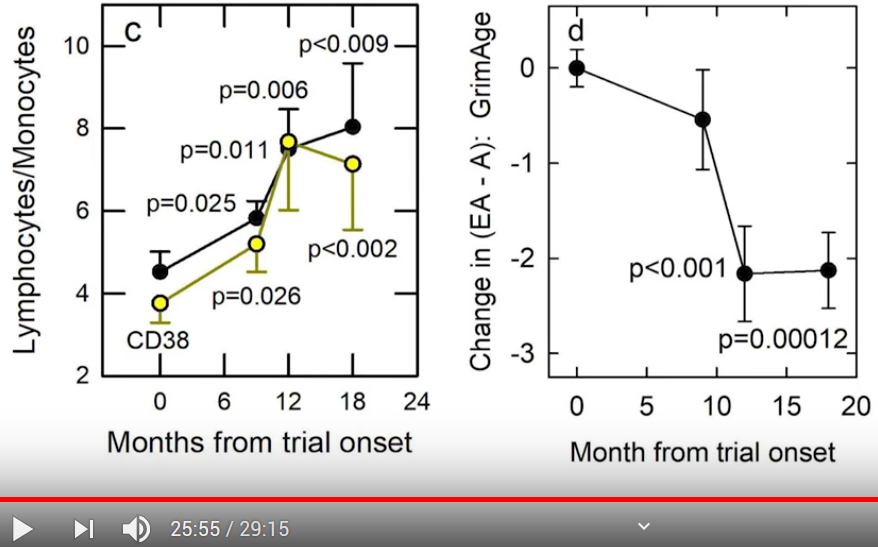
I’d seen the below presentation graphic several times since September 2019. My reaction was “Oh, that’s interesting” each time.

On Friday I understood it: This was what resetting your internal environment looked like.

Did my paradigm change? Yes, among other things, and all of that allowed me to see.

An environmental signaling paradigm of aging provided evidence up through 2015 for its hypothesis and framework. Its treatments’ capabilities to “reset to different age-phenotypes will be tested as the 2020 study underlying A rejuvenation therapy and sulforaphane is tested.

Caution is warranted before getting carried away with ratio analyses of a 9-subject pilot study. Are hormone ratios useful in explaining health? Behavior? Neurobiology? Anything? recommended:

“Analysis of the individual variables offers more information and a more accurate picture of the underlying relationships.

Ratios should either be analyzed with non-parametric techniques, or be log-transformed before parametric statistical methods are applied.”

There was monocyte but not lymphocyte data in the clinical trial’s supplementary material.