Plasmalogens Week #5 – Health and Diseases, Part 1

Continuing Plasmalogens Week with three 2025 papers, starting with a human study that included plasmalogen biomarkers of non-communicable disease fatigue symptoms:

“This study explored the biological mechanisms underlying fatigue in patients with NCDs using a multi-omics approach. Our findings indicate that distinct metabolic pathways, salivary microbiota, and genetic factors may contribute to different dimensions of fatigue, including general, physical, and mental fatigue.

  • General fatigue is associated with unsaturated fatty acid biosynthesis, indicating its role in lipid metabolism.
  • Physical fatigue was associated with plasmalogen synthesis, mitochondrial beta-oxidation of long-chain fatty acids, and selenoamino acid metabolism, suggesting a potential contribution of impaired energy production.
  • Mental fatigue is associated with homocysteine degradation and catecholamine biosynthesis, which may influence cognitive fatigue.

This exploratory study suggests that fatigue in patients with NCDs may involve disruptions in lipid metabolism, neurotransmitter pathways, microbial composition, and genetic variations. Blood-based biomarkers showed better predictive potential for physical fatigue, whereas salivary-based models were more indicative of mental fatigue.

Although our findings support the role of lipid metabolism, the contribution of plasmalogen synthesis remains underexplored. Further studies are needed to validate these findings and understand their mechanisms of action.”

https://link.springer.com/article/10.1186/s12911-025-03034-3 “Visualizing fatigue mechanisms in non-communicable diseases: an integrative approach with multi-omics and machine learning”


A human study of metabolic dysfunction-associated steatotic liver disease (MASLD) included investigating plasmalogens:

“In this study, we applied untargeted metabolomic profiling to serum samples from individuals with and without MASLD, classified by the Fatty Liver Index, with the goal of identifying characteristic metabolic signatures and pathways that may underlie disease presence and progression. Individuals in the MASLD group displayed significantly higher levels of ALT, AST, ALP, and GGT, reflecting ongoing hepatic injury, cholestasis, and oxidative stress. However, albumin and bilirubin levels remained within normal limits, indicating early to intermediate disease stages rather than advanced fibrosis or cirrhosis.

A consistent and highly significant lipidomic pattern in the MASLD group is the depletion of plasmalogens and sphingomyelins. Depletion of these lipid classes was identified as a hallmark of insulin resistance as defined by the triglyceride-glucose index. In contrast, phosphatidylcholine, phosphatidylethanolamine, and phosphatidylinositol species were elevated in MASLD, pointing toward broader lipid remodeling events.

Reduced plasmalogen and sphingomyelin levels positions their depletion as a core feature of metabolic dysfunction. Plasmalogens are ether phospholipids with strong antioxidant capacity, and their reduction suggests a loss of protective buffering against oxidative stress, one of the main drivers of MASLD progression. Similarly, sphingomyelin depletion implicates altered membrane dynamics and signaling disturbances, further contributing to metabolic dysfunction.

Depletion of plasmalogens 1-(1-enyl-palmitoyl)-2-oleoyl-GPC (P-16:0/18:1), 1-(1-enyl-palmitoyl)-2-linoleoyl-GPC (P-16:0/18:2), 1-(1-enyl-palmitoyl)-2-palmitoyl-GPC (P-16:0/16:0), 1-(1-enyl-palmitoyl)-2-palmitoleoyl-GPC (P-16:0/16:1), 1-(1-enyl-palmitoyl)-2-oleoyl-GPE (P-16:0/18:1), 1-(1-enyl-palmitoyl)-2-linoleoyl-GPE (P-16:0/18:2), and disruption of the glutamate–gamma-glutamyl pathway stand out as central features of metabolic dysfunction in MASLD, with clear potential to inform biomarker discovery, disease classification, and the design of targeted therapeutic strategies.”

https://www.mdpi.com/2218-1989/15/11/687 “Metabolomic Signatures of MASLD Identified by the Fatty Liver Index Reveal Gamma-Glutamyl Cycle Disruption and Lipid Remodeling”


A rodent study investigated dietary sea squirt (AM) plasmalogen ethanolamine (PlsEtn) extract’s and dietary pig liver (PL) phosphatidyl ethanolamine (PtdEtn) extract’s effects on acetaminophen liver injury:

“We investigated dietary effects of PlsEtn from ascidian on chronic hepatic injury in acetaminophen (APAP)-treated mice. Five-week-old male mice were divided into four groups (n = 12), which were treated with experimental diets for two weeks and then the respective APAP-containing diet for five weeks.

Ingested PlsEtn is digested into lysoPlsEtn and free fatty acid in the small intestine. PlsEtn digests are absorbed and are subsequently resynthesized into PlsEtn preferentially with PUFA.

Acetaminophen is a frequently used analgesic and antipyretic. Approximately 90% of APAP is metabolized by UDP-glucuronosyltransferase and sulfotransferase into glucuronic acid and sulfate conjugates, respectively.

5–9% of APAP is metabolized into the highly reactive intermediate N-acetyl-p-benzoquinone imine (NAPQI). This metabolite is considered a pivotal molecule in APAP-induced hepatotoxicity and is conjugated by glutathione (GSH). Excessive NAPQI levels deplete GSH and covalently bind to cellular proteins, resulting in organelle dysfunction, such as mitochondria dysfunction. These impairments induce oxidative stress, cell malfunctions, and subsequently, cell death, such as ferroptosis and apoptosis.

Mice were treated with continuous APAP consumption to induce oxidative stress and impaired lipid metabolism in the liver. Effects of diets were evaluated based on levels of malondialdehyde (MDA), a marker of lipid oxidation, on fatty acid content, and on expression of apoptosis-related proteins in the liver.

The PlsEtn-rich diet effectively suppressed APAP-induced decrease in body and liver weights of mice. However, this suppressive effect was not observed in mice fed a PtdEtn-rich diet. APAP administration decreased the total fatty acid content in the liver, whereas a PlsEtn-rich diet alleviated this decrease and increased the hepatic content of docosahexaenoic acid (DHA).

Owing to the alkenyl linkage, which exhibits antioxidant properties, PlsEtn was expected to markedly suppress hepatic lipid oxidation. However, its suppressive effect was the same extent as that by PtdEtn. Both PlsEtn and PtdEtn contain an ethanolamine base in their structures, and free ethanolamine and its metabolite choline suppress lipid peroxidation. Dietary PlsEtn and PtdEtn may be metabolized into free ethanolamine and its further metabolites, which may alleviate APAP-induced hepatic lipid oxidation.

Dietary ethanolamine glycerophospholipids (EtnGpls) rich in PlsEtn or PtdEtn suppressed APAP-induced lipid oxidation in the liver. Protein expression results revealed that dietary EtnGpls reduced expression of certain apoptosis-related proteins compared to the APAP group. This reduction was more effective in mice fed the PlsEtn-rich diet than in those on the PtdEtn-rich diet.”

https://www.mdpi.com/2076-3417/15/11/5968 “Dietary Ethanolamine Plasmalogen from Ascidian Alleviates Chronic Hepatic Injury in Mice Treated with Continuous Acetaminophen”

This study neither demonstrated nor provided citations for its dietary plasmalogen recycling statements.


Three more plasmalogen health and disease papers are curated in Part 2.

Plasmalogens Week #4 – Nutrition

Continuing Plasmalogens Week with two 2025 papers, starting with a simulated in vitro model of how humans digest mussel plasmalogens:

“Plasmalogens (Pls) have promising therapeutic potential in the treatment of neurological disorders, but their distribution, compositional intricacies, and structural alterations during the digestive process are unclear. This study aimed to address this gap by isolating Pls-enriched fractions from mussel (Mytilus edulis) and simulating their digestion in vitro across the mouth, stomach, and intestine phases.

Comparison between Pls and normal phospholipids, sharing identical fatty acyl compositions, illuminated a heightened susceptibility of Pls to catabolism during stomach digestion, which is mainly attributed to the hydrolysis reaction of Pls sensitive to acidic conditions. Phospholipid digestion commenced during the gastric phase and continued with notable catabolism in the intestinal phase, resulting in the release of substantial amounts of free fatty acids (FFAs) and lysophospholipids (LPs), which subsequently formed lipid droplets of larger sizes. Larger droplets delay intestinal absorption, extending the window period for Pls hydrolysis by pancreatic lipase.

The digestive behaviour of Pls with different polar head groups indicated that pancreatic lipase appears to digest phosphatidylethanolamine plasmalogen (PlsPE) to a greater extent than phosphatidylcholine plasmalogen (PlsPC). 41 PlsPE and 14 PlsPC were observed, suggesting that Pls may be more readily digested in the gastrointestinal tract compared to conventional phospholipids.

Generally, lipids are first absorbed by intestinal epithelial cells and undergo lipid remodeling before being transported into lymphatic fluid and then entering the bloodstream. During lipid absorption, PE can be partially converted into PC for lipid remodeling. Since in vitro digestion models cannot fully simulate the intestinal microenvironment (such as microbial metabolism and intestinal epithelial absorption), animal experiments are required to verify the actual bioavailability of PlsPE and PlsPC.”

https://www.sciencedirect.com/science/article/pii/S2666154325006799 “Characterization of plasmalogen properties and metabolic behavior during the simulated multi-stage digestion of Mytilus edulis phospholipids based on untargeted lipidomics”


A review highlighted nutritional implications of changes in plasmalogen chemistry:

“Plasmalogens vary quantitatively in biological systems due to biosynthesis, degradation, remodeling, and certain external stressors. Not only concentrations, but also the composition of molecular species within the plasmalogen pool changes. These shifts often involve the shortening of sn-2 fatty acyl chains, the loss of PUFAs such as DHA and EPA, and the accumulation of oxidized, truncated, or degraded species, as a result of radical-mediated oxidation and/or enzymatic degradation.

The possible increase in lysophospholipids (typically LPE and LPC, corresponding to PlsEtn and PlsCho, respectively) may be attributed to the loss of intact plasmalogens during degradation, especially in the sn-1 position. Lysoplasmalogens can be re-acylated to regenerate the original plasmalogens or create new plasmalogen species with different sn-2 fatty acyl compositions.

These molecular-level transitions highlight the complexity of plasmalogen dynamics and emphasize the need for quantitative, species-specific analysis. Variations are influenced by physiological conditions, pathological states, and nutritional supplementation.

Plasmalogens are primarily those derived from animal products, such as fish, meat, and dairy products, as well as certain marine foods. Microorganism-derived plasmalogens are attracting researchers’ attention, representing a new way of effectively utilizing bacterial resources as a ‘food’ source. Compounds provided can be plasmalogens (either PlsCho and PlsEtn, extracted from natural sources or synthesized) or plasmalogen precursors (e.g., alkylglycerols).”

https://www.mdpi.com/2072-6643/17/22/3497 “The Changes in Plasmalogens: Chemical Diversity and Nutritional Implications—A Narrative Review”

A challenge researchers haven’t satisfactorily addressed yet is the question of whether beneficial oral intake of plasmalogens can be mechanistically attributed to specific plasmalogen breakdown products or to intact plasmalogens. This review introduced two other mechanistic uncertainties in that 1) absorbed and digested breakdown products can be recycled back into plasmalogens, and 2) gut microbiota can also produce plasmalogens. I’ve read papers that speculated but didn’t demonstrate that either of these factors contributed to their results.

This review cited Dr. Goodenowe’s plasmalogen precursor clinical trial mentioned in Plasmalogens Parts 1, 2, and 3. The first paper above, and most of the papers in Plasmalogen Week cited his other research.


Plasmalogens Week #3 – Aging

Continuing Plasmalogens Week with two 2025 papers, starting with a rodent study of plasmalogens’ effects on mitigating cognitive decline:

“We evaluated beneficial effects of plasmalogens (PLS), phosphatidylcholine (PC), and phosphatidylserine (PS) on age-associated cognitive decline. We established a mouse model of aging-associated cognitive impairment using the subcutaneous injection of d-galactose (D-gal) at a dosage of 400 mg/kg/day.

We randomly divided six-week-old female mice into nine groups: control, model, high-dose PLS (0.3 mg/kg/day), low-dose PLS (0.09 mg/kg/day), high-dose PC (200 mg/kg/day), low-dose PC (50 mg/kg/day), high-dose PS (200 mg/kg/day), low-dose PS (50 mg/kg/day), AMC-Plas (120 mg/kg/day; and functional component PLS (0.252 mg/kg/day).

We administered PLS, PC, and PS separately by oral gavage once daily. We extracted PLS from scallops according to the literature. AMC-Plas is a commercially available health supplement known for its neuroprotective properties and memory-enhancing effects. In this study, we included AMC-Plas as a positive control group to evaluate the effects of different phospholipids.

Synaptophysin (SYP), synapsin-1 (SYN-1), postsynaptic density protein 95 (PSD-95), and brain-derived neurotrophic factor (BDNF) play important roles in synapse formation and synaptic plasticity. Synaptic function alterations or losses are key pathological mechanisms that underlie development of cognitive impairment. Therapeutic strategies that attempt to restore synaptic function or promote synaptic remodeling are considered to be increasingly promising strategies to mitigate cognitive decline.

Results showed that:

  • PLS improved spatial memory performance by 44% and object recognition by 80% in D-galactose-induced cognitively impaired mice.
  • PLS significantly decreased glial fibrillary acidic protein (GFAP)-positive cells (an indicator of astrocyte activation) in the dentate gyrus (DG) of the hippocampus, an important result because the DG is a crucial neurogenesis region.
  • PLS alleviated neuronal damage and protected against synaptic injury, verified by a 228% increase in PSD-95 expression in the hippocampus.
  • PLS showed a more prominent role for the mitigation of age-related cognitive impairment compared with PC and PS.

In conclusion, the evaluation of PLS using both behavioral and neuropathological assessments in cognitively impaired mice highlighted its exceptional efficacy compared with other phospholipids. PLS at a remarkably low effective dose significantly ameliorated cognitive deficits in cognitively impaired mice. This result further emphasized its potential relevance in neurodegenerative disease research.

We found that PLS alleviated cognitive impairment potentially by improving synaptic function; however, the molecular mechanisms that underlie its effects on synaptic function warrant further investigation.”

https://www.sciencedirect.com/science/article/pii/S175646462500132X “Mitigating effects of plasmalogens on age-related cognitive impairment”

There was no disclosed chemical analysis of the PLS scallop extract’s plasmalogen types or other contents. Despite its name, I didn’t see that the AMC-Plas product contained plasmalogens or plasmalogen precursors.


A fruit fly study investigated plasmalogen effects on mitochondria during aging:

“We identify plasmalogens—endogenous ether-linked phospholipids—as key regulators of age-associated mitochondrial fission in Drosophila melanogaster. Loss of Kua (also known as plasmanylethanolamine desaturase (PEDS) / TMEM189 in mammals), the enzyme essential for plasmalogen biosynthesis, leads to inhibition of mitochondrial fission and impaired recruitment of the fission protein Drp1, similar to what is observed during aging.

Mitochondrial dynamics, comprising balanced cycles of fission and fusion, are essential for preserving organelle quality, metabolic flexibility, and cellular homeostasis throughout life. Aging disrupts this balance, with multiple studies reporting a decline in mitochondrial fission that contributes to the accumulation of enlarged and dysfunctional mitochondria.

These morphological changes are linked to impaired mitophagy, altered energy production, and tissue dysfunction. Midlife induction of Drp1—the dynamin-related GTPase that drives mitochondrial division—has been shown to reverse age-related mitochondrial defects and prolong lifespan in Drosophila.

To determine whether plasmalogen biosynthesis is essential for mitochondrial fission, we used KuaMI04999, a hypomorphic allele. Western blot analysis revealed significantly reduced Kua protein levels in KuaMI04999/+ heterozygotes compared to wild-type controls.

Our findings reveal a previously unrecognized lipid-based mechanism that controls mitochondrial fission during aging and position plasmalogens as key effectors linking membrane composition to mitochondrial homeostasis. It is not merely expression or stability of Drp1 that is affected, but rather its recruitment to the mitochondrial surface, which is a critical activation step for fission.

While our study highlights the requirement of plasmalogen biosynthesis for Drp1 recruitment, further work is needed to understand how plasmalogens mechanistically facilitate this interaction.”

https://www.researchsquare.com/article/rs-7330024/v1 “Plasmalogen Biosynthesis Controls Mitochondrial Fission via Drp1 Recruitment during Aging”

This study didn’t analyze or characterize specific plasmalogens.


Plasmalogens Week #2 – Childhood Development

Continuing Plasmalogens Week with three 2025 papers, starting with a human study of plasmalogens’ effects of decreasing breastfed infants’ infections and inflammation:

“Mothers reported on breastfeeding and infant infections in questionnaires collected at 1 month, 3 months, 6 months, 12 months, and 18 months post-birth. Parent-reported infection burden was defined as the total number of infant respiratory tract infections, gastroenteritis, conjunctivitis, and acute otitis media episodes reported by mothers between birth and 6 months for 6-month analyses, and between birth and 12 months for 12-month analyses.

We constructed a causal mediation model to estimate the proportion of effects explained by a direct effect of breastfeeding on inflammation, measured via glycoprotein acetyls (GlycA)—the average direct effect (ADE)—and the proportion that was mediated by metabolomic biomarkers/lipid—the average causal mediation effect (ACME).

Breastfeeding is negatively associated with GlycA, positively associated with plasmalogens, and plasmalogens are negatively associated with GlycA. However, the positive association between breastfeeding and plasmalogens is stronger than the negative direct association between breastfeeding and inflammation, resulting in an ACME that exceeds the total effect. This pattern indicates that plasmalogens may play a dominant role in mediating the relationship between breastfeeding and systemic inflammation.

We have recently developed a plasmalogen score that is associated with a range of cardiometabolic outcomes, including type 2 diabetes and CVD.

  • At 6 months, the plasmalogen score was estimated to mediate 162% of the total effect (proportion mediated: 1.62, i.e. average causal mediation effect (ACME) to total effect ratio of 1.62, resulting in a percentage > 100%) of breastfeeding on GlycA.
  • At 12 months, the plasmalogen score mediated an estimated 75% of the total effect of breastfeeding on GlycA.

Any breastfeeding, regardless of supplementary feeding, was associated with lower inflammation, fewer infections, and significant, potentially beneficial changes in metabolomic and lipidomic markers, particularly plasmalogens. There was evidence of bidirectional mediation: metabolomic biomarkers and lipids mediated breastfeeding’s effects on inflammation, while inflammation partly mediated breastfeeding’s impact on certain metabolites and lipids.”

https://bmcmedicine.biomedcentral.com/articles/10.1186/s12916-025-04343-0 “The protective effect of breastfeeding on infant inflammation: a mediation analysis of the plasma lipidome and metabolome”

Reference 48 was the 2024 plasmalogen score study.


A second study by many of the first study’s researchers used the same cohort as the first study to investigate effects of maternal obesity on infant obesity:

“We aimed to investigate associations between maternal pre-pregnancy body mass index (pp-BMI), lipidomic profiles of mothers, human milk, and infants, and early life growth. We were particularly interested in ether lipids as they are higher in breastfed infants compared to formula-fed infants, are enriched in human milk compared to infant formula, and are involved in metabolic health and inflammation in adult populations.

Maternal plasmalogen score was negatively associated with pp-BMI and positively associated with plasmalogens in human milk and infant plasmalogen scores from birth to four years of age. We were unable to establish clear links between plasmalogen score and infant BMI within the first 4 years.

These findings position plasmalogens and ether lipids as potential biomarkers or intervention targets for reducing transmission of obesity from mother to infant. Optimising lipid profiles through reducing maternal pp-BMI and dietary or supplemental ether lipids may represent a novel strategy for mitigating early-life obesity risk.”

https://www.researchsquare.com/article/rs-7089146/v1 “Maternal BMI and infant obesity risk: a lipidomics perspective on the developmental origins of obesity”

There was a lot of hand waving and weasel-wording (i.e., could, may, potential, associated with) but little causal evidence in this preprint. Reference 42 was the preprint version of the first study.


A third paper investigated 9- to 12-year-olds’ plasmalogen levels and molecular types:

“The importance of plasmalogens (Pls) in several cellular processes is known, one of which is their protective effect against oxidative damage. The physiological role of Pls in human development has not been elucidated. This study is the first report on plasmalogen levels and molecular types in children’s plasma.

Ethanolamine plasmalogen (PlsEtn 16:0/20:5) and choline plasmalogen (PlsCho 16:0/20:5), both carrying eicosapentaenoic acid (EPA, ω-3), were significantly lower in girls than in boys. There was no significant difference observed among the 9, 10, 11, and 12-year-old groups between girls and boys in their levels of PlsEtn 16:0/20:5. However, a significant decrease in the levels of PlsCho 16:0/20:5 was observed for 9, 10 and 12-year-old groups of girls compared to boys.

  • In both sexes, the plasmalogen levels for the 12-year-old children were lower than those for the 9-year-old children.
  • PlsCho (16:0/18:2) linoleic acid (ω-6)-derived was lower in the overweight children than in the normal-weight children for both sexes.
  • Arachidonic acid (ω-6)-containing PlsEtn (18:0/20:4) was the most abundant ethanolamine-type plasmalogen in both sexes.

This study has many limitations as follows:

  1. Non-fasting plasma samples were collected from the children’s plasma and used for analysis; since diet can influence Pls levels, the result may be affected by the sample collection method.
  2. Physical activity was also not monitored, which could have an influence on plasma levels, and
  3. A limited number of plasmalogen molecular species were quantified in this study.

A follow-up study may be essential to determine the plasma Pls in the same population when they are adolescents.”

https://www.mdpi.com/2075-4418/15/6/743 “Application of Liquid Chromatography/Tandem Mass Spectrometry for Quantitative Analysis of Plasmalogens in Preadolescent Children—The Hokkaido Study”


Plasmalogens Week #1 – Overview

It’s been a while since I curated plasmalogen papers. Let’s start out a week’s worth of 2025 papers with a review of plasmalogens as biomarkers:

“Reduced levels of plasmalogens in circulation or in cell membranes are associated with rare peroxisomal disorders, systemic disease, neurological impairment, cancer, and diseases of the heart, kidney, and liver. Roles for plasmalogens have been identified in lipid rafts, myelin, chlorolipids, bromolipids, hemostasis, cholesterol metabolism, and redox responses.

Plasmalogens account for approximately 5-20% of the phospholipids in mammalian cell membranes. Circulating choline and ethanolamine are incorporated into lipid membranes through the synthesis of plasmalogens. These lipids are formed through a separate multistep process involving precursors in the cytoplasm, peroxisome, and endoplasmic reticulum.

Cytochrome c (cyt-c) typically serves as an electron carrier in the mitochondrial membrane, but under oxidative stress, cyt-c undergoes a conformational alteration conferring peroxidase activity that cleaves the vinyl-ether linkage in plasmalogens. Plasmalogens may act as precursors to platelet-activating factor (PAF), and PAF can be enzymatically converted to plasmalogens. PAF is a potent pro-inflammatory mediator in cancer, cardiovascular, neurological, chronic and infectious disease, suggesting that increased PAF levels may inversely correspond to lower ethanolamine plasmalogen levels identified in human diseases.

Plasmalogens are abundant in myelin, and crucial to the function of central nervous system oligodendrocytes and peripheral nervous system Schwann cells in supporting neuronal action potential.

Catabolism of plasmalogens occurs in response to oxidative stress and activation of TLRs, which promote pro-inflammatory responses during disease progression. Release of fatty acids (e.g., arachidonic acid, eicosapentaenoic acid, docosahexaenoic acid) during plasmalogen catabolism can either exacerbate or resolve pro-inflammatory and thrombotic responses depending on the type of fatty acid released and mediator produced.

Continued research of the types of plasmalogens and plasmalogen precursors and their natural or synthetic sources, the frequency and amount of plasmalogens administered, the route of administration, and the timing of treatment is needed.”

https://www.jlr.org/article/S0022-2275(25)00188-9/fulltext “Plasmalogens as biomarkers and therapeutic targets”


A second review highlighted various strategies for regulating plasmalogen levels:

“Plasmalogens serve as significant structural components of cellular membranes, particularly enriched in tissues with high membrane trafficking. Plasmalogens are recognized as major reservoirs for polyunsaturated fatty acids (PUFAs), notably docosahexaenoic acid (DHA) and arachidonic acid (AA). Incorporation of these PUFAs influences membrane physical properties, including fluidity and the propensity to form non-lamellar structures.

Effective delivery of plasmalogens or their precursors faces significant hurdles, including chemical instability (especially oxidation of the vinyl-ether bond), low oral bioavailability, and challenges in crossing biological barriers like the blood–brain barrier (BBB). Exploration of plasmalogen-based nanoparticles is currently quite limited.”

https://faseb.onlinelibrary.wiley.com/doi/10.1096/fba.2025-00010 “Plasmalogen as a Bioactive Lipid Drug: From Preclinical Research Challenges to Opportunities in Nanomedicine”

Yeah, no. Everything the public was told about lipid nanoparticles this decade was propaganda in service of an agenda. The real stories are gathered in papers I haven’t curated, such as Lipid Nanoparticles as Active Biointerfaces: From Membrane Interaction to Systemic Dysregulation.


Maternal intake of broccoli sprouts transfers to the fetus and infant

A 2025 human study investigated placental and breast milk sulforaphane content:

“Uncomplicated pregnant patients (n = 8) scheduled for elective caesarean sections (>37 weeks gestation) provided written and informed consent. A single oral dose of EnduraCell, a broccoli sprout extract (equivalent to 21 mg of sulforaphane), was administered prior to caesarean section. Baseline blood pressure, blood and urine were collected and again at time of operation, alongside umbilical cord blood (vein and artery) and placental samples.

2–4 days post-delivery, a second dose was administered. Two hours later, maternal bloods and breast milk were collected.

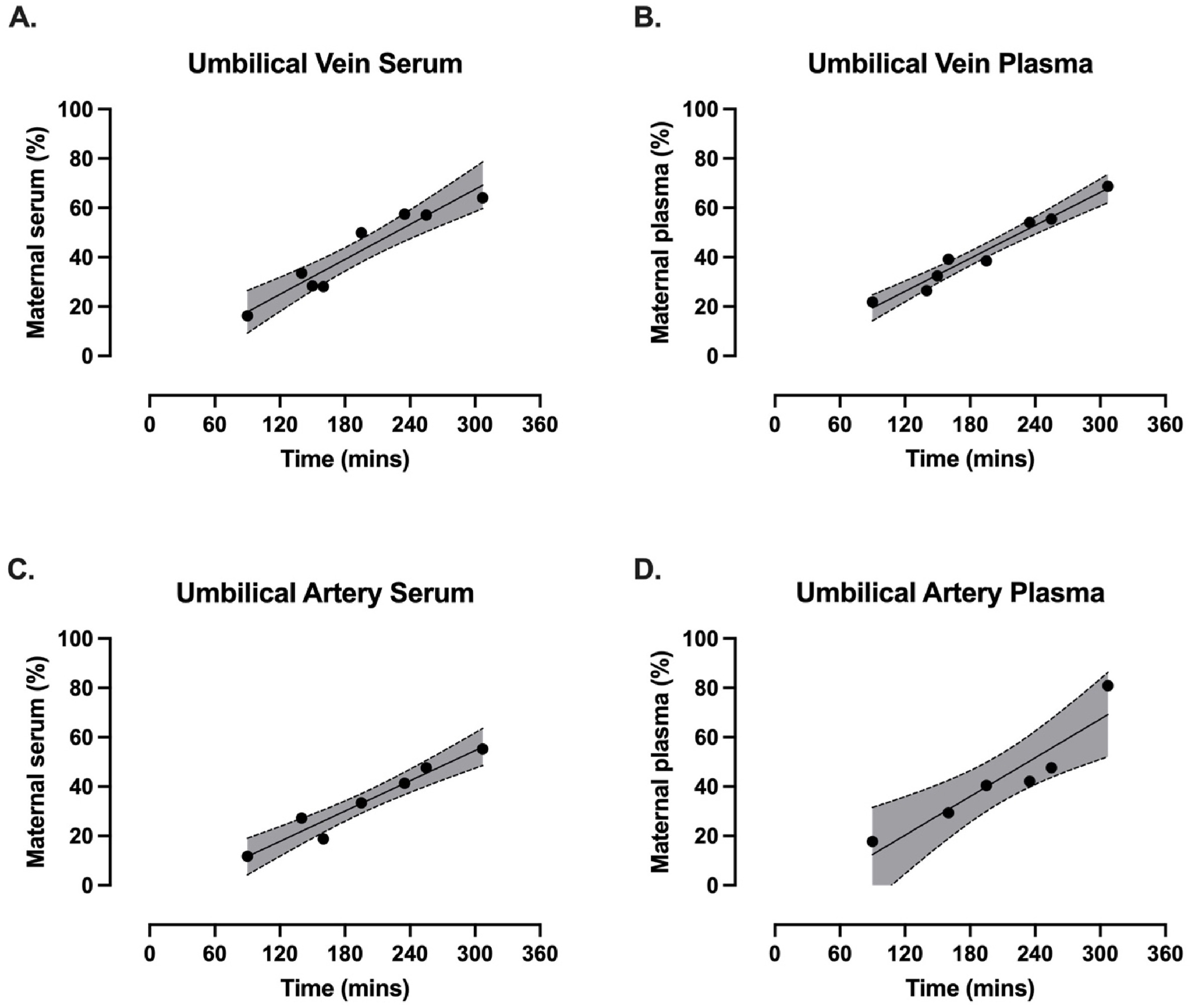
Unlike in the maternal circulation, sulforaphane levels did not show an obvious peak at the 2–3 h timepoint in the fetal umbilical vein serum and plasma or the umbilical artery serum and plasma.

A linear regression indicated that the percentage of fetal sulforaphane relative to the maternal concentration increased over time, showing progressive transfer from maternal to fetal circulation.

This is the first study to demonstrate the successful maternal-fetal transfer of sulforaphane through the placenta and into breast milk following exposure to a broccoli sprout extract during and after pregnancy. No adverse events or outcomes were reported from any of the participants, supporting the reassuring safety profile of an acute exposure to a broccoli sprout extract in pregnancy.

https://www.sciencedirect.com/science/article/pii/S0143400425006964 “Assessing the transplacental passage and breastmilk levels of broccoli sprout-derived sulforaphane”


1. These researchers incorrectly termed a commercially available broccoli sprout powder as an extract. Grinding up broccoli sprouts produces a different product than does processing broccoli seeds or sprouts using solvents into extracts.

2. They asserted the broccoli sprout powder was a 21 mg sulforaphane dose. A more realistic explanation should have been provided, since:

  • No sulforaphane measurements were taken to back their assertion, which is understandable because the powder contained glucoraphanin, sulforaphane’s precursor, and sulforaphane wouldn’t be expected to be found in the powder; and
  • Conversion of broccoli spout powder to sulforaphane would be dependent on each subject’s gut microbiota, which is different for each individual.

Here’s what How long does sulforaphane keep? said for the same broccoli sprout powder product:

“Per the manufacturer, each capsule contained 700 mg of 100% whole broccoli sprout powder, including active myrosinase and 21 mg of glucoraphanin, which upon full conversion to SFN would yield ∼8 mg, equaling ∼24 mg of SFN total per three-capsule dose. We note that full conversion to SFN, even with active myrosinase in the supplement, is not expected.”

3. Characterizing this minimal dose as “an acute exposure” mixed up its meaning with the common meaning of acute – “extremely sharp or severe; intense.”

4. Someday, researchers will be interested and forward-thinking enough about their field to plan ahead and investigate occurrences such as why both the highest and lowest maternal blood sulforaphane content didn’t translate into correspondingly ranked umbilical cord blood sulforaphane content.

5. Since blood contains up to 18,000 compounds, I don’t see where any other maternal blood compound wouldn’t pass to the fetus, unless it is definitively shown that the placenta specifically blocks it. It’s time to discard and disclaim any “safe and effective” propaganda with respect to pregnant women and breastfeeding mothers.

I found this study by it citing Eat broccoli sprouts for longevity.

A Nrf2 treatment for ALS?

A 2025 rodent in vivo / human cell ex vivo study investigated effects of a Nrf2 activator on ALS rodent models and ALS human nervous system cells:

“M102 is a central nervous system (CNS) penetrant small molecule electrophile which activates in vivo the NF-E2 p45-related factor 2-antioxidant response element (NRF2-ARE) pathway, as well as transcription of heat-shock element (HSE) associated genes. Apart from the recent promising emergence of tofersen as a disease modifying therapy for the 2% of ALS patients who harbor mutations in the SOD1 gene, other approved drugs have only marginal effects on life expectancy (riluzole) or indices of disease progression (edaravone).

Data from disease model systems and from human biosamples provide strong evidence for a role of redox imbalance, inflammation, mitochondrial dysfunction, and altered proteostasis, including autophagy and mitophagy, as four key drivers in the pathobiology of ALS. We demonstrate that M102 is a dual activator of NRF2 and HSF1 transcription factor pathways, two upstream master regulators of neuroprotective mechanisms, with the potential to modulate all four of these key drivers of neurodegeneration and with excellent penetration across the blood brain barrier.

Stress response of the KEAP1-Nrf2-ARE system is stronger in astrocytes compared to neurons. A body of evidence from in vitro and in vivo model systems and from post-mortem CNS tissue from ALS patients has indicated that the NRF2 response is impaired in ALS, and has also been shown to decline with age.

HSF1 is a stress-inducible transcription factor that is the key driver for expression of multiple heat shock proteins which act as chaperones responsible for correct folding of newly synthesized proteins, refolding of denatured proteins, and prevention of aggregation of misfolded proteins. However, to date, many small molecule activators of HSF-1 have shown undesirable properties e.g. by acting as Hsp90 inhibitors or by exerting direct proteotoxic effects.

M102 (S-apomorphine hydrochloride hemihydrate) is a proprietary new chemical entity (NCE) and the S-enantiomer of the marketed R-apomorphine (Apokyn®; pure R-enantiomer). The R-enantiomer is a dopamine agonist administered subcutaneously for management of advanced Parkinson’s disease. M102 is a very weak dopamine antagonist and does not show the adverse effects associated with dopamine agonism.

M102 treatment rescues motor neuron (MN) survival in co-cultures with C9, SOD1 and sporadic ALS patient-derived astrocytes. Other NRF2 activators have been investigated in clinical trials or have been approved for medical use. These include dimethylfumarate (DMF) (Tecfidera®, Biogen) and omaveloxolone (Reata, Biogen).

  • DMF was originally approved for the treatment of psoriasis (Fumaderm®) and was later repurposed for the treatment of relapsing-remitting multiple sclerosis (Tecfidera®). A phase 2 trial of DMF in ALS provided Class 1 evidence of safety at a dose of 480 mg/day and lack of disease-modifying efficacy. DMF treatment is associated with dose-limiting lymphopenia and flushing (Tecfidera® Prescribing Information).
  • Omaveloxolone (Skyclarys®) is a potent NRF2 activator that has been approved by the FDA and EMA for the treatment of Friedreich’s ataxia. By activating the NRF2 pathway, omaveloxolone ameliorates oxidative stress and improves mitochondrial function. As a potent NRF2 activator, omaveloxolone exhibited significant liver toxicity with elevated AST/ALT levels in 37% of patients exposed to a dose of 150 mg.
  • Toxicity has also been reported with other potent NRF2 activators, such as bardoxolone methyl (EC50: 53 nM) which showed significant heart, liver, and renal toxicity in humans.

In contrast, our preclinical toxicological studies indicate that M102 has a much higher safety margin in relation to liver toxicity. M102 has the potential to modulate multiple key drivers of neurodegeneration, increasing the chances of achieving impactful neuroprotection and disease modifying effects in ALS.

This comprehensive package of preclinical efficacy data across two mouse models as well as patient-derived astrocyte toxicity assays, provides a strong rationale for clinical evaluation of M102 in ALS patients. Combined with the development of target engagement biomarkers and the completed preclinical toxicology package, a clear translational pathway to testing in ALS patients has been developed.”

https://molecularneurodegeneration.biomedcentral.com/articles/10.1186/s13024-025-00908-y “M102 activates both NRF2 and HSF1 transcription factor pathways and is neuroprotective in cell and animal models of amyotrophic lateral sclerosis”


Combining exercise with sulforaphane

A 2025 clinical trial with old people compared NRF2 effects of acute exercise with pre- and post-exercise sulforaphane treatment:

“This study tested the hypothesis that combining acute exercise (in vivo stimulus) with ex vivo sulforaphane (SFN) treatment would induce greater NRF2 activation and signaling in older adults compared to either treatment alone. This approach was used to bypass the potential issue of inter-individual variability in metabolism and bioavailability of SFN supplementation through oral consumption and thereby provide more rigorous biological control to establish mechanistic feasibility.

Twenty-five older adults (12 men, 13 women; mean age: 67 ± 5 years) performed 30-min cycling exercise. Blood was drawn before and immediately after exercise to isolate peripheral blood mononuclear cells (PBMCs) and incubate with and without SFN (5 μM) treatment.

Acute exercise induced modest transcriptional changes across the four tested transcripts compared to the robust upregulation elicited by SFN. This disparity was notable given the comparable NRF2/ARE binding activity observed between EX and SFN.

Near-significant trends were observed for EX in heme oxygenase-1 (HO-1), NAD(P)H quinone oxidoreductase 1 (NQO1), and glutathione reductase (GR) (after Bonferroni correction), while glutamate-cysteine ligase catalytic subunit (GCLC) was not induced by EX. In contrast, SFN alone robustly induced expression of NQO1, HO-1, GR, and GCLC.

We had chosen 5 μM as the dose based on pilot data from our laboratory and existing literature from in vitro experiments. However, typically, SFN is not combined with another stimulus.

To test this speculation, we ran a post hoc dose–response experiment where we stimulated PBMCs (n = 5) at six different SFN concentrations ranging from 0 to 20 μM (incubated for 5 h) and analyzed responses across the four genes used in the present study. The dose responses displayed hormetic curves for NQO1, GR, and GCLC, with 5 μM eliciting the peak response, suggesting that the lack of difference between SFN and the combined treatment was due to a ceiling effect of the SFN dose. Interestingly, HO-1 displayed a linear/curvilinear response with the maximal observed response at 20 μM.

In future ex vivo studies, a sulforaphane concentration of 1–2 μM in combination with acute exercise is predicted to enhance the expression of these antioxidant genes in the PBMCs of older adults to a greater extent than either treatment alone. Furthermore, lower SFN plasma concentrations are more likely to be achievable with oral supplementation.

To our knowledge, this is the first trial to measure responses to acute exercise combined with sulforaphane stimulation on NRF2 signaling in older men and women. We did not observe any statistically significant differences in any of our outcome variables between men and women.

Our results demonstrate that combining acute exercise with a sulforaphane stimulus elicits a greater response in nuclear NRF2 activity in older adults. While the response in gene expression did not completely mirror the response in NRF2 activation, it is important to note that NRF2 induces hundreds of cytoprotective genes. The four transcripts we measured are among those most commonly used to represent NRF2 signaling but do not capture the full picture. Full transcriptomics in future studies would address this question.”

https://link.springer.com/article/10.1007/s11357-025-01939-5 “Sulforaphane improves exercise-induced NRF2 signaling in older adults: an in vivo-ex vivo approach” (not freely available) Thanks to Dr. Tinna Traustadóttir for providing a copy.


I asked two questions, and will follow up with replies:

  1. Did a second experiment test effects of these subjects eating broccoli sprouts prior to acute exercise? The clinical trial’s NCT04848792 Study Overview section indicated that was the researchers’ intent.
  2. What studies have the data that produced this study’s graphical abstract’s younger vs. older NRF2 response graph?

Ancient DNA fragments enable adult neurogenesis

A 2025 rodent study investigated mechanisms by which erythropoietin (EPO) enables adult neurogenesis and cognitive function:

“We mapped epigenomic and transcriptional landscapes of adult mouse hippocampus under recombinant human EPO (rhEPO) treatment. We discovered significant lineage-specific remodelling of chromatin accessibility predominantly in newly formed pyramidal neurons, highlighting a robust EPO-driven neurogenic response. Notably, transposable elements (TEs), particularly ancient LINEs and SINEs, emerged as critical cis-regulatory elements (cCREs).

EPO is known to be upregulated in the brain under hypoxic or injury conditions, and it has been considered a natural neuroprotective agent. We demonstrated that EPO, a traditionally hematopoietic hormone, can profoundly reprogram the adult neural epigenome to drive neurogenesis.

EPO may activate a specific subclass of dormant regulatory elements to drive nearby genes. Such a mechanism would represent a previously unappreciated mode of gene regulation: the de novo recruitment of ancient genomic elements to drive a contemporary cellular response.

Our data support the model that EPO drives differentiation of progenitors rather than inducing widespread cell division. The net effect is an enrichment of pyramidal neurons at the cost of interneurons. Pyramidal neurons integrate in the hippocampal circuitry, leading to potential implications for mood, memory, cognitive enhancement, and recovery from brain injury.

We propose a conserved evolutionary mechanism at play: ancient TEs embedded in the genome have been repurposed as cCREs in neural cells, and during an EPO-induced neurogenic stimulus, the brain taps into this reservoir of regulatory elements to rapidly reshape gene expression. In evolutionary terms, this represents an efficient strategy.”

https://www.biorxiv.org/content/10.1101/2025.10.13.682070v1.full “Transposable Element-Mediated Epigenomic Remodeling Drives Erythropoietin-Induced Neurogenesis in the Adult Hippocampus”


Activating Nrf2 pathways with sunlight

A 2025 review subject was non-electrophilic Nrf2 activators:

“NRF2 can be induced via:

  1. Non-specific electrophile/ROS generation,
  2. Disruption of the NRF2–KEAP1 protein–protein interaction,
  3. Autophagy-mediated KEAP1 degradation,
  4. Direct modulation of NRF2 protein stability, and
  5. Post-transcriptional/post-translational modifications.

Except for a single intervention, therapeutic hypothermia, every non-pharmacological strategy with defined mechanisms employs more than one of these routes, most frequently pairing post-translational modification with either protein-stability regulation or limited electrophile production. This combinatorial activation elevates both NRF2 abundance and transcriptional competence while minimizing the liabilities of purely electrophilic agents and circumventing the efficacy limitations.

Classical electrophilic NRF2 activators, despite potent activation potential, exhibit paradoxically reduced therapeutic efficacy relative to single antioxidants, attributable to concurrent oxidative stress generation, glutathione depletion, mitochondrial impairment, and systemic toxicity. Although emerging non-electrophilic pharmacological activators offer therapeutic potential, their utility remains limited by bioavailability and suboptimal potency.”

https://www.mdpi.com/2076-3921/14/9/1047 “Non-Electrophilic Activation of NRF2 in Neurological Disorders: Therapeutic Promise of Non-Pharmacological Strategies”


These researchers exaggerated problems of electrophilic Nrf2 activators such as “mitochondrial impairment, and systemic toxicity” so they could have something to write about. Just like every intervention, the dose determines the response. I can’t imagine not eating broccoli sprouts in favor of brain zapping with electroconvulsive therapy or transcranial magnetic stimulation just to avoid sulforaphane’s temporary mild oxidative stress that activates Nrf2 for 15-20 minutes.

But there are limitations to how an unwell person can benefit from Nrf2 activation. For example, I haven’t curated many cancer papers because healthy body functioning can’t be assumed.

I walk the beach at sunrise, weather permitting, because it makes me feel good, and I’m always happy afterwards that I made the effort to get outside. That doing so combines two of the above non-electrophilic Nrf2 activators, physical exercise and photobiomodulation, hasn’t been a consideration.

These reviewers didn’t include human studies of sunlight’s effects. Nevermind that hospitals used to have sundecks for patients, and John Ott published relevant human and animal studies over fifty years ago.


Many studies have an undisclosed limitation in that they were performed without controlling for light. For example, knowing that mitochondria are light-activated, I don’t trust those studies’ in vivo, ex vivo, or in vitro results.

None of the 100 most recent 2025 photobiomodulation papers examined natural sunlight. Maybe it wouldn’t sell red light, green light, and blue light lasers and other products to show that people could produce the same effects themselves with sunlight at different times of the day? Would researchers damage their reputations to study a freely-available intervention, one where they don’t “do something”?

Sulforaphane and malaria

A 2025 rodent study investigated sulforaphane’s capability as an adjunct with standard treatment to inhibit resistant malaria strains:

“In this study, we performed proteomic analysis on a range of sensitive and artemisinin-resistant parasites, revealing specific dysregulation of PfK13 protein abundance. Reduced PfK13 levels were linked to impaired hemoglobin digestion, decreased free heme levels, and consequently, decreased artemisinin activation. Artemisinin resistant parasites also exhibited elevated thiol levels, indicating a more reduced cellular state.

Modulation of PfK13 levels or localisation modifies glutathione (GSH) levels, and elevated GSH decreases artemisinin potency. Elevated levels of reduced GSH and its precursor γ-glutamyl cysteine (gGlu-Cys) were observed in resistant parasites, while oxidised glutathione (GSSG) was lower.

In mammalian cells, SFN conjugates GSH, either passively or through the activity of glutathione-S-transferases, and the SFN-GSH conjugate causes oxidative stress. In response to this stress, Nrf2 translocates to the nucleus and interacts with the antioxidant response element (ARE) of target genes, resulting in expression of antioxidant genes, which induces an antioxidant response. However, P. falciparum has no identified Nrf2 orthologue and so likely lacks a KEAP1-Nrf2 mediated antioxidant response, which suggests that the SFN-GSH conjugate should only cause oxidative stress in parasites.

SFN has antioxidant properties for the host through activation of Nrf2. Therefore our molecule of choice would not only kill the parasite, but will boost the host antioxidant capacity. This differs from most other available pro-oxidants, which do not have this host antioxidant capacity.

5mg/kg SFN was found to be sufficient to significantly prolong the survival of artesunate-treated mice infected with parasites.

PfK13 mutations drive artemisinin resistance in Plasmodium parasites by enhancing antioxidant defences, which can be targeted by redox modulators such as sulforaphane. By leveraging SFN’s ability to induce oxidative stress and deplete thiol levels in parasites, this approach can enhance the efficacy of artemisinin and potentially restore its effectiveness against resistant strains.”

https://www.biorxiv.org/content/10.1101/2025.10.05.680568v1.full “PfK13-associated artemisinin resistance slows drug activation and enhances antioxidant defence, which can be overcome with sulforaphane”


Sulforaphane and skin aging

A 2025 rodent study investigated sulforaphane effects on natural skin aging:

“Aging is a multifactorial process that progressively impairs skin integrity by diminishing dermal fibroblast function, which is macroscopically manifested by wrinkling, laxity, and pigmentary abnormalities. The potential mechanism by which sulforaphane (SFN) delays intrinsic skin aging was explored through skin proteomic sequencing and immune cell infiltration analysis. Associations between SFN administration and phenotypic changes in skin aging, immune cell populations, and key signaling pathway targets were further examined.

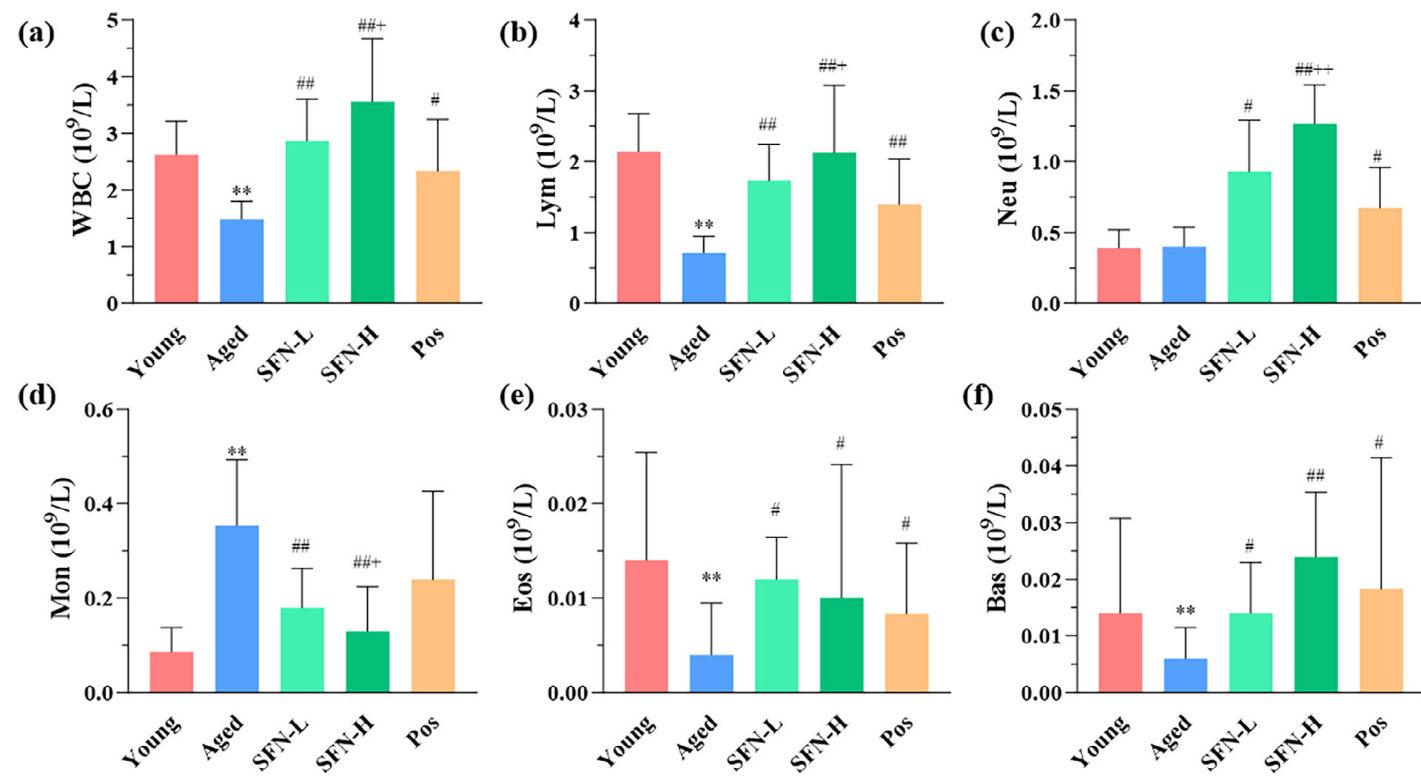
WBC count results indicated that mice from the Aged group were significantly immunosuppressed. T cells occupied the main lymphocyte lineages.

The present study illuminated the skin protective mechanism of SFN by network pharmacology and proteomics analyses in a natural aging mouse model. SFN therapy showed significant alterations in skin structure, redox balance, and composition of immune cell populations after an intervention duration of 2 months.”

https://onlinelibrary.wiley.com/doi/10.1002/mnfr.70281 “Integrative Network Pharmacology and Proteomics Decipher the Immunomodulatory Mechanism of Sulforaphane Against Intrinsic Skin Aging” (not freely available)


I rated this study Wasted resources for using sulforaphane doses not relevant to humans. I usually don’t curate such studies. Its lowest sulforaphane 50 mg/day dose is a ((50 mg * .081) * 70 kg) = 284 mg human equivalent.

I decided to curate it for its informative young controls vs. aged controls results in the above graphic. WBC counts are available on almost every standard human blood test.

This study’s young and aged groups per Grok: “A 2-month-old mouse aging for two more months (reaching 4 months) is approximately equivalent to a human aging from about 12–15 years to 17–21 years old. An 18-month-old mouse (human equivalent: ~45–50 years) aging for two months would be roughly equivalent to a human aging from ~45–50 years to ~51–58 years.”

Sulforaphane and migraines

A 2025 rodent study compared protective effects of sulforaphane and a migraine compound on nitroglycerin-induced migraines:

“Activation of trigeminal vascular pathways and the release of calcitonin gene‐related peptide (CGRP) are central to migraine pathogenesis. The amylin‐1 (AMY1) receptor is expressed in key structures implicated in migraine mechanisms.

This study evaluated protective effects of sulforaphane (SFN) against nitroglycerin induced migraine in female mice, comparing its efficacy to the standard migraine medication, topiramate. Migraine was induced using nitroglycerin (10 mg/kg, i.p., administered every other day), and treatments included sulforaphane (5 mg/kg/day, i.p.) or topiramate (30 mg/kg/day, i.p.) for a duration of 9 days.

Sulforaphane demonstrated significant improvements in behavioral symptoms such as photophobia, head grooming, and both mechanical and thermal allodynia. These behavioral changes were accompanied by reductions in serum levels of nitric oxide, CGRP, and pro‐inflammatory cytokines.

Histological analysis revealed that sulforaphane ameliorated nitroglycerin-induced damage in the trigeminal ganglia and trigeminal nucleus caudalis. Additionally, sulforaphane reduced AMY1 receptor expression in the medulla and inhibited its downstream signaling components, including phosphorylated ERK1/2, P38, and c‐Fos. Sulforaphane further enhanced the Nrf2/HO‐1 pathway while suppressing the NF‐κB/NLRP3/caspase‐1 signaling cascade.

These findings indicate that SFN has a potential as a novel therapeutic candidate for migraine management by targeting the downstream signaling pathways of the AMY1 receptor.”

https://onlinelibrary.wiley.com/doi/10.1002/ardp.70107 “The Role of the AMY1 Receptor Signaling Cascade in the Protective Effect of Sulforaphane Against Nitroglycerin-Induced Migraine in Mice” (not freely available)


This study’s Reference 34 was a 2016 study curated in Do broccoli sprouts treat migraines?.

Glucosinolate and isothiocyanate human interventions

A 2025 review covered human evidence from glucosinolate and isothiocyanate research through April 2025:

“Glucosinolates (GSLs) and their breakdown products, isothiocyanates (ITCs), are biogenesis compounds with anti-inflammatory, antioxidant, and anticancer properties, mediated through key pathways such as Nrf2, NF‐κB, and epigenetic regulation. However, their limited and variable bioavailability remains a key challenge. This review summarises the current clinical evidence on GSLs and ITCs, with a focus on their health effects and metabolic fate in humans.”

https://www.mdpi.com/2304-8158/14/16/2876 “Bioavailability, Human Metabolism, and Dietary Interventions of Glucosinolates and Isothiocyanates: Critical Insights and Future Perspectives”


In the above graphic, notice how the inactive myrosinase column has no small intestine participation, but the active myrosinase column does. This point wasn’t adequately emphasized, that for complete effects, an individual has to do whatever they can to thoroughly chew or otherwise activate myrosinase to hydrolyze glucosinolates before swallowing.

Researchers don’t rely on individuals taking responsibility for their own health, of course. Just swallow these pills, we’ll do it for you, as if humans are lab rats. This lack of emphasis is understandable, if not optimal.

This review provided longish coverage of studies, which is preferable to the usual treatment of citing a reference without much explanation. Compare, for example, my longish curation of the 2023 Eat broccoli sprouts for your high intensity interval training with its reference 68 summary below:

“Another study investigated the effects of consuming GSL-rich broccoli sprout (GRS) supplements on oxidative stress and physiological adaptations to intense exercise training. In a randomised, double-blind, crossover design, nine healthy participants consumed either a GRS supplement (75 g of sprouts) or a placebo twice daily over a 7-day high-intensity interval training period. The findings revealed that GRS supplementation significantly reduced markers of oxidative stress, including carbonylated proteins in skeletal muscle and plasma myeloperoxidase levels, compared to the placebo condition. Furthermore, GRS intake led to reduced lactate accumulation during submaximal exercise and enhanced exercise performance, as indicated by a longer time to exhaustion during maximal exercise tests. At the molecular level, supplementation with GRS was associated with elevated Nrf2 protein levels in muscle tissue, suggesting activation of endogenous antioxidant defence mechanisms. In addition, GRS intake mitigated nocturnal hypoglycaemic episodes and lowered average blood glucose levels, indicating improved glucose regulation during intense training. Collectively, these results suggest that GRS supplementation may enhance physiological adaptations to high-intensity exercise by reducing oxidative stress and supporting metabolic homeostasis.”


Oats sprouts treat gut inflammation

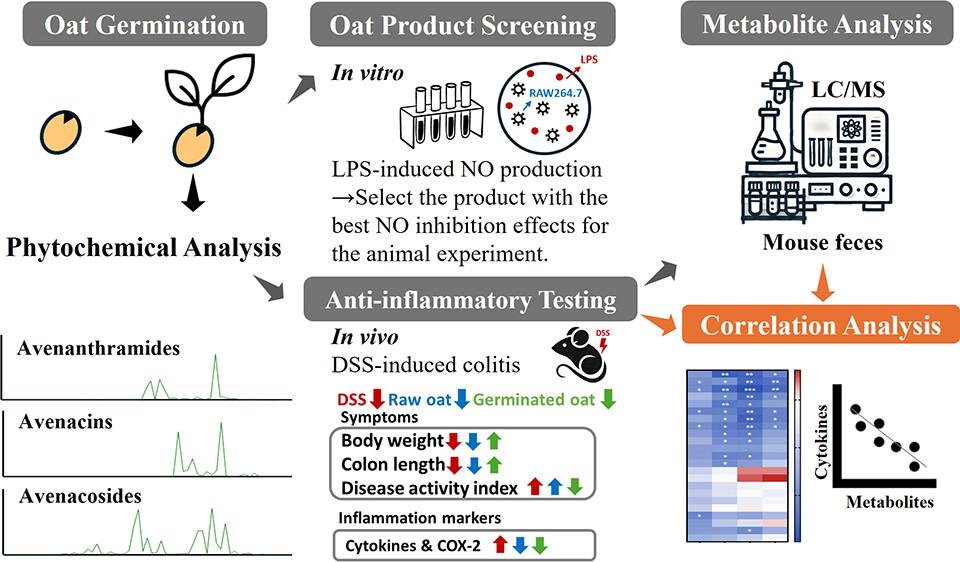
A 2025 rodent study investigated differing effects of regular oats and oat sprouts to treat induced colitis:

“This study aims to test our hypothesis that germinated oats exert stronger anti-inflammatory effects than raw oats due to their higher levels of bioactive phytochemicals. First, the nitric oxide (NO) production assay was used to screen [22] commercially available oat seed products and identify the product with the highest anti-inflammatory activity after germination [for five days]. The selected oat seed product was then produced in larger quantities and further evaluated in an in vivo study using the dextran sulfate sodium (DSS)-induced colitis mouse model to compare the anti-inflammatory effects of phytochemical extracts from germinated and raw oats.

The guideline states that for a healthy U.S.-style dietary pattern at a 2000 calorie level, a daily intake of 6 ounces of grains is recommended, with at least 3 ounces (84 g) coming from whole grains (WGs). For a 60 kg human, consuming 3 ounces of WGs per day translates to a 17.2 g/kg daily dose in mice. Given that the daily food intake of a 20 g mouse is approximately 2.5 g, the 17.2 g/kg daily dose corresponds to 14% of the total diet as WGs. Therefore, the 7 and 21% WG equivalent doses used in this study are relevant to human consumption.

Germination led to an overall increase in the content of all avenanthramides (AVAs) and avenacins (AVCs) as well as some avenacosides (AVEs):

  • For AVAs, the compounds 2c, 2p, 2f, 2cd, 2pd, and 2fd significantly increased by 10.0-, 6.3-, 9.6-, 20.7-, 10.6-, and 4.6-fold, respectively, which is consistent with previous reports.
  • This study is the first to report an increase in AVCs after germination, with AVC-A2, B2, A1, and B1 contents significantly increasing by 2.5-, 2.2-, 3.6-, and 4.2-fold, respectively.
  • Although germination resulted in a decrease in certain AVEs, it significantly increased the levels of AVE-C, Iso-AVE-A, AVE-E, and AVE-F by 1.8-, 3.3-, 3.3-, and 5.0-fold, respectively. Notably, AVE-E has been previously reported to have the strongest anti-inflammatory activity among all of the major AVEs.

In summary, germination enhances the anti-inflammatory properties of oats in both cells and DSS-induced colitis in mice by increasing levels of bioactive phytochemicals. Correlation analysis showed a significant inverse relationship between pro-inflammatory cytokines and phytochemical content in feces, especially AVAs and their microbial metabolites.

The observation of a stronger anti-inflammatory effect in the low-dose germinated oat group compared with the high-dose group is intriguing and warrants further investigation. One possible explanation is the phenomenon of hormesis, where low doses of bioactive compounds can exert beneficial effects, while higher doses may lead to diminished efficacy or even adverse effects. Further studies involving a broad range of doses would be valuable to define the effective intake range and provide insight into the underlying mechanisms.

It is possible that AVAs, AVEs, and AVCs act synergistically to enhance the overall anti-inflammatory efficacy, potentially by targeting different inflammatory pathways or modulating each other’s bioavailability and activity. Further investigation into the synergistic interactions among these compounds is warranted.”

https://pubs.acs.org/doi/10.1021/acs.jafc.5c02993 “Phytochemical-Rich Germinated Oats as a Novel Functional Food To Attenuate Gut Inflammation”


I’ve eaten 3-day-old Avena sativa oat sprouts (started from 20 grams of groats) every day for 4.5 years now, and haven’t had gut problems. Here’s what they looked like this morning: