Sulforaphane and skin aging

A 2025 rodent study investigated sulforaphane effects on natural skin aging:

“Aging is a multifactorial process that progressively impairs skin integrity by diminishing dermal fibroblast function, which is macroscopically manifested by wrinkling, laxity, and pigmentary abnormalities. The potential mechanism by which sulforaphane (SFN) delays intrinsic skin aging was explored through skin proteomic sequencing and immune cell infiltration analysis. Associations between SFN administration and phenotypic changes in skin aging, immune cell populations, and key signaling pathway targets were further examined.

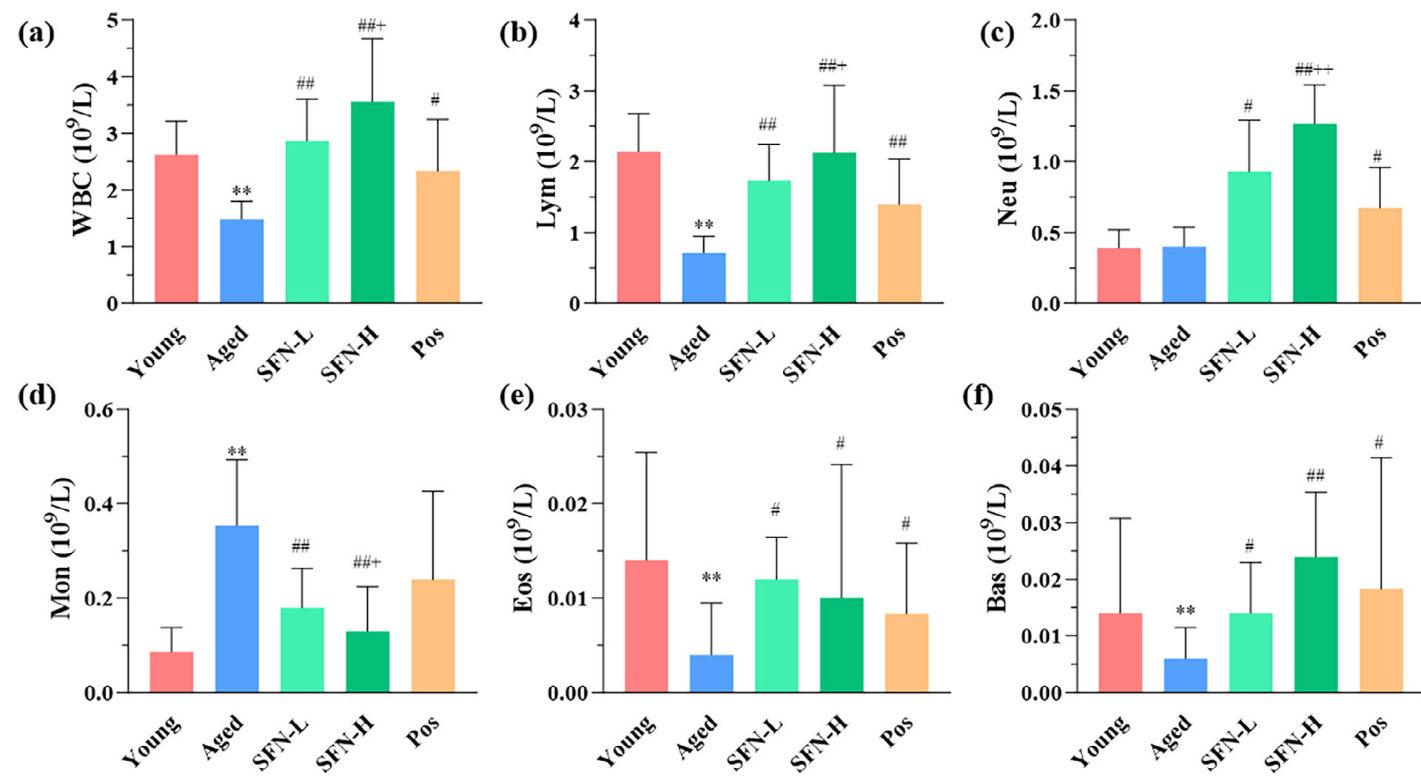
WBC count results indicated that mice from the Aged group were significantly immunosuppressed. T cells occupied the main lymphocyte lineages.

The present study illuminated the skin protective mechanism of SFN by network pharmacology and proteomics analyses in a natural aging mouse model. SFN therapy showed significant alterations in skin structure, redox balance, and composition of immune cell populations after an intervention duration of 2 months.”

https://onlinelibrary.wiley.com/doi/10.1002/mnfr.70281 “Integrative Network Pharmacology and Proteomics Decipher the Immunomodulatory Mechanism of Sulforaphane Against Intrinsic Skin Aging” (not freely available)


I rated this study Wasted resources for using sulforaphane doses not relevant to humans. I usually don’t curate such studies. Its lowest sulforaphane 50 mg/day dose is a ((50 mg * .081) * 70 kg) = 284 mg human equivalent.

I decided to curate it for its informative young controls vs. aged controls results in the above graphic. WBC counts are available on almost every standard human blood test.

This study’s young and aged groups per Grok: “A 2-month-old mouse aging for two more months (reaching 4 months) is approximately equivalent to a human aging from about 12–15 years to 17–21 years old. An 18-month-old mouse (human equivalent: ~45–50 years) aging for two months would be roughly equivalent to a human aging from ~45–50 years to ~51–58 years.”

Glucosinolate and isothiocyanate human interventions

A 2025 review covered human evidence from glucosinolate and isothiocyanate research through April 2025:

“Glucosinolates (GSLs) and their breakdown products, isothiocyanates (ITCs), are biogenesis compounds with anti-inflammatory, antioxidant, and anticancer properties, mediated through key pathways such as Nrf2, NF‐κB, and epigenetic regulation. However, their limited and variable bioavailability remains a key challenge. This review summarises the current clinical evidence on GSLs and ITCs, with a focus on their health effects and metabolic fate in humans.”

https://www.mdpi.com/2304-8158/14/16/2876 “Bioavailability, Human Metabolism, and Dietary Interventions of Glucosinolates and Isothiocyanates: Critical Insights and Future Perspectives”


In the above graphic, notice how the inactive myrosinase column has no small intestine participation, but the active myrosinase column does. This point wasn’t adequately emphasized, that for complete effects, an individual has to do whatever they can to thoroughly chew or otherwise activate myrosinase to hydrolyze glucosinolates before swallowing.

Researchers don’t rely on individuals taking responsibility for their own health, of course. Just swallow these pills, we’ll do it for you, as if humans are lab rats. This lack of emphasis is understandable, if not optimal.

This review provided longish coverage of studies, which is preferable to the usual treatment of citing a reference without much explanation. Compare, for example, my longish curation of the 2023 Eat broccoli sprouts for your high intensity interval training with its reference 68 summary below:

“Another study investigated the effects of consuming GSL-rich broccoli sprout (GRS) supplements on oxidative stress and physiological adaptations to intense exercise training. In a randomised, double-blind, crossover design, nine healthy participants consumed either a GRS supplement (75 g of sprouts) or a placebo twice daily over a 7-day high-intensity interval training period. The findings revealed that GRS supplementation significantly reduced markers of oxidative stress, including carbonylated proteins in skeletal muscle and plasma myeloperoxidase levels, compared to the placebo condition. Furthermore, GRS intake led to reduced lactate accumulation during submaximal exercise and enhanced exercise performance, as indicated by a longer time to exhaustion during maximal exercise tests. At the molecular level, supplementation with GRS was associated with elevated Nrf2 protein levels in muscle tissue, suggesting activation of endogenous antioxidant defence mechanisms. In addition, GRS intake mitigated nocturnal hypoglycaemic episodes and lowered average blood glucose levels, indicating improved glucose regulation during intense training. Collectively, these results suggest that GRS supplementation may enhance physiological adaptations to high-intensity exercise by reducing oxidative stress and supporting metabolic homeostasis.”


Oats sprouts treat gut inflammation

A 2025 rodent study investigated differing effects of regular oats and oat sprouts to treat induced colitis:

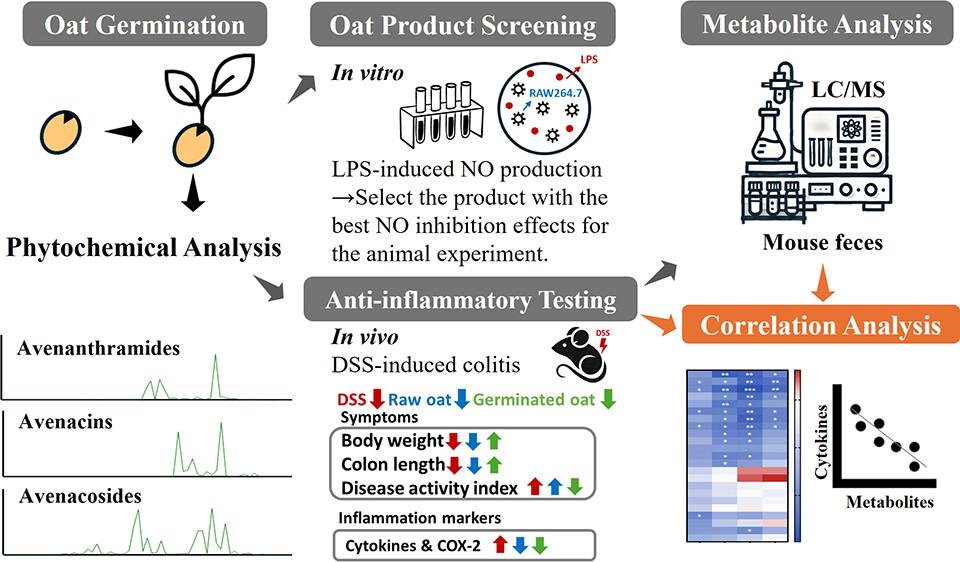
“This study aims to test our hypothesis that germinated oats exert stronger anti-inflammatory effects than raw oats due to their higher levels of bioactive phytochemicals. First, the nitric oxide (NO) production assay was used to screen [22] commercially available oat seed products and identify the product with the highest anti-inflammatory activity after germination [for five days]. The selected oat seed product was then produced in larger quantities and further evaluated in an in vivo study using the dextran sulfate sodium (DSS)-induced colitis mouse model to compare the anti-inflammatory effects of phytochemical extracts from germinated and raw oats.

The guideline states that for a healthy U.S.-style dietary pattern at a 2000 calorie level, a daily intake of 6 ounces of grains is recommended, with at least 3 ounces (84 g) coming from whole grains (WGs). For a 60 kg human, consuming 3 ounces of WGs per day translates to a 17.2 g/kg daily dose in mice. Given that the daily food intake of a 20 g mouse is approximately 2.5 g, the 17.2 g/kg daily dose corresponds to 14% of the total diet as WGs. Therefore, the 7 and 21% WG equivalent doses used in this study are relevant to human consumption.

Germination led to an overall increase in the content of all avenanthramides (AVAs) and avenacins (AVCs) as well as some avenacosides (AVEs):

  • For AVAs, the compounds 2c, 2p, 2f, 2cd, 2pd, and 2fd significantly increased by 10.0-, 6.3-, 9.6-, 20.7-, 10.6-, and 4.6-fold, respectively, which is consistent with previous reports.
  • This study is the first to report an increase in AVCs after germination, with AVC-A2, B2, A1, and B1 contents significantly increasing by 2.5-, 2.2-, 3.6-, and 4.2-fold, respectively.
  • Although germination resulted in a decrease in certain AVEs, it significantly increased the levels of AVE-C, Iso-AVE-A, AVE-E, and AVE-F by 1.8-, 3.3-, 3.3-, and 5.0-fold, respectively. Notably, AVE-E has been previously reported to have the strongest anti-inflammatory activity among all of the major AVEs.

In summary, germination enhances the anti-inflammatory properties of oats in both cells and DSS-induced colitis in mice by increasing levels of bioactive phytochemicals. Correlation analysis showed a significant inverse relationship between pro-inflammatory cytokines and phytochemical content in feces, especially AVAs and their microbial metabolites.

The observation of a stronger anti-inflammatory effect in the low-dose germinated oat group compared with the high-dose group is intriguing and warrants further investigation. One possible explanation is the phenomenon of hormesis, where low doses of bioactive compounds can exert beneficial effects, while higher doses may lead to diminished efficacy or even adverse effects. Further studies involving a broad range of doses would be valuable to define the effective intake range and provide insight into the underlying mechanisms.

It is possible that AVAs, AVEs, and AVCs act synergistically to enhance the overall anti-inflammatory efficacy, potentially by targeting different inflammatory pathways or modulating each other’s bioavailability and activity. Further investigation into the synergistic interactions among these compounds is warranted.”

https://pubs.acs.org/doi/10.1021/acs.jafc.5c02993 “Phytochemical-Rich Germinated Oats as a Novel Functional Food To Attenuate Gut Inflammation”


I’ve eaten 3-day-old Avena sativa oat sprouts (started from 20 grams of groats) every day for 4.5 years now, and haven’t had gut problems. Here’s what they looked like this morning:

Get a little stress into your life, Part 2

A 2025 reply to a letter to the editor cited 56 references to elaborate on Part 1 and related topics:

“A positive effect does not necessarily mean benefit, and positive effects on individual organisms may mean adverse effects on other coexisting organisms. However, a vast literature shows that hormetic stimulation can result in benefits depending on the context, for instance, clear growth, yield, and survival improvement.

There is some energetic cost to support hormetic stimulation, with a likely positive energy budget, which might also have negative consequences if there is insufficient energy substrate, especially under concurrent severe environmental challenges. Moreover, hormetic preconditioning could be particularly costly when there is a mismatch between the predicted environment and the actual environment the same individuals or their offspring might face in the future.

Hormesis should not be unilaterally linked to positive and beneficial effects without considering dose levels. For any research to answer the question of whether a stimulation represents hormesis and whether it is beneficial, robust dose–response evaluations are needed, which should be designed a priori for this purpose, meeting the requirements of the proper number, increment, and range of doses.

Both additivity and synergism are possible in the hormetic stimulatory zone, depending also on the duration of exposure and the relative ratio of different components. This might happen, for example, when a chemical primes stress pathways (e.g., heat shock proteins and antioxidants), thus enabling another chemical to trigger hormesis (defense cross-activation) and/or because combined low subtoxicity may modulate receptors (e.g., aryl hydrocarbon receptor and nuclear factor erythroid 2-related factor 2) differently than individual exposures (receptor binding synergy).

Moreover, even when stimulation occurs in the presence of individual components, stimulation may no longer be present when combined, and therefore, effects of mixtures cannot be accurately predicted based on the effects of individual components. There may be hormesis trade-offs; hormesis should be judged based on fitness-critical end points.

While often modeled mathematically, hormesis is fundamentally a dynamic biological process and should not be seen as a purely mathematical function, certainly not a linear one. Much remains to be learned about the role of hormesis in global environmental change, and an open mind is needed to not miss the forest for the trees.”

https://pubs.acs.org/doi/10.1021/acs.est.5c05892 “Correspondence on ‘Hormesis as a Hidden Hand in Global Environmental Change?’ A Reply”


Reference 38 was a 2024 paper cited for:

“Hormetic-based interventions, particularly priming (or preconditioning), do not weaken organisms but strengthen them, enhancing their performance and health under different environmental challenges, which are often more massive than the priming exposure.

The catabolic aspect of hormesis is primarily protective whereas the anabolic aspect promotes growth, and their integration could optimize performance and health. The concept of preconditioning has also gained widespread attention in biomedical sciences.”

https://www.sciencedirect.com/science/article/abs/pii/S1568163724004069 “The catabolic – anabolic cycling hormesis model of health and resilience” (not freely available)


Reference 40 was a 2021 review that characterized hormesis as a hallmark of health:

“Health is usually defined as the absence of pathology. Here, we endeavor to define health as a compendium of organizational and dynamic features that maintain physiology.

Biological causes or hallmarks of health include features of:

  • Spatial compartmentalization (integrity of barriers and containment of local perturbations),
  • Maintenance of homeostasis over time (recycling and turnover, integration of circuitries, and rhythmic oscillations), and
  • An array of adequate responses to stress (homeostatic resilience, hormetic regulation, and repair and regeneration).

Disruption of any of these interlocked features is broadly pathogenic, causing an acute or progressive derailment of the system.

A future ‘medicine of health’ might detect perilous trajectories to intercept them by targeted interventions well before the traditional ‘medicine of disease’ comes into action.”

https://www.sciencedirect.com/science/article/pii/S0092867420316068 “Hallmarks of Health”


Activate Nrf2 with far-infrared light

A 2025 rodent study investigated effects of far-infrared light on Alzheimer’s disease models. I’ll focus on its Nrf2 findings:

“Far-infrared radiation (FIR) is commonly utilized as a complementary treatment of a range of disease, for example, insomnia and rheumatoid arthritis. In this research, we explored how FIR light impacts cognitive functions of TgCRND8 AD mice and elucidated its underlying molecular mechanism.

Infrared radiation is a form of electromagnetic energy that has wavelengths between 750 nm and 1000 μm, which are longer than visible light. International Commission on Illumination categorizes infrared light as three sub-divisions according to the wavelength: (1) near-infrared radiation (0.7–1.4 μm), (2) middle infrared radiation (1.4–3.0 μm), and (3) far-infrared radiation (3.0–1000 μm).

Nrf-2/ HO-1 signaling, a key endogenous antioxidant system, helps mitigate oxidative stress and enhances expression of various endogenous genes. Activation of HO-1 during inflammatory conditions may serve as an adaptive response to reduce cytotoxicity through various mechanisms.

In this study, we applied EFFIT LITE® as the FIR spectrum transmitter which stably radiates an FIR spectrum with a wavelength of 4–20 μm, and the device was put within 1 cm directly above the head of the 3-month-old TgCRND8 mice for 30 min exposure once every day. FIR light notably enhanced cognitive function and spatial memory of TgCRND8 mice after 28-days consecutive treatment.

Underlying molecular mechanisms involve suppression of Aβ deposition, hyperphosphorylation of tau, and neuroinflammation through modulating Jak-2/Stat3 and Nrf-2/HO-1 pathways. Our current experimental findings amply indicate that FIR light is a potential non-pharmacological therapy for AD.”

https://link.springer.com/article/10.1007/s12017-025-08860-2“Far-Infrared Radiation Ameliorates the Cognitive Dysfunction in an Alzheimer’s Disease Transgenic Mouse via Modulating Jak-2/Stat3 and Nrf-2/HO-1 Pathways”


This study measured Nrf2 and its quickly-induced downstream enzyme HO-1 effects of daily far-infrared light exposure for 30 minutes. We’d have to see measurements of Nrf2’s more-slowly induced and longer-lasting downstream xenobiotic detoxifying enzyme NQO1 to compare far-infrared light Nrf2 activation effects with those of natural plant compounds.

Betaine as an exercise mimetic

A 2025 human study investigated effects of long-term exercise:

“Exercise has well-established health benefits, yet its molecular underpinnings remain incompletely understood. We conducted an integrated multi-omics analysis to compare effects of acute vs. long-term exercise in healthy males.

Acute exercise induced transient responses, whereas repeated exercise triggered adaptive changes, notably reducing cellular senescence and inflammation and enhancing betaine metabolism. Exercise-driven betaine enrichment, partly mediated by renal biosynthesis, exerts geroprotective effects and rescues age-related health decline in mice.

Betaine binds to and inhibits TANK-binding kinase 1 (TBK1), retarding the kinetics of aging.

Betaine effectively alleviated senescence phenotypes by reduced senescence-associated β-galactosidase (SA-β-Gal)-positive cells, decreased p21 expression, lowered DNA damage indicator γ-H2A.X, and elevated heterochromatin mark H3K9me3. Betaine treatment also enhanced cellular antioxidant capacity, as evidenced by increased NRF2 phosphorylation and reduced ROS accumulation.

These findings systematically elucidate the molecular benefits of exercise, and position betaine as an exercise mimetic for healthy aging.”

https://doi.org/10.1016/j.cell.2025.06.001 “Systematic profiling reveals betaine as an exercise mimetic for geroprotection” (not freely available) Thanks to Dr. Weimin Ci for providing a copy.


Taurine and mitochondrial health

A 2025 review subject was taurine’s beneficial effects on mitochondria:

“Taurine has multiple and complex functions in protecting mitochondria against oxidative-nitrosative stress. We introduce a novel potential role for taurine in protecting from deuterium (heavy hydrogen) toxicity. This can be of crucial impact to either normal or cancer cells that have highly different mitochondrial redox status.

Deuterium is an isotope of hydrogen with a neutron as well as a proton, making it about twice as heavy as hydrogen. We first explain the important role that the gut microbiome and gut sulfomucin barrier play in deuterium management. We describe synergistic effects of taurine in the gut to protect against deleterious accumulation of deuterium in mitochondria, which disrupts ATP synthesis by ATPase pumps.

Taurine’s derivatives, N-chlorotaurine (NCT) and N-bromotaurine (NBrT), produced through spontaneous reaction of taurine with hypochlorite and hypobromite, have fascinating regulatory roles to protect from oxidative stress and beyond. We describe how taurine could potentially alleviate deuterium stress, primarily through metabolic collaboration among various gut microflora to produce deuterium depleted nutrients and deuterium depleted water (DDW), and in this way protect against leaky gut barrier, inflammatory bowel disease, and colon cancer.

Taurine cannot be metabolized by human cells, but gut microbes are able to break it down to release sulfite, which then gets oxidized to sulfate anions that become available to support synthesis of sulfomucins. Taurine protects against many diseases linked to mitochondrial defects, such as aging, metabolic syndrome, cancer, cardiovascular diseases and neurological disorders.

We present a novel view that gut microbes play an essential role in providing deuterium depleted (deupleted) nutrients, especially, butyrate, to the host colonocytes forming the gut barrier. We propose that sulfomucins synthesized by goblet cells not only protect the barrier from pathogens, but also trap and sequester deuterium, thus reducing mitochondrial deuterium levels, resulting in improved mitochondrial health.

Due to taurine, redox buffer glutathione (GSH) further stabilizes the membrane potential. GSH not only reduces radical oxygen species (ROS) during oxidative stress, but it also assists in production of deupleted water in mitochondria.

Spontaneous oxidation of two GSH molecules to produce GSSG in the presence of hydrogen peroxide yields two molecules of DDW. Just as for glutathione, bilirubin can produce DDW indefinitely through chronic recycling between bilirubin and biliverdin, capturing a deupleted proton in NADPH to produce a DDW molecule in each cycle.

A novelty that arises from this investigation is introduction of the role that deuterium plays in mitochondrial disease, and ways in which taurine may facilitate maintenance of low deuterium in mitochondrial ATPase pumps. Excess deuterium causes a stutter in the pumps, which leads to inefficiencies in ATP production and an increase in ROS.”

https://pmc.ncbi.nlm.nih.gov/articles/PMC11717795/ “Taurine prevents mitochondrial dysfunction and protects mitochondria from reactive oxygen species and deuterium toxicity”


Stay away from NAC

A 2025 rodent study added several reasons to avoid non-emergency use of N-acetylcysteine:

“We previously showed that antioxidants induced an impairment of negative feedback of the hypothalamus-pituitary-adrenal (HPA) axis in rats, in parallel to a down-regulation of glucocorticoid receptor (GR) and nuclear factor erythroid 2-related factor 2 (Nrf2) expression in the pituitary gland. This study evaluated the role of the Nrf2-heme-oxygenase-1 (HO-1) pathway on impairment of negative feedback of the HPA axis induced by N-acetylcysteine (NAC).

Male Swiss-Webster mice were orally supplemented with NAC for 5 consecutive days. The Nrf2-HO-1 pathway activator cobalt protoporphyrin IX (CoPPIX) was injected intraperitoneally on days 2 and 5 after starting NAC supplementation.

NAC reduced expression of Nrf2 in the pituitary of mice. NAC induced adrenal enlargement and hypercorticoidism, along with a decrease in GRα expression and an increase of GRβ expression in the pituitary gland.

We observed that dietary supplementation with NAC ( Figure 4A ) significantly increased plasma corticosterone levels in mice 24h ( Figure 4B ) as well as 15 days ( Figure 4C ) after the last administration of the antioxidant with the same magnitude of response (3.5-fold and 3.4-fold, respectively).

Chronic activation of the HPA axis can have damaging effects on immune, cardiovascular, metabolic, and neural functions, increasing the risk of immune system dysfunction, mood disorders, and metabolic and cardiovascular diseases. To prevent these deleterious effects of chronic hypercortisolism, HPA axis function is controlled by a glucocorticoid-dependent negative feedback system that is essential for ending the stress response.

These findings showed that NAC reduced Nrf2-HO-1 pathway activation in the pituitary gland, in a mechanism probably related to a local downregulation of GRα and an up-regulation of GRβ, leading to a failure of negative feedback of the HPA axis and consequently to the hyperactivity of this neuroendocrine axis.”

https://pmc.ncbi.nlm.nih.gov/articles/PMC11827418/ “Activation of the Nrf2/HO-1 pathway restores N-acetylcysteine-induced impairment of the hypothalamus-pituitary-adrenal axis negative feedback by up-regulating GRα expression and down-regulating GRβ expression into pituitary glands”


A human equivalent to this study’s NAC dose is (150 mg x .081) x 70 kg = 851 mg. Human supplements are sold in 600 mg and 1000 mg doses.

Grok 3 replied to a question: Human equivalent time to 15 days in male Swiss-Webster mice aged between 4 and 6 weeks? by stating: “15 days in male Swiss-Webster mice aged 4 to 6 weeks corresponds to approximately 4.1 human years, advancing their equivalent human age from about 10–12 years to roughly 14–16 years.” Four+ years seems like a long time for NAC to steadily and continuously affect humans’ HPA axes per the above graphic. What do you think?

Previously mentioned reasons to avoid daily use of NAC were in the lower part of A good activity for bad weather days.

Sulforaphane as a senotherapy

A 2025 rodent study investigated cardioprotective effects of dasatinib / quercetin (a senolytic combination) and sulforaphane (senomorphic):

“Senolytics are molecules that selectively eliminate senescent cells (SCs). Senomorphics are drugs that suppress or mitigate the pro-inflammatory effects of the senescence-associated secretory phenotype (SASP) without killing SCs. Senomorphics decrease the number of SCs by diminishing the paracrine effect of senescence induction in neighboring cells, and by enhancing elimination of SCs by the immune system, which reduces their harmful effects.

We used middle-aged female rats fed a hypercaloric diet (HD) from 21 days to 15 months of age. Under our experimental conditions, rats exhibited cardiac hypertrophy and fibrosis, accumulation of senescent cells, changes in mitochondrial morphology, and oxidative stress. Rats were treated for 2 months with senolytic (dasatinib + quercetin, DQ) or senomorphic (sulforaphane, SFN) agents.

A novel aspect of recent research has been the crosstalk between organelles, particularly between the mitochondria and endoplasmic reticulum (ER), through specialized contact sites (MERCSs). However, there is still no consensus on the optimal distance between MERCSs and their positive or negative effects on disease progression.

HD rats showed cardiac improvement after both treatments. Although both strategies improved cardiomyocyte size and cardiac fibrosis, only DQ decreased LDH levels, whereas SFN positively affected cardiac damage proteins.

In general, no changes in structure or damage-associated enzymes were observed in control rats treated with DQ or SFN, indicating that senotherapies do not promote adverse effects on the heart, reinforcing the concept that they are safe for application in the clinical field. Data suggest a possible link mechanism between Nrf2 activation and MERCSs preservation, activated by SFN rather than by the DQ combination, which allowed cardiac structure maintenance in HD rats decreasing harmful effects of senescent cells.”

https://www.sciencedirect.com/science/article/abs/pii/S0955286325000865 “Cardioprotective effect of senotherapy in chronically obese middle-aged female rats may be mediated by a MERCSs/Nrf2 interaction” (not freely available) Thanks to Dr. Alejandro Silva for providing a copy.


The third phase of reversing aging and immunosenescent trends

Here’s a 2025 interview with Dr. Greg Fahy:

“We found that we could statistically demonstrate thymic regeneration morphologically on single individuals at single time points. MRI changes really are detecting shifts from the fatty tissue infiltration state of the involuted thymus to the regenerated thymus with functional thymic epithelial cells.

When you go through puberty your thymus involutes so you don’t have much left even when you’re 40. Essentially the process consists of loss of functional thymic mass and replacement of that functional thymic mass with adipose tissue, that’s what thymic involution is. It continues throughout life, but you retain a small amount of functional thymic mass all the way out to the age of 107.

The function of the thymus is to essentially manufacture half of your immune system. You have precursor cells arise from the bone marrow. They either go into the meiotic lineage and turn into the innate immune system, or you have the lymphocytic cells for what turns into T cells that enter the thymus and are educated in the thymus to grow up into newborn T cells and they’re released into the bloodstream.

The thymus has two jobs. It manufactures these lovely T cells without which you die but it also has a secondary finishing school. In the thymus cortex you manufacture all these lovely T cells but in the thymus medulla the T cells go to the medulla and if they don’t pass the second examination that they have to pass before they release into the body they’re all killed off. That second examination is: Do you reject self? As we get older, the thymus weakens in both the functions of making the T cells and screening out the ones that attack self. It stands to reason as we get older and the thymus’ influence wanes, we’re going to get more autoimmune disorders.

It took people a while to catch on to the fact that this involution problem is really a significant issue because the T cells that you made when you were 12, and even 20 and 40, they’re probably lasting until you’re 60. But at some point they don’t get replaced as fast as they’re going out of existence, and then your immune system goes off the cliff. Between the ages of 62 and 78 you lose 98% of your ability to recognize foreign antigens, and you still have a lot of capacity left.

We had nine guys in the first trial. Second trial we had 18 men 6 women and 2 controls that happen to be contemporaneous with that group. We have some more controls now that are either finished or or nearing completion. The second population was older than the first population by about nine years, but based on the epigenetic clocks that we looked at, they were starting off biologically younger.

On this last data analysis for Triim XA we looked at 21 different aging clocks. One aspect of the noise that we’re talking about is that biological aging as measured by some of these clocks is circadian. If you measure your age at 4:00 a.m. versus 11:00 a.m. you’re going to get a different result. It’s dynamic and there’s a trend and over time you change in a certain direction, but over any short period of time you can bounce around a little bit. The clocks predict your probability of cognitive dysfunction, they predict your probability of having impairments in your daily life, and they also predict your mortality.

We’re pretty much wrapping up that second clinical trial and going into the third. As we look at more data we understand more and more things and we see more and more things that we previously were not aware of. We began to look at a phenomena that may be responsible for limiting the magnitude of responses that we’re seeing limiting the aging reversal.

Triim-XD which is the next flavor of Triim-X is going to be looking at shifting biochemical pathways in such a way that it optimizes effects of these three medications that we’re giving people [human growth hormone, DHEA, and metformin] and prevents contradictions between them and prevents side effects of each one of these things. That’s about all I can tell you right now.”


Charts regarding the discussed item of how long effects may last are covered in The next phase of reversing aging and immunosenescent trends which was the last time I curated this research effort.


Practice what you preach, or shut up

A 2025 review subject was sulforaphane and brain health. This paper was the latest in a sequence where the retired lead author self-aggrandized his career by citing previous research.

He apparently doesn’t personally do what these research findings suggest people do. The lead author is a few weeks older than I am, and has completely white hair per an interview (Week 34 comments). I’ve had dark hair growing in (last week a barber said my dark hair was 90%) since Week 8 of eating broccoli sprouts every day, which is a side effect of ameliorating system-wide inflammation and oxidative stress.

If the lead author followed up with what his research investigated, he’d have dark hair, too. Unpigmented white hair and colored hair are both results of epigenetics.

Contrast this lack of personal follow-through of research findings with Dr. Goodenowe’s protocol where he compared extremely detailed personal brain measurements at 17 months and again at 31 months. He believes enough in his research findings to personally act on them, and demonstrate to others how personal agency can enhance a person’s life.

It’s every human’s choice whether or not we take responsibility for our own one precious life. I’ve read and curated on this blog many of this paper’s references. Five years ago for example:

So do more with their information than just read.

https://www.mdpi.com/2072-6643/17/8/1353 “Sulforaphane and Brain Health: From Pathways of Action to Effects on Specific Disorders”

Year Five of Changing to a youthful phenotype with sprouts

1. I’ve continued daily practices from Year Four to experience another year without being sick! I’ll get a set of Labcorp tests in a week to see if anything is sneaking up on me.

Really think that Brassica clinical trials should last years, not weeks. Once people get over the fact that broccoli, red cabbage, and mustard sprouts will never taste good because their compounds are plants’ defenses against predators, they’ll overlook that in favor of health benefits. Avena sativa oat sprouts don’t have a palatability problem.

2. Daily supplements have changed a little:

  • Started taking a quercetin supplement suggested in a comment to Year One as helpful for seasonal allergies (it doesn’t do that for me). Repeatedly rinsing and soaking the salt out of capers for quercetin content became too much of a nuisance, and the results didn’t always taste right;
  • Stopped taking Prodrome supplements because of unsustainable high costs;
  • Started taking Ovega 3 algae oil DHA 420 mg/EPA 140 mg twice a day in their place;
  • Substituted flax oil 1400 mg once a day for Balance oil;
  • Started taking 2 g magnesium L-threonate;
  • Upped taurine intake from 5 to 6 grams;
  • Upped D3 by 25 mcg to a daily 4400 IU;
  • Reduced chondroitin sulfate by 1.8 g since my joints are doing fine;
  • Stopped soy lecithin in favor of eating three raw eggs.

3. I injured my left shoulder in May 2024 by overdoing upper body exercises, and stopped seven months to recover. Gained thirty pounds during that layoff, and have worked off ten pounds with new routines since then.

I’m no longer dogmatic about aerobic exercise / beach walks. I’ll go over to the beach before sunrise when it isn’t raining or windy, or wait until the afternoon for weather to improve, rather than walk 30 minutes a day irregardless.

The largest cause of coincidences, Part 2

Part 1 was informative, but this 2.5 hour interview with Dr. Suzanne Humphries provided a dozen times more information on health care and other subjects. Probably couldn’t have been on YouTube six months ago for more than a few minutes until it would have been censored.

I came across this interview by reading Why Is What We Feed Infants So Unhealthy?

“As I was finishing this article, Joe Rogan made the remarkable decision earlier this week to bring Suzanne Humphries onto his show to discuss the centuries of lies we’ve been told about vaccines (which amongst other things inspired this Substack) where she not only did that but also focused on the importance of breast feeding and the increased susceptibility formula fed infants have to vaccine injuries.”

I don’t specifically search for breast feeding topics, but my electronic services and devices seem to find them for me. Such as this suggestion:

2025 α-ketoglutarate research

I haven’t mentioned α-ketoglutarate for a while, although I’ve taken it twice a day for several years. Here are four 2025 papers on α-ketoglutarate, starting with a review of its role in bone health:

“α-Ketoglutarate (α-KG) serves as a pivotal intermediate in various metabolic pathways in mammals, significantly contributing to cellular energy metabolism, amino acid metabolism, and other physiological processes. α-KG may be a therapeutic target for a variety of bone-related diseases, such as osteoporosis, osteoarthritis, and rheumatoid arthritis, because of its role in maintaining metabolic balance of bone.

α-KG, as a rate-determining mitochondrial intermediate, is crucial in cell energy metabolism because it connects intracellular carbon and nitrogen metabolism between isocitrate and succinyl coenzyme A. Additionally, α-KG is closely involved in the amino acid cycle. As a precursor of amino acids such as glutamine and glutamic acid, α-KG plays a direct role in energy production and a wide range of cellular chemical reactions. α-KG provides an energy source, stimulating protein synthesis, inhibiting protein degradation in muscle, and serving as a significant metabolic fuel for gastrointestinal cells.

α-KG promotes osteogenic differentiation of stem cells, increases activity of osteoblasts to promote osteogenesis, and inhibits bone resorption activity of osteoclasts. α-KG in articular cartilage promotes differentiation and maturation of chondrocytes and formation of a cartilage matrix. The protective effect of α-KG on bone has practical value in treatment of abnormal bone loss symptoms in various bone tissue diseases.”

https://www.sciengine.com/ABBS/doi/10.3724/abbs.2025020 “Essential role of the metabolite α-ketoglutarate in bone tissue and bone-related diseases”


A rodent study explored adding α-KG to osteoarthritis treatment:

“Mesenchymal stem cell (MSC) therapy represents a promising treatment strategy for osteoarthritis (OA). Nevertheless, the therapeutic efficacy of MSCs may be attenuated under conditions of cellular senescence or when the available clinical quantity is insufficient. α-Ketoglutarate (AKG) exerts beneficial effects on skeletal tissues and activity of stem cells. The present study was designed to explore the potential of AKG in augmenting viability of MSCs and the potential of their combined utilization in treatment of OA.

AKG plays a crucial role in multiple biological processes. It is involved in regulating stem cell differentiation, exerts anti-apoptotic effects, modulates the body’s immune and inflammatory responses, contributes to muscle and bone development, and is essential for maintaining stability of the cartilage matrix.

Platelet-rich plasma (PRP) has been demonstrated to have protective effects on chondrocytes and can effectively repair damaged cartilage in OA. However, PRP has intractable problems in terms of product quality control and allogeneic application, and its long-term therapeutic effect gradually weakens.

Combining AKG’s regulation of cellular metabolism with the multi-directional differentiation and immunomodulatory functions of MSCs is likely to generate a synergistic effect. This combined treatment modality targets the complex pathological processes of OA, including cartilage damage, inflammatory responses, and extracellular matrix imbalance, in a more comprehensive manner than a single therapy.”

https://www.sciencedirect.com/science/article/pii/S2707368825000032 “The repair effect of α-ketoglutarate combined with mesenchymal stem cells on osteoarthritis via the hedgehog protein pathway”


A rodent study investigated whether α-KG has a role in determining frailty:

“Frailty is an age-related geriatric syndrome, for which the mechanisms remain largely unknown. We performed a longitudinal study of aging female (n = 40) and male (n = 47) C57BL/6NIA mice, measured frailty index, and derived metabolomics data from plasma samples.

We find that frailty related metabolites are enriched for amino acid metabolism and metabolism of cofactors and vitamins, include ergothioneine, tryptophan, and alpha-ketoglutarate, and present sex dimorphism. We identify B vitamin metabolism related flavin adenine dinucleotide and pyridoxate as female-specific frailty biomarkers, and lipid metabolism related sphingomyelins, glycerophosphoethanolamine and glycerophosphocholine as male-specific frailty biomarkers.

We were interested to observe whether metabolite abundance at any specific timepoint was associated with frailty at a future timepoint. Unfortunately, we didn’t observe any metabolites that showed an overall significant association with future FI (FIf) or future devFI (devFIf). When focusing only on the abundance of metabolites at the baseline time point (∼400 days), we found a single metabolite, alpha-ketoglutarate, was negatively associated with both FIf and devFIf.”

https://www.biorxiv.org/content/10.1101/2025.01.22.634160v1.full “Metabolomics biomarkers of frailty: a longitudinal study of aging female and male mice”


Wrapping up with a rodent study adding α-KG to exercise for its effects on depression and learning:

“aKG acts as a prophylactic and antidepressant to effectively counteract social avoidance behaviors by modulating BDNF levels in the hippocampus and nucleus accumbens. Exercise increases aKG levels in the circulation.

In mice, aKG supplementation prolongs lifespan and reduces aging-associated frailty. aKG supplementation also reverses aging in humans as measured by DNA methylation patterns.

aKG functions as a co-factor for epigenetic enzymes. Changes in the intracellular αKG/succinate ratio regulates chromatin modifications, including H3K27me3 and ten-eleven translocation (Tet)-dependent DNA demethylation. The ability of aKG to influence epigenetic status of cells may explain both its prophylactic and anti-depressant effects since transcriptional dysregulation and aberrant epigenetic regulation are unifying themes in psychiatric disorders. This may also explain its ability to differentially regulate BDNF expression in the hippocampus and NAc.

If exercise mediates its effects through aKG, aKG may be a pivotal component of an exercise pill along with lactate and BHB that can serve as both a prophylactic and antidepressant treatment for depression.”

https://www.sciencedirect.com/science/article/pii/S266717432500031X “α-ketoglutarate (aKG) is a circulatory exercise factor that promotes learning and memory recall and has antidepressant properties


Vitamin K2 and your brain

A 2025 review linked Vitamin K2‘s effects on vascular health with cognitive function:

“Cardiovascular disease (CVD) is negatively correlated with cognitive health. Arterial stiffness, in particular, appears to be a critical factor in the functional and structural brain changes associated with aging. We review the association between vitamin K and cerebral function, discussing novel developments regarding its therapeutic role in arterial stiffness and cognitive health.

Among the non-invasive measures of vascular stiffness, pulse wave velocity (PWV) is considered the gold standard. PWV measures arterial stiffness along the entire aortic pathway, providing a reliable, feasible, and accurate assessment of vascular health. Arterial stiffness, as measured by PWV, is negatively associated with total brain volume, brain atrophy, and cognitive function. Pathogenic mechanisms responsible for vascular stiffness recently shifted from collagen and elastin to the differentiation of vascular smooth muscle cells to osteoblastic phenotype, which is triggered by oxidative stress and inflammation, membrane mechanotransduction, lipid metabolism, genetic factors, and epigenetics.

Vitamin K-dependent proteins (VKDPs) rely on vitamin K to undergo γ-glutamylcarboxylation, a modification essential for their biological activity. This family of proteins includes hepatic VKDPs such as prothrombin, FVII, FIX, and FX, protein S and protein C as well as extrahepatic VKDPs such as matrix Gla-protein (MGP), which is involved in inhibiting vascular calcification, and osteocalcin, which plays a role in bone mineralization.

Structural differences between K1 and K2 influence their bioavailability, absorption, bioactivity, and distribution within tissues. Compared to vitamin K1, the K2 subtype menaquinone-7 (MK-7) has a significantly longer half-life, accumulates more effectively in blood, and exhibits greater biological activity, particularly in facilitating the carboxylation of extrahepatic VKDPs. Circulating dephosphorylated, uncarboxylated Matrix Gla protein (dp-ucMGP), a marker of extrahepatic vitamin K deficiency, could represent a novel therapeutic target for mitigating both arterial stiffness and cognitive decline.

Vascular calcification and arterial stiffness may represent pathophysiological mechanisms underlying the onset and progression of cognitive decline. Vitamin K deficiency is a key determinant of arterial health and, by extension, may influence cognitive function in the elderly.

To elucidate potential therapeutic benefits of MK-7 supplementation on cognitive function, future randomized controlled trials (RCTs) are needed. These trials should focus on using optimal dosages (>500 μg/day), ensuring long follow-up periods, and utilizing the most bioactive form of vitamin K (MK-7).”

https://www.frontiersin.org/journals/aging-neuroscience/articles/10.3389/fnagi.2024.1527535/full “The role of vitamin K2 in cognitive impairment: linking vascular health to brain health”


A coauthor Dr. Katarzyna Maresz took time on her weekend to answer a few questions:

1. Regarding the second paper of Part 2 of Vitamin K2 – What can it do?:

Hello Dr. Maresz. Did this trial ever happen? “Effects of Combined Vitamin K2 and Vitamin D3 Supplementation on Na[18F]F PET/MRI in Patients with Carotid Artery Disease: The INTRICATE Rationale and Trial Design” I haven’t seen a followup mention of it since 2021.

“Hello. The study never started. The capsules were produced for the study, but the research center experienced delays. Unfortunately, I’m afraid it won’t proceed. Regarding studies on aortic stenosis and vitamin K2, BASIC II has been completed, and the data from this pilot study are currently under analysis. (https://pubmed.ncbi.nlm.nih.gov/29561783/). There is also published study with K1: https://www.ahajournals.org/doi/10.1161/CIRCULATIONAHA.116.027011

2. Thank you! In your recent review of cognitive function and K2 (above), what influenced the heuristic that a >500 mcg K2 dose should be pursued in future RCTs?

“The optimal vitamin K dosage depends on the target population. Research in kidney patients has shown that 460 mcg daily was insufficient, that is why have hypothesis that at least 500 mcg should be used. The ongoing VIKIPEDIA study is using 1,000 mcg daily in peritoneal dialysis patients. In healthy young individuals, 180-360 mcg was effective in improving vitamin K status (British Journal of Nutrition (2012), 108, 1652–1657) . However, a one-year clinical study found that 180 mcg daily was sufficient for women but not for men. Additionally, older adults and individuals with metabolic disorders may require higher doses for optimal benefits. So it is pretty complicated situation. We do not have good marker of extrahepatic K status. dp-ucMGP seems to be valuable from CV perspective.”

3. Regarding Fat-soluble vitamin competition:

Thank you again Dr. Maresz! Would any consideration be given to dosing K2 separately from dosing another fat-soluble vitamin? A 2015 in vitro study found that vitamins D, A, and E outcompeted K1 intake when simultaneously dosed. I inferred from the one capsule of D3-K2 produced for the canceled trial that isn’t that much of a problem with K2?

“You are right, the key findings suggest that vitamin D, E, and K share common absorption pathways, leading to competitive interactions during uptake. However, I’m afraid we do not have human data. The majority of studies have focused on vitamin K2 alone. Recent research combining K2 and D3 showed an improvement in vitamin K status. Example: https://pubmed.ncbi.nlm.nih.gov/35465686/ or increase in D level: https://pubmed.ncbi.nlm.nih.gov/39861434/. We do not know if VKDP activation or absorption of D would be more effective if K2 were not supplemented with D3 at the same time. Unfortunately, I doubt anyone will fund such a study, as clinical trials are very expensive. In vitro data will always raise questions regarding their relevance to human physiology. In my opinion, for patients to fully benefit from optimal vitamin K status, vitamin D levels should also be optimized, as both have synergistic effects.”