Measuring bioavailability

This 2017 review challenged snapshot measurements of biological availability:

“There is a general belief that anthocyanins, flavanones, and other polyphenols are poorly bioavailable with only relatively small amounts of ingested dose entering systemic circulation in the form of metabolites. When lower molecular weight phenolic and aromatic ring-fission catabolites produced primarily by colonic microbiota are taken into account, it is evident that anthocyanins and flavanones are much more bioavailable than previously envisaged.

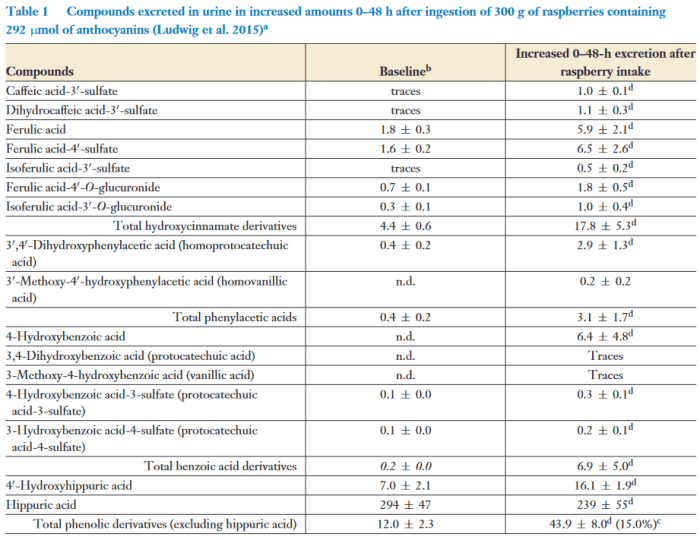
Although plasma pharmacokinetic measurements provide a snapshot of absorbed circulating metabolites, 0–24-h urinary excretion of both metabolites absorbed in the small intestine and catabolites of distal gastrointestinal (GI) origin that are products of bacterial processing provide a more quantitative reflection of polyphenol absorption. Overall 0–48-h urinary recovery of phenolic compounds – after baseline subtraction – was 43.9 ± 8.0 μmol, which is equivalent to 15% of ingested anthocyanins.

raspberries

With orders of magnitude higher plasma/serum Cmax levels and significantly longer half-lives, evidence points toward lower molecular weight phenolic and aromatic catabolites being the primary bioavailable products of anthocyanin consumption. Gut-derived catabolites can often exert higher bioactivity than their precursor flavonoid structures.”

https://www.annualreviews.org/doi/full/10.1146/annurev-food-030216-025636 “Anthocyanins and Flavanones Are More Bioavailable than Previously Perceived: A Review of Recent Evidence” (not freely available)


Much of this review’s anthocyanin section was dedicated to a coauthor’s 9-person study where they ate a huge amount of raspberries. Its flavanone section was similarly influenced by another coauthor’s human orange juice studies.

I’d like to see stronger evidence before reviewer statements become faits accomplis, elevated through citations to become indisputable facts. Its underlying point that studies could take more and varied measurements over extended periods seems amenable to evidence.

I arrived at this review through its citations in Colorize your diet and Red cabbage pigments and the brain.

Colorize your diet

This 2020 review subject was anthocyanins in Brassicaceae species:

“Anthocyanins provide red to blue colors in Brassicaceae plants, have nutritional value, and pharmaceutical potential. This review summarizes chemical composition, stability, bioavailability, and health benefits.

Edible sprouts are good sources of anthocyanins. Even within the same species, content of anthocyanins may vary with cultivar, growing season, growth condition, and plant organ.

Acylated anthocyanins were more stable than non-acylated anthocyanins. Bioavailability is the proportion of nutrient reaching systemic circulation.

Brassicaceae anthocyanins

Large amounts of unabsorbed anthocyanins reached the large intestine, where they were extensively metabolized by microbiota, forming simple anthocyanins, which were much more bioavailable. Degradation products can also be absorbed.

When these events are taken into account, Brassicaceae anthocyanins might be more bioavailable than previously perceived.

Stability of Brassicaceae anthocyanins may be beneficial in preventing certain chemical degradation in the gastrointestinal tract. Anthocyanins reaching blood circulation may be different from original food compounds.

Brassicaceae anthocyanins possess potential:

  • Antioxidant;
  • Anti-cancer;
  • Anti-inflammatory activities;
  • Protection against hepatic andrenal damage; and
  • Cardiovascular disease.

Most evidence is based on in vitro studies. More studies are necessary to further understand health benefits, as well as levels of consumption to maximize benefits, and mechanisms involved.”

https://www.tandfonline.com/doi/abs/10.1080/10408398.2020.1852170 “Anthocyanins in Brassicaceae: composition, stability, bioavailability, and potential health benefits” (not freely available)


I found this review as a fourth-order citation of related papers.

Chew it!

This 2020 human study examined associations between food consumption and chewing difficulty:

“Masticatory function influences not only control of chewing frequency and pressure, but also quality of life through food intake. Reduced food intake caused by chewing difficulty results in loss of eating pleasure and nutritional imbalance.

Chewing difficulty (DC) has been related to brain-related diseases such as cognitive impairment, cerebrovascular disorder, and Parkinson’s disease, increase in occurrence of diseases such as muscular dystrophy, aging acceleration, stomach, and kidney dysfunction due to reduced digestive enzyme secretion, and depression.

Subjects were divided into not difficult in chewing (NDC) and DC groups, with 24.17% being classified into DC. Average age of all subjects (n = 20,959 adult subjects aged between 19 and 64 yrs plus older) was 50.67 yrs. Average age of DC (60.5 yrs) was about 13 yrs older than NDC (47.5 yrs old).

Males and females consumed 35 and 37 items less frequently than the other sex, respectively:

nrp-14-637-g001

Subjects over 65 yrs who had chewing difficulty were 45.4% whereas that of adults was 24.3%. Items known to contain relatively high dietary fiber content or a high content of connective tissues were considered as foods to avoid by those with chewing difficulty due to strong or hard texture.

https://www.ncbi.nlm.nih.gov/pmc/articles/PMC7683204/ “Food consumption frequency of Korean adults based on whether or not having chewing difficulty using 2013–2016 KNHANES by sex-stratified comparative analysis”


I’d like to know more about subjects who had unresolved dental problems. This study focused on age and sex, but I’ve known twenty-somethings who had problems such as false teeth and dentures.

I go to a dentist twice a year. Don’t think I’d make my gut microbiota happy with Avena nuda oats, broccoli and oat sprouts, and AGE-less chicken vegetable soup if I had dental problems.

One aspect of research on short-chain fatty acids

To further understand An overlooked gut microbiota product, a 2018 rodent study found:

“Microbial metabolites short-chain fatty acids (SCFAs) have been implicated in gastrointestinal functional, neuroimmune regulation, and host metabolism, but their role in stress-induced behavioural and physiological alterations is poorly understood

SCFAs are primarily derived from fermentation of dietary fibres, and play a pivotal role in host gut, metabolic and immune function. All these factors have previously been demonstrated to be adversely affected by stress.

Administration of SCFAs to mice undergoing psychosocial stress alleviated enduring alterations in anhedonia and heightened stress-responsiveness, as well as stress-induced increases in intestinal permeability.

experimental design

SCFA treatment alleviated psychosocial stress-induced alterations in reward-seeking behaviour, and increased responsiveness to an acute stressor and in vivo intestinal permeability. In addition, SCFAs exhibited behavioural test-specific antidepressant and anxiolytic effects, which were not present when mice had also undergone psychosocial stress.”

https://physoc.onlinelibrary.wiley.com/doi/pdf/10.1113/JP276431 “Short-chain fatty acids: microbial metabolites that alleviate stress-induced brain–gut axis alterations”


One way researchers advance science is to relate aspects of their findings to previous studies. That approach works, but may miss items that weren’t covered in previous research.

This study fed specific quantities of three SCFAs – acetate, butyrate, and propionate – apparently due to previous research findings. If other SCFAs produced by gut microbiota were ignored – like crotonate (aka unsaturated butyrate) – how would that approach advance science?

I found this study from its citation in Harnessing endogenous defenses with broccoli sprouts.

Benefits of eating fermentable fiber

This 2021 review subject was effects of short-chain fatty acids produced by gut microbiota:

“SCFAs are the main players in the interplay between diet, microbiota, and health. SCFAs contribute to intestinal homeostasis and regulation of energy metabolism.

SCFAs regulate the blood–brain barrier and neuroimmunoendocrine functions. During gestation, SCFAs can cause epigenetic imprinting and protect against allergic airway disease.

gr3_lrg

Fiber reaching the colon is anaerobically fermented by gut bacteria, which produce SCFAs. Nondigestible polysaccharides are found in plant cell walls, and are further classified into soluble and nonsoluble dietary fibers.

A role for SCFAs in histone modification of tissues in the body was definitively shown by dietary supplementation of germ-free mice with microbially produced acetate, propionate, and butyrate. These SCFAs increased acetylation of histone H4 and H3 in a tissue-specific fashion.

Most research to date has focused on butyrate but unlike acetate and propionate, it is typically present in undetectable or very low concentrations in the body. SCFAs appear to influence health through three principal mechanisms:

  1. Altering levels of HAT [histone acetyltransferase] and HDAC [histone deacetylase] activity;
  2. Signaling by specific fatty acid-sensing GPCRs [G-protein-coupled receptors]; and
  3. Anti-inflammatory mechanisms in the periphery and tissues due to the first two mechanisms.”

https://www.cell.com/trends/microbiology/fulltext/S0966-842X(21)00035-4 “Microbial Regulation of Host Physiology by Short-chain Fatty Acids”


PXL_20210412_104327851

Several diseases, one treatment?

This 2021 review summarized three dietary supplements’ effects on psychiatric symptoms:

“Upregulation of Nrf2 has been suggested as a common therapeutic target for major neuropsychiatric disorders. In this paper, evidence is presented showing how NAC [N-acetyl-cysteine], coenzyme Q10 (CoQ), and melatonin can ameliorate many important effects of oxidative stress by upregulating Nrf2.

Given its key role in governing cellular antioxidant response, upregulation of Nrf2 has been suggested as a common therapeutic target in neuropsychiatric illnesses such as major depressive disorder, bipolar disorder, and schizophrenia. These are associated with chronic oxidative and nitrosative stress, characterised by elevated levels of reactive oxygen species, nitric oxide, and peroxynitrite.

CoQ:

  • Acts as a superoxide scavenger in neuroglial mitochondria;
  • Instigates mitohormesis;
  • Ameliorates lipid peroxidation in the inner mitochondrial membrane;
  • Activates uncoupling proteins;
  • Promotes mitochondrial biogenesis; and
  • Has positive effects on the plasma membrane redox system.

Melatonin:

  • Scavenges mitochondrial free radicals;
  • Inhibits mitochondrial nitric oxidesynthase;
  • Restores mitochondrial calcium homeostasis;
  • Deacetylates and activates mitochondrial SIRT3;
  • Ameliorates increased permeability of the blood-brain barrier and intestine; and
  • Counters neuroinflammation and glutamate excitotoxicity.”

https://www.researchgate.net/publication/348309816_Increasing_Nrf2_Activity_as_a_Treatment_Approach_in_Neuropsychiatry “Increasing Nrf2 Activity as a Treatment Approach in Neuropsychiatry” (registration required)


These reviewers explored three selected supplements, citing 380 references. They overlooked something, though. There was only one mention of sulforaphane in their paper, yet four references’ titles included sulforaphane?

I take two of the three exogenous supplements discussed. The one I stopped taking over a year ago – NAC – was thoroughly discussed, but not in contexts directly related to the Nrf2 transcription factor. Why?

Switch on your Nrf2 signaling pathway pointed out:

“We use NAC in the lab all the time because it stops an Nrf2 activation. So that weak pro-oxidant signal that activates Nrf2, you switch it off by giving a dose of NAC. It’s a potent antioxidant in that right, but it’s blocking signalling. And that’s what I don’t like about its broad use.”

The current review noted that Nrf2 is activated by oxidative stress. NAC is a precursor to glutathione – our main endogenous antioxidant – and neither one activates Nrf2 pathways.

What does? Sulforaphane.

PXL_20210412_104353167

Repositioning DNA methylation

This 2021 human study found:

“We report on a randomized controlled clinical trial conducted among 43 healthy adult males between the ages of 50-72. The 8-week treatment program included diet, sleep, exercise and relaxation guidance, and supplemental probiotics and phytonutrients.

This is the first randomized controlled study to suggest that specific diet and lifestyle interventions may reverse Horvath DNAmAge (2013) epigenetic aging in healthy adult males. Larger-scale and longer duration clinical trials are needed to confirm these findings, as well as investigation in other human populations.

aging-v13iundefined-202913-figure-f3

In both treatment and control groups, there was no net increase or decrease in methylation of 353 sites that compose the Horvath clock. This finding suggests that intervention did not lead to an overall increase in methylation of Horvath clock sites, but rather it prompted a repositioning of clock CpG methylation patterns consistent with a younger biological age.

One significant limitation of this pilot trial is limited statistical power due to relatively small sample size. It is not yet fully established whether interventions that slow any methylation clocks necessarily curtail risks of age-related disease.”

https://www.aging-us.com/article/202913/text “Potential reversal of epigenetic age using a diet and lifestyle intervention: a pilot randomized clinical trial”


Baffled as to why these researchers relied on 2013 research rather than at least Dr. Horvath’s improved 2018 skin and blood clock, a review of which noted:

“Although the skin-blood clock was derived from significantly less samples (~900) than Horvath’s clock (~8000 samples), it was found to more accurately predict chronological age, not only across fibroblasts and skin, but also across blood, buccal and saliva tissue. A potential factor driving this improved accuracy in blood could be related to the approximate 18-fold increase in genomic coverage afforded by using Illumina 450k/850k beadarrays.”

Which would you prefer? A 2013 flip phone, or a 2018 smartphone?

Gut microbiota topics

Here are thirty 2019 and 2020 papers related to Switch on your Nrf2 signaling pathway topics. Started gathering research on this particular theme three months ago.

There are more researchers alive today than in the sum of all history, and they’re publishing. I can’t keep up with the torrent of interesting papers.

on

2020 A prebiotic fructo-oligosaccharide promotes tight junction assembly in intestinal epithelial cells via an AMPK-dependent pathway

2019 Polyphenols and Intestinal Permeability: Rationale and Future Perspectives

2020 Prebiotic effect of dietary polyphenols: A systematic review

2019 Protease‐activated receptor signaling in intestinal permeability regulation

2020 Intestinal vitamin D receptor signaling ameliorates dextran sulfate sodium‐induced colitis by suppressing necroptosis of intestinal epithelial cells

2019 Intestinal epithelial cells: at the interface of the microbiota and mucosal immunity

2020 The Immature Gut Barrier and Its Importance in Establishing Immunity in Newborn Mammals

2019 Prebiotics and the Modulation on the Microbiota-GALT-Brain Axis

2019 Prebiotics, Probiotics, and Bacterial Infections

2020 Vitamin D Modulates Intestinal Microbiota in Inflammatory Bowel Diseases

2020 Microbial tryptophan metabolites regulate gut barrier function via the aryl hydrocarbon receptor

2019 Involvement of Astrocytes in the Process of Metabolic Syndrome

2020 Intestinal Bacteria Maintain Adult Enteric Nervous System and Nitrergic Neurons via Toll-like Receptor 2-induced Neurogenesis in Mice (not freely available)

2019 Akkermansia muciniphila ameliorates the age-related decline in colonic mucus thickness and attenuates immune activation in accelerated aging Ercc1−/Δ7 mice

2020 Plasticity of Paneth cells and their ability to regulate intestinal stem cells

2020 Coagulopathy associated with COVID-19 – Perspectives & Preventive strategies using a biological response modifier Glucan

2020 Synergy between Cell Surface Glycosidases and Glycan-Binding Proteins Dictates the Utilization of Specific Beta(1,3)-Glucans by Human Gut Bacteroides

2020 Shaping the Innate Immune Response by Dietary Glucans: Any Role in the Control of Cancer?

2020 Systemic microbial TLR2 agonists induce neurodegeneration in Alzheimer’s disease mice

2019 Prebiotic supplementation in frail older people affects specific gut microbiota taxa but not global diversity

2020 Effectiveness of probiotics, prebiotics, and prebiotic‐like components in common functional foods

2020 Postbiotics-A Step Beyond Pre- and Probiotics

2019 Pain regulation by gut microbiota: molecular mechanisms and therapeutic potential

2020 Postbiotics: Metabolites and mechanisms involved in microbiota-host interactions

2020 Postbiotics against Pathogens Commonly Involved in Pediatric Infectious Diseases

2019 Glutamatergic Signaling Along The Microbiota-Gut-Brain Axis

2019 Lipoteichoic acid from the cell wall of a heat killed Lactobacillus paracasei D3-5 ameliorates aging-related leaky gut, inflammation and improves physical and cognitive functions: from C. elegans to mice

2020 Live and heat-killed cells of Lactobacillus plantarum Zhang-LL ease symptoms of chronic ulcerative colitis induced by dextran sulfate sodium in rats

2019 Health Benefits of Heat-Killed (Tyndallized) Probiotics: An Overview

2020 New Horizons in Microbiota and Metabolic Health Research (not freely available)

Oat digestibility

A reader questioned one part of Oat species comparisons of the good stuff regarding Avena nuda hull digestibility. This 2019 study partially investigated that aspect:

“We investigated effects of proteins, lipids, and β-glucan in naked oat flour on in vitro digestibility of starch. Content of rapidly digested starch increased, and content of resistant starch decreased after removing non-starch constituents.

There are three categories of starch in accordance with the rate and degree of starch digestion, namely, rapidly digested starch, slowly digested starch, and resistant starch. Resistant starch cannot be digested. Instead, it promotes growth of beneficial colonic flora.

Digestibility of starch is influenced by size and shape of starch granules, food processing method, physical and chemical modifications, viscosity, and food matrix components. Physicochemical properties of naked oat starch and naked oat flour after removing non-starch constituents were compared to study relationships between starch digestibility and intrinsic factors:


Oats contain more proteins and lipids than other common grains. Proteins can effectively reduce starch digestibility by several mechanisms:

  • Proteins can form a protection around starch granules, restricting entry of enzymes into substrates.
  • Surface proteins can block catalytic binding of enzymes on starch granule exterior.
  • α-amylase can partially bind to proteins, reducing enzyme utilization.

By contrast, effects of lipids on starch digestibility is primarily due to forming complexes with amylose, which is better able to resist amylase.

β-glucan, particularly the extracted water-soluble fraction, can lower digestion rate of starch by increasing viscosity. β-glucan can create a complex of adjacent proteins to form a robust structure that resists amylase, resulting in a decrease in starch digestibility.”

https://www.sciencedirect.com/science/article/abs/pii/S0308814619310556 “Non-starch constituents influence the in vitro digestibility of naked oat (Avena nuda L.) starch” (not freely available)


When viewing the above graphic, keep in mind that its order wasn’t sequential. So “degreased” oat flour (lipids removed, DG-NOF) wasn’t included in “deproteinized” oat flour (DP-NOF).

This in vitro study missed an opportunity to investigate human-practical aspects. Nobody eats oats without preparing them with water. But effects on digestibility from minutes and hours of soaking, boiling, microwaving, etc. weren’t analyzed.

Gut microbiota outnumber human cells. Treat them well with both Avena nuda resistant oat starch and indigestible hulls, and expect reciprocity.

Long-lasting benefits of a common vaccine

This 2021 review subject was effects of the 100-year-old tuberculosis vaccine:

“Bacillus Calmette-Guerin (BCG) vaccine is one of the most widely used vaccines. It protects against many non-mycobacterial infections secondary to its nonspecific immune effects.

The mechanism for these effects includes modification of innate and adaptive immunity. BCG vaccine is known to not only boost immune responses to many vaccines when they are co-administered, but also decreases severity of these infections when used alone.

Alteration in innate immunity is through histone modifications and epigenetic reprogramming of monocytes to develop an inflammatory phenotype, a process called trained immunity. Memory T cells of adaptive immunity are also responsible for resistance against secondary infections after administration of BCG vaccine, a process called heterologous immunity.

The PI3K/AKT pathway, another pathway for mediating immunity, was upregulated. This was supported by recent studies demonstrating its involvement in induction of trained immunity by both BCG and β-glucan.

BCG vaccine can modify both innate and adaptive immunity, and provide immunity not only against Mycobacterium tuberculosis but also other pathogens. Heterologous immunity and trained immunity contribute to pathophysiologic mechanisms which explain how a vaccine protects against unrelated pathogens.”

https://www.amjmedsci.org/article/S0002-9629(21)00092-6/fulltext “Bacillus Calmette-Guerin Vaccine and Nonspecific Immunity”


As inferred by “induction of trained immunity by both BCG and β-glucan” many of these findings also apply to yeast cell wall β-glucan treatments. See Choosing your future with β-glucan for a representative study.

Time-restricted prebiotics

My 700th curation is a 2021 rodent study that investigated time-restricted prebiotic intake combined with an unrestricted bad diet:

“Restricted prebiotic feeding during active phase induced weight-independent alleviation of liver steatosis and reduced serum cholesterol in high-fat diet (HFD) fed mice more significantly than unrestricted feeding.

The prebiotic was a mixture of resistant starch [86%], fructo-oligosaccharide [5%], inulin [7.5%], and xylooligosaccharide [1.5%]. It was administered via drinking water at 10% (w/v) for 11 weeks followed by 20% (w/v) for 4 weeks.

Data suggests that improvement in HFD-induced hepatic steatosis by prebiotics could be associated with increased production of SCFAs [short-chain fatty acids]. Findings suggest that SCFA production can also be modified by timed feeding of prebiotics. This implies that distinct alterations in gut microbiota introduced by a difference in prebiotic feeding regime might be an outcome of gut microbiota undergoing diurnal oscillation.

These results suggest that the impact of prebiotics on weight-independent alleviation of liver steatosis and cholesterol-lowering effect can be optimized by restricting prebiotic intake to active phase, and is associated with a distinct change of gut microbiota with increased SCFA production.”

https://www.ncbi.nlm.nih.gov/pmc/articles/PMC7806547/ “Active phase prebiotic feeding alters gut microbiota, induces weight-independent alleviation of hepatic steatosis and serum cholesterol in high-fat diet-fed mice”


This study provided further evidence for Rhythmicity in that:

“Active phase restricted feeding of prebiotics showed more significant effects on modulating gut microbiota, SCFA production, and metabolic response, independent of weight loss. Alterations in gut microbiota introduced by a difference in prebiotic feeding regime might be an outcome of gut microbiota undergoing diurnal oscillation.”

Subjects’ human-equivalent ages were ~15 years to start and ~30 years at the end. As findings may be applicable to humans, this study was similar to Eat oats to prevent diabetes in that it passed on the issue of causes for detrimental effects continuing.

Eat whatever and whenever you want even though you know it will adversely affect your health? Sure, just add this prebiotic, or even better, time-restrict the prebiotic, and everything’s going to be alright?

Eat oats to prevent diabetes

This 2020 rodent study investigated Type 2 diabetics eating oats along with a bad diet:

“Type 2 diabetes (T2D) is a metabolic disease which is characterized by a state of chronic low-grade inflammation with abnormal expression and production of multiple inflammatory mediators. Insulin resistance (IR), a condition where higher-than-normal concentration of insulin is needed to maintain a normal glycemia and adequate glucose utilization in insulin target tissues, has been clinically recognized as the best indicator for diagnosis of T2D.

Increased proportion of whole grain foods in daily diet are associated with reduced prevalence of IR, which is mainly attributed to abundant non-digestible carbohydrates.”

Oat species was Avena nuda, analyzed as:

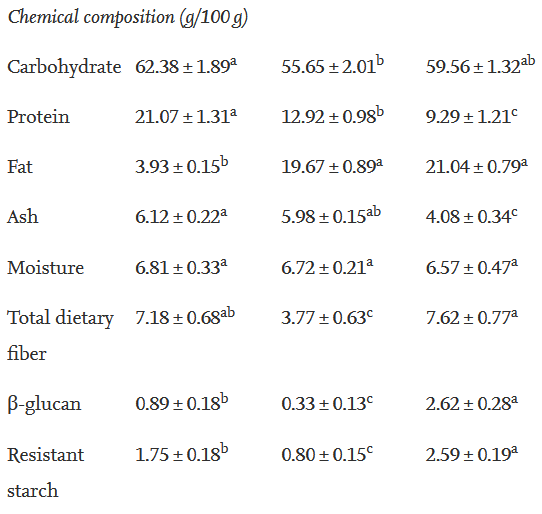
Left to right, diet compositions for basic chow diet, high-fat diet (HFD), and 49% HFD with 51% whole oat flour:

“An inflammation state characterized by high plasma TNF-α, IL-6, and IL-1β level was induced by HFD in T2D rats. Whole oats had anti-inflammatory effects by inhibiting production of proinflammatory cytokines. Our data supports a positive relationship between increased adipose proinflammatory cytokines and increased insulin resistance.

A drop in water and food intake indicated an improvement in typical clinical symptoms of T2D. Results of this study provide information about differences between individual oat products in improving T2D-related symptoms, and the role of gut microbiota.”

https://www.sciencedirect.com/science/article/pii/S1756464620301638 “Effects of oat β-glucan, oat resistant starch, and the whole oat flour on insulin resistance, inflammation, and gut microbiota in high-fat-diet-induced type 2 diabetic rats”


This study’s design wasn’t influenced by It’s the fiber, not the fat evidence. A more thorough analysis of each diet’s fiber contents may have better explained this study’s results.

100% insoluble fiber (cellulose) in “It’s the fiber” didn’t help subjects’ health. Removing 2-5% soluble fiber from subjects’ diets in that study had negative effects.

Although β-glucan isn’t the sole soluble fiber in Avena nuda oats, let’s use this study’s 51% whole-oat flour diet β-glucan of 2.62% as a proxy for soluble fiber:

  • Basic chow diet removed 1.73% (2.62 – 0.89) soluble fiber, and HFD removed 2.29% (2.62 – 0.33) soluble fiber.
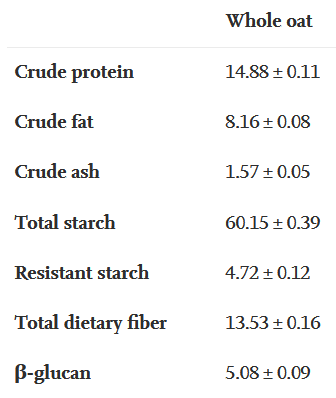
  • Using its oat analysis, 51% whole-oat flour diet insoluble fiber due to oats was 4.31% ((13.53 – 5.08) * .51). The diet’s unanalyzed insoluble fiber of 3.31% (7.62 – 4.31) was roughly equivalent to HFD unanalyzed insoluble fiber of 3.44% (3.77 – 0.33).
  • Because composition of insoluble fiber matters to this study’s measurements – especially to gut microbiota – I won’t calculate estimates to compare basic chow diet’s unanalyzed insoluble fiber with the other diets’ unanalyzed insoluble fiber.

These researchers could have analyzed all this for soluble and insoluble fiber. They could have isolated resistant starch effects since its content was equivalent to β-glucan in the 51% whole-oat flour diet.


I’ve replaced Avena sativa steel-cut oats for breakfast with the Avena nuda cultivar used in Sprouting hulless oats. They’re chewier when prepared the same way – 1/2 cup soaked overnight in 2 cups water, then microwaved 20 minutes in a 1000W microwave at 80% power.

This Avena nuda cultivar is healthier because of oat bran’s contributions. Per Oat species comparisons of the good stuff, up to 25% of Avena sativa oat seeds are removed by dehulling before the steel-cut process.

I prefer 3-day-old oat sprouts of the hulled Avena sativa cultivar used in Sprouting hulled oats because of their 97% germination rate and taste. The Avena nuda cultivar didn’t sprout as well or taste as good.

One step short of greatness

A 2021 rodent study investigated dietary effects of organic and conventional farming practices:

“We report results from a two-generation, dietary intervention study with male Wistar rats to identify the effects of feeds made from organic and conventional crops on growth, hormonal, and immune system parameters that are known to affect the risk of a number of chronic, non-communicable diseases in animals and humans.

Conventional, pesticide-based crop protection resulted in significantly lower fiber, polyphenol, flavonoid, and lutein, but higher lipid, aldicarb [a pesticide], and diquat [a herbicide] concentrations in animal feeds.

Conventional, mineral nitrogen, phosphorus and potassium (NPK)-based fertilization resulted in significantly lower polyphenol, but higher cadmium and protein concentrations in feeds.

Growth and other physiological parameters were only monitored for 9 weeks after weaning. It was therefore not possible to determine whether and to what extent:

  1. Differences in feed composition;
  2. Dietary intakes of compounds previously linked to obesity and chronic diseases; and/or
  3. Changes in endocrine and immune parameters in rats raised on feed crops treated with mineral fertilizers and/or pesticides,

would have resulted in higher levels of weight gain and/or diseases linked to obesity, endocrine disruption and/or changes in immune system activity/responsiveness.”

https://www.mdpi.com/2072-6643/13/2/377/htm “Feed Composition Differences Resulting from Organic and Conventional Farming Practices Affect Physiological Parameters in Wistar Rats—Results from a Factorial, Two-Generation Dietary Intervention Trial”


I’m always fascinated when researchers intentionally stop one step short of greatness.

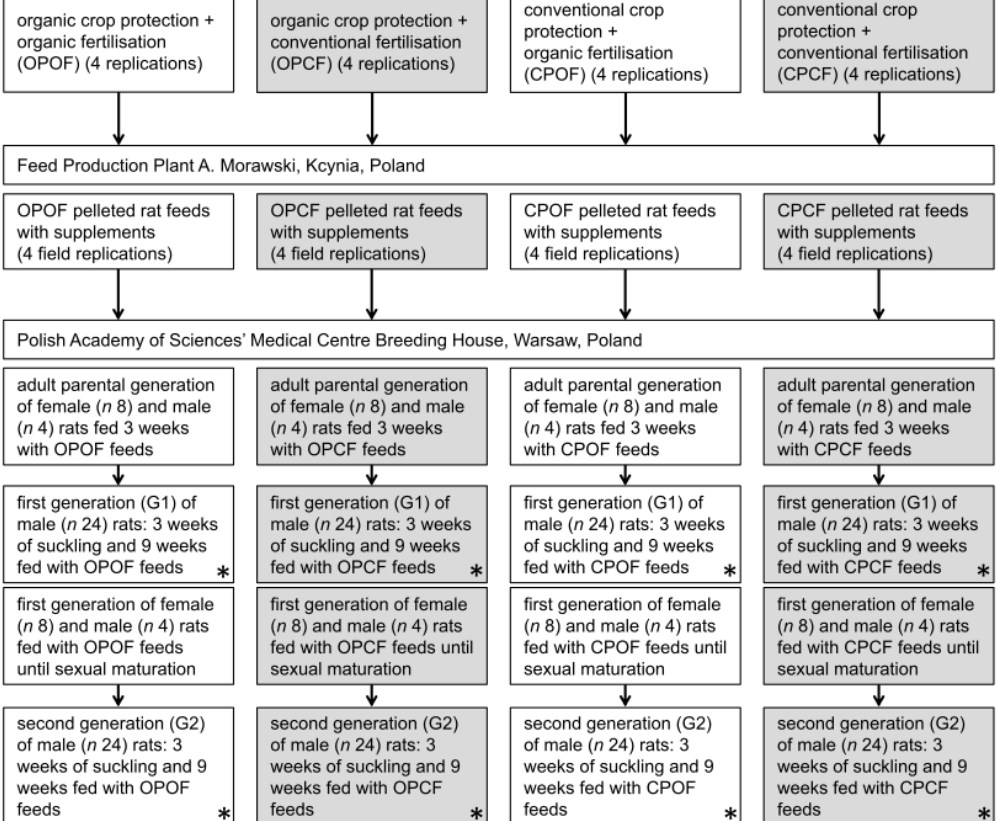
It seems a main purpose of this study was to justify a 2013 study by these researchers on pretty much the same subject. The current study had a defined F0 generation, and four different F1 generations and F2 generations.

This study stopped without continuing to any F3 generations.

  • The F1 F2 OPOF line in the above graphic’s first column didn’t eat chow produced with either synthetic chemical pesticides or conventional fertilizers.
  • This line could have continued on to transgenerational great-grand offspring who would have had no direct exposure to the F0 generation’s conventionally fertilized and “protected” crop diet.
  • By continuing, these researchers could have found out what transgenerationally inherited effects on the F3 generation there may be from the F0 generation eating a conventionally-produced diet.
  • Anything found in this line’s F3 great-grand offspring may have applied to humans.

Do we ever consider our great-grandchildren?

A PhD in oats

The lead researcher of Eat oat sprouts for AVAs‘s second study made their PhD thesis freely available. It’s still informative 13 years later:

“The main objective of this research project was to obtain new knowledge on how to treat raw oat material of oat-based products in order to sustain or even increase levels of endogenous phenolic compounds, with emphasis on avenanthramides, in the final food product. Germination of oats proved to be a potential processing method for use on oats since it is relatively easy to perform, although time-consuming.”

Which of these may be better for you? 44.1 grams of 4-day-old hulless oat sprouts at the top:

Or 53.2 g of 3-day-old hulled oat sprouts at the bottom?

They both started from 20.0 g seeds, and germinated the same way up through three days. 20 grams was over 1,300 hulled oat seeds, and close to 700 hulless oat seeds.

3-day-old hulled oat sprouts taste better, have a higher germination rate, and supply more quantity of their nutrients by weight. Characteristics of hulls from the thesis:

“The hull constitutes on average approximately 25% of the total grain weight. Protein, oil, starch and water-soluble carbohydrate levels are overall relatively low.

A large number of bioactive phenolic compounds can be found, among them p-coumaric acid, ferulic acid, vanillic acid, tricin and avenanthramides. Hull constituents remain unaffected during germination.

Activity of β-glucanase increases during germination of oats, resulting in almost total degradation of β-glucan. Since β-glucan is known to have health beneficial effects in humans, degradation during germination is not desirable if oats are intended for use in food products rather than for brewing.”

I’m not going to deal with hulls. Humans can’t digest oat hulls anyway.

A case for 4-day-old hulless oat sprouts:

“Germination of oats can be a good method to sustain or increase avenanthramides and other potentially health beneficial phenolic compounds. Levels of avenanthramides can increase during germination, sometimes to a high degree.

There was no indication that the increase in avenanthramide content had reached a plateau for any cultivars at 120 h of germination, indicating that further increase could take place.

Total protein content in oats increases slightly during germination. Even though the increase is small, it is important, since essential amino acids lysine and tryptophan increase and therefore improve nutritional value.

Lipid content in oats decreases slightly during germination while content of free fatty acids increases, although there are differences between cultivars as well as between hulled and hulless cultivars.”

Eat oat sprouts for AVAs

Here are three oat studies, two of them specifically on oat sprouts. The first from 2019 was cited in Don’t brew oat sprouts – eat them! for oat sprouts having “up to 25-fold increase” in avenanthramides (AVAs):

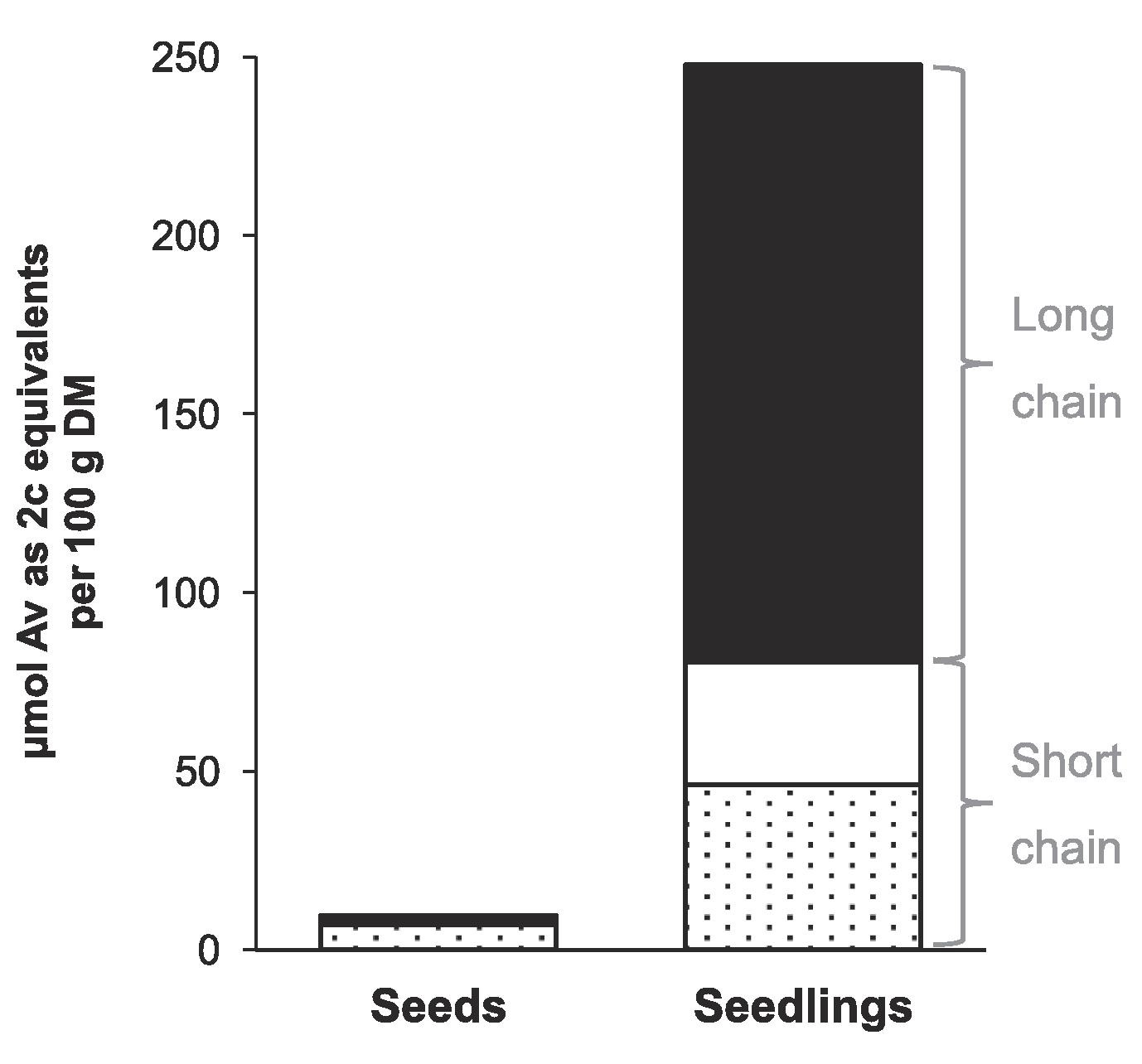
“Oat seeds were germinated, extracted, and analysed, finding 28 unique AVAs. AVAs 2p, 2c, and 2f, which are commonly described as the major AVAs, represented less than 20% of total content in seedlings.

The germinator program was: soak for 20 h at 20 °C (aeration 1 min every 10 min), followed by germination for 72 h at 25 °C (RH ≥ 99%). After the first 72 h of germination, oat seedlings were incubated for another 96 h at 30 °C (RH 70–80%).

AVA content was boosted by germination, resulting in around 25 times larger quantities found in oat seedlings.
Previous studies also showed an increase in AVA content upon germination, but to a lesser extent than in our current experiment. It used different growth conditions, namely a shorter soaking time (10–14 vs. 20 h) and their seed germination phase was performed at lower temperature and different duration (120 h at 16 °C or 72 h at 20 °C vs 96 h at 30 °C).

Additionally, they quantified AVAs 2p, 2c, 2f, and 3f but also observed a large number of unknown peaks in the UV 340 nm chromatogram. Based on the wide variety of AVAs annotated in our work, many of these peaks probably corresponded to other AVAs, but they were not identified and quantified as such.”

https://www.sciencedirect.com/science/article/pii/S0308814618319411 “Mass spectrometric characterisation of avenanthramides and enhancing their production by germination of oat (Avena sativa)”

No measurements were taken at three days when germination parameters changed. These researchers didn’t bother to take any samples between Hours 0 and 168. This lack of germination-stage evidence limited findings’ utility to other researchers.

Was this study designed to create a headline rather than useful germination-stage information? Why obliquely and directly fault another study in the Abstract, Results and Discussion, and Conclusion sections for being performed more than a decade earlier, without subsequent advancements in science and technology?

Contrast this study’s design with 2020 Oat sprouts analysis which took measurements under 18 different conditions (hulled / dehulled seeds of two oat varieties, for 1-to-9 days, at 12-to-20°C). Those researchers produced evidence to support many further studies, such as:

“Presence / absence of hull might determine different effects of germination conditions on α-amylase, protease, and lipase activities.”


The referenced disparaged 2007 study:

“..investigated the effect of a steeping and germination process, using a pilot plant malting system, on content of AVAs and other phenolic compounds. This was performed to gain a more collective and comparative picture of what happens to phenolic compounds in the oat kernel during germination.

Steeping and germination was performed at two different temperatures, 16 and 20°C. Three closely related North American covered oat cultivars were steeped to 45% moisture, which took 10, 12, and 14 h for Vista, Gem, and Dane, respectively.

After steeping, oat grains were drained and samples were germinated at 16°C for 120 h or at 20°C for 72 h (due to a machine breakdown, the 20°C experiment had to be stopped at 72 h of germination). Sampling during germination was carried out at set hours (for 16°C at 12, 24, 48, 72, 96 and 120 h and for 20°C at 12, 24, 48 and 72 h).
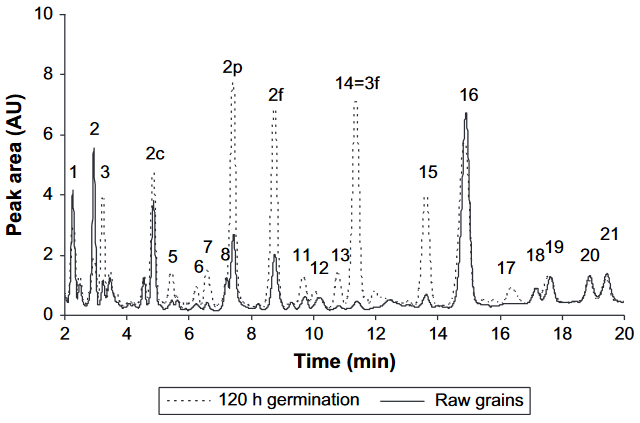
Chromatogram of AVAs and other phenols from cultivar Dane (16°C treatment). Peaks for AVAs 2c, 2p, 2f and 3f are identified. Unknown peaks are numbered in order of appearance (from 1-21). For isolation and identification of AVA 3f the commercial product SPC-flakes, purchased in a health food shop, was used.

An increase in AVA content of germinated seeds, as compared to raw grains, was observed for Dane (125%, p < 0.001) and for Vista (29%, p = 0.007). HHT [avenanthramide-synthesizing enzyme] activity increased 62% (p = 0.014) in Dane, whereas no change was detected in Vista and Gem. This increase started early in germination to reach its maximum at 96 h of germination.

Effects of temperature on AVAs 2c, 2p and 2f, and activities of HHT and PO, was less important than time of steeping, or time of germination, or cultivar. However, almost all unknown compounds were affected by temperature, indicating the importance of this factor.”

https://www.sciencedirect.com/science/article/abs/pii/S0733521007001762 “Avenanthramide content and related enzyme activities in oats as affected by steeping and germination” (not freely available)

This study’s HHT (avenanthramide-synthesizing enzyme) maximum-at-96-hours finding may be what I tasted in Sprouting hulless oats, where that variety’s sprouts improved their sweetness and enzymes between Days 3 and 4. Did an extra day improve AVA content?

So their pilot malting system broke down. They had to get an analysis standard from a health food store. And there were many unknowns due to 2007 science and technology.

Despite difficulties, germination-stage samples produced evidence and analyses other people could use more than a decade later.


A 2020 study cited the first study for basic, not headline, information:

“There are various potential mechanisms for AVAs anti-inflammatory effects, including inhibition of lipoxygenases (LOX), which catalyse oxygenation of polyunsaturated fatty acids into potent signal molecules involved in inflammatory processes.

It was found that AVAs comprising caffeic or sinapic acid exhibited significant lipoxygenase inhibition (60–90%), whereas low or no inhibition was observed with AVAs containing p-coumaric or ferulic acid.

Corresponding free cinnamic acids, AVA analogue Tranilast® and LOX inhibitor trans-resveratrol were included for comparison. Trans-resveratrol showed inhibition, whereas no difference in inhibition was seen on comparing AVAs with their free corresponding cinnamic acids, which implies that the anthranilic acid part of the avenanthramide molecule does not affect inhibition.

Whether dietary AVAs at intake levels normally achieved through consumption of oat products exert LOX inhibitory activity in vivo, and thereby inhibit production of pro-inflammatory compounds, remains to be elucidated. In this context it may also be of importance to emphasize that lipid content in groats of various oat cultivars is comparably high (49–135 g kg−1) and that LA [linoleic acid (C18:2, n-6)] and ALA [α-linolenic acid (C18:3, n-3)] comprise about 40% and 1%, respectively, of fatty acids.

Consumption of oats has been linked to a decreased risk of several chronic diseases, and AVAs contribute to protective effects. This study suggests that avenanthramides comprising caffeic acid or sinapic acid partly exert their antioxidant and anti-inflammatory effects via lipoxygenase inhibition.”

https://www.sciencedirect.com/science/article/pii/S2405844020311488 “Avenanthramides as lipoxygenase inhibitors”


Tampa’s Riverwalk