Conclusions without evidence regarding emotional memories

The last sentence in the Significance section of this 2015 Emory/Harvard rodent study was:

“These data highlight the potential to exploit sensory system plasticity as a means of ameliorating negative emotional memories that may be tied to peripheral sensory systems.”

The “ameliorating negative emotional memories” part of this statement was incongruent with what the study actually found, as summarized by the Abstract’s last sentence:

“These data suggest that learning-induced freezing behavior, structural alterations, and enhanced neural sensory representation can be reversed in adult mice following extinction training.”

The study performed fear extinction experiments. The researchers and reviewer knew or should have known about prior studies such as Fear extinction is the learned inhibition of retrieval of previously acquired responses whose findings demonstrated that fear extinction doesn’t depend on memory retrieval.

Based on the previous research, the subjects’ “negative emotional memories” possibly weren’t affected at all by the current study’s extinction experiments!

The researchers provided neither direct evidence for “ameliorating negative emotional memories” nor studied areas of the subjects’ brains that contained or processed emotional memories, such as the hippocampus, amygdala, and prefrontal cortex. But – after all – Harvard.

What purposes did it serve for the researchers to make a Significance statement about “ameliorating negative emotional memories” when this wasn’t supported by the study’s findings? What part did the reviewer play in approving this statement?


Where was the study’s evidence to support the headline and statements in the news release such as:

“New Study Indicates That Sense of Smell Could Play Major Role in New Approaches to Treating PTSD

It’s possible for fear behaviors associated with emotional learning to be reversed through exposure-based talk therapy.”

Could this rodent study’s olfactory system findings be properly extrapolated to human talk therapy?

NO! But – Harvard.

http://www.pnas.org/content/112/41/12846.full “Extinction reverses olfactory fear-conditioned increases in neuron number and glomerular size”
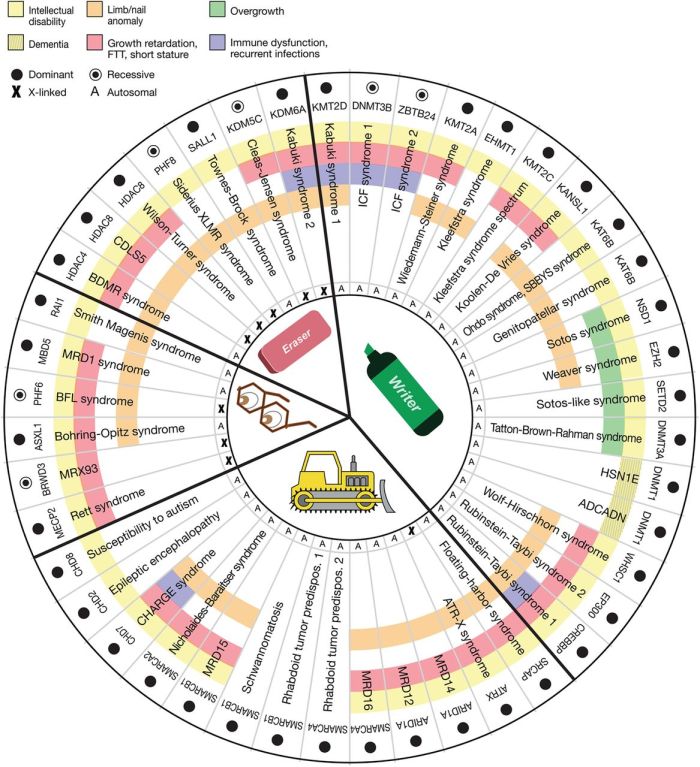
Genetic causes for epigenetic symptoms

This 2015 human summary study was of 44 genetic disorders that disrupt the maintenance of epigenetic modifications:

“..making them likely to have significant downstream epigenetic consequences. Interestingly, these patients often demonstrate neurological dysfunction, suggesting that precise epigenetic regulation may be critical for neuronal homeostasis. However, at the same time, it is important to keep in mind that many of these proteins have additional non-epigenetic roles.

Mutations in many of these components have now been linked to a number of well-known causes of intellectual disability. Intellectual disability is generally defined as deficits of intellectual function and adaptive behavior that occur during the developmental period.

Given the opposing activity of many of the components of the epigenetic machinery, the pathogenic sequence in these disorders involves an imbalance of chromatin states. Keeping a subset of genes under “pressure” from two opposing systems may allow the cellular system to rapidly respond to environmental stimuli.

These disorders, on average, have unusual phenotypic breadth. Similarly, there is a shift in distribution toward a higher number of organ systems affected.

In addition to developmental phenotypes (multiple congenital anomalies), in some cases there appear to be ongoing defects that remain consequential in post-natal life. An example of the latter is the hippocampal memory defects seen in many of the mouse models.

This raises the question whether cells undergoing neurogenesis and synaptogenesis are particularly sensitive to subtle defects of the epigenetic machinery and downstream epigenetic abnormalities. A major remaining question is whether neurogenesis defects and/or abnormalities of synaptic plasticity are a unifying pathophysiological process.”

The researchers represented the 44 genetic disorders on a wheel graph:

F1.large

I look forward to further research that includes non-genetic disruptors of epigenetic modifications.

http://genome.cshlp.org/content/25/10/1473.full “The Mendelian disorders of the epigenetic machinery”

What can cause memories that are accessible only when returning to the original brain state?

This 2015 French rodent study found:

“Memories can be established and maintained without de novo protein synthesis and that experimental amnesia may not result from a disruption of memory consolidation/reconsolidation.

Posttraining/postreactivation treatments induce an internal state, which becomes encoded with the memory, and should be present at the time of testing to ensure a successful retrieval.

This integration concept includes most of the previous explanations of memory recovery after retrograde amnesia and critically challenges the traditional memory consolidation/reconsolidation hypothesis, providing a more dynamic and flexible view of memory.”

From Neuroskeptic’s analysis of the study:

“A different drug, lithium chloride, produces the same pattern of effects – it blocks ‘reconsolidation’, but this can be reversed by a second dose at the time of recall. However, lithium chloride is not an amnestic [a drug that blocks memory formation] – it doesn’t block protein synthesis. Rather, it causes nausea.

The implication of the lithium experiment is that any drug that causes an ‘internal state change’, even if it’s just nausea, can trigger state-dependent memory and behave just like an ‘amnestic’.”


As this study may apply to humans, a drug wouldn’t necessarily be required to “induce an internal state.” If the findings of studies such as Are 50 Shades of Grey behaviors learned in infancy? extend to humans, an emotional or physical experience may be sufficient to produce a state-dependent memory. For example, A study that provided evidence for basic principles of Primal Therapy found, albeit with rodents and use of a drug:

“Fear-inducing memories can be state dependent, meaning that they can best be retrieved if the brain states at encoding and retrieval are similar.”

Memories triggered while in a brain state reentered through an emotion or a physical reaction are experienced by Primal Therapy patients and observed by therapists every day. However, as mentioned in What scientific evidence can be offered for Primal Therapy’s capability to benefit people’s lives? there’s a difficulty in developing human evidence for such state-dependent emotional memories.

Standard procedures would use human subjects and control groups in a way that retrieved memories according to the researchers’ schedule and experimental parameters. In order for the retrieval of an emotional memory to be therapeutic, though, the methods of an experiential therapy such as Dr. Arthur Janov’s Primal Therapy leave the timing of entering a triggering brain state up to the patient.

When a brain state protects a human emotional memory from being accessed, it probably wouldn’t be therapeutic to:

  • Force a return to that brain state, and thereby
  • Remove the memory’s protection, then
  • Retrieve and re-experience the memory

just for the sake of research.

The evidence for retrieving and re-experiencing a state-dependent memory lies mainly within the individual’s experiences.

A challenge is to find innovative ways to document human evidence for state-dependent emotional memories while ensuring a therapeutic process.

http://www.jneurosci.org/content/35/33/11623 “Integration of New Information with Active Memory Accounts for Retrograde Amnesia: A Challenge to the Consolidation/Reconsolidation Hypothesis?”

A study that provided evidence for basic principles of Primal Therapy

This 2015 Northwestern University rodent study found:

“Fear-inducing memories can be state dependent, meaning that they can best be retrieved if the brain states at encoding and retrieval are similar.

Memories formed in a particular mood, arousal or drug-induced state can best be retrieved when the brain is back in that state.

‘It’s difficult for therapists to help these patients,’ Radulovic said, ‘because the patients themselves can’t remember their traumatic experiences that are the root cause of their symptoms.’

The best way to access the memories in this system is to return the brain to the same state of consciousness as when the memory was encoded.”

The study demonstrated one method of activating neurobiological pathways with a drug to remove a hippocampal memory’s protection, which played a part in enabling subjects to relive their remembered experiences. This rodent study’s methods weren’t designed to therapeutically access similarly protected memories with humans.

From the Northwestern press release:

“There are two kinds of GABA [gamma-Aminobutyric acid] receptors. One kind, synaptic GABA receptors, works in tandem with glutamate receptors to balance the excitation of the brain in response to external events such as stress.

The other population, extra-synaptic GABA receptors, are independent agents.

If a traumatic event occurs when these extra-synaptic GABA receptors are activated, the memory of this event cannot be accessed unless these receptors are activated once again.

‘It’s an entirely different system even at the genetic and molecular level than the one that encodes normal memories,’ said lead study author Vladimir Jovasevic, who worked on the study when he was a postdoctoral fellow in Radulovic’s lab.

This different system is regulated by a small microRNA, miR-33, and may be the brain’s protective mechanism when an experience is overwhelmingly stressful.

The findings imply that in response to traumatic stress, some individuals, instead of activating the glutamate system to store memories, activate the extra-synaptic GABA system and form inaccessible traumatic memories.”

I’d point out that “can’t remember” and “inaccessible traumatic memories” phrases used above were in reference to what’s usually called “memory” i.e., a recall initiated by the cerebrum.


The study’s findings should inform memory-study researchers if they care to understand how emotional memories can be formed and re-experienced.

The study provided evidence for fundamentals of Dr. Arthur Janov’s Primal Therapy, such as:

  • Experiences associated with pain can be remembered below our conscious awareness.
  • The retrieval and re-experiencing of emotional memories can engage our lower-level brain areas without our higher-level brain areas’ participation.

The obvious nature of this study’s straightforward experimental methods made me wonder why other researchers hadn’t used the same methods decades ago.

Use of this study’s methodology could have resulted in dozens of informative follow-on study variations by now, and subsequently found whether subjects’ physiological, behavioral, and epigenetic measurements differed from control group subjects, as in:

“miR-33 is downregulated in response to gaboxadol [the drug used to change subjects’ brain state] and modulates its effects on state-dependent fear.”


See Resiliency in stress responses for abstracts of three follow-on papers by these researchers.

http://www.nature.com/neuro/journal/v18/n9/full/nn.4084.html “GABAergic mechanisms regulated by miR-33 encode state-dependent fear”

MP3 with lead researcher Dr. Jelena Radulovic: http://www.thenakedscientists.com/HTML/specials/show/20150825/

A hippocampal protein that increases when stress increases

This 2015 Michigan human/rodent study found:

“Gene expression profiling in postmortem human brain and studies using animal models have implicated the fibroblast growth factor (FGF) family in affect regulation and suggest a potential role in the pathophysiology of major depressive disorder (MDD).

We show that FGF9 expression is up-regulated in the hippocampus of individuals with MDD, and that FGF9 expression is inversely related to the expression of FGF2.”

The researchers went down the evolutionary scale from human findings to replicate many of the findings with rodents:

“We found that chronic social defeat stress, an animal model recapitulating some aspects of MDD, leads to a significant increase in hippocampal FGF9 expression.

Collectively, these results suggest that high levels of hippocampal FGF9 play an important role in the development or expression of mood and anxiety disorders.”

http://www.pnas.org/content/112/38/11953.full “Fibroblast growth factor 9 is a novel modulator of negative affect”

Adverse effects of inflammation and stress on hippocampal synapses

This dense and highly-jargoned 2015 rodent study found:

“The suppression of BDNF [brain-derived neurotrophic factor] signaling, LTP [long-term potentiation], and memory may be driven by an increased sensitivity to IL-1β [the proinflammatory cytokine interleukin 1β] that occurs directly at synapses.”

The researchers reversed the adverse effects of IL-1β after they induced stress and inflammation. Blocking IL-1β when there wasn’t stress or inflammation, however, also caused adverse effects:

“Interestingly, administration of AS1 [the compound that blocked the proinflammatory responses] in the absence of LPS [the bacterial compound used to stress the subjects’ immune systems] treatment also impaired OLM [the object location memory test where control group rodents exhibited a preference for a novel location over a familiar location].

This finding is consistent with the notion that endogenous IL-1β at physiologically low levels may be essential for hippocampal memory function.”


The researchers asserted:

“Our data reveal a previously unidentified mechanism that explains the age-related vulnerability of hippocampal function to impairment by inflammation.”

Instead of couching their findings with a non-causal “age-related” term, could the researchers have specifically identified causes?

“IL-1β activates different pathways via AcP (proinflammatory) or AcPb (prosurvival) IL-1 receptor subunits.

This study demonstrates that the IL-1 receptor subunit system undergoes an age-dependent reconfiguration in hippocampal synapses.

This previously undescribed reconfiguration, characterized by an increase in the AcP/AcPb ratio, is responsible for potentiating impairments of synaptic plasticity and memory by IL-1β.”

What were the underlying causes for the relatively increased AcP activation over AcPb activation? The researchers didn’t say. Their explanations were left hanging at a correlated-but-not-causal “age-dependent” level rather than a “mechanism that explains.”

http://www.pnas.org/content/112/36/E5078.full “Synapse-specific IL-1 receptor subunit reconfiguration augments vulnerability to IL-1β in the aged hippocampus”

A mechanistic study of neurotransmitters in the hippocampus

This 2015 UK rodent study found:

“A mechanistic understanding of how alterations in dopamine and NMDAR [a type of glutamate receptor that participates in excitatory neurotransmission] function can lead to the disruption of hippocampal–PFC [prefrontal cortex] functional connectivity.

These results show how dopaminergic activation induces long-term hypofunction of NMDARs, which can contribute to disordered functional connectivity, a characteristic that is a hallmark of psychiatric disorders such as schizophrenia.”

One of the experiments applied theta-frequency (5 Hz) waves to the rats’ hippocampi and dampened the electrical activity of the NMDAR type of glutamate receptor.

However, this effect of theta waves was dependent on the activation of D2 dopamine receptors. The study’s findings should inform researchers who treat brain waves as base causes of behavior in studies such as What’s an appropriate control group for a schizophrenia study?

This study’s findings may also inform researchers of studies such as the What causes disconnection between the limbic system and the cerebrum? of a neurochemical basis for “the disruption of hippocampal–PFC functional connectivity.”

http://www.pnas.org/content/112/35/11096.full “Disruption of hippocampal–prefrontal cortex activity by dopamine D2R-dependent LTD of NMDAR transmission”

We first recognize familiar faces with our limbic system

This 2015 Belgian human study found:

“Medial temporal lobe structures (perirhinal cortex, amygdala, hippocampus) and anterior inferior temporal cortex responded abruptly when sufficient information for familiar face recognition was accumulated.

Activation in ventral occipitotemporal face-preferential regions increased with visual information, independently of long-term face familiarity.

[The researchers] isolated the discriminative neural responses to unfamiliar and familiar faces by slowly increasing visual information (i.e., high-spatial frequencies) to progressively reveal faces of unfamiliar or personally familiar individuals.”

A limitation of the study was, however:

“Behavioral data were acquired from only 11 subjects because of a technical error.”

http://www.pnas.org/content/112/35/E4835.full “Neural microgenesis of personally familiar face recognition”

A missed opportunity to study image-evoked emotional memories

This 2015 Ohio human study found that the:

“Hippocampus integrates distinct experiences, thereby providing a scaffold for encoding and retrieval of autobiographical memories.”

The researchers ignored the hippocampus’ role in emotional memories, although studies such as Emotional memories and out-of-body–induced hippocampal amnesia have shown emotional involvement to be desirable in order to properly study the hippocampus with human subjects.


The researchers missed quite a few good opportunities to advance science. Consider these opportunities:

  • All subjects were instructed during fMRI scans (here’s a video of one subject) to:

    “Try to remember the event depicted in each picture and relive the experience in their mind while viewing the photo for eight seconds.”

    The photos were taken during each subject’s day-to-day life by a smartphone hung around their neck. Following these instructions created an ideal situation for engaging the subjects’ emotions when they successfully remembered and relived. Although the experiment probably engaged the subjects’ emotions;

  • None of the subjects were asked anything that would lead the researchers to discover WHY the subjects remembered! The researchers had a perfect setup to make even a bare-bones inquiry, or to ask the subjects to immediately rate the emotional impact of each remembered event/relived experience, or to have them identify what emotions were evoked. But the researchers didn’t use any emotional measures to help understand how and why events were remembered or not.
  • Wouldn’t it also have potentially helped the subjects to become somewhat aware of how they processed memories, of how they felt with each remembered event/relived experience? They probably wouldn’t have remembered personally unimportant events, or forgotten personally significant ones.
  • “One subject recalled all of the items presented” and another had “very few unrecalled items.”

    Why? Weren’t the researcher interested in what was potentially the same between these two and different from the other subjects?


The researchers instead focused on rodent studies with statements such as:

“Validating the relevance of decades of rodent studies for human memory.”

They lost track of the reason rodent studies exist: to help humans.

In order for the research to help humans, move forward on the evolutionary scale, not backward! A rat or mouse can’t define and describe the emotional impact of an image of their life that evokes a memory.

http://www.pnas.org/content/112/35/11078.full “Human hippocampus represents space and time during retrieval of real-world memories”

Another factor in producing new brain neurons in the adult hippocampus

This 2015 New York rodent study provided further details on the production of new neurons in the adult hippocampus. The researchers found that a protein that regulated a glutamate receptor also:

“Significantly influences hippocampal neurogenesis and that both the proliferation and survival of newborn neurons are impaired in the absence.”

The study showed:

“The effect of Norbin [the protein] on neurogenesis is likely caused by a nonautonomous niche effect.

These results show that Norbin is a regulator of adult hippocampal neurogenesis and that its deletion causes depressive-like behaviors.”

http://www.pnas.org/content/112/31/9745.full “Norbin ablation results in defective adult hippocampal neurogenesis and depressive-like behavior in mice”

Emotionless brain research that didn’t deal with human reality

Are tasks you do at work and home never influenced by emotional content or contexts?

Does your ability to focus on a task always have nothing to do with your emotional state?

The researchers who designed this 2015 Boston human study acted as if both of your answers to these questions were “Yes” by stripping out any emotional content from their experiments. As a result, this study which purported to:

“Have the potential to provide additional insights into how inhibitory control may break down in a wide variety of individuals with neurological or psychiatric difficulties”

couldn’t achieve anything near its goal.


This study included fMRI scans of subjects’ entire brains. Limbic system areas were in 3 of the 5 modules, and lower brain areas were in one.

Functional MRI signals depend on changes in blood flow that follow changes in brain activity. Given this study’s goal, did it make sense for researchers to design experiments that didn’t actively engage scanned areas of subjects’ brains?

It wasn’t all that difficult to include emotional content that could potentially contribute to the purported goal. This 1996 review described studies that developed varieties of emotional content with the same test type (Stroop) used. Presumably these approaches had made progress since 1996 incorporating emotional content in Stroop tests given to normal people, who were subjects in this study.

http://www.pnas.org/content/112/32/10020.full “Flexible brain network reconfiguration supporting inhibitory control”

How brain neurons remain stable when constantly stimulated

This 2015 UK rodent study provided details of how neurons in the hippocampus respond to stimuli. The researchers found that hippocampal neurons:

“Remain electrically stable when confronted with chronic increases in neuronal activity.”

Changes in electrical potential changed the initial segment of the neuron’s axon.

Synapses formed along the segment, and stayed in place while this highly-plastic segment moved along the axon. The location mismatch:

“Allows the GABAergic [producing gamma-Aminobutyric acid, an inhibitory neurochemical] synapses to strongly oppose action potential generation, and thus downregulate pyramidal cell excitability.”

The researchers also used the two antioxidants endogenous to humans, superoxide dismutase and glutathione, to supplement the culture medium.

http://www.pnas.org/content/112/31/9757.full “Activity-dependent mismatch between axo-axonic synapses and the axon initial segment controls neuronal output”

Interruptions to the circadian cycle negatively affect memory consolidation

This 2015 German rodent study found:

“The control of sleep and memory consolidation may share common molecular mechanisms.”

Somewhat counter to the “Enhanced memory consolidation” in the study’s title, the researchers also found:

“Elevated IGF2 [insulin-related growth factor 2] signaling in the long term, however, has a negative impact on cognitive processing.”

The IGF2 finding was in genetically altered mice that had their circadian rhythm permanently disturbed, however. The study didn’t clearly determine the contribution of other factors that could have contributed to the cognitive decline.


The study traced fear memories induced by stress through the cerebrum to the anterior cingulate cortex and hippocampus parts of the limbic system.

Researchers have no problems studying emotional memories in these brain areas with rodents. In human memory experiments, however, emotional content is consistently excluded, as if none of our memories had anything to do with our feelings.

http://www.pnas.org/content/112/27/E3582.full “Enhanced memory consolidation in mice lacking the circadian modulators Sharp1 and -2 caused by elevated Igf2 signaling in the cortex”

A study on alpha brain waves and visual processing that had limited findings

This 2015 Wisconsin human study found:

“Forming predictions about when a stimulus will appear can bias the phase of ongoing alpha-band oscillations toward an optimal phase for visual processing, and may thus serve as a mechanism for the top-down control of visual processing guided by temporal predictions.”

The researchers measured delta (1-4 Hz), theta (4-7 Hz), alpha (9-13 Hz), and low beta (15-20 Hz) brain waves. Their findings applied only to the alpha band in their experimental tasks, which excluded emotional content.

Brain waves studies such as Are hippocampal place cells controlled by theta brain waves from grid cells? and Research that identifies the source of generating gamma brain waves established different experimental conditions that elicited brain waves in non-alpha frequency bands. Such studies may have been relevant to further explain this study’s negative findings.

Visual perception studies such as We are attuned to perceive what our brains predict will be rewarding and Our long-term memory usually selects what we pay closer visual attention to provided insight into possible causes for the observed effects. It may have provided additional findings if the researchers of this study were also interested in causal factors that affected visual processing.

Other studies on visual perception such as The amygdala is where we integrate our perception of human facial emotion provided reasons to not exclude emotional content in brain studies. The current study’s researchers claimed that they provided insights relevant to neurological disorders by stating:

“Because forming the appropriate sensory predictions can have a large impact on our visual experiences and visually guided behaviors, a mechanism thought to be disrupted in certain neurological conditions like autism and schizophrenia, an understanding of the neural basis of these predictions is critical.”

However, I didn’t see that the researchers provided such an understanding since their experimental designs excluded emotional content. I wonder what the reviewer saw that justified this Significance section statement.

http://www.pnas.org/content/112/27/8439.full “Top-down control of the phase of alpha-band oscillations as a mechanism for temporal prediction”

Do scientists have to perpetuate memes in order to keep their jobs?

I was disgusted by this 2015 Korean human study.

Is the current state of science such that researchers won’t be funded unless there’s an implicit guarantee that their studies will produce politically correct findings? It seemed that the primary reason for the study’s main finding of:

“Neural markers reflecting individual differences in human prosociality”

was to perpetuate that non-causal, non-explanatory meme.

Per If research treats “Preexisting individual differences” as a black box, how can it find causes for stress and depression? it wasn’t sufficient in 2015 to pretend that there are no early-life causes for the observed behavior and fMRI scan results of the subjects. Such a pretense leads to the follow-on pretense that later-life consequences are not effects, but are instead, a “mystery” due to “individual differences.”

The researchers asserted:

“Our present findings shed some light on the mystery of human altruism.”

Weren’t the findings of the People who donated a kidney to a stranger have a larger amygdala 2014 study of extraordinary altruists big enough clues for these researchers to feature the amygdala in the fMRI scans?

The main experiment had the female, college student, right-handed subjects try to “reduce the duration of exposure to stressful noise.” Why weren’t brain areas that are especially susceptible to stress like the hippocampus featured in the fMRI scans?

The secondary reason for the study seemed to be to perpetuate the harmful “self-sacrifice = good, individuality = bad” meme.

The main reason this meme is harmful is that it condones a subset of people’s unconscious act outs. People are encouraged to avoid conscious awareness both of who they really are and of what drives their feelings, thoughts, and actions.

Despite not asking the subjects directly about either their motivations or their histories, these researchers asserted that the study demonstrated:

“The automatic and intuitive nature of prosocial motivation.”

What was largely observed were the subjects’ unconscious act outs, not some higher-order functions as the researchers mischaracterized them.

Similar to Who benefits when research promotes a meme of self-sacrifice? I suspect that a major motivation behind scientific justification for memes like the self-sacrifice promoted by this study is to rush people past what really happened in their lives.

I wonder what value we would place on the “social norms internalized within an individual” if we felt and honestly understood our real history.


This study and the Do you know a stranger’s emotional motivations for smiling? study had the same reviewer, and shared several of the burden-of-proof problems. Both studies demonstrated a lack of researcher interest in finding causes for the observed effects.

What was the agenda with these researchers and the reviewer? Why would the researchers glorify factors that cause difficulties when one tries to live a life of one’s own choosing?

http://www.pnas.org/content/112/25/7851.full “Spatial gradient in value representation along the medial prefrontal cortex reflects individual differences in prosociality”