Failed aging paradigms

A 2024 paper with 81 coauthors presented different views of aging:

“This article highlights the lack of consensus among aging researchers on fundamental questions such as the definition, causes, and onset of aging as well as the nature of rejuvenation. Our survey revealed broad disagreement and no majority opinion on these issues.

We obtained 103 responses (∼20% of which were submitted anonymously). The respondents included 29.8% professors, 25% postdoctoral fellows, 22.1% graduate students, 13.5% industry professionals, and 9.6% representing other categories (a total of eight additional groups).

When does aging begin? At 20 years (22%), gastrulation (18%), conception (16.5%), gametogenesis (13%), 25 years (11%), birth (8%), 13 years (5%), and 9 years (4%). Nobody chose the only remaining option (30 years).

m_pgae499f3

It is clear from responses that aging remains an unsolved problem in biology. While most scientists think they understand the nature of aging, apparently their understanding differs. Where some may stress the importance of targeting underlying mechanisms, others focus on ameliorating the phenotypes.”

https://academic.oup.com/pnasnexus/article/3/12/pgae499/7913315?login=false “Disagreement on foundational principles of biological aging”


I’ll assert that these researchers were unable to incorporate information outside of their chosen paradigm. This would explain why only 18% understood the embryonic stage of gastrulation as aging’s start, although the 2022 paper Epigenetic profiling and incidence of disrupted development point to gastrulation as aging ground zero in Xenopus laevis provided epigenetic clock evidence that:

“It is not birth, marriage, or death, but gastrulation which is truly the most important time in your life.”


I’ve cited Josh Mitteldorf’s work about aging a few times. His paradigm of aging is in his 2017 book Cracking the Aging Code: The New Science of Growing Old – And What It Means for Staying Young that:

“Aging has an evolutionary purpose: to stabilize populations and ecosystems.”

However, there isn’t evidence of such causal inheritance mechanisms that would begin an organism’s aging during embryogenesis, i.e., that an embryo’s development of aging elements at gastrulation is causally affected by population and ecosystem factors.


Dr. Goodenowe recently had a casual conversation Episode 8 – Perpetual Health, Exploring The Science Behind Immortality where he asserted items such as:

“What we’re all fighting is entropy. Entropy is the tendency of all things to reach a level of randomness. Aging is not a disease. It’s just apathy and entropy. The body just doesn’t care – people don’t pay attention.

This notion that we are programmed for death is wrong. We’re not programmed to die. We actually teach ourselves to die. The body learns how to die, so as your function decreases, it adjusts. It appears to be programmed because of the association with chronological age.”

I haven’t seen any of his papers that put these and his other assertions up for review. For example, I doubt the entropy-caused randomness assertion would survive peer review per Stochastic methylation clocks?:

“Entropic theories of aging have never been coherent, but they are nevertheless experiencing a resurgence in recent years, primarily because neo-Darwinist theories of aging are all failing. I find this ironic, because the neo-Darwinist theories arose precisely because scientists realized that the Second Law of Thermodynamics does not apply to living systems.”


The funny thing about failed aging paradigms is that quite a few of their treatments improve healthspan, but not lifespan. If they don’t “target aging underlying mechanisms” they “ameliorate aging phenotypes.” None so far have positively affected both human healthspan and lifespan.

PXL_20241129_174732711.MP~2

Fourteen cruciferous microgreens

A 2024 study investigated beneficial properties of cruciferous microgreens grown for 12 days:

“Fourteen microgreens were ranked morphologically, phytochemically, and sensorially: (A) watercress, (B) broccoli, (C) pak choi, (D) red cabbage, (E) tatsoi, (F) red mizuna, (G) green mizuna, (H) white mustard, (I) red mustard, (J) purple-top white globe turnip, (K) red globe radish, (L) cauliflower, (M) white cabbage, (N) rocket.

12 cruciferous microgreens

  • Watercress and pak choi microgreens had the highest levels of phenolic compounds.
  • Red mustard and red cabbage microgreens revealed the major content of glucosinolates.
  • Cauliflower microgreens had the highest ascorbic acid, TPC, and consumer acceptance.
  • Radish and cauliflower microgreens topped the quality indices ranking.”

https://www.sciencedirect.com/science/article/abs/pii/S0963996924008822 “Optimal Brassicaceae family microgreens from a phytochemical and sensory perspective” (not freely available) Thanks to Dr. Florencia Alloggia for providing a copy.


This study determined “optimal” in a very broad sense, which didn’t lend itself to specific recommendations. For example:

  • A twelve-day growing duration and individual cultivars were selected with no references to how they were chosen as optimal;
  • Measurements weren’t taken along the way to discover informative compositional changes from a phytochemical and sensory perspective; and
  • Measurements such as ascorbic acid and phenolics after twelve days also didn’t reflect several of these compounds’ reactivities and purposes in earlier plant growth phases.

PXL_20240729_101428384

Eat broccoli sprouts to reduce knee pain?

A 2024 preprint published results of feasibility trial NCT03878368:

“High glucosinolate broccoli soup is a novel approach to managing osteoarthritis (OA) that is widely accessible and can be used on a large scale. This study shows that it is an acceptable way of delivering dietary bioactives and has potential for therapeutic benefit.

Limitations of the study:

1. COVID-19 curtailed data collection and restricted sample size below that originally planned, however we remained able to derive meaningful interpretation and meet our original study aims.

2. The study had a short time scale (12 weeks). A longer study would be useful to understand how a long-term intervention might be accepted, important for chronic conditions such as OA.

3. The full sample size fell short of the number anticipated, therefore we were unable to use the data to provide a reliable estimate of sample size for a full trial.

4. Participants were excluded if they did not like broccoli to maximise compliance and retention, and so a food intervention should account for this in future developments. While most patients tolerated the soups well, two patients withdrew because they did not like the soup.”

https://www.medrxiv.org/content/10.1101/2024.06.20.24309233v1.full-text “The BRoccoli In Osteoarthritis (BRIO study) – A randomised controlled feasibility trial to examine the potential protective effect of broccoli bioactives, (specifically sulforaphane), on osteoarthritis”


The glucoraphanin dose used was the highest of three tested in 2017 via NCT02300324:

“This study seeks to quantify the exposure of human tissues to glucoraphanin and sulforaphane following consumption of broccoli with contrasting Myb28 genotypes. Myrosinases are intentionally denatured during soup manufacture. Threefold and fivefold higher levels of sulforaphane occur in the circulation following consumption of Myb28V/B and Myb28V/V broccoli soups, respectively.

6b

Myb28V/V and Myb28B/V broccoli soups contained 452 ± 10.6 μmoles glucoraphanin per 300 mL portion and 280 ± 8.8 μmoles glucoraphanin per 300 mL portion respectively, approximately five- and threefold greater glucoraphanin levels compared to Myb28B/B broccoli soup that contained 84 ± 2.8 μmoles glucoraphanin per 300 mL.

The percentage of sulforaphane excreted in 24 h relative to the amount of glucoraphanin consumed varies among volunteers from 2 to 15%, but does not depend on the broccoli genotype.”

https://onlinelibrary.wiley.com/doi/10.1002/mnfr.201700911 “Bioavailability of Glucoraphanin and Sulforaphane from High-Glucoraphanin Broccoli”


Unlike these two papers, I don’t depend primarily on my gut microbiota for results. Microwaving 3-day-old broccoli sprouts to 60°C to create 80% bioavailable sulforaphane then immediately eating it is way more efficient. If depending on an individual’s gut microbiota to convert glucoraphanin into sulforaphane, the best that can be expected is 15% bioavailability.

Don’t think an osteoarthritis clinical trial that depends on a person’s gut microbiota could have steady, predictable results when there could be more than 700% variability (2% to 15%) among subjects’ sulforaphane conversions. If a treatment subject doesn’t have relief from knee pain, there would have to be additional methods to detect that subject’s effective sulforaphane dose based on their gut microbiota conversion ability. Would these researchers suggest that subject change their gut microbiota? What study has reliable results for that?

PXL_20240628_095215629

Astaxanthin and aging

A 2023 rodent study investigated two NRF2-activating compounds for their effects in increasing median and maximum lifespan:

“In genetically heterogeneous (UM-HET3) mice, the Nrf2 activator astaxanthin (Asta) extended the median male lifespan by 12%. Astaxanthin (Asta) is a naturally occurring xanthophyll carotenoid that is an efficient Nrf2 activator, with potent antioxidant activity, broad health applications, and excellent safety.

Asta is distributed systemically and incorporated into cellular membranes, where it spans and stabilizes the lipid bilayer and reduces lipid peroxidation. Asta localizes in mitochondria and protects against mitochondrial dysfunction.

It has anti-inflammatory properties, showing equivalent efficacy to prednisolone in an animal model. Geroprotective mechanisms of Asta regulate FOXO3, Nrf2, Sirt1, and Klotho, and the influence of Asta on autophagy via modulation of AMPK (a direct upstream regulator of mTOR), PI3K/Akt, and MAPK (JNK and p38) signaling pathways.

The present Interventions Testing Program (ITP) study is the first evaluation of Asta in a mammalian lifespan model, so the target dose of 4000 ppm in the diet is based on chronic mammalian studies other than lifespan. Despite the fact that the average diet contained 1840 ppm Asta (only 46% of the target), median lifespans of male UM-HET3 mice were significantly improved.astaxanthin male survival

Asta and dimethyl fumarate (DMF) are both Nrf2 inducers; while both had low concentrations sometimes in the diet, we used about 30 times more Asta, which may explain why it increased the lifespan in males while DMF had no effect. Amounts of DMF in the diet averaged 35% of the target dose, which may explain the absence of lifespan effects.”

https://link.springer.com/article/10.1007/s11357-023-01011-0 “Astaxanthin and meclizine extend lifespan in UM‑HET3 male mice; fisetin, SG1002 (hydrogen sulfide donor), dimethyl fumarate, mycophenolic acid, and 4‑phenylbutyrate do not significantly affect lifespan in either sex at the doses and schedules used”


This study repeated an astaxanthin supplier’s claims without investigating its low bioavailability issues mentioned in Astaxanthin bioavailability. No explanations were forthcoming for unintentional low doses of astaxanthin and DMF in the treatment chows.

A human equivalent for the intended astaxanthin dose was 22 mg (4000 ppb x .081 x 70 kg), whereas the actual dose human equivalent was 10 mg (1840 ppb x .081 x 70 kg). Dose/response studies weren’t performed, so no conclusions could be drawn as to whether the target dose or other astaxanthin doses may be optimal for increasing lifespan.

A previous ITP study of another commercial NRF2 activator (PB125) found no lifespan benefits. Maybe one day, ITP or others will come around to testing sulforaphane that has 80% bioavailability (regardless of sex) and dose/response studies, which should end the uncertainty about NRF2’s anti-aging effects.

Eat broccoli sprouts for your bladder?

A 2024 clinical trial investigated effects of people adding a cup of cruciferous vegetables to their daily diet for six months:

“We developed a 6-month behavioral dietary intervention (Power to Redefine Your Health [POW-R Health]) designed to increase Cruciferae intake and isothiocyanate (ITC) levels in non–muscle-invasive bladder cancer (NMIBC) survivors, with the long-term goal of reducing bladder cancer recurrence, progression, and mortality.

Orally ingested ITCs are rapidly and almost exclusively delivered to the bladder and concentrated in the urine, showing 2 to 3 orders of magnitude higher concentration of ITCs and metabolites in the urine than in the plasma within 3 hours of dosing. Storage of urine in the bladder further enhances exposure of malignant cells to ITCs.

We estimated dietary ITC intake and measured urinary ITC levels. With the exception of urinary ITC levels in µM, the treatment arm had a significantly higher increase in levels in all variables compared with the control arm from baseline to 6-month follow-up.

full-jnccn230138t2

Our POW-R Health intervention increased Cruciferae intake by 0.94 cups/day and urinary ITC levels by 11.1 μmol/g creatinine compared with the control arm, with an average increase of urinary concentration of 10.4 μM, the desirable dose level of urinary ITCs needed to stop or kill at least 50% of bladder cancer cells in in vitro models. To our knowledge, this is the only study that showed an intervention’s success in significantly and meaningfully increasing both Cruciferae intake and urinary ITC levels among NMIBC survivors.

Our simple dietary intervention only requires NMIBC survivors to consume 1 cup of Cruciferae a day, is of low cost to participants (cost of Cruciferae), and is easily accessible (available at grocery stores). If a future RCT demonstrates that the intervention significantly reduces bladder cancer recurrence and progression, it would be an easily scalable strategy to prevent NMIBC recurrence and progression, which occurs within 5 years in most NMIBC survivors.”

https://jnccn.org/view/journals/jnccn/aop/article-10.6004-jnccn.2023.7086/article-10.6004-jnccn.2023.7086.xml “Outcomes of a Dietary Intervention to Reduce Bladder Cancer Recurrence and Progression in Survivors of Non–Muscle-Invasive Bladder Cancer”


These researchers took a result of “an average increase of urinary concentration of 10.4 μM” and touted it as evidence of the intervention’s success. The first paragraph of clinical trial NCT04548193’s primary objective was:

“Develop an evidence-based behavioral intervention to increase cruciferous vegetable intake, with the goal of attaining desirable urinary isothiocyanates (ITC) levels effective for anti-cancer activities.”

No mention in this study’s Discussion section of why 10.4 ± 22.5 µM was so wildly variable. After all, nobody’s measurements of excreted ITCs (aka bioavailability) were below zero as the standard deviation implies (10.4 – 22.5 µM ?).

How much did “estimated dietary ITC intake” contribute to variability in this trial’s measurement goal? Reference 26 “Total isothiocyanate yield from raw cruciferous vegetables commonly consumed in the United States” shared a few coauthors with this study, and had items such as:

“We observed up to 345-fold difference in isothiocyanate yield among nine samples of mustard green (ranging from 0.4 to 137.9 μmol/100g wet weight).”

Reference 25 “Effects of cooking methods on total isothiocyanate yield from cruciferous vegetables” also shared a few coauthors with this study, and had items such as:

“The efficiency and amount of ITCs generated by gastrointestinal microflora could be relatively low and vary substantially by individuals.”

But differences in cooking methods and raw cruciferous vegetables weren’t the only explanations for this primary outcome’s wild variability. These researchers knew or should have known about the 2016 https://onlinelibrary.wiley.com/doi/abs/10.1002/mnfr.201600766 “Stabilized Sulforaphane for Clinical Use: Phytochemical Delivery Efficiency” (not freely available).

Per that study of 10 healthy people’s metabolisms after ingesting a 200 μmol isothiocyanate sulforaphane amount (35 mg), urinary % of dose amount excreted ranged from 19.5% to 86.9%. Statistics wouldn’t add any plausible explanations of why there were >four times individual differences in ITC bioavailability.

So we’ll have to wait for follow-on studies.


Kingfisher

PXL_20240215_182326756

Eat broccoli sprouts for your liver, Part 2

A 2023 review cited Part 1 and caught up other relevant research on sulforaphane effects through early 2023:

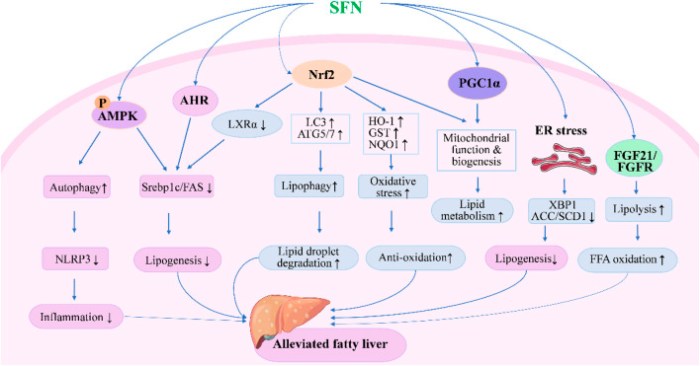
“A growing number of studies have reported that sulforaphane (SFN) could significantly ameliorate hepatic steatosis and prevent development of fatty liver, improve insulin sensitivity, attenuate oxidative damage and liver injury, induce apoptosis, and inhibit proliferation of hepatoma cells through multiple signaling pathways.

SFN inhibits lipogenesis and oxidative stress while enhancing lipid droplet degradation through modulating expression of genes involved in lipid synthesis, metabolism, and oxidation. SFN modulates autophagy, lipolysis, mitochondrial function, and ER stress to alleviate fatty liver through AMPK-, AHR-, PGC1α-, and FGF21-mediated pathways.

fphar-14-1256029-g001

There is still a gap between basic research and clinical application of SFN. More efficient delivery systems and precise dose schedules of SFN are expected to be developed in future studies, which would improve its solubility, stability, and bioavailability, and reduce inter-individual variations in humans.”

https://www.frontiersin.org/articles/10.3389/fphar.2023.1256029/full “Therapeutic potential of sulforaphane in liver diseases: a review”


These reviewers did alright gathering papers. That’s only part of what needed to be done, with the other part being reading, understanding, and interpreting these papers.

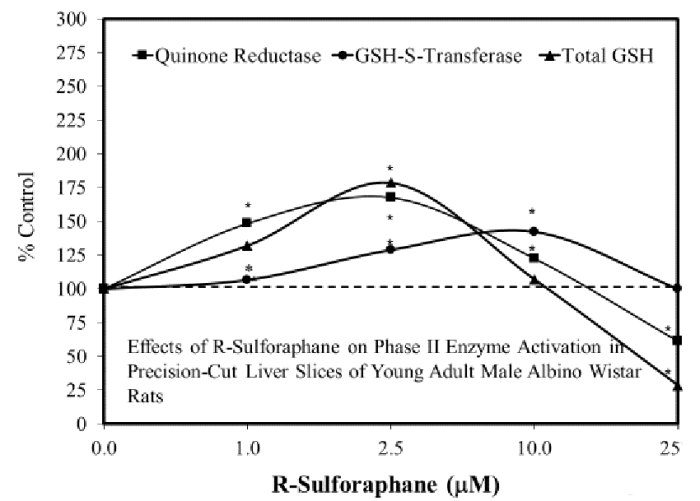
First example: Sulforaphane in the Goldilocks zone was cited [reference 12], but applicability to this review with its main point “The stimulatory zone for in vitro studies proved to be consistently in the 1-10 μM range” as in Figure 10 “Effects of R-sulforaphane on phase II enzyme activation in precision-cut liver slices of young adult male Albino Wistar rats” wasn’t understood:

figure 10

These reviewers complained:

“Few dose-response studies on SFN have been reported, and the range of its effective doses is unclear. Doses used in most animal studies have exceeded the highest dose of SFN used in humans.”

So it might have taken a little bit more effort, but these reviewers could have highlighted studies where sulforaphane liver treatments were in the 1-10 μM potentially therapeutic range.

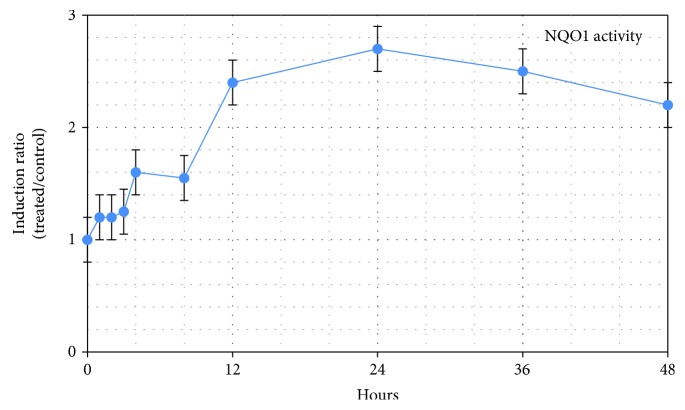
Another example: these reviewers said “The half-life of SFN is very short due to its rapid metabolism in the human body.” They missed a point that the second paper in How much sulforaphane is suitable for healthy people? [reference 46] made in section 6.4. “NQO1 Pharmacokinetics following SFN Ingestion:”

“Maximal induction of NQO1 occurred at around 24 hours, declining thereafter (Figure 8). This peak represents an approximate 2.8-fold induction over baseline.

These findings are useful when considering the effect of SFN as an intervention material in acute compared with chronic conditions. A significant increase in NQO1 occurred between 6 and 12 hours, a timeframe that may not be sufficiently responsive for management of an acute state, leaving one to conclude that NQO1 induction is best suited to chronic conditions where a rapid response may not be necessary.”

OMCL2019-2716870.008

Sulforaphane’s effects of inducing NQO1 for its cytoprotective, antioxidant, and other functions lasts for days, regardless of when sulforaphane leaves the bloodstream.

Oat sprout stressors

Two 2023 Avena sativa oat sprout studies, starting with one that found different effects during germination from varying temperature and relative humidity:

“This study evaluated effects of temperature (20, 25, and 30°C) and relative humidity (RH, 55, 60, and 65%) as abiotic stressors during oat germination. We identified eighty polyphenols, nine avenanthramides, twelve lignans, and five phytosterols.

  • 100% germination was achieved at 25°C/60% RH from day 3, yielding the longest radicle size.
  • The highest content of most phenolic acids, avenanthramides, and lignans occurred at 30°C/65% RH, where 100% germination was attained by day 5, but with a shorter radicle size.
  • The best flavonoid and phytosterol profile was obtained at 20°C/55% RH, achieving only a 67% germination rate by day 5.

sprouted oat temp rh

By considering germination conditions, end-users can harness the versatility of oat sprouting to meet their specific needs and maximize potential benefits of this promising cereal crop. For instance, manufacturers of functional foods and beverages could consider using sprouts from conditions that yield high polyphenol content for products targeting antioxidant benefits, whereas nutraceutical manufacturers could focus on sprouting conditions that result in elevated levels of avenanthramides, well-known for their health-promoting properties.”

https://www.sciencedirect.com/science/article/abs/pii/S0308814623027917Impact of temperature and humidity conditions as abiotic stressors on the phytochemical fingerprint of oat (Avena sativa L.) sprouts” (not freely available) Thanks to Dr. Iza F. Pérez-Ramírez for providing a copy.


Another study compared and contrasted eight sprouted grains to their ungerminated grains and to each other. I’ll highlight oat sprout results:

“The method used was germination for up to 72 h at temperatures ranging from 19–23°C. Oat germination rate was 80%.

Linoleic acid (omega-6) was the predominant fatty acid in oat grain powder, followed by similar amounts of oleic and palmitic acids and smaller amounts of stearic and linolenic (omega-3) acids. Since omega-6 content remained unchanged and omega-3 quantity increased slightly in sprouted oats, the omega-6/omega-3 ratio decreased.”

https://www.mdpi.com/2304-8158/12/17/3306 “Effect of Germination on Fatty Acid Composition in Cereal Grains”


My kitchen cupboard’s oat sprouting conditions are closer to this second study’s temperature, where relative humidity wasn’t specified. I doubt that kitchen winter-time relative humidity ever rises to the 55% lower threshold of the first study for more than a few minutes.

At this time of year in Sprouting hulled oats, I got a 97% germination rate over three days with an estimated 21°C (70°F) and a relative humidity closer to 30% than 55%. Couldn’t tell you why the first study’s germination rate with 20°C/55% RH was only 67% at day 5, or why the second study’s germination rate was only 80% at day 3 with 19–23°C.


PXL_20231223_175744134

Suboccipital release

Here’s a 2023 paper on the subject, but let’s first see what it is, from Michigan State University:

https://hal.bim.msu.edu/CMEonLine/Autonomic/Sympathetic/Treatment/SuboccipitalRelease/start.html

and University of Wisconsin:

https://www.fammed.wisc.edu/suboccipital-release-technique/


An instruction paper for osteopaths:

“This technique treats migraines, headaches, and neck pain. It can also be used as an adjunct for treating conditions with autonomic dysfunction.

Before performing a suboccipital release, the patient should have a neurologic and musculoskeletal exam of the neck and upper extremities. Ensure that the patient does not have contraindications such as: Acute cervical fractures; concern for neurovascular compromise; focal neurologic deficit.”

https://www.ncbi.nlm.nih.gov/books/NBK582126/ “Osteopathic Manipulative Treatment: Suboccipital Release”


I read a half-dozen other 2023 papers comparing this technique with other suboccipital techniques. I’m not posting links because these papers didn’t completely specify their technique, what was its history, and what was its safety. It’s extremely easy to traumatize this area of our bodies.

I similarly won’t post links to other 2023 papers that claimed this technique improved other body problems, such as ankle range of motion, hamstring tightness, and lumbar pain. Mechanistic explanations are required, not just “they are connected by one neural system,” hand-waving, and woo.


This search for recent research was disappointing. I’ve performed suboccipital release on myself at least twice a day for years the same way I saw physical therapists do it to their patients while I was in physical therapy 13 years ago. Maybe there’s a video about self-suboccipital release that didn’t involve gadgets, but I couldn’t find it.

The point of this technique is to evoke a relaxation response. It usually relaxes areas from the neck to my feet. Sometimes it works quickly, other times it takes a while.

In any event – you and I are different, and I’m definitely not recommending suboccipital release for you. It isn’t a cure-all for neck pain, sitting most of the day, bad posture, poor ergonomic setup, being stuck in traffic, being glued to your phone, etc.

What you expect may not be what you find

I’m halfway through a 90-day trial of plasmalogens coincident with improving peroxisomal function via resistance exercise and time-restricted eating. I haven’t curated related 2023 papers I’ve read concerning plasmalogens, peroxisomes, sphingolipids, ceramides, and mitochondrial interactions with these, mainly because I haven’t seen human-pertinent aspects similar to Dr. Goodenowe’s efforts.

The 2023 papers I’ve read have more to do with researcher incentives rather than actual human benefits. I’d guess that researchers care about these related subjects to the extent that they want to be the first to publish arcane details about them, like peroxisomes in the parotid salivary gland.

One area I expected to see a difference at the regimen’s beginning was in my peripheral nervous system Schwann cells. Instead, I had taste and smell improvements in my primary olfactory nervous system olfactory ensheathing cells, which are highly similar to Schwann cells. I was also happy to experience an immediate halt to my ulnar nerve elbow pain after what I interpret as ProdromeNeuro effects and perhaps coincident ProdromeGlia effects on items upstream of Schwann cells.

Here are three papers on Schwann cells that I haven’t yet seen as applicable to my current regimen, starting with a 2022 review:

“We summarise contributions of neurotransmitter receptors in regulation of morphogenetic events of glial cells, with particular attention paid to the role of acetylcholine receptors in Schwann cell physiology. This redundant and complex integrated regulation system could be explained as a mechanism of preserving glial cell physiology. In case of a single receptor signalling dysfunction, other neurotransmitters can overcome the deficit, preserving functions of glia and health of the nervous system.

Increased knowledge in medicinal chemistry and in bioinformatics accompanied by drug delivery studies might open a fascinating therapeutic perspective for cholinergic mimetics for treatment of several nervous system pathologies, and in reducing neuroinflammation both in the central and peripheral nervous systems.”

https://www.mdpi.com/2227-9059/11/1/41 “Emerging Roles of Cholinergic Receptors in Schwann Cell Development and Plasticity”


A 2023 study investigated the vagus nerve’s Schwann cells’ impact with gut function:

“The vagus nerve is the longest extrinsic cranial nerve in the body. It regulates gut physiology through the intrinsic nervous system (myenteric and submucosal plexus) and enteric glial cells interactions, which participate in controlling intestinal absorption, secretion, immune homeostasis, and motility.

Normal intestinal motility is critical for nutrition assimilation and several biological functions. The loss of normal gut function aggravates inflammation, oxidative stress, and other cellular stressors.”

https://bmcbiotechnol.biomedcentral.com/articles/10.1186/s12896-023-00781-x “A critical role for erythropoietin on vagus nerve Schwann cells in intestinal motility”


I haven’t curated a Buck Institute for Research on Aging sponsored study for a while, since their 2015 A study of how “age” itself wasn’t a causal factor for wound-healing differences detracted from science and their 2020 Linear thinking about biological age clocks wasted resources.

This 2023 rodent study couldn’t investigate anything outside of Buck’s limited paradigm’s echo chamber. This sponsor would rather break their arms patting themselves on their backs pretending they’re advancing science than fund relevant human research successes that do advance science:

“Following peripheral nerve injury, successful axonal growth and functional recovery require Schwann cell (SC) reprogramming into a reparative phenotype. This work provides the first characterization of senescent SCs and their influence on axonal regeneration in aging and chronic denervation.”

https://www.embopress.org/doi/full/10.15252/emmm.202317907 “Senescent Schwann cells induced by aging and chronic denervation impair axonal regeneration following peripheral nerve injury”


PXL_20231207_185309349

An ulnar nerve anecdote

Two 2023 papers demonstrated the weak-sauce treatments currently offered to resolve elbow ulnar nerve pain:

“This case report investigated the use of ultrasound-guided nerve hydrodissection and platelet releasate injection for treating ulnar neuritis at the elbow.

  • The patient’s symptoms were first managed with home exercise and ulnar nerve hydrodissection at the elbow, which decreased but did not resolve her pain.
  • Platelet releasate injection of the ulnar nerve at the elbow was subsequently performed. Six weeks post-procedure, the patient reported additional pain improvement.

Despite these results, the patient was not completely symptom-free. Persistent symptoms were attributed to her concomitant neurogenic thoracic outlet syndrome.”

https://www.cureus.com/articles/133241-platelet-releasate-injection-as-a-novel-treatment-for-ulnar-neuritis-at-the-elbow-a-case-report/ “Platelet Releasate Injection as a Novel Treatment for Ulnar Neuritis at the Elbow: A Case Report”

When a diagnosis concludes with the word ‘syndrome’, we can be assured that medical professionals don’t know any specific cause. Expect physical therapy and/or drugs and/or surgery to be recommended, which will only address symptoms, not causes.

These practitioners proposed two experimental treatments, and somehow, the patient agreed to be a lab rat for both. If they were repeatedly questioned as to whether those two treatments would address causes, I’d expect responses similar to “That’s all we can do for you.”

In line with this decade’s revelations about the medical profession, the patient was also gaslighted. These practitioners asserted “changes to the patient’s lifestyle” as a reason neither treatment worked, although no such lifestyle changes were indicated.

Medical professionals are people whose early life experiences impel them to control other people with a license, among other driving factors. They won’t discuss items outside their ideas and beliefs, because these are defenses against their and their patients’ realities.


Next is a study of 111 elbow neuropathy patients (average age 55, median follow-up period of 880 days), one third of whom had various surgeries:

“There are three main potential mechanisms of recovery after nerve lesion: (1) resolution of conduction block, (2) collateral reinnervation, and (3) nerve regeneration.

  • Nerve function in chronic focal compression/entrapment neuropathies seems to improve mainly due to resolution of the conduction block and collateral reinnervation.
  • Contribution of nerve regeneration seems to be minor.

The majority of axons lost in chronic focal neuropathies probably never recover. Further studies using quantitative methods are needed to validate present findings.”

https://www.mdpi.com/2077-0383/12/12/3906 “No Major Nerve Regeneration Seems to Occur during Recovery of Ulnar Neuropathy at the Elbow”


Another interesting thing may have unexpectedly started with my 90-day trial of Prodrome Glia and Neuro products. Here’s an abbreviated look at what I’m tracking that omits intermittent fasting data:

day 7-25

Left ulnar nerve pain stayed the same or decreased two hours after a ProdromeGlia loading dose from Days 11-21. After adding a ProdromeNeuro loading dose at Day 22, my left ulnar nerve pain has unexpectedly stopped.

Any resistance exercise I’ve done during the past month would have aggravated my left ulnar nerve prior to the current regimen. Yesterday I clumped together reverse curls, regular bicep curls, bench presses, and triceps extensions, in that order, two sets each. I used lower weights than in the past, squeezed at the top of concentric motion, and returned slowly with eccentric motion for each rep.

Today on Day 25 the exercised muscles burn as expected, especially due to eccentric motion. But my left ulnar nerve is fine.

At the beginning, I thought that ProdromeGlia might eventually have an effect on left ulnar nerve pain, but not ProdromeNeuro. The first paper noted “The ulnar nerve begins in the axilla as a continuation of the medial cord of the brachial plexus, originally arising from the C8 and T1 nerve roots of the spinal cord.” I’ll guess that something upstream of my left ulnar nerve may also be involved in recent results.

Don’t agree with the second paper’s unevidenced assertion that “The majority of axons lost in chronic focal neuropathies probably never recover.” I’ve had intermittent left ulnar nerve numbness and pain for over five years, which is a lot longer than the 880-day median follow-up period of that paper.

Dr. Goodenowe presented his combined daily plasmalogen precursor dose as ~100 mg/kg. My analogous combined daily plasmalogen precursor loading doses are 7200 mg, appropriate for a person who weighs 72 kg. I weigh 155 lbs. / 70 kg.

More testing is warranted, of course. Maybe I’m just in-between an intermittent occurrence of left ulnar pain. So far, the way my current regimen is playing out, every day has something to make it Thanksgiving Day.

A smell and taste anecdote

Two 2023 papers, starting with a study of smell and taste disorders:

“This study investigates the impact of etiology on the epidemiologic profile, disease severity, type of treatment, and therapy outcome in smell and taste disorders.

Hyposmia has a prevalence of about 15%, while approximately 5% of the population suffers from anosmia. Multiple innervation of the taste mucosa with fibers from the seventh, ninth, and tenth cranial nerves assures robustness of the gustatory system compared to smell.

Conservative therapy employs corticosteroids, antibiotics, vitamins and and minerals as well as functional rehabilitation by olfactory training. Data regarding outcome of therapy were only available for 71 (26.3%) of patients. Only the sinunasal etiology was significantly more likely to show improvement after therapy (27.4% show improvement vs. 9.6% show no improvement).”

https://link.springer.com/article/10.1007/s00405-023-07967-1 “Characteristics of smell and taste disorders depending on etiology: a retrospective study”

This study was a little light on describing effective treatments for smell and taste problems. For example, olfactory training was said to have good therapeutic response. Looking it up, though, it seems to be whatever each practitioner feels like doing.


A review introduced the subject of olfactory ensheathing cells:

“Olfactory ensheathing cells (OECs) are glial cells of the primary olfactory nervous system, which are composed of the olfactory nerve and outer nerve fiber layer of the olfactory bulb. The primary olfactory nervous system is unique in that it can constantly regenerate.

It is now possible to remove olfactory bulb tissue and olfactory mucosa (outermost layer and lamina propria, which belong to the central nervous system and peripheral nervous system, respectively), which also suggests the potential value of OECs therapy in central nervous system and peripheral nervous system diseases. OECs can survive and renew in the central nervous system, and have been widely used in nerve regeneration and tissue repair.

Schwann cells (SCs) form the myelin sheath of the peripheral nerve, protect and nourish neurons, and play an irreplaceable role in the repair of peripheral nerve injury. There is no transcriptional difference between OECs and SCs. OECs are highly similar to SCs, and express the biomarkers of SCs.

fimmu-14-1280186-g002

Functional mechanisms of OECs in the treatment of neurological diseases include neuroprotection, immune regulation, axon regeneration, improvement of nerve injury microenvironment and myelin regeneration, which also includes secreted bioactive factors. Results obtained in clinical trials are not very satisfactory, and the effectiveness of these cell-based therapies remains to be proved.”

https://www.frontiersin.org/articles/10.3389/fimmu.2023.1280186/full “Potential therapeutic effect of olfactory ensheathing cells in neurological diseases: neurodegenerative diseases and peripheral nerve injuries”


Something interesting may have unexpectedly started with my 90-day trial of Prodrome Glia and Neuro products. Here’s an abbreviated look that omits my intermittent fasting and resistance exercise data:

day 7-15

Both product labels have a loading dose suggestion of 4-8 softgels (2 to 4 times the standard two-softgel dose) for 1-3 months. Two days after I started a Glia loading dose, my sense of smell, then sense of taste, were noticeably better.

I’ll guess that my primary olfactory nervous system glial cells are responding to these changes. At the beginning I thought that my peripheral nervous system Schwann cells might be affected regarding my left ulnar nerve. Since olfactory ensheathing cells are highly similar to Schwann cells, it doesn’t seem to be that much of a stretch to think that they could also be affected by my current regimen.

More testing is warranted, of course. I’ve had diminished smell and taste for decades, though. If the gardenias, roses, magnolias, honeysuckles, and other scents in past summers that had fainter scents than I remembered come across stronger, so much the better.

IMG_20200425_154336

Vitamin K2 blood measurement

Two 2023 human studies used different measurement techniques to find similar results regarding Vitamin K2 MK-7. The first compared 100 premenopausal women with 100 postmenopausal women with osteoporosis:

“Vitamin K (VK) as well as vitamin D (VD) plays an important role in osteoporosis. We developed a simple LC-MS/MS method for determination of VK1, MK-4, MK-7, 25(OH)D2, and 25(OH)D3 levels in human serum and validated the method in a study cohort of 200 patients.

vitamins k and d types

MK-7 in plasma decreased earlier than VD in postmenopausal osteoporosis patients. MK-7 status is significantly associated with osteoporosis, and could be considered a predictable biomarker in diagnosis of osteoporosis in postmenopausal women.”

https://karger.com/anm/article-abstract/79/3/334/843963/Determination-of-Vitamin-K1-MK-4-MK-7-and-D-Levels?redirectedFrom=fulltext “Determination of Vitamin K1, MK-4, MK-7, and D Levels in Human Serum of Postmenopausal Osteoporosis Women Based on High Stability LC-MS/MS: MK-7 May Be a New Marker of Bone Metabolism” (not freely available)

Comparisons of postmenopausal women with and without osteoporosis are a necessary step before assigning MK-7 status as a diagnosis biomarker.


A second study sampled 518 people of various ages with unspecified health status:

“Biological properties of menaquinone-7, both those proven and those that remain to be investigated, arouse extensive interest. The most important of them is the prevention of age-related diseases.

A simple sample preparation method followed by liquid chromatography-tandem mass spectrometry-based method (LC-MS/MS) was used for selective and sensitive determination of K2MK-7 from 518 samples.

molecules-28-06523-g004

The highest degree of agreement of results with the lowest number of outliers and shortest whiskers is visible for the youngest age group. The lowest degree of agreement with the longest whiskers can be observed in males in the middle age group, i.e., 41–50 years old, with the highest values of outliers, not shown in Figure 4 for the sake of legibility, obtained in the oldest age group of females (11.7 ng/mL). The difference in the amount of vitamin K2MK-7 in females and males is noticeable in age group 41–50, which is when menopause often begins.

K2MK-7 values are significantly related to age of both females and males. Higher F-test values obtained for females not only confirmed the relationship between age and gender with content of vitamin K, but also indicated that in females, there is a greater distribution of K2MK-7 values depending on age.”

https://www.mdpi.com/1420-3049/28/18/6523 “Development, Validation, and Two-Year Application of Rapid and Simple LC-MS/MS-Based Method for the Determination of K2MK-7 in Blood Samples”

This study had more to do with establishing a simpler MK-7 measurement method than making other findings. Arbitrary age buckets weren’t informative without additional information regarding health status. Maybe these researchers’ workplace was similar to Labcorp or Quest where they didn’t interact with the blood donor?


PXL_20231108_113223664

Plasmalogens, Part 2

This post compares Dr. Goodenowe’s clinical trial mentioned in Part 1 with other researchers’ human plasmalogen studies this decade. One of its findings was:

“Figure 1A illustrates that plasmalogen precursor DHA-AAG dose-dependently elevated both direct and indirect target species [DHA-PL, DHA-PE, and (LA + AA)-PL] and had no effect on levels of biochemically unrelated PE species index (LA + AA)-PE.

  • DHA-AAG had a greater elevating effect on its direct target, DHA-PL than its indirect targets.
  • The 1-month washout period resulted in decreased levels of both direct and indirect target species and no effect on unrelated PE species.

Figures 1A,B illustrate that DHA-AAG is converted to its direct and indirect target species in humans as predicted from animal studies on similar AAG plasmalogen precursors (Wood et al., 2011d).”

fcell-10-864842-g001A

Given this century’s background of numerous animal studies, there’s a need to know what translates to humans. Here are the three most recent human plasmalogen studies in descending order where I could access the full study:

2022

“Forty unmarried male students aged 18–22 years (20 in the plasmalogen group and 20 in the placebo group) were randomly allocated to either plasmalogen (2 mg per day) or placebo treatment of 4 weeks’ duration and ingested two capsules of 0.5 mg plasmalogen or placebo twice daily.

  • The primary efficacy outcome was the Total Mood Disturbance (TMD) T-score of POMS 2–Adult Short.
  • Secondary outcomes included the seven individual scales of POMS 2, other psychobehavioral measures (Athens Insomnia Scale and Uchida-Kraepelin test), physical performance test (shuttle run, grip muscle strength, and standing long jump), plasmalogen levels in plasma and erythrocytes, plasma levels of brain-derived neurotrophic factor (BDNF), urinary 8-hydroxy-2′-deoxyguanosine (8-OHdG), body mass index, and percent body fat.

Lipid composition of purified ether phospholipids from scallop is shown below. One capsule contained 0.48 mg of ethanolamine plasmalogen and 0.02 mg of choline plasmalogen. Plasmalogen and placebo capsules were prepared by a manufacturer (B&S Corporation, Tokyo).

fcell-10-894734-t001

There were no between-group differences in physical and laboratory measurements. It is suggested that orally administered plasmalogens alleviate negative mood states and sleep problems, and also enhance mental concentration.”

https://www.frontiersin.org/articles/10.3389/fcell.2022.894734/full “Orally Administered Plasmalogens Alleviate Negative Mood States and Enhance Mental Concentration: A Randomized, Double-Blind, Placebo-Controlled Trial”

There was no dose / response investigation, so there’s no data to corroborate that this 2 mg treatment produced these effects. It isn’t difficult to think of other factors that could influence the primary outcome of a 18-22 year-old unmarried male’s moods.


2020

“Effects of ascidian-derived plasmalogens on cognitive performance improvement were assessed in a randomized, double-blind, placebo-controlled study including Japanese adult volunteers age 45.6 ± 11.1 years with mild forgetfulness. An allocation controller who was not directly involved in the study equally, but randomly, assigned participants to either the intervention group (n=33) or the placebo group (n=33), based on normalized Cognitrax composite memory score (the primary outcome), sex, and age at time of screen. Participants were administered either one active capsule (200 mg medium-chain triglyceride (MCT) oil including ascidian plasmalogen oil) or placebo capsule (200 mg MCT oil) per day with water, any time during the day for 12 weeks.

Ascidian plasmalogen oil was extracted from ascidians (Halocynthia roretzi) and sold by NIHON PHARMACEUTICAL CO., LTD. Based on a previous study, 33% of lipids contained in ascidians are phospholipids, 23% of which are plasmalogens, and fatty acids of the sn-2 position of plasmalogens are mainly EPA, DHA, oleic acid, and arachidonic acid. The active capsule contains 1 mg plasmalogen.

Compared to the placebo group, the intervention group showed a significant increase score in composite memory (eight weeks: 3.0 ± 16.3 points, 12 weeks: 6.7 ± 17.5 points), which was defined as the sum of verbal and visual memory scores. These results indicate consumption of ascidian-derived plasmalogen maintains and enhances memory function.”

https://www.jstage.jst.go.jp/article/jos/69/12/69_ess20167/_article “The Impact of Ascidian (Halocynthia roretzi)-derived Plasmalogen on Cognitive Function in Healthy Humans: A Randomized, Double-blind, Placebo-controlled Trial”

Again no dose / response investigation, so no corroborating data. Standard deviations many times larger than a sample’s mean indicated wild variability (aka noise). Maybe intervention participants experienced memory loss (3.0 mean – 16.3 SD = -13.3; 6.7 mean – 17.5 SD = -10.8)? Yet statistics inferred a signal that allowed interpreting this treatment as producing meaningful positive changes in cognitive function.


“Ten Parkinson’s disease (PD) patients age 67.80 (7.41) years received oral administration of 1 mg/day of purified ether phospholipids derived from scallop for 24 weeks. Clinical symptoms and blood tests were checked at 0, 4, 12, 24, and 28 weeks. Blood levels of plasmalogens in patients with PD were compared with those of 39 age-matched normal controls.

B&S Corporation Co. Ltd. (Tokyo) was involved in provision of capsules containing ether phospholipids derived from scallop. Ethanolamine ether phospholipids (ePE) in plasma from PD and relative composition of ethanolamine plasmalogen (plsPE) of erythrocyte membrane in PD were significantly low as compared to those of age-matched normal controls.

Oral administration of purified ether phospholipids derived from scallop for 24 weeks increased plasma ePE and erythrocyte plsPE to almost normal levels, and concomitantly improved some clinical symptoms of patients with PD. Results indicate the efficacy of oral administration of purified ether phospholipids derived from scallop to some nonmotor symptoms of PD. Physiological mechanisms of the efficacy of purified ether phospholipid derived from scallop remained to be elucidated.”

https://www.hindawi.com/journals/pd/2020/2671070/ “Improvement of Blood Plasmalogens and Clinical Symptoms in Parkinson’s Disease by Oral Administration of Ether Phospholipids: A Preliminary Report

Again no dose / response investigation, so no corroborating data. These researchers asserted their 2017 study to be a plasmalogen gold standard, as did the other two above studies.

Here’s part of what Dr. Goodenowe said about that 2017 study in a 2019 review Plasmalogen deficiency and neuropathology in Alzheimer’s disease: Causation or coincidence?:

“They did not observe a significant elevation of plasma levels of plasmalogens in the treated group relative to the baseline. Lower dose of plasmalogens (1 mg twice daily) and the labile nature of the vinyl-ether bond might have limited absorption of the intact molecule and might have contributed to the lack of response in terms of plasmalogen levels in blood as well as the cognitive function. Reported instability of plasmalogens in acidic environments questions the stability of preformed plasmalogens in gastric juice during digestion which might reduce plasmalogen bioavailability.”

Also see Part 1’s explanation of why using age-matched controls in plasmalogen studies is ridiculous.

Continued in Part 3.

If professionals in medical-related fields cared about people, they would..

Last month I came across an immune system inflammation biomarker I hadn’t known about, suPAR (soluble urokinase plasminogen activator receptor). This subject went into a queue of things I also didn’t know about, and I got around to looking at its 2023 research earlier this week.

It turns out suPAR was discovered in 1991. How some suPAR evidence fits into a segment of existing medicine and research will bore you to tears if you read https://www.mdpi.com/1422-0067/24/15/12376 “Plasminogen System in the Pathophysiology of Sepsis: Upcoming Biomarkers” up through Section 4.4. But it does thoroughly explain what suPAR is.

ijms-24-12376-g001

This paper managed to avoid addressing the point of 2018’s The arrogance of a paradigm exceeding its evidence as well as epigenetic findings of 2023’s Sex hormones and epigenetic clocks. I couldn’t find a better 2023 suPAR starting point, though.

Other 2023 suPAR papers bickered and equivocated using speech constrained by researchers wanting to keep their jobs and add to their CV. How about publishing papers telling the truth about whether or not quality medical care was provided using suPAR inflammation information? Since inflammation’s progression with disease or age isn’t exactly a mystery, what are suPAR’s prospects?


The most heartening 2023 paper I read provided good guidance for young adults:

“For verification of predicted correlations between plasma levels of suPAR and cardiovascular risk factors in younger populations, the current study analyzed data from young and healthy adults aged 25–41 years. A statistically significant inverse correlation between suPAR plasma levels and the HDL serum levels was found in male and female populations, as well as higher suPAR plasma levels in smokers compared to nonsmokers and past smokers.

A major strength of our study is the young and healthy study population lacked any relevant comorbidities, thus minimizing possible interference by unknown confounders. Investigating correlations of biomarker suPAR with cardiovascular risk factors and overall cardiovascular risk in a young and healthy population is important, since preventive measures to reduce the burden of cardiovascular risk factors and diseases should take place before irreversible damage is set.”

https://www.mdpi.com/2075-4418/13/18/2938 “The Association of suPAR with Cardiovascular Risk Factors in Young and Healthy Adults”

Higher suPAR in this study indicated preclinical symptoms with low-grade inflammation. If young adults ignore this signal, and don’t individually take responsibility for their own one precious life by investigating inflammation’s source, they may not be able to reverse later clinical conditions of many inflammation-related diseases.


The most disheartening paper provided details about how suPAR biomarkers continue to be ignored:

“We find that as a prognostic biomarker suPAR is challenged in it becoming as an object for clinical practice in the emergency department by the power of diagnostic practices and the desire for experience-based scripts that quickly enable the clinician to reach the right diagnosis. Although suPAR is enacted as a promising triage strategy suggesting a low or high risk of disease, the inability to rule out specific diagnoses and producing the notion of secure clinical actions make its non-specificity and prognostic character problematic in clinical practices.”

https://link.springer.com/article/10.1057/s41292-022-00296-2 “Challenges facing the clinical adoption of a new prognostic biomarker: a case study”

Didn’t agree with philosophical abstractions throughout this paper regarding a “new” biomarker from 1991.


PXL_20231019_111839463

Three years after

A delayed commemoration of Week 9 of Changing to a youthful phenotype with broccoli sprouts:

Yes, Awakening continues to be a common occurrence due to continuous broccoli compound intake. Understanding what I didn’t understand yesterday. Noticing what I couldn’t see yesterday. I’m sure there’s more to go.

Appreciate last week’s experiences with people associated with my fourth grandchild’s birth. So miraculous, so beautiful that everything happened when it needed to. She’s perfect.

The current idiocracy prohibits saying anymore.


Ripe wild persimmons. They really taste good if you wait until they’re completely ripened.

PXL_20231003_111355807