An interview with Dr. Rachel Yehuda on biological and conscious responses to stress

How Trauma and Resilience Cross Generations

“The purpose of epigenetic changes, I think, is simply to increase the repertoire of possible responses.

So let’s say, for some reason, your parents transmitted to you biologic changes that are very appropriate to starvation, but you don’t live in a culture where food is not plentiful.

You’re just not optimized, but I think that if we develop an awareness of what the biologic changes from stress and trauma are meant to do, then I think we can develop a better way of explaining to ourselves what our true capabilities and potentials are.


What I hear from trauma survivors — what I’m always struck with is how upsetting it is when other people don’t help, or don’t acknowledge, or respond very poorly to needs or distress.


Feel it instead of running to someone to give you a sleeping pill.”

Transcript: http://www.onbeing.org/program/rachel-yehuda-how-trauma-and-resilience-cross-generations/transcript/7791

Is the purpose of research to define opportunities for interventions?

In this 2014 review, a social scientist first presented an interpretive history of what he found to be important in the emergence of epigenetics. He proceeded into his ideas of “a possible agenda of the social studies of the life-sciences” in the “postgenomic age” with headings such as “Postgenomic biopolitics: “upgrade yourself” or born damaged for ever?”

This perspective included:

“The upgradable epigenome may become the basis for a new motivation to intervene, control and improve it through pharmacological agents or social interventions.

An important trend is the use of epigenetic and developmental findings in the so-called early-intervention programmes.

It is possible that epigenetic findings will become increasingly relevant in social policy strategies.”


In this blog I often highlight research that may help us understand details of how each of us is a unique individual. It’s my view that insofar as research helps each of us understand our unique, real self, we may be able to empathetically understand others’ unique qualities.

Click individual differences for a sample of how researchers explain away uniqueness in order to converge on a study’s desired objectives. There’s seldom an attempt to further understand what caused each subject to develop their unique qualities.

Why would this reviewer advocate that

  • Researchers,
  • People working in the social sciences,
  • People employed or involved in social services, and
  • Their sponsors and employers

intentionally disregard another individual’s unique qualities?

I’ll answer this question from a perspective that explains how this common, reflexive action derives from a person being unable to face the facts of their own life. Pertinent fundamentals of Dr Arthur Janov’s Primal Therapy are:

  1. Pain motivates a person’s unconscious act-outs of their underlying problems.
  2. The behavior that caused a problem is sometimes also the act-out behavior.
  3. Act-outs enable a person to re-experience the feelings of their historical struggles, in a vain attempt to resolve them.
  4. Due to pain barriers, people seldom become consciously aware of and – more importantly – address the causes for their own problematic behavior.
  5. “The patient has the power to heal himself.”

A consequent hypothesis is that a person will often glorify their unconscious act-outs and surround themself with justifications for these actions. For example, a person who can’t sit still may refer to their incessant activity with socially acceptable phrases such as “I’m always busy” or “I love to travel.” They’ll structure their life to enable their unconscious behavior, never questioning how they were attracted to an always-on-the-go occupation such as flight attendant, only vaguely feeling that they were made for it.

The behavior relevant to the current review may be exhibited by a person with a history of having no control over their own life. Following the above first two fundamentals, the pain of historically not having control over their life may motivate them to control other people’s lives.

Unfortunately for everyone who’s affected, such unconscious act-outs don’t resolve anything:

  1. The initiator may achieve some symbolic satisfaction by controlling others’ lives.
  2. This temporary satisfaction doesn’t make the initiator’s underlying problems less painful.
  3. The motivation impelling these unconscious act-outs isn’t thereby reduced.
  4. So the initiator soon repeats their controlling behavior, stuck in a loop of unresolved feelings.
  5. Since the self-chosen interests of someone who’s being controlled are lesser concerns to the initiator than exercising control, the controlled person may or may not be helped by the controller’s act-outs.

Research provides abundant evidence that we are unique individuals.

This is a strong indicator of who is best qualified to direct each of our unique lives.

A person who is driven to control others’ lives won’t accept epigenetic research as instructive for understanding, honoring, and respecting others as unique individuals. They’ll use research as a way to enable their own unconscious act-outs, and view it as offering opportunities for interventions into the lives of others.

This is the way that “pharmacological agents or social interventions” are often the intended “use of epigenetic and developmental findings.” Interventions receive justifications with “a possible agenda of the social studies of the life-sciences.”

Becoming aware of one’s own act-outs – and then individually addressing one’s own underlying problems – often take backseats to employment and other concerns to keep enabling one’s own behavior. That makes it likely that interventions justified by “epigenetic findings..in social policy” will continue, whether or not the subjects agree that they’re being helped.

For examples, take a look at a few of the YouTube presentations by people employed in the social sciences and social services on a topic of epigenetics. Compare them with the current state of epigenetic research in Grokking an Adverse Childhood Experiences (ACE) score.

What did you notice? How many presentations emphasized disrupted prenatal development – a period when problems can be prevented? Did you instead see that many more of the presentations emphasized controlling behavior?

http://journal.frontiersin.org/article/10.3389/fnhum.2014.00309/full “The social brain meets the reactive genome: neuroscience, epigenetics and the new social biology

What can cause memories that are accessible only when returning to the original brain state?

This 2015 French rodent study found:

“Memories can be established and maintained without de novo protein synthesis and that experimental amnesia may not result from a disruption of memory consolidation/reconsolidation.

Posttraining/postreactivation treatments induce an internal state, which becomes encoded with the memory, and should be present at the time of testing to ensure a successful retrieval.

This integration concept includes most of the previous explanations of memory recovery after retrograde amnesia and critically challenges the traditional memory consolidation/reconsolidation hypothesis, providing a more dynamic and flexible view of memory.”

From Neuroskeptic’s analysis of the study:

“A different drug, lithium chloride, produces the same pattern of effects – it blocks ‘reconsolidation’, but this can be reversed by a second dose at the time of recall. However, lithium chloride is not an amnestic [a drug that blocks memory formation] – it doesn’t block protein synthesis. Rather, it causes nausea.

The implication of the lithium experiment is that any drug that causes an ‘internal state change’, even if it’s just nausea, can trigger state-dependent memory and behave just like an ‘amnestic’.”


As this study may apply to humans, a drug wouldn’t necessarily be required to “induce an internal state.” If the findings of studies such as Are 50 Shades of Grey behaviors learned in infancy? extend to humans, an emotional or physical experience may be sufficient to produce a state-dependent memory. For example, A study that provided evidence for basic principles of Primal Therapy found, albeit with rodents and use of a drug:

“Fear-inducing memories can be state dependent, meaning that they can best be retrieved if the brain states at encoding and retrieval are similar.”

Memories triggered while in a brain state reentered through an emotion or a physical reaction are experienced by Primal Therapy patients and observed by therapists every day. However, as mentioned in What scientific evidence can be offered for Primal Therapy’s capability to benefit people’s lives? there’s a difficulty in developing human evidence for such state-dependent emotional memories.

Standard procedures would use human subjects and control groups in a way that retrieved memories according to the researchers’ schedule and experimental parameters. In order for the retrieval of an emotional memory to be therapeutic, though, the methods of an experiential therapy such as Dr. Arthur Janov’s Primal Therapy leave the timing of entering a triggering brain state up to the patient.

When a brain state protects a human emotional memory from being accessed, it probably wouldn’t be therapeutic to:

  • Force a return to that brain state, and thereby
  • Remove the memory’s protection, then
  • Retrieve and re-experience the memory

just for the sake of research.

The evidence for retrieving and re-experiencing a state-dependent memory lies mainly within the individual’s experiences.

A challenge is to find innovative ways to document human evidence for state-dependent emotional memories while ensuring a therapeutic process.

http://www.jneurosci.org/content/35/33/11623 “Integration of New Information with Active Memory Accounts for Retrograde Amnesia: A Challenge to the Consolidation/Reconsolidation Hypothesis?”

A study that provided evidence for basic principles of Primal Therapy

This 2015 Northwestern University rodent study found:

“Fear-inducing memories can be state dependent, meaning that they can best be retrieved if the brain states at encoding and retrieval are similar.

Memories formed in a particular mood, arousal or drug-induced state can best be retrieved when the brain is back in that state.

‘It’s difficult for therapists to help these patients,’ Radulovic said, ‘because the patients themselves can’t remember their traumatic experiences that are the root cause of their symptoms.’

The best way to access the memories in this system is to return the brain to the same state of consciousness as when the memory was encoded.”

The study demonstrated one method of activating neurobiological pathways with a drug to remove a hippocampal memory’s protection, which played a part in enabling subjects to relive their remembered experiences. This rodent study’s methods weren’t designed to therapeutically access similarly protected memories with humans.

From the Northwestern press release:

“There are two kinds of GABA [gamma-Aminobutyric acid] receptors. One kind, synaptic GABA receptors, works in tandem with glutamate receptors to balance the excitation of the brain in response to external events such as stress.

The other population, extra-synaptic GABA receptors, are independent agents.

If a traumatic event occurs when these extra-synaptic GABA receptors are activated, the memory of this event cannot be accessed unless these receptors are activated once again.

‘It’s an entirely different system even at the genetic and molecular level than the one that encodes normal memories,’ said lead study author Vladimir Jovasevic, who worked on the study when he was a postdoctoral fellow in Radulovic’s lab.

This different system is regulated by a small microRNA, miR-33, and may be the brain’s protective mechanism when an experience is overwhelmingly stressful.

The findings imply that in response to traumatic stress, some individuals, instead of activating the glutamate system to store memories, activate the extra-synaptic GABA system and form inaccessible traumatic memories.”

I’d point out that “can’t remember” and “inaccessible traumatic memories” phrases used above were in reference to what’s usually called “memory” i.e., a recall initiated by the cerebrum.


The study’s findings should inform memory-study researchers if they care to understand how emotional memories can be formed and re-experienced.

The study provided evidence for fundamentals of Dr. Arthur Janov’s Primal Therapy, such as:

  • Experiences associated with pain can be remembered below our conscious awareness.
  • The retrieval and re-experiencing of emotional memories can engage our lower-level brain areas without our higher-level brain areas’ participation.

The obvious nature of this study’s straightforward experimental methods made me wonder why other researchers hadn’t used the same methods decades ago.

Use of this study’s methodology could have resulted in dozens of informative follow-on study variations by now, and subsequently found whether subjects’ physiological, behavioral, and epigenetic measurements differed from control group subjects, as in:

“miR-33 is downregulated in response to gaboxadol [the drug used to change subjects’ brain state] and modulates its effects on state-dependent fear.”


See Resiliency in stress responses for abstracts of three follow-on papers by these researchers.

http://www.nature.com/neuro/journal/v18/n9/full/nn.4084.html “GABAergic mechanisms regulated by miR-33 encode state-dependent fear”

MP3 with lead researcher Dr. Jelena Radulovic: http://www.thenakedscientists.com/HTML/specials/show/20150825/

Reflections on my four-year anniversary of spine surgery

At age 55, I found out that I’d suffered for maybe 45 to 50 years from a childhood injury, and I didn’t know anything about it. It still seems unbelievable to me that I was physically ill for decades before I received a diagnosis.

As explained to me by two surgeons, the cause of my spondylolisthesis between L5 and S1 was a sudden injury sometime between ages 5 and 10. Here’s a further explanation:

“In children, spondylolisthesis usually occurs between the fifth bone in the lower back (lumbar vertebra) and the first bone in the sacrum (pelvis) area. It is often due to a birth defect in that area of the spine or sudden injury (acute trauma).

Other causes of spondylolisthesis include bone diseases, traumatic fractures, and stress fractures (commonly seen in gymnasts). Certain sport activities, such as gymnastics, weight lifting, and football, put a great deal of stress on the bones in the lower back. They also require that the athlete constantly overstretch (hyperextend) the spine.”

I played a lot of baseball when I was a kid growing up in Miami. I didn’t suffer from a birth defect or bone disease, play football before I was a teenager, do gymnastics, or lift weights.

I don’t remember a specific “sudden injury (acute trauma)” per the above explanation. Maybe I incurred the acute trauma that started my spondylolisthesis sliding into bases playing baseball. Maybe I incurred it playing in the other rough-and-tumble activities that I did as a boy.


Please stop at the first hint of any pain that you feel while reading the rest of this post. I don’t want to cause you pain.

I re-experienced while in Primal Therapy a day when I was seven or eight years old. A most exhilarating day, one that filled me with light and joy.

What brought on my elevated mood? It was the day I finally ran faster than my father did, and he couldn’t catch me to give me a beating as I ran out of the house.

My father never beat me on the sidewalk, the street, or the front yard anyway. That would make the abuse public.

My father’s job was assistant principal/dean of boys at West Miami Junior High School. He whipped boys with a thick belt or paddled them daily as part of his job requirements.

My father kept a wooden paddle with holes in it at home. For me.

I don’t remember that my three siblings ever received a paddling or belting, although they were spanked. I’ve remembered while in Primal Therapy that my younger sister and brother were spanked for crying.

I re-experienced the dread of waiting (in an exact place with visual details), waiting for my father to come home to administer a spanking or belting or paddling to me for some “transgression” my mother observed. She had dozens of rules of conduct for her children.

I re-experienced my early childhood feelings that my father’s punishments depended more on my mother’s mood than on what I did.

I re-experienced my early childhood feelings that I didn’t deserve the beatings. I didn’t deserve any beatings, not one!

My father continued, though, until I was around age 11 or so. I’m sure that the beatings were a factor in how I felt at age 12:

Suicidal. Needing to escape from my life.

When I was a child, I needed my parents’ love.

I re-experienced many times while in Primal Therapy the overwhelming hopelessness, helplessness, worthlessness, and betrayal when the people I needed to love me were cruel to me instead.


My parents knew what they did was wrong. Neither one of them ever told me that, though.

My father never apologized for beating me so much before he died 19 years ago. Even before he retired, 17 years before he died, the Miami-Dade County public school system stopped him and the rest of their employees from spanking, whipping, beating, and paddling children.

What could he even tell me to take away those experiences?

  • That he beat me as a child because he himself was beaten as a child?
  • That he couldn’t help it?
  • That how he and my mother frequently went out of their way to help me along in life after my childhood somehow made up for the beatings?

I’m certain that my father was beaten as a child. I bring this up not as a defense for what he did, but as part of my history, too.

It wasn’t enough for my father’s mother to beat me while she was babysitting my siblings and me at our parents’ house. I re-experienced crying as a five-year old when I was required to go cut off palm fronds from the tree in front of our house for her to use as a switch, and bring them to her.

It was a mark of my grandmother’s cruelty that she threatened to beat me with a broom handle when I tried to not participate in my own torment. I re-experienced exact places of my legs where she switched me with the palm fronds, giving me even more when I cried during the punishment.


These wounds left scars that haven’t gone away.

Run your hand down your spine until you reach the top of your sacrum. That’s the area on which I had surgery four years ago, where I now have a titanium cage, replacement disc, and two rods to keep the area stable.

I received a lot of beatings pretty close to that area. Maybe my boyhood activities didn’t cause the “sudden injury (acute trauma).”


I write frankly about my parents because that’s my history: the realities of who they were.

And the realities of who I needed them to be.

I express it because getting well has to address reality.

From Dr. Arthur Janov’s book, Primal Healing, page 133:

“Another cognitive technique is to help the patient understand and forgive his parents. ‘After all, your parents did the best they could. They had a pretty tough childhood too.’ ‘Oh yes, I understand. They did have it tough and I do forgive’ comes forth from the left side. Still, of course, the right side is crying out its needs and its pain, and will go on with its silent scream for the rest of our lives.

There is no way around need.

‘Forgiveness’ is an idea that has no place in therapy.

We are not here to pardon parents; we are here to address the needs of patients, and what the lack of fulfillment did to them.

I regret to say that much of current therapy and particularly cognitive therapy is about a moral position; well hidden, couched in psychological jargon, but, at bottom, moralizing. The therapist becomes the arbiter of correct behavior.

After all, the therapist is trying to change the patient’s behavior toward some preconceived goal. That goal has a sequestered moral position.”
Words are neither the problem nor the solution

“Words are neither the problem nor the solution. They are the last evolutionary step in processing the feeling or sensation. They are the companions of feelings.

We cannot make progress on the third-line cognitive level alone. We can become aware of why we act the way we do but nothing changes biologically; it is like being aware of a virus and expecting the awareness alone to kill it. Our biology has been left out of the therapeutic equation.”

Janov’s Reflections on the Human Condition: On the Difference Between Abreaction and Feeling (Part 6/9).

Do scientists have to perpetuate memes in order to keep their jobs?

I was disgusted by this 2015 Korean human study.

Is the current state of science such that researchers won’t be funded unless there’s an implicit guarantee that their studies will produce politically correct findings? It seemed that the primary reason for the study’s main finding of:

“Neural markers reflecting individual differences in human prosociality”

was to perpetuate that non-causal, non-explanatory meme.

Per If research treats “Preexisting individual differences” as a black box, how can it find causes for stress and depression? it wasn’t sufficient in 2015 to pretend that there are no early-life causes for the observed behavior and fMRI scan results of the subjects. Such a pretense leads to the follow-on pretense that later-life consequences are not effects, but are instead, a “mystery” due to “individual differences.”

The researchers asserted:

“Our present findings shed some light on the mystery of human altruism.”

Weren’t the findings of the People who donated a kidney to a stranger have a larger amygdala 2014 study of extraordinary altruists big enough clues for these researchers to feature the amygdala in the fMRI scans?

The main experiment had the female, college student, right-handed subjects try to “reduce the duration of exposure to stressful noise.” Why weren’t brain areas that are especially susceptible to stress like the hippocampus featured in the fMRI scans?

The secondary reason for the study seemed to be to perpetuate the harmful “self-sacrifice = good, individuality = bad” meme.

The main reason this meme is harmful is that it condones a subset of people’s unconscious act outs. People are encouraged to avoid conscious awareness both of who they really are and of what drives their feelings, thoughts, and actions.

Despite not asking the subjects directly about either their motivations or their histories, these researchers asserted that the study demonstrated:

“The automatic and intuitive nature of prosocial motivation.”

What was largely observed were the subjects’ unconscious act outs, not some higher-order functions as the researchers mischaracterized them.

Similar to Who benefits when research promotes a meme of self-sacrifice? I suspect that a major motivation behind scientific justification for memes like the self-sacrifice promoted by this study is to rush people past what really happened in their lives.

I wonder what value we would place on the “social norms internalized within an individual” if we felt and honestly understood our real history.


This study and the Do you know a stranger’s emotional motivations for smiling? study had the same reviewer, and shared several of the burden-of-proof problems. Both studies demonstrated a lack of researcher interest in finding causes for the observed effects.

What was the agenda with these researchers and the reviewer? Why would the researchers glorify factors that cause difficulties when one tries to live a life of one’s own choosing?

http://www.pnas.org/content/112/25/7851.full “Spatial gradient in value representation along the medial prefrontal cortex reflects individual differences in prosociality”

Unconscious stimuli have a pervasive effect on our brain function and behavior

This 2015 Swedish human study, performed at the institution that awards the Nobel Prize in Physiology or Medicine, found:

“Pain responses can be shaped by learning that takes place outside conscious awareness.”

Images of neutral male faces were used as conditioning stimuli which the subjects were trained to associate with levels of pain.

The concluding sentence of the study:

“Our results demonstrate that conscious awareness of conditioned stimuli is not required during either acquisition or activation of conditioned analgesic and hyperalgesic responses, and that low levels of the brain’s hierarchical organization are susceptible for learning that affects higher-order cognitive processes.”

From the study’s abstract:

“Our results support the notion that nonconscious stimuli have a pervasive effect on human brain function and behavior and may affect learning of complex cognitive processes such as psychologically mediated analgesic and hyperalgesic responses.”


Principles of Dr. Arthur Janov’s Primal Therapy related to this study’s findings are:

  • Experiences associated with pain can be remembered below our conscious awareness.
  • Unconscious memories associated with pain, when activated, have varying forms of expression as they pass up through our levels of consciousness.
  • These memories, when activated, have effects on our feelings, thinking, health, brain functioning, and behavior that are usually below our conscious awareness.

I’ll use one of Dr. Janov’s 2011 blog posts, On Being Alone, to show an example of how the study’s findings of:

  • “Conscious awareness of conditioned stimuli is not required during either acquisition or activation of conditioned..responses” and
  • “Nonconscious stimuli have a pervasive effect on human brain function and behavior”

are seen through the lens of Primal Therapy:

Unconscious memories associated with the pain of being left alone may be stored, especially in the developing brain, in our lower brain areas below conscious awareness: “Pain of being left alone a lot in childhood and infancy, added to the ultimate aloneness right after birth when no one was there for the newborn. That imprints a primal terror where a naïve, innocent and vulnerable baby has no one to lean on, to be held by, to snuggle up to, to be comforted. To be loved.”
As we develop, the cumulative memories associated with the pain of being left alone, when activated, may affect our feelings, thoughts, and behavior: “And that also has multiple meanings: no one wants me; there is no one there for me: no one wants to be with me; I have no love and no one who cares. One races to phone others so as not to feel alone. One runs from the feeling and struggles mightily not to be alone. Or, depending on earlier events one stays alone out of that same feeling. These are by and large the depressives.”
Although memories associated with the pain of being left alone may be formed in our early lives, they remain decades later, and can be activated below our conscious awareness: “When something in the present occurs which is similar to an old feeling “I am all alone and no one wants me,” the old feelings are triggered off..and the whole feeling rises toward conscious/awareness where it must be combated. Either the person wallows in the feeling and is overwhelmed by it even when she doesn’t even know what “it” is. Or the compounded feeling drives the act-out, forcing the person into some kind of social contact.”

A PNAS commentary on the study stated:

“Pain, analgesia, and hyperalgesia represent higher-order cognitive functions.”

and attempted to draw conclusions from this reasoning.

The commentator was incorrect regarding pain. I didn’t see where this study showed or even postulated that pain was always a higher-order cognitive function. In fact, the researchers cited a sea slug study and stated:

“It would not be surprising if vestiges of simpler nonconscious processes would also be operative under some conditions.”

Maybe it would have provided clarifications if the researchers specifically defined “low” and “higher” used throughout the study in statements such as the closing sentence:

“Low levels of the brain’s hierarchical organization are susceptible for learning that affects higher-order cognitive processes.”

http://www.pnas.org/content/112/25/7863.full “Classical conditioning of analgesic and hyperalgesic pain responses without conscious awareness”


This post has somehow become a target for spammers, and I’ve disabled comments. Readers can comment on other posts and indicate that they want their comment to apply here, and I’ll re-enable comments.

Agenda-driven research on emotional memories

I curated this 2013 study because one of the authors has made a career out of denying that people accurately remember and re-experience emotional memories. I’ll show how this viewpoint created problems with the study.

For background, one relevant hypothesis of Dr. Arthur Janov’s Primal Therapy is that there are differences in the levels of consciousness of: (1) an emotional memory; (2) the recall of an emotional memory; and (3) a verbal description of the recall of an emotional memory.

  1. The retrieval and re-experiencing of an emotional memory can engage our lower-level brain areas without our higher-level brain areas’ participation.
  2. The recall of 1 above is a product of our cerebrum in response to input from limbic system and lower brain areas.
  3. The verbal description of 2 above is a product of our brain’s language areas in response to input from the cerebral areas that recalled the emotional memory.

Clinical principles of Primal Therapy that follow are:

  • A patient won’t re-experience an emotional memory when they only just recall it.
  • It’s another level of consciousness even further removed from an emotional memory when someone describes their recall of the memory.

The researchers asserted that they studied emotional memories in one part of this study. Their method was to ask the subjects to recall and verbally describe the emotions they felt the week after 9/11/2001.

The researchers introduced factors to try to confuse the subjects about their recall of their emotions, and their verbal descriptions of their recall. The researchers were very sure that confusing the subjects’ cerebral recalls and descriptions produced evidence that the subjects’ emotional memories were changed and falsified.

Can you see how far removed the researchers were from studying emotional memories? They didn’t demonstrate that they understood how emotional memories were stored because they didn’t attempt to engage the subjects’ limbic system and lower brain areas.


Let’s illustrate the study’s inappropriate characterizations with an example. I burned my left index fingertip last week while toasting bread on an infrared oven grill. The pain is still stored with my emotional memory, and is probably why my memory is very clear.

I can recall the visual details of the grill, how my fingertip looked, the pain I initially felt, and the relief I felt when I held my finger under running cold water. I can retrieve and re-experience my emotional memory in a calm environment such as lying in bed with no aural or visual distractions.

Let’s imagine that the researchers analogously studied my burned fingertip accident. They would deny that I can accurately retrieve and re-experience my emotional memory of the accident if they could create problems with my verbal descriptions of my recall. For example, if I initially said that I pushed the kitchen faucet handle all the way in the cold direction, then after repeated questioning, I said that I wasn’t sure that the handle was pushed all the way over to Cold.


The researchers intentionally conflated the falsifiability of emotional memories with a strawman definition of false emotional memories.

They purposely misidentified both:

  • The subjects’ recalls of post-9/11 emotions; and
  • The subjects’ descriptions of their recalls

as emotional memories.

The study was designed to be lawyering, not science. The researchers DETRACTED from science.

Maybe their purposeful error could be overlooked if it was confined to this study. But it isn’t.

Imagine the damage this viewpoint creates when mental health professionals deny the reality of their patients’ feelings, experiences, and emotional memories!

http://www.pnas.org/content/110/52/20947.full “False memories in highly superior autobiographical memory individuals”

Problematic research on suppressing unwanted memories

This 2014 French/UK human study found:

“Motivated forgetting mechanisms, known to disrupt conscious retention, also reduce unconscious expressions of memory, pointing to a neurobiological model of this process.”

There were multiple problems with this study.

1. The researchers excluded emotional content, although the study involved areas of the brain involved in processing emotions:

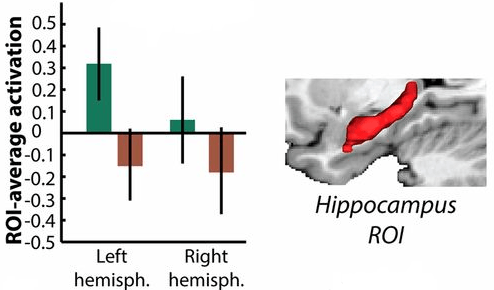
roi

How could the study’s findings apply to:

“The distressing intrusions that accompany posttraumatic stress disorder

when emotional memories were excluded? It was an unsupported assertion for one of the researchers to state:

“The better understanding of the neural mechanisms underlying this process arising from this study may help to better explain differences in how well people adapt to intrusive memories after a trauma.”

2. The term “unconscious” was used 27 times, including in the title, without defining it. The cited studies defined “unconscious” several meaningfully different ways. How could the findings achieve validity when they contained an undefined term?

3. The experiments involved short-term memories and visual perception, and the subjects took longer to visually perceive objects that they had been directed to suppress than those that they had been directed to think about. However, the researchers didn’t show that these experimental results could be extrapolated into findings about long-term unconscious memories.

4. Data manipulation:

  • The researchers noted:

    “We did not observe less hippocampal activation during no-think than think trials.”

  • This data didn’t fit what they wanted to find, so they:

    “Restricted the search volume to anatomically defined regions of interest.”

  • They still couldn’t make their predetermined finding, so they discarded:

    “An outlier which compromised the significance of this effect.”

The above process didn’t support the statement that immediately followed:

“Thus, suppression robustly engaged the brain regions associated with memory control, and this was accompanied by reduced activation in the hippocampus.”

Didn’t the reviewer have something to say about these four problem areas?

It was a letdown to read the details of the study when its title held out such promise for informing us about the unconscious influence of memories. Per the Scientific evidence page, it would really help a person as a first step to become somewhat aware of their unconscious memories and feelings, especially when these are expressed through behavior.

http://www.pnas.org/content/111/13/E1310.full “Suppressing unwanted memories reduces their unconscious influence via targeted cortical inhibition”

A study of visual perception that didn’t inform us about human conscious awareness

This 2015 Vanderbilt study with a Princeton reviewer stated that they found “compelling evidence” related to:

“How the brain begets conscious awareness.

Identifying the fingerprints of consciousness in humans would be a significant advancement for basic and medical research, let alone its philosophical implications on the underpinnings of the human experience.”

Let’s begin with the “conscious” part of the study’s conscious awareness goal. A summary article of 105 studies entitled Evolution of consciousness: Phylogeny, ontogeny, and emergence from general anesthesia that I curated found:

The core of human consciousness appears to be associated primarily with phylogenetically ancient structures mediating arousal and activated by primitive emotions.”

The current study ignored the evolutionary bases of human consciousness and didn’t include any limbic system and lower brain areas. The researchers’ biases were further indicated by the statement from their press release:

“Focal theories contend there are specific areas of the brain that are critical for generating consciousness, while global theories argue consciousness arises from large-scale brain changes in activity.”

The researchers were in the “global” camp of this unnecessary divide.


Let’s next examine the “awareness” part of the study’s conscious awareness goal. The subjects were 24 students in a visual perception experiment that used fMRI. The visual events that were perceived went into the “aware” bucket and the others into the “unaware” bucket.

The study’s subject selection criteria and experiment seemed a little odd for developing “compelling evidence” related to “how the brain begets conscious awareness.” By equating visual perception with awareness, the researchers excluded the contributions of other senses and methods of awareness.

Would it follow from the study’s methodology that blind people can’t be consciously aware?

The supplementary material showed that 7 of the 24 subjects’ results for one experimental condition, and 12 – half – of the subjects’ results for another condition were excluded because they apparently had problems reporting confidence in their visual perception. I wonder why the reviewer agreed that it was appropriate to discard half of the subjects’ experimental results?

Whatever else it was that the study found, the researchers didn’t reach their goal of developing “compelling evidence” related to “how the brain begets conscious awareness.”

http://www.pnas.org/content/112/12/3799.full “Breakdown of the brain’s functional network modularity with awareness”

Research that identified the source of generating gamma brain waves

This 2015 Harvard rodent study found that specific brain neurons trigger cortical band oscillations in the gamma wave length. The cell type:

“Has increased activity during waking and is involved in activating the cerebral cortex and generating gamma oscillations, enabling active cortical processing.

Cortical gamma band oscillations are correlated with conscious awareness.”


1. News coverage of the study misreported the research’s consciousness findings by regurgitating the Harvard press release word-for-word. Several speculations thrown in by the PR staff weren’t supported by the findings regarding:

  • “Awareness of consciousness;
  • Aware of the lower levels of consciousness and their contents.”

2. The researchers used optogenetic stimulation of neurons, similar to the Activation of brainstem neurons induces REM sleep study. The current study took the extra step of lesioning cholinergic neurons to ensure the activity studied was due to the target neurons.

3. The neurons generated gamma waves by simultaneously turning off all receptor neurons, then simultaneously switching them all back on. The researchers said:

“Our results are surprising and novel in indicating that this presumptively inhibitory”

neuron type acted this way.

http://www.pnas.org/content/112/11/3535.full “Cortically projecting basal forebrain parvalbumin neurons regulate cortical gamma band oscillations”

What is Primal Therapy by Dr. Arthur Janov

“We have needs that we are all born with.

When those basic needs are not met, we hurt.

And when that hurt is big enough, it is imprinted into the system.

It changes the system, our whole physiologic system.

What our therapy does, it goes back to those early brains, those hurt brains, and relive the pain, and get it out of the system.

Because meanwhile, that pain is being held in storage, and just waiting for its exit, so to speak.

So Primal Therapy is a way of accessing our feeling brain, and down below even the feeling brain, to the brainstem, to get to all of the hurts that started very early in our lives.

And bring them up to consciousness for connection and integration.

It is a very systematic therapy, by the patient.

The patient decides when he comes and when he leaves and how long he stays.

There’s no 50-minute hour anymore.

It’s the feelings of the patient that determine when he stops.”

An example of how we are unaware of some of the unconscious bases of our decisions

This 2014 human study provided details of how we are unaware of some of the unconscious bases of our decisions:

“We show that unconscious information can be accumulated over time and integrated with conscious elements presented either before or after to boost or diminish decision accuracy.

The unconscious information could only be used when some conscious decision-relevant information was also present.

Surprisingly, the unconscious boost in accuracy was not accompanied by corresponding increases in confidence, suggesting that we have poor metacognition for unconscious decisional evidence.”

I wouldn’t agree that these findings apply as broadly as the researchers said they did during interviews.

The first reason is that the researchers restricted the study to the subjects’ cerebrums’ visual processing. In everyday life, though, our limbic systems and lower brains are also very much involved with visual processing.

As an example, have you ever taken a nature walk where you instinctually jumped back from a vague initial impression only to find that the object was a stick? I’ve done that many times, and our shared human instincts operating with the limbic system and lower brain saved me once in childhood from stepping on a copperhead snake.

Secondly, the researchers limited the term “unconscious” to mean below visual perception of the subjects’ cerebrums.

What if, for example, the study’s visual cues included emotional content that involved the subjects’ limbic systems? The researchers may have able to develop a basis for findings that applied to common operations such as making decisions that are influenced by unconscious emotional content.

The third reason to not apply the findings as broadly as the researchers may have desired is that the researchers limited the term “metacognition” to operations of the the subjects’ cerebrums. We know that Task performance and beliefs about task responses are solely cerebral exercises, which accurately describes the metacognition experiment.

As an example of how people’s metacognitions are much broader than just their cerebrums, I take a crowded train to and from work everyday. It’s fairly straightforward to understand people’s actions, body postures, and facial expressions in terms of the combined metacognition operations of their entire brains.

Also, the metacognition finding sample size may have been too small by involving only five subjects.

http://www.pnas.org/content/111/45/16214.full “Unconscious information changes decision accuracy but not confidence”

One way that an infant unconsciously knows the emotions of the humans in their environment

This 2014 human study found one way that an infant unconsciously recognized the emotions of the humans in their environment:

“The current study provides neural evidence for the unconscious detection of emotion and gaze cues from the sclera in 7-mo-old infants.

Wide-open eyes, exposing a lot of white, indicate fear or surprise. A thinner slit of exposed eye, such as when smiling, expresses happiness or joy.”

The basis for finding that the subjects’ responses were unconscious was that the researchers determined that displaying images of eyes for 50 milliseconds fell below the threshold of infants’ conscious awareness.

http://www.pnas.org/content/111/45/16208.full “Unconscious discrimination of social cues from eye whites in infants”