Agenda-driven research on emotional memories

I curated this 2013 study because one of the authors has made a career out of denying that people accurately remember and re-experience emotional memories. I’ll show how this viewpoint created problems with the study.

For background, one relevant hypothesis of Dr. Arthur Janov’s Primal Therapy is that there are differences in the levels of consciousness of: (1) an emotional memory; (2) the recall of an emotional memory; and (3) a verbal description of the recall of an emotional memory.

  1. The retrieval and re-experiencing of an emotional memory can engage our lower-level brain areas without our higher-level brain areas’ participation.
  2. The recall of 1 above is a product of our cerebrum in response to input from limbic system and lower brain areas.
  3. The verbal description of 2 above is a product of our brain’s language areas in response to input from the cerebral areas that recalled the emotional memory.

Clinical principles of Primal Therapy that follow are:

  • A patient won’t re-experience an emotional memory when they only just recall it.
  • It’s another level of consciousness even further removed from an emotional memory when someone describes their recall of the memory.

The researchers asserted that they studied emotional memories in one part of this study. Their method was to ask the subjects to recall and verbally describe the emotions they felt the week after 9/11/2001.

The researchers introduced factors to try to confuse the subjects about their recall of their emotions, and their verbal descriptions of their recall. The researchers were very sure that confusing the subjects’ cerebral recalls and descriptions produced evidence that the subjects’ emotional memories were changed and falsified.

Can you see how far removed the researchers were from studying emotional memories? They didn’t demonstrate that they understood how emotional memories were stored because they didn’t attempt to engage the subjects’ limbic system and lower brain areas.


Let’s illustrate the study’s inappropriate characterizations with an example. I burned my left index fingertip last week while toasting bread on an infrared oven grill. The pain is still stored with my emotional memory, and is probably why my memory is very clear.

I can recall the visual details of the grill, how my fingertip looked, the pain I initially felt, and the relief I felt when I held my finger under running cold water. I can retrieve and re-experience my emotional memory in a calm environment such as lying in bed with no aural or visual distractions.

Let’s imagine that the researchers analogously studied my burned fingertip accident. They would deny that I can accurately retrieve and re-experience my emotional memory of the accident if they could create problems with my verbal descriptions of my recall. For example, if I initially said that I pushed the kitchen faucet handle all the way in the cold direction, then after repeated questioning, I said that I wasn’t sure that the handle was pushed all the way over to Cold.


The researchers intentionally conflated the falsifiability of emotional memories with a strawman definition of false emotional memories.

They purposely misidentified both:

  • The subjects’ recalls of post-9/11 emotions; and
  • The subjects’ descriptions of their recalls

as emotional memories.

The study was designed to be lawyering, not science. The researchers DETRACTED from science.

Maybe their purposeful error could be overlooked if it was confined to this study. But it isn’t.

Imagine the damage this viewpoint creates when mental health professionals deny the reality of their patients’ feelings, experiences, and emotional memories!

http://www.pnas.org/content/110/52/20947.full “False memories in highly superior autobiographical memory individuals”
Who benefits when research promotes a meme of self-sacrifice?

The main purpose of this 2014 Illinois human study was to make findings directed toward high school students that:

“Well-being may depend on attending to higher values related to family, culture, and morality, rather than to immediate, selfish pleasure.”

The study’s messages to young people and to those who control young people were:

  • You have to give up trying to live your own life if you want to be happy.
  • For your own “well-being” just follow the “higher values” where other people tell you what to do and think.
  • Other people know how you should live your life better than you do. Science says so.

The researchers embedded many assertions into the study, most of which weren’t supported by the study’s data. The researchers’ main assertion was:

“Optimal well-being may be achieved through eudaimonic activities.”

The researchers repeated this assertion multiple times in multiple ways, such as citing philosophy and other research. The short version of the term “eudaimonic” was defined as: “Meaning and purpose, a life well-lived.”

The study’s ONLY measurement of “eudaimonic” activities was the subjects’

“Neural activation when making a donation to the family that involves self-sacrifice.”

The study’s main finding involving this SOLE measurement was:

“Eudaimonic decisions predicted longitudinal declines in depressive symptoms.”

Depressive symptoms were determined by “a self-report measure” where the subjects, 47 adolescents aged 15-17:

  • “Completed the internalizing symptoms subscale of the Youth Self-Report form of the Child Behavior Checklist
  • Underwent a brain scan during which they completed a family donation task and a risk-taking task.”

39 of the subjects returned one year later to reanswer the checklist.


I wonder what bases the reviewer used to approve the researchers’ methods.

1. In the study’s verbiage the researchers extrapolated the significance of the sole measurement of eudaimonic activities – the initial fMRI scan – many times past what it actually measured. One-time measurements of the blood flow in the ventral striatum of a few Los Angeles teenagers can’t validly be assigned as the bases for all of what the researchers went on and on about to glorify “prosocial eudaimonic decisions.”

2. No method checked the subjects’ personal impact of the experiments’ monetary rewards and donations. The subjects didn’t scale their personal relative importance of the monetary rewards and donations.

Consider the relative importance of a dime for a kid whose parents gave them a BMW to drive to high school. Compare that with a kid who searched the sidewalk for dropped coins as they walked to high school.

Absent subjective scaling, the monetary rewards and donations data couldn’t be used as the basis to produce informative results.

3. The balloon test used in this study to measure “risky hedonic decisions” was the same as in the Who benefits when research with no practical application becomes a politically correct meme? study. The same objection applies here: a video game task of popping balloons that engages the cerebrum was NOT informative to the cause-and-effect of the emotions and instincts and impulses from limbic system and lower brain areas that predominantly drive risky behavior.


Scientific justification for memes like the self-sacrifice promoted by this study helps rush people past what really happened in their lives. A popular cultural meme is to “live in the present” and purposefully overlook how we arrived at our present lives.

I wonder how we would evaluate the “higher values related to family, culture, and morality” if we felt and honestly understood our real history.

Do you feel that young people benefit when they sacrifice their lives in the name of “family, culture, and morality?” Who benefits when people don’t pause to reflect on how their history impacts what’s going on now with their lives?

http://www.pnas.org/content/111/18/6600.full “Neural sensitivity to eudaimonic and hedonic rewards differentially predict adolescent depressive symptoms over time”

Problematic research on suppressing unwanted memories

This 2014 French/UK human study found:

“Motivated forgetting mechanisms, known to disrupt conscious retention, also reduce unconscious expressions of memory, pointing to a neurobiological model of this process.”

There were multiple problems with this study.

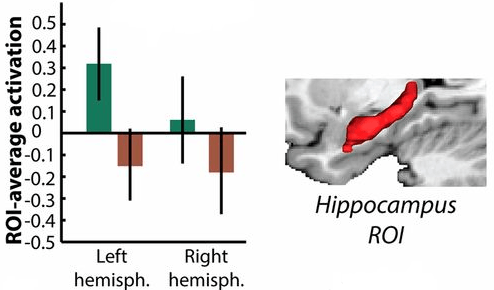
1. The researchers excluded emotional content, although the study involved areas of the brain involved in processing emotions:

roi

How could the study’s findings apply to:

“The distressing intrusions that accompany posttraumatic stress disorder

when emotional memories were excluded? It was an unsupported assertion for one of the researchers to state:

“The better understanding of the neural mechanisms underlying this process arising from this study may help to better explain differences in how well people adapt to intrusive memories after a trauma.”

2. The term “unconscious” was used 27 times, including in the title, without defining it. The cited studies defined “unconscious” several meaningfully different ways. How could the findings achieve validity when they contained an undefined term?

3. The experiments involved short-term memories and visual perception, and the subjects took longer to visually perceive objects that they had been directed to suppress than those that they had been directed to think about. However, the researchers didn’t show that these experimental results could be extrapolated into findings about long-term unconscious memories.

4. Data manipulation:

  • The researchers noted:

    “We did not observe less hippocampal activation during no-think than think trials.”

  • This data didn’t fit what they wanted to find, so they:

    “Restricted the search volume to anatomically defined regions of interest.”

  • They still couldn’t make their predetermined finding, so they discarded:

    “An outlier which compromised the significance of this effect.”

The above process didn’t support the statement that immediately followed:

“Thus, suppression robustly engaged the brain regions associated with memory control, and this was accompanied by reduced activation in the hippocampus.”

Didn’t the reviewer have something to say about these four problem areas?

It was a letdown to read the details of the study when its title held out such promise for informing us about the unconscious influence of memories. Per the Scientific evidence page, it would really help a person as a first step to become somewhat aware of their unconscious memories and feelings, especially when these are expressed through behavior.

http://www.pnas.org/content/111/13/E1310.full “Suppressing unwanted memories reduces their unconscious influence via targeted cortical inhibition”

Do you know a stranger’s emotional motivations for smiling?

The premise of this combination of two studies was:

“Emotional understanding is the central problem of human interaction.”

The researchers reanalyzed a 2008 study’s data, supplemented it with their own 2015 study, and found:

“Social-historical factors..explain cross-cultural variation in emotional expression and smile behavior.

We also report an original study of the underlying states that people believe [my emphasis] are signified by a smile.”

The researchers presented the subjects with a survey that asked them to rate 15 possible reasons for a person to smile at them on a seven-point scale of -3 to +3 for disagreeing/agreeing.

The research methodology didn’t take the additional necessary steps of establishing paired experiments that included presenting a similar survey to a control group of subjects to self-report their emotional motivations for smiling, and then processing the two surveys.

Did the study’s reviewer have anything to say about this lack of validation of the subjects’ beliefs to any factual measurements of a stranger’s corresponding “emotional expression and smile behavior?”

This combination of studies didn’t inform us about the “emotional understanding is the central problem of human interaction” premise. The researchers only provided evidence that the subjects’ cultures were one of many causal factors for the subjects’ beliefs about a hypothetical stranger’s smiling behavior.

The combined studies didn’t contain any emotional content to establish experimental conditions toward the goal of “emotional understanding.” No emotions were involved, for example, when a subject rated “strongly agree” to the “Wants you to like them” reason on a survey for a hypothetical stranger’s smiling behavior.

The studies didn’t show that the subjects rating their beliefs contributed to their real “emotional understanding.” Including emotional content, such as experimentally evoking an actual emotion in response to an actual stranger smiling, possibly could have contributed to real “emotional understanding.

Research that strips out emotional content can’t factually provide evidence for real “emotional expression and smile behavior.” The degrees to which beliefs about and perceptions of a stranger’s smiling actually match their emotional reality remain to be shown.

http://www.pnas.org/content/112/19/E2429.full “Heterogeneity of long-history migration explains cultural differences in reports of emotional expressivity and the functions of smiles”

Can a Romanian orphan give informed consent to be an experimental subject?

This 2015 study used Romanian orphans as lab rats for findings of which I failed to see the value. The world didn’t really need any further research to demonstrate that foster care would be better for a child than staying in an orphanage.

The researchers placed the orphans in five separate stressful situations, and measured their cortisol and DHEA-S levels, along with their electrocardiograph and impedance cardiograph activity. The findings were:

“Children who were removed from the Romanian institutions and placed with foster parents before the age of 24 months had stress system responses similar to those of children being raised by families in the community.

The children raised in institutions showed blunted responses in the sympathetic nervous system, associated with the flight or fight response, and in the HPA axis, which regulates cortisol.”

One unsupported assertion from the researchers was:

“We provide evidence for a causal link between the early caregiving environment and stress response system reactivity in humans with effects that differ markedly from those observed in rodent models.”

The researchers stated that rodent studies have converged to find:

“Early-life adversity results in hyperreactivity of the sympathetic nervous system (SNS) and hypothalamic–pituitary–adrenal (HPA) axis.”

It’s baloney that the same results from early life adversity in rodents haven’t also been present in humans. Even the lead researcher herself said in a news article:

“More significantly, McLaughlin said, their [the orphans] stress response systems might have been initially hyperactive at earlier points in development, then adapted to high levels of stress hormones.”

The difference was that the rodents were monitored 24/7 until researchers killed and dissected them. The children’s periods of adversity likely started while in the womb, and their lives had been monitored for research purposes sporadically after their births.

Everybody knows that just because adverse events and effects in these children’s lives weren’t recorded by researchers didn’t mean these effects weren’t present at some point.

Particularly irksome was another unsupported assertion from the lead reviewer:

“The children involved in the study are now about 16 years old, and researchers next plan to investigate whether puberty has an impact on their stress responses. It could have a positive effect, McLaughlin said, since puberty might represent another sensitive period when stress response systems are particularly tuned to environmental inputs. “It’s possible that the environment during that period could reverse the impacts of early adversity on the system,” she said.”

No, this is NOT possible. We may as well expect an apple to fall upward.

The impacts of early adversity persist with enduring physiological changes as shown in experimental studies. Studies have NOT provided evidence that the subjects’ environment can cause the effects of complete reversal of all these changes, no matter the stage of life of the subjects.

This point was addressed in The effects of early-life stress are permanent alterations in the child’s brain circuitry and function rodent study:

The current study manipulates the type and timing of a stressor and the specific task and age of testing to parallel early-life stress in humans reared in orphanages.

The results provide evidence of both early and persistent alterations in amygdala circuitry and function following early-life stress.

These effects are not reversed when the stressor is removed nor diminished with the development of prefrontal regulation regions.

That study had the same reviewer as the current study. The current study’s lead researcher knew or should have known of this and other relevant research. She knew or should have known of the irreversibility of critical periods, during which developments either occurred or were forever missed.

Did the lead researcher make assertions not supported by the study or relevant research – assertions made counter to her scientific knowledge – show her unease about treating the orphans as lab rats? Was there was some other agenda in play?

The larger problem was the study’s informed consent with this group of Romanian orphans. If you were in contact with a damaged person, and implicitly gave them hope that you would improve their life, then who are you as a feeling human being when you don’t personally carry through? Does the legal documentation matter?


Also, I’ve noticed problems with several studies that had this particular reviewer:

Add the current study to the list.

http://www.pnas.org/content/112/18/5637.full “Causal effects of the early caregiving environment on development of stress response systems in children”


This post has somehow become a target for spammers, and I’ve disabled comments. Readers can comment on other posts and indicate that they want their comment to apply here, and I’ll re-enable comments.

Problematic research that ignored the hippocampus as the seat of emotional memories

If this 2015 human study from the San Diego Veterans Administration developed findings of any note, I didn’t see them.

Like other studies, this study ignored the hippocampus’ position as the seat of emotional memories. The experiments were designed to not contain any emotional content.

The researchers mainly wanted to fight a 60-year old battle on whether or not the hippocampus contributed to spatial processing. They ignored all the research on place cells, such as:

to name three of the hundreds of place cell studies available.

By ignoring these and other studies, the researchers declared:

“We have not found evidence that this is the case.”

The lead researcher continued with speculations that couldn’t be verified with the current experiments’ data:

“We think they can do these spatial tasks because these tasks can be managed within short-term memory functions, supported by the frontal lobe of the neocortex.

The spatial tasks that we can do with our neocortex using short-term memory must be performed by the hippocampus in rats.”

Basically, the rest of the scientific world must supply irrefutable evidence (which will be ignored) but the reader can just take the lead researcher’s words as fact for what’s going on inside human and rodent brains, although:

  • No fMRI scans were performed during the experiments,
  • No hard measurements were taken.

The findings were based on observations of six subjects:

  • With hippocampal lesions of unspecified duration,
  • Drawing pictures, and
  • Narrating what they imagined about a playground.

I wonder what the reviewers saw in this study that factually advanced science. Did the statement:

“These results support the traditional view that the human hippocampus is primarily important for memory.”

convey something new? Make a contribution to science?

Studies like this one not only detract from science. They are also a waste of resources that supposedly the Veterans Administration have in short supply.

The design and data of such studies are not able to reach levels where they can provide evidence of causes and effects of anything within their scope. That’s a good indication of some other agenda in play.

http://www.pnas.org/content/112/15/4767.full “Memory, scene construction, and the human hippocampus”

If research doesn’t provide causal evidence for effects, can epigenetics be forced in to explain everything?

This 2015 UK bird study found that older mothers had female children who had fewer offspring than did the rest of the house sparrow population. The finding applied also to older fathers and their male children.

In general, if a study didn’t directly demonstrate cause and effect, it isn’t appropriate to force the use of epigenetics to explain everything. That’s what this study did with epigenetic inheritance.

Did the study:

“Demonstrate that this parental age effect..potentially is epigenetically inherited.”

by analyzing DNA across generations?

No!

The researchers ran some numbers that tested the effect of older foster parents where the model’s only other possible explanation was epigenetic inheritance.

Several other things about this study were off:

  • The researchers used the term “fitness” 28 times as shorthand to mean the number of offspring, but only twice was it explained as “reproductive fitness.” This was potentially misleading in some of the contexts of the term’s other uses. For example, several of the cited references used “fitness” in a different context.
  • The researchers went into a long exposition of telomeres, punctuated by citing 11 references, only to say:

    “However it is unclear how telomere dynamics could affect fitness.”

    The next sentence was:

    “An alternative explanation might be the accumulation of deleterious mutations as individuals age.”

    which was additionally irritating because “alternative” assumed that telomeres presented a factual explanation of the study’s findings in the first place. Was this section an artifact of a struggle with the reviewer?

After forcing epigenetic inheritance as an explanatory factor and potentially misleading readers about reproductive fitness and telomeres, the researchers had little basis to conclude that their research had “important implications.”

http://www.pnas.org/content/112/13/4021.full “Reduced fitness in progeny from old parents in a natural population”

An agenda-driven study on beliefs, smoking and addiction that found nothing of substance

The researchers of this 2014 Virginia Tech study said that they found something profound about beliefs and the brain and addiction and smoking.


I’ll assert the short versions of some relevant understandings before assessing the study.

1) A principle of Dr. Arthur Janov’s Primal Therapy is: we all have needs that start at the beginning of our lives. Our needs change as we grow.

If our basic needs aren’t satisfied anywhere along the way, we feel pain.

When the unmet needs are early in our lives and the painful conditions persist, enduring physiological changes may occur.

This basic truth is supported by the findings of much of the recent research I’ve curated on this blog, the references in those studies, and older research elsewhere.

2) Another fundamental of Primal Therapy is that the physiological impacts of these unmet needs drive our behavior, thoughts, and feelings.

The painful impacts of our unfulfilled needs impel us to be constantly vigilant for some way to fulfill them.

This is a richly insightful and truly empathetic method of interpreting people’s behaviors and expressions of thoughts and feelings.

3) A hypothesis of Primal Therapy is: a major function that our cerebrums have evolutionarily adapted is to use ideas and beliefs to repress pain and make us more comfortable.

I value this inference as an empathetic method of interpreting people’s expressions of thoughts and feelings. Click the Beliefs category to view samples of how beliefs, expectations, and predictions are studied using cerebral measurements.


So – what did this study contribute to science about beliefs and the underlying causes of addiction and smoking as found by measuring the subjects’ brains?

Nothing new, really. The study was all about the effects, the symptoms. There was nothing about:

  • Impelling physical conditions and causes,
  • What primarily drives people’s beliefs and addiction behaviors, and
  • What may permanently help someone with their need for the next cigarette.

I wonder what the study’s reviewer saw that factually advanced science.

Everybody already knew that beliefs can temporarily substitute for addicting substances, as well as temporarily change behaviors. It’s a foundation of AA and detox centers.

It’s also a foundation of AA and detox centers that these beliefs have to be constantly reinforced. That fact in and of itself demonstrates that underlying causes aren’t addressed in the AA and detox center approaches. The symptoms always bubble up, and require thought remedies and other interventions in order to stay suppressed.


The research provided details about an approach that wasn’t capable of anything more than temporarily suppressing symptoms. What does the following quote from the Significance statement sound like to you?

“Our findings suggest that subjective beliefs can override the physical presence of a powerful drug like nicotine by modulating learning signals processed in the brain’s reward system.”

Any human therapeutic approach won’t supply the addicting substance. That leaves just beliefs and their required constant reinforcement.

The unsupported overconfidence of the researchers that:

“The implications of these findings may be far ranging”

led to one of the most ridiculous statements I’ve seen in a while:

“Just as drugs micromanage the belief state,” Montague said, “maybe we can micromanage beliefs to better effect behavior change in addiction.”

This hubris just added to the stench of an agenda.

Since smoking isn’t politically correct, I’d guess that it wasn’t that difficult for this study to be funded and promoted. It apparently wasn’t an obstacle that the research DETRACTED from science and didn’t really help people.

http://www.pnas.org/content/112/8/2539.full “Belief about nicotine selectively modulates value and reward prediction error signals in smokers”

Is it science, or is it a silly and sad farce when researchers “make up” missing data?

This 2014 French study was a parody of science.

The researchers “made up” missing data on over 50% of the men and over 47% of the women! All to satisfy their model that drove an agenda of the effects of adverse childhood experiences.

As an example of how silly and sad this was:

  • Two of the seven subject ages of interest were 23 and 33 consecutively, and
  • One of the nine factors was education level.

If I was a subject, and wasn’t around to give data at age 33 and later, how would the researchers have extrapolated a measurement of my education level of “high school” at age 23?

I’m pretty sure their imputation method would have “made up” education level data points for me of “high school” for ages 33 and beyond. I doubt that the model would have produced my actual education levels of a Bachelors and two Masters degrees at age 33.

Everything I said about the Problematic research on stress that will never make a contribution toward advancing science study applied to this study, including the “allostatic load” buzzword and the same compliant reviewer.

Studies like this both detract from science and are a misallocation of scarce resources. Their design and data aren’t able to reach levels where they can provide etiologic evidence.

Such studies also have limiting effects on how we “do something” about real problems, because the researchers won’t be permitted to produce findings that aren’t politically correct.

http://www.pnas.org/content/112/7/E738.full “Adverse childhood experiences and physiological wear-and-tear in midlife: Findings from the 1958 British birth cohort”

If a study didn’t measure feelings, then its findings may not pertain to genuine empathy

This 2014 UK study tried to show that empathetic actions were very context-dependent. It mainly studied causing overt pain to another person.

The lead researcher stated:

“We were interested in quantifying how much people care about others, relative to themselves. A lack of concern for others’ suffering lies at the heart of many psychiatric disorders such as psychopathy, so developing precise laboratory measures of empathy and altruism will be important for probing the brain processes that underlie antisocial behavior.”

The researchers didn’t provide direct evidence of genuine empathy – the subjects’ emotions of sensing and sharing the emotions of another person.

The study was designed to cause sensations of pain and draw conclusions about empathetic feelings. The subjects’ limbic system and lower brains were never measured, however.

Why did the researchers decide to only infer these feelings and sensations from actions and reports? Why wasn’t this inferred evidence confirmed with direct measurements of the brain areas that primarily process feelings and sensations?


  1. At no time during the experiment did the subjects see or hear or touch the person whom they caused pain. Wouldn’t it be difficult for the subjects to feel authentic empathy for a disembodied presence?
  2. We’re informed by the Task performance and beliefs about task responses are solely cerebral exercises study that it’s inaccurate to characterize subjects’ task responses as feelings.
  3. We know from the Problematic research: If you don’t feel empathy for a patient, is the solution to fake it? study that people’s cerebrums are easily capable of generating a proxy for empathy.

This study’s findings concerning empathy involved inauthentic empathy – the non-feeling, cerebral exercise, faking-it kind.

http://www.pnas.org/content/111/48/17320.full “Harm to others outweighs harm to self in moral decision making”

Problematic research on stress that will never make a contribution toward advancing science

This 2014 UK human study found:

“Type 2 diabetes is characterized by disruption of stress-related processes across multiple biological systems and increased exposure to life stress.”

HOWEVER, the stress effects weren’t conclusively shown to be either a cause or consequence of type 2 diabetes. Correlation wasn’t causation.

Looking around for clues as to what went wrong, I found this data sample of cortisol in a small table that comprised the total amount of information in the supplementary material:

“Geometric means, adjusted for education, marital status, BMI, smoking status, use of statins, and time of day.”

It’s hubris for the researchers to state that they improved data measurements by averaging them after adjusting for all of the above six factors.

Maybe the problem was elsewhere, maybe in the study design. Wherever the problems were, they guaranteed that the researchers would NEVER find cause and effect.

But maybe that’s the point?

There appeared to be other agendas that ensured studies like these failed to make a contribution toward advancing science. The researchers inevitably used buzzwords such as “allostatic load” and cited the need for further studies (money). Everybody was okay with that, including the reviewer, and everybody kept their safe jobs.

Such studies also had limiting effects on how we “do something” about real problems because the researchers wouldn’t produce findings that weren’t politically correct.

http://www.pnas.org/content/111/44/15693.full “Disruption of multisystem responses to stress in type 2 diabetes: Investigating the dynamics of allostatic load”

Do researchers have to be cruel to our fellow primates to adequately research oxytocin?

This 2014 primate study found:

“Oxytocin increased infants’ affiliative communicative gestures and decreased salivary cortisol, and higher oxytocin levels were associated with greater social interest.”

One would have to take an anti-evolutionist stance and believe that primates do not feel what humans feel to consider this process to NOT be cruel:

“To test these macaques, we took advantage of ongoing experiments requiring infants to be separated from their mother on the day of birth. Infants were nursery-reared, housed individually, with a cloth surrogate mother. They could see and hear other infants, but could not touch them.”

We know that primate infants, like humans, need nourishment, transportation, warmth, protection, and socialization from their mothers. What level of findings about oxytocin can a research study make that would justify this deprivation?

It surely wasn’t the findings this study made. We knew without doing the study that getting oxytocin from a nebulizer would be nowhere near an acceptable substitute for a mother’s touch and care.

http://www.pnas.org/content/111/19/6922.full “Inhaled oxytocin increases positive social behaviors in newborn macaques”

Problematic research on oxytocin: If the study design excludes women, its findings cannot include women

This 2014 study’s findings that “the hormone oxytocin promotes group-serving dishonesty” can’t apply generally to humans because its subjects were ALL men.

Regarding oxytocin, the researchers certainly knew or should have known previous studies’ findings about sex differences, as did Is oxytocin why more women than men like horror movies? which cited:

“Oxytocin modulates brain activity differently in male and female subjects.”

Regarding differing reciprocal behaviors, the researchers also knew or should have been better informed about associated brain areas through studies such as Reciprocity behaviors differ as to whether we seek cerebral vs. limbic system rewards and its references.

And how could the study produce reliable, replicable evidence of:

Dishonesty to be plastic and rooted in evolved neurobiological circuitries”

when the researchers performed NO measurements of “neurobiological circuitries” that supported that finding?

What was the agenda in play here? What did the female Princeton reviewer see in this study that advanced science?

http://www.pnas.org/content/111/15/5503.full “Oxytocin promotes group-serving dishonesty”


This post has somehow become a target for spammers, and I’ve disabled comments. Readers can comment on other posts and indicate that they want their comment to apply here, and I’ll re-enable comments.

Who benefits when research with no practical application becomes a politically correct meme?

Do you take a risk, as this 2013 University of Texas/Yale study concluded, because you don’t foresee how you can avoid the risk?

By making this finding, the study essentially assigned the bases of a person’s risky decisions to their cerebrum.

I wasn’t persuaded. The conclusion was reached because the study’s design only engaged the subjects’ cerebrums with a video game task involving popping balloons. See Task performance and beliefs about task responses are solely cerebral exercises for a similar point.

If the researchers had instead designed a study that also engaged the subjects’ limbic system and lower brains, the findings may have been different.


Only one of the news articles covered this story with some accuracy, io9.com:

Helfinstein (the lead researcher) doesn’t see any direct, practical applications of the research. After all, people don’t spend their lives in fMRI scanners, so it’s not as if we can tell when people are going to make a risky decision in their day-to-day activities.”

Compare that with the majority of the news coverage that hijacked the study’s findings to try to develop a politically correct meme:

“Many health-relevant risky decisions share this same structure, such as when deciding how many alcoholic beverages to drink before driving home or how much one can experiment with drugs or cigarettes before developing an addiction.”

The study found that “risk taking may be due, in part, to a failure of the control systems necessary to initiate a safe choice.” The brain areas were “primarily located in regions more active when preparing to avoid a risk than when preparing to engage in one.” These areas included the “bilateral parietal and motor regions, anterior cingulate cortex, bilateral insula, and bilateral lateral orbitofrontal cortex.”

Notice that just one of the studied brain areas (the anterior cingulate cortex) is part of the limbic system or lower brains, although the bilateral insula connects to the limbic system. Yet the limbic system and lower parts of the brain are most often the brain areas that drive real-world risky behaviors such as smoking, drug use, sexual risk taking, and unsafe driving.

A video game task of popping balloons that engaged the cerebrum was NOT informative to the cause-and-effect of the emotions and instincts and impulses from limbic system and lower brains that predominantly drive risky behavior.

Who may benefit from the misinterpretations and misdirections of the study’s findings? We can take clues from the five applicable NIH grants (UL1-DE019580, RL1MH083268, RL1MH083269, RL1DA024853, PL1MH083271) and the researchers’ statement:

“We were able to predict choice category successfully in 71.8% of cases.”

Anybody ever read Philip K. Dick?

http://www.pnas.org/content/111/7/2470.full “Predicting risky choices from brain activity patterns”

Can psychologists exclude the limbic system and adequately study awareness and social cognition?

This 2014 Princeton human study was proof that cognitive researchers are stuck in the cerebrum. That and gadgets.

The researchers didn’t measure limbic system or lower brain areas, yet from their use of cartoon faces and magnetically zapping their subjects’ brains they proclaimed:

“The findings suggest a fundamental connection between private awareness and social cognition.”

For just one example of the gross omissions of the study’s design, look at the limbic system’s part in “social cognition” for The amygdala is where we integrate our perception of human facial emotion.

And it’s a very limited scope of “private awareness” that excludes conscious awareness of what’s in our own feeling, instinctual, and impulsive levels of consciousness.

http://www.pnas.org/content/111/13/5012.full “Attributing awareness to oneself and to others”


This post has somehow become a target for spammers, and I’ve disabled comments. Readers can comment on other posts and indicate that they want their comment to apply here, and I’ll re-enable comments.