John Hopkins will be herding the US public toward the cliff April 6-10, 2020

Let’s predict this coming week in the US using the methodology of COVID-19 in Italy Part II:

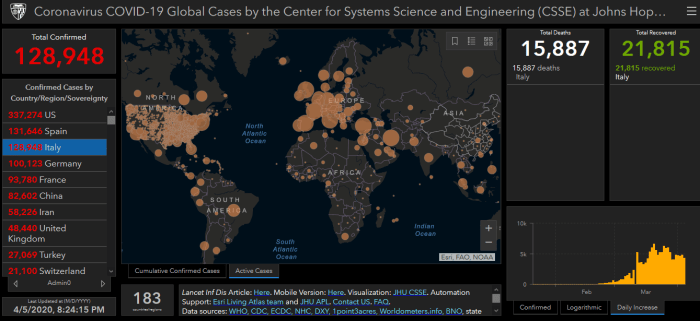
  1. Click Italy on the left menu of the John Hopkins map.
  2. Click the Active Cases tab at the bottom center.
  3. Click the Daily Increase tab at the bottom right.
  4. Hover your mouse over the longest chart bar.
  5. Observe that March 20, 2020 – 17 days ago – was the peak of Italy’s daily increases in COVID-19 cases.


Have you seen this reported anywhere or investigated? I heard on the April 5th coronavirus task force briefing that Italy’s daily deaths had gone down. Even non-health professionals knew that should have happened – with a lag time – since March 20th.

Can you find daily deaths or daily recoveries on the map? No, John Hopkins has those daily numbers but doesn’t display them. It’s not a difficult programming task to put two more tabs at the bottom right and display daily deaths and daily recoveries.


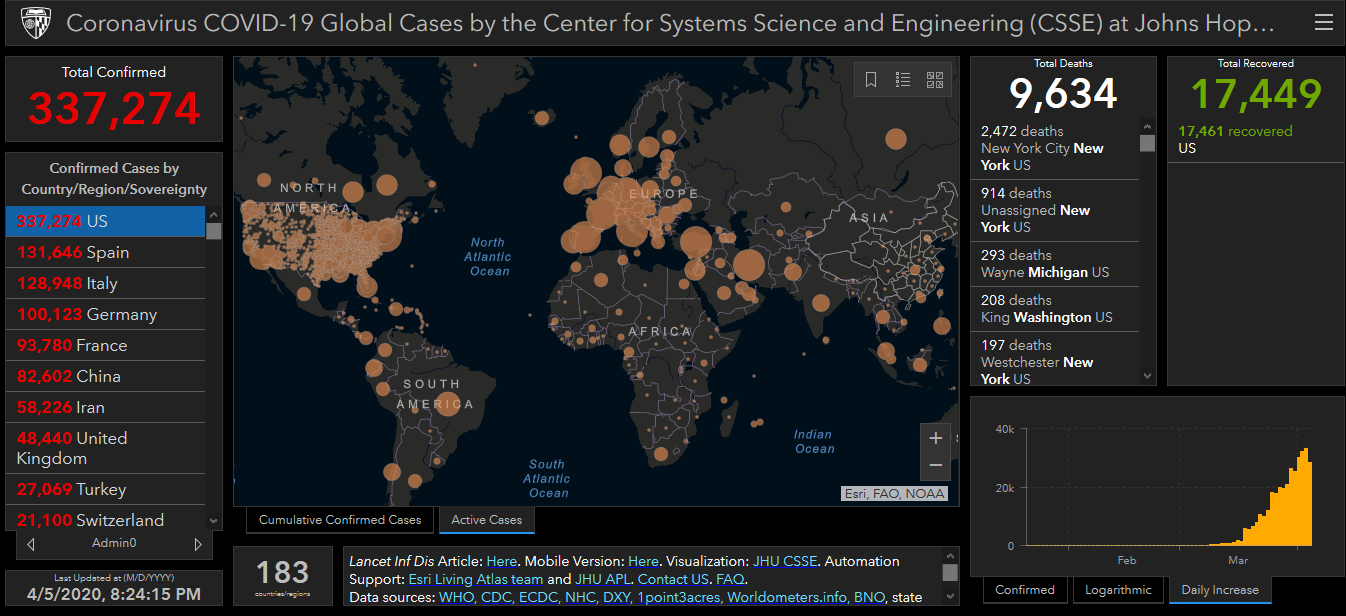
Let’s find the US numbers using similar steps:

  1. Click US on the left menu of the John Hopkins map.
  2. Click the Active Cases tab at the bottom center.
  3. Click the Daily Increase tab at the bottom right.
  4. Hover your mouse over the longest chart bar.
  5. Observe that April 3rd – two days ago – had been the peak of the US daily increases in COVID-19 cases todate.

No daily deaths or daily recoveries to inform us of trends such as daily recoveries compared to new cases. Instead, John Hopkins’ user interface features cumulative deaths that panic the public.

I’ll guess the US public isn’t John Hopkins’ customer, regardless of who pays them. John Hopkins is one of the herders – acting on behalf of their real customer(s) waiting at the bottom of the cliff for the herd’s demise.

All that’s missing to complete the picture is giving John Hopkins horses and torches.

Changing an inflammatory phenotype with broccoli sprouts

This follow up to Growing a broccoli sprouts Victory Garden is what’s gone on during Week 1 of starting to grow broccoli sprouts for a 30 60 grams of fresh broccoli sprouts incorporated daily into the diet” [1] program. See Week 2 of Changing an inflammatory phenotype with broccoli sprouts for changes.

Day 0 – I’ve tried many things to cure chronic inflammation over the years, basing most of my actions on what’s proven to work for other people. These treatments have helped but haven’t completely worked for me. I’ve continued them with the hypothesis that they may have positive synergistic interactions with daily eating 60 grams of 3-day-old broccoli sprouts that yield 27 mg of sulforaphane after microwaving.

Day 0 treatments included two dozen supplements I’ve taken since turning 50, a diet low in advanced glycation end products started last year [2], and naproxen (a nonsteroidal anti-inflammatory drug). The chronically inflamed spots are the left thumb base (arthritis), tendons outside the left ankle (peroneal tendinosis), and left knee tendonitis, all probably consequences of playing golf for 40+ years.

Day 1 – The vertical farming equipment is a Deluxe Kitchen Crop 4-Tray Seed Sprouter Model VKP1200 made by VICTORIO Kitchen Products. I soak one tablespoon of organic broccoli seeds for 12 hours. Take them out of the stackable trays for a twice-daily rinsing, which is counter to directions of pouring water into the tower top. Microwave the Day 3 broccoli sprouts daily per [3]. Run its tray through the dishwasher (but no heat cycle). Put the tray back in rotation for Day 0.

Day 2 – Threw away one of my crutches, naproxen, as taking it had become more of a habit than a necessity. I’d been taking 220 mg twice daily for years until two weeks ago, when I switched to once daily.

“Sulforaphane increases several endogenous antioxidant compounds via the transcription factor Nrf2 [nuclear factor erythroid 2-related factor 2, discovered in 1994]. Of the phytochemicals with Nrf2 inducer capacity, Brassica-derived SFN [sulforaphane] is the most potent naturally occurring biomolecule known at this time.

Another transcription factor, NF-κB, which is associated with inflammatory pathways is downregulated by SFN. This dual action of SFN is especially intriguing in that Nrf2 and NF-κB interact via their own ‘cross talk’.” [4]

Day 3 – Stopped taking 2 mg of sulforaphane in the form of a broccoli sprout extract capsule, and 200 mg of a diindolylmethane (DIM) capsule daily. DIM was raised 195% from Day 0 to Day 70 after daily intake of broccoli sprouts in [1], noting:

“The anti-inflammatory effects observed with broccoli sprouts intake are likely due to the combined effects of all the hydrolysis products of glucosinolates.”

Don’t need either supplement when broccoli sprouts supply them.

The next supplement I’ll drop is N-acetyl-cysteine (NAC), the precursor to our endogenous antioxidant glutathione. I’ve taken a 600 mg capsule twice daily for fifteen years.

[4] goes on and on about sulforaphane / glutathione interactions. For example: “Several well-studied Nrf2-dependent target genes of possible relevance are those encoding synthesis of glutathione (GSH)” in Section 5.2. SFN as a Redox Modulator that included Figure 6 below, and in Section 6. SFN: Its Redox-Modulating Effects:

Day 4 – I’d seen studies of broccoli sprouts that ranged from 3-days old (the most frequent age) to 8-days old. Before [5], I hadn’t found analyses of broccoli sprout age differences in sulforaphane contents, and only a few studies of sulforaphane differences among broccoli sprout cultivated varieties.

Day 5 – I’ve eaten sprouts at 3 – 5 days old, and haven’t noticed a taste difference after microwaving per [3]. Here’s what they look like at Days 0, 1, 2, and 3:

Day 6 – Are you ready to change your phenotype?


References in order of citation:

[1] 2018 Effects of long-term consumption of broccoli sprouts on inflammatory markers in overweight subjects

[2] 2016 Dr. Vlassara’s AGE-Less Diet: How a Chemical in the Foods We Eat Promotes Disease, Obesity, and Aging and the Steps We Can Take to Stop It

[3] 2020 Microwave cooking increases sulforaphane level in broccoli curated in Microwave broccoli to increase sulforaphane levels and Growing a broccoli sprouts Victory Garden

[4] 2019 Sulforaphane: Its “Coming of Age” as a Clinically Relevant Nutraceutical in the Prevention and Treatment of Chronic Disease

[5] 2020 3-day-old broccoli sprouts have the optimal yields

Using COVID-19 as a cover story Part II

To follow up Using COVID-19 as a cover story, what other previously unacceptable agendas are now in play?

1. The United Nations is using COVID-19 to advocate a global 10% tax. From the March 27, 2020, document at https://www.un.org/sites/un2.un.org/files/sg_report_socio-economic_impact_of_covid19.pdf:

“A large-scale, coordinated and comprehensive multilateral response amounting to at least 10 per cent of global GDP is needed now more than ever.”

Sound familiar? What happened to using climate change as the cover story to take away money and property? That hasn’t gone away – just add another 10% to the price of the power grab.


2. Here’s one report of likely consequences from “nonessential” businesses being shut down in a county where the state hadn’t yet taken that action:

More People Died From Suicide Than Coronavirus In Tennessee This Week

“Knox County, Tennessee saw nine deaths by suicide within 48 hours this week as doomsday predictions over the novel Wuhan coronavirus panics an already anxious public and leaves millions unemployed and isolated. As of this writing, [March 27] more people have died from suicide in Knox County than people have from the virus in the entire state, where there have been 6 fatalities from the disease.

The county’s suicides over the span of two days this week equates to about 10 percent of last year’s total where 83 lives were lost to suicide.”

Have there been other reports comparing suicide numbers with COVID-19 numbers?


3. What are other consequences of taking away people’s livelihoods by “essential” becoming defined by governments?

The place where I live has city jobs for mowing the grass – because only public employees can do that work? I saw a team of them mowing median strips last week while others with “nonessential” livelihoods were forced to stay inside by the state.

Were city and state income taxes, property taxes, food sales taxes, utility, petroleum, and other taxes suspended? No, regardless of whether the state had forced the loss of income. People who had “nonessential” jobs and businesses are still on the hook for state and city spending, and “essential” people’s salaries, benefits, and pensions.


4. Where’s the evidence that COVID-19 poses such a monumental threat that it warrants shutting down businesses and surrendering all our liberties? Is there any historical evidence that governments have completely relinquished powers of this magnitude?

Are these attempts to make most people dependent upon government and accept subjugation? Will Part II be governments granting themselves even more powers with a cover story such as they will restore the order that they destroyed?

How can we swat them away before they infect us with their diseases? Better yet, how can we act like my traveling companion’s picture of a praying mantis protecting her against blood-sucking pests?

COVID-19 in Italy Part II

To follow up Deaths in Italy attributed to COVID-19:

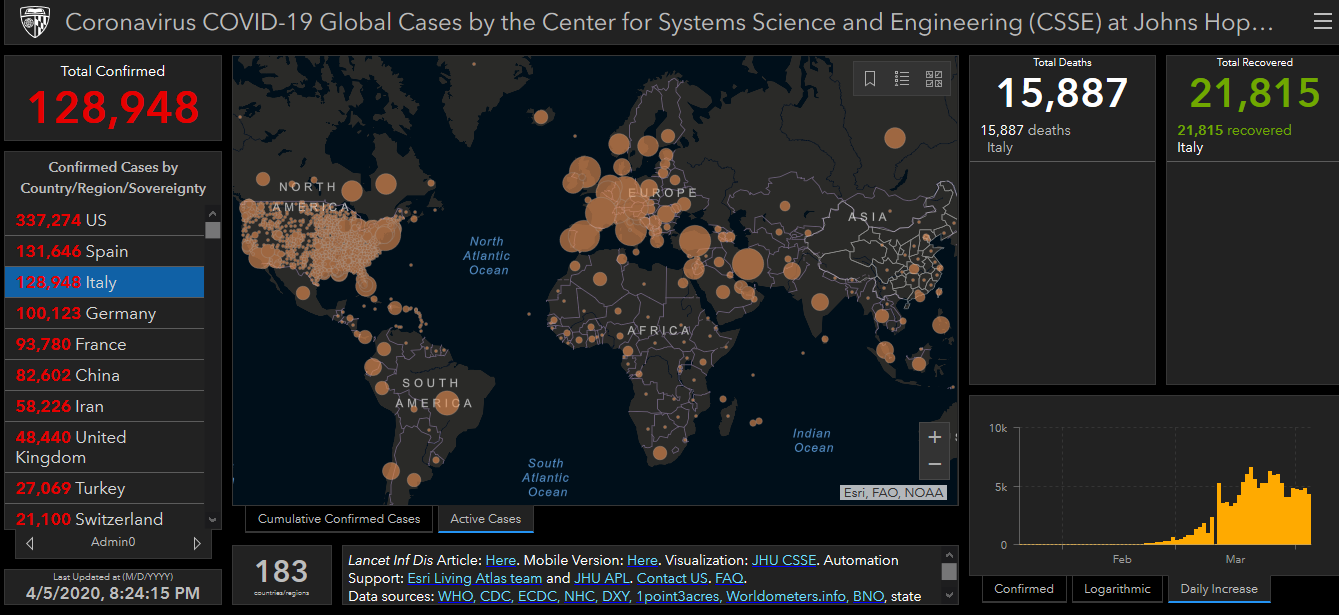
  1. Click Italy on the left menu of the John Hopkins map.
  2. Click the Active Cases tab at the bottom center.
  3. Click the Daily Increase tab at the bottom right.
  4. Hover your mouse over the longest chart bar.
  5. Observe that March 20, 2020 – 17 days ago – was the peak of Italy’s daily increases in COVID-19 cases.

Italy COVID-19

Have you seen this reported anywhere or investigated? I heard on tonight’s coronavirus task force briefing that Italy’s daily deaths had gone down. Even non-health professionals knew that should have happened – with a lag time – since March 20th.

Can you find daily deaths or daily recoveries on the map? No, John Hopkins has those daily numbers but doesn’t display them. It’s not a difficult programming task to put two more tabs at the bottom right and display daily deaths and daily recoveries.

I’ll guess the public isn’t really their customer. John Hopkins is a herder – acting on behalf of their customer(s) waiting at the bottom of the cliff – because they display cumulative deaths that panic the public toward the cliff rather than inform us.

We also know there was some other-than-medical purpose for:

“All the people who die in hospitals with the coronavirus are deemed to be dying of the coronavirus.”

although

“Only 12 per cent of death certificates have shown a direct causality from coronavirus.”

What effect would such reporting have on the headlines we’ve seen over the past 17 days?

Who has benefited from (medical, economic, social, and political) reports on and actions taken with COVID-19 over the past three weeks? Who has suffered from these reports and actions?

3-day-old broccoli sprouts have the optimal yields

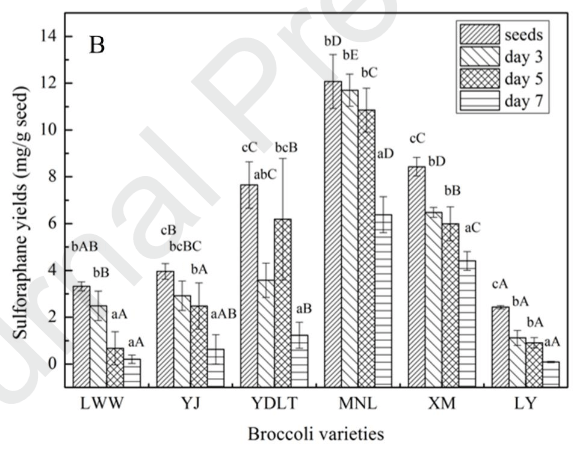
This 2020 Chinese study compared the contents of 3, 5, and 7-day-old broccoli sprouts:

“The objective of this study was:

  1. To optimize the extraction conditions of SF [sulforaphane] from seeds and sprouts at the same time to ensure the maximum SF yields from them;
  2. To compare the SF yields, total flavonoid (TF) contents, and total phenolic (TP) contents from broccoli seeds and sprouts (after 3, 5, and 7 days germination respectively) of six different cultivated varieties; and
  3. To evaluate and compare the the stability and bioaccessibility of SF, TF and TP from broccoli seeds and sprouts upon in vitro gastrointestinal digestion; total antioxidant activities of samples before and after digestion were also investigated in this section.

Most varieties obtained the maximum SF, TP and TF contents in sprouts on day 3. SF contents in sprouts were 46% – 97% of seeds, whereas TP and TF contents in sprouts were 1.12 – 3.58 times higher than seeds among varieties.

sprout ages 1B

After in vitro digestion, broccoli sprouts from MNL variety kept considerable SF, TF, and TP contents, as well as antioxidant capacities, with all values higher than seeds.

SF from seeds and sprouts both showed high bioaccessibility values of 0.91 and 1.00, respectively. The high bioaccessibility of SF in vitro experiments provide an additional evidence for its efficient utilization, as many previous researches have reported a high bioavailability of SF in vivo.”


This study provided higher measures of sulforaphane in vitro bioaccessibility compared with previous studies of in vivo bioavailability.

It was good to read a definitive study that addressed both broccoli sprout age and cultivated variety for optimizing sulforaphane. The need was there. As the study authors put it:

“From the perspective of comparison methods, broccoli varieties, and germination processes, there is still lack of a systematic comparison of SF yields and other bioactive compounds contents between broccoli seeds and sprouts.”

https://www.sciencedirect.com/science/article/pii/S0308814620300637 “Sulforaphane and its antioxidative effects in broccoli seeds and sprouts of different cultivars” (not freely available)

Growing a broccoli sprouts Victory Garden

To follow up How much sulforaphane is suitable for healthy people? I’ve started growing broccoli sprouts, and a 30 60 grams of fresh broccoli sprouts incorporated daily into the diet” [1] program. See Week 2 of Changing an inflammatory phenotype with broccoli sprouts for changes.

I loosely follow [2]‘s sprouting guidelines. One preparation difference is microwaving per [3]‘s findings as follows:

My current microwaving time for 60 grams of 3-day-old broccoli sprouts in 100 ml of water with a 1000 W microwave on full power is 35 seconds. The temperature gets up to 57°C. See Enhancing sulforaphane content for changes. I immediately dump the broccoli sprouts into a colander and spray with cold water to stop heating at the desired temperature.

The first batch of broccoli sprouts was a mild, cabbage-tasting side dish to the home-style chicken soup on page 238 of [4].

The a priori hypotheses:

    1. 30 grams of fresh broccoli sprouts will not have “51 mg (117 μmol)” of glucoraphanin [1] because they “Used the elicitor methyl jasmonate (MeJA) by priming the seeds as well as by spraying daily. MeJA at concentrations of 156 μM act as stressor in the plant and enhances the biosynthesis of the phytochemicals glucosinolates. Compared to control plants without MeJA treatment, the content of compounds as the aliphatic glucosinolate glucoraphanin was enhanced up to 70%.” 117 μmol / 1.70 = 69 μmol is the expected glucoraphanin amount in 30 grams weight of fresh broccoli sprouts. 69 x 2 = 138 μmol in 60 grams.
    2. One measurement [5] of how much sulforaphane is present in fresh broccoli sprouts before microwaving is 100 μmol / 111 g = .9 μmol / g. (.9 x 30 g) = 27 μmol is the expected sulforaphane amount in 30 grams of fresh broccoli sprouts. Changed assumption to 0 μmol sulforaphane due to 2013 Sulforaphane: translational research from laboratory bench to clinic “Broccoli sprouts are correctly described as releasing, generating, or yielding but not containing SFN [sulforaphane].”
    3. Last week a [3] coauthor agreed to make the data available to facilitate calculations. While I’m waiting… The study said the Figure 3 HL60 sulforaphane amount was 2.45 μmol / g. Eyeball estimate of the below Figure 3 control (raw broccoli florets) is a glucoraphanin amount of ~2.2 μmol / g. I assume that the broccoli florets and sprouts conversion would be the same at a 2.45 μmol / 2.2 μmol ≈ 1.11 ratio. I expect that microwaving the raw broccoli sprouts to 60°C will convert the 138 μmol of glucoraphanin to a 153 μmol amount of sulforaphane at this assumed 1.11 conversion ratio.
    4. The estimated sulforaphane weight per [6] would be (153 μmol / 5.64) = 27 mg which is comparable to clinical trial dosages listed in [7] and [8].
    5. I’ve been sitting around a lot since returning from Milano, Italy, on February 24, 2020, and probably weigh around 75 kg. The estimated dosage represents 153 μmol of sulforaphane / 75 kg = 2.04 μmol of sulforaphane / kg, compared to the 1.36 μmol of glucoraphanin / kg average of [1]. (The study provided the subjects’ mean weight in Table 1 as “85.8 ± 16.7 kg.” The average dosage per kg body weight was 117 μmol of glucoraphanin / 85.8 kg = 1.36 μmol of glucoraphanin / kg.)
    6. Don’t have a practical estimate of the amount of sulforaphane I metabolize from post-microwave glucoraphanin that would add to the calculated 153 μmol of sulforaphane. Both [7] and [8] cited a 2012 study that found: “Some conversion of GRN [glucoraphanin] to SFN can occur in response to metabolism by the gut microflora; however, the response is inefficient, having been shown to vary ‘from about 1% to more than 40% of the dose.’”
    7. Don’t have a practical estimate of the “internal dose” [8] that would result from 153+ μmol of sulforaphane.

I don’t have a laboratory in my kitchen 🙂 and won’t have quantified results. See Grow a broccoli sprouts Victory Garden today! for August 2020 practices.


References in order of citation:

[1] 2018 Effects of long-term consumption of broccoli sprouts on inflammatory markers in overweight subjects

[2] 2017 You Need Sulforaphane – How and Why to Grow Broccoli Sprouts

[3] 2020 Microwave cooking increases sulforaphane level in broccoli curated in Microwave broccoli to increase sulforaphane levels

fsn31493-fig-0003-m

[4] 2016 Dr. Vlassara’s AGE-Less Diet: How a Chemical in the Foods We Eat Promotes Disease, Obesity, and Aging and the Steps We Can Take to Stop It

[5] 2016 Effect of Broccoli Sprouts and Live Attenuated Influenza Virus on Peripheral Blood Natural Killer Cells: A Randomized, Double-Blind Study

[6] 2020 https://pubchem.ncbi.nlm.nih.gov/compound/sulforaphane lists sulforaphane’s molecular weight as 177.3 g / mol. A 1 mg weight of sulforaphane equals a 5.64 μmol sulforaphane amount (.001 / 177.3).

[7] 2019 Sulforaphane: Its “Coming of Age” as a Clinically Relevant Nutraceutical in the Prevention and Treatment of Chronic Disease

[8] 2019 Broccoli or Sulforaphane: Is It the Source or Dose That Matters? Note that a coauthor didn’t disclose their business’ conflict of interest for an effectively promoted commercial product.

Using COVID-19 as a cover story

One aspect of the coronavirus is how it’s being used for economic upheavals that weren’t previously acceptable. The view from a Hong Kong analyst:

From March 2020 MMT is now a reality:

“Under cover of the ‘coronacrisis’, we are now witnessing the introduction of Modern Monetary Theory (MMT), which isn’t modern and isn’t a theory.

The dollars that the government will inject into the Fed’s Special Purpose Vehicles (SPVs) were previously created out of nothing when the Fed monetised Treasury securities. So, the Fed creates money out of nothing. This money then goes to the government. The government then deposits some of this money into the Fed’s new SPVs, and based on this injection of ‘capital’ the Fed creates a lot more money out of nothing.

No longer will governments feel constrained by their abilities to tax the population and borrow from bond investors. From now on they will act like they have unrestricted access to a bottomless pool of money.”

The Coming Great Inflation from October 2019 showed that current developments were already in the works:

“The difference between money and every other economic good is that money is on one side of almost every economic transaction. Consequently, there is no single number that can accurately represent the price (purchasing power) of money, meaning that even the most honest and rigorous attempt to calculate the ‘general price level’ will fail. This doesn’t imply that changes in the supply of money have no effect on money purchasing power, but it does imply that the effects of changes in the money supply can’t be explained or understood via a simple equation.

The economic effects of a money-supply increase driven by commercial banks making loans to their customers will be very different from the economic effects of a money-supply increase driven by central banks monetising assets. ‘Main Street’ is the first receiver of the new money in the former case and ‘Wall Street’ is the first receiver of the new money in the latter case. This alone goes a long way towards explaining why the QE programs of Q4-2008 onward had a much greater effect on financial asset prices than on the prices that get added together to form the Consumer Price Index.

Due to the combination of the false belief that large increases in the supply of money have only a minor effect on the purchasing power of money and the equally false belief that the economy would benefit from a bit more ‘price inflation’, it’s a good bet that central banks and governments will devise ways to inject a lot more money into the economy in reaction to future economic weakness.”

How much sulforaphane is suitable for healthy people?

This post compares and contrasts two perspectives on how much sulforaphane is suitable for healthy people. One perspective was an October 2019 review from John Hopkins researchers who specialize in sulforaphane clinical trials:

Broccoli or Sulforaphane: Is It the Source or Dose That Matters?

These researchers didn’t give a consumer-practical answer, so I’ve presented a concurrent commercial perspective to the same body of evidence via an October 2019 review from the Australian founder of a company that offers sulforaphane products:

Sulforaphane: Its “Coming of Age” as a Clinically Relevant Nutraceutical in the Prevention and Treatment of Chronic Disease


1. Taste from a clinical trial perspective:

“Harsh taste (a.k.a. back-of-the-throat burning sensation) that is noticed by most people who consume higher doses of sulforaphane, must be acknowledged and anticipated by investigators. This is particularly so at higher limits of dosing with sulforaphane, and not so much of a concern when dosing with glucoraphanin, or even with glucoraphanin-plus-myrosinase.

Presence and/or enzymatic production of levels of sulforaphane in oral doses ranging above about 100 µmol, creates a burning taste that most consumers notice in the back of their throats rather than on the tongue. Higher doses of sulforaphane lead to an increased number of adverse event reports, primarily nausea, heartburn, or other gastrointestinal discomfort.”

Taste wasn’t mentioned in the commercial review. Adverse effects were mentioned in this context:

“Because SFN is derived from a commonly consumed vegetable, it is generally considered to lack adverse effects; safety of broccoli sprouts has been confirmed. However, use of a phytochemical in chemoprevention engages very different biochemical processes when using the same molecule in chemotherapy; biochemical behaviour of cancer cells and normal cells is very different.”

2. Commercial products from a clinical trial perspective:

“Using a dietary supplement formulation of glucoraphanin plus myrosinase (Avmacol®) in tablet form, we observed a median 20% bioavailability with greatly dampened inter-individual variability. Fahey et al. have observed approximately 35% bioavailability with this supplement in a different population.”

Avmacol appeared to be the John Hopkins product of choice, as it was mentioned 15 times in its clinical trials table. A further investigation of Avmacol showed that its supplier for broccoli extract, TrueBroc, was cofounded by a John Hopkins coauthor! Yet the review stated:

“The authors declare no conflict of interest.”

Please disclose easily discoverable ethical and commercial conflicts without prevarication. Other products were downgraded with statements such as:

“5 or 10 g/d of BroccoPhane powder (BSP), reported to be rich in SF, daily x 4 wks (we have assayed previously and found this not to be the case).”

They also disclaimed:

“We have indicated clinical studies in which label results have been used rather than making dose measurements prior to or during intervention.”

No commercial products – not even the author’s own company’s – were directly mentioned in a commercial perspective.

3. Dosage from a clinical trial perspective:

“Reporting of administered dose of glucoraphanin and/or sulforaphane is a poor measure of the bioavailable / bioactive dose of sulforaphane. As a consequence, we propose that the excreted amount of sulforaphane metabolites (sulforaphane + sulforaphane cysteine-glycine + sulforaphane cysteine + sulforaphane N-acetylcysteine) in urine over 24 h (2–3 half-lives), which is a measure of “internal dose”, provides a more revealing and likely consistent view of delivery of sulforaphane to study participants.

Only recently have there been attempts to define minimally effective doses in humans – an outcome made possible by development of consistently formulated, stable, bioavailable broccoli-derived preparations.”

Dosage from a commercial perspective:

“Of available SFN clinical trials associated with genes induced via Nrf2 activation, many demonstrate a linear dose-response. More recently, it has become apparent that SFN can behave hormetically with different effects responsive to different doses. This is in addition to its varying effects on different cell types and consequent to widely varying intracellular concentrations.

A 2017 clinical pilot study examined the effect of an oral dose of 100 μmol (17.3 mg) encapsulated SFN on GSH [reduced glutathione] induction in humans over 7 days. Pre- and postmeasurement of GSH in blood cells that included T cells, B cells, and NK cells showed an increase of 32%. Researchers found that in the pilot group of nine participants, age, sex, and race did not influence the outcome.

Clinical outcomes are achievable in conditions such as asthma with daily SFN doses of around 18 mg daily and from 27 to 40 mg in type 2 diabetes. The daily SFN dose found to achieve beneficial outcomes in most of the available clinical trials is around 20-40 mg.”

The author’s sulforaphane products are available in 100, 250, and 700 mg capsules of enzyme-active broccoli sprout powder.

4. Let’s see how these perspectives treated a 2018 Spanish clinical trial published as Effects of long-term consumption of broccoli sprouts on inflammatory markers in overweight subjects.

From a commercial perspective:

“In a recent study using 30 grams of fresh broccoli sprouts incorporated daily into diet, two key inflammatory cytokines were measured at four time points in forty healthy overweight [BMI 24.9 – 29.9] people. Levels of both interleukin-6 (Il-6) and C-reactive protein (CRP) declined over the 70 days during which sprouts were ingested.

These biomarkers were measured again at day 90, wherein it was found that Il-6 continued to decline, whereas CRP climbed again. When the final measurement was taken at day 160, CRP, although climbing, had not returned to its baseline value. Il-6 remained significantly below baseline level at day 160.

Sprouts contained approximately 51 mg (117 μmol) GRN [glucoraphanin], and plasma and urinary SFN metabolites were measured to confirm that SFN had been produced when sprouts were ingested.”


From a clinical trial perspective, glucoraphanin dosage was “1.67 (GR) μmol/kg BW.” This wasn’t accurate, however. It was assumed into existence by:

“In cases where authors did not indicate dosage in μmol/kg body weight (BW), we have made those calculations using a priori assumption of a 70 kg BW.”

117 μmol / 1.67 μmol/kg = 70 kg.

This study provided overweight subjects’ mean weight in its Table 1 as “85.8 ± 16.7 kg.” So its actual average glucoraphanin dosage per kg body weight was 117 μmol / 85.8 kg = 1.36 μmol/kg. Was making an accurate calculation too difficult?

A clinical trial perspective included this study in Section “3.2. Clinical Studies with Broccoli-Based Preparations: Efficacy” subsection “3.2.8. Diabetes, Metabolic Syndrome, and Related Disorders.” This was somewhat misleading, as it was grouped with studies such as a 2012 Iranian Effects of broccoli sprout with high sulforaphane concentration on inflammatory markers in type 2 diabetic patients: A randomized double-blind placebo-controlled clinical trial (not freely available).

A commercial perspective pointed out substantial differences between these two studies:

“Where the study described above by Lopez-Chillon et al. investigated healthy overweight people to assess effects of SFN-yielding broccoli sprout homogenate on biomarkers of inflammation, Mirmiran et al. in 2012 had used a SFN-yielding supplement in T2DM patients. Although the data are not directly comparable, the latter study using the powdered supplement resulted in significant lowering of Il-6, hs-CRP, and TNF-α over just 4 weeks.

It is not possible to further compare the two studies due to vastly different time periods over which each was conducted.”


The commercial perspective impressed as more balanced than the clinical trial perspective. The clinical trial perspective also had an undisclosed conflict of interest!

A. The clinical trial perspective:

  • Effectively promoted one commercial product whose supplier was associated with a coauthor;
  • Downgraded several other commercial products; and
  • Tried to shift responsibility for the lack of “minimally effective doses in humans” to commercial products with:

    “Only recently have there been attempts to define minimally effective doses in humans – an outcome made possible by the development of consistently formulated, stable, bioavailable broccoli-derived preparations.”

But unless four years previous is “recently,” using commercial products to excuse slow research progress can be dismissed. A coauthor of the clinical trial perspective was John Hopkins’ lead researcher for a November 2015 Sulforaphane Bioavailability from Glucoraphanin-Rich Broccoli: Control by Active Endogenous Myrosinase, which commended “high quality, commercially available broccoli supplements” per:

“We have now discontinued making BSE [broccoli sprout extract], because there are several high quality, commercially available broccoli supplements on the market.”

The commercial perspective didn’t specifically mention any commercial products.

B. The commercial perspective didn’t address taste, which may be a consumer acceptance problem.

C. The commercial perspective provided practical dosage recommendations, reflecting their consumer orientation. These recommendations didn’t address how much sulforaphane is suitable for healthy people, though.

The clinical trial perspective will eventually have to make practical dosage recommendations after they stop dodging their audience – which includes clinicians trying to apply clinical trial data – with unhelpful statements such as:

“Reporting of administered dose of glucoraphanin and/or sulforaphane is a poor measure of the bioavailable / bioactive dose of sulforaphane.”

How practical was their “internal dose” recommendation for non-researcher readers?


Here’s what I’m doing to answer how much sulforaphane is suitable for healthy people.

I’d like to posthumously credit my high school literature teachers Dorothy Jasiecki and Martin Obrentz for this post’s compare-and-contrast approach. They both required their students to read at least two books monthly, then minimally handwrite a 3-page (single-spaced) paper comparing and contrasting those books.

Each monthly assignment was individualized so that students couldn’t undo the assignment’s purpose – to think for yourself – with parasitical collaboration. This former practice remains a good measure of intentional dumbing-down of young people, the intent of which has become clearer.

You can see from these linked testimonials that their approach was in a bygone era, back when some teachers considered a desired outcome of public education to be that each individual learned to think for themself. My younger brother contributed:

“I can still remember everything Mr. Obrentz ever assigned for me to read. He was the epitome of what a teacher should be.”
Microwave broccoli to increase sulforaphane levels

This 2020 Chinese/USDA study investigated effects on sulforaphane amount from heating broccoli in water and microwaving at different power settings to different temperatures:

“Microwave treatment causes a sudden collapse of cell structure due to the increase in osmotic pressure difference over vacuole membrane. Mild heating could increase SFR [sulforaphane] level, possibly explained by the increased activity of MYR [the enzyme myrosinase] which can hydrolyze GLR [glucoraphanin] into SFR at high temperature (up to 60°C).

Microwave‐cooked broccoli had higher levels of these two compounds compared to broccoli heated in water. The broccoli sample without cooking as a control showed the least amount of GLR, indicating that microwave heating did help to release more GLR from the cell.

In the temperature range of 50–60°C, a positive correlation was observed between GLR or SFR contents and temperature. However, these two physiochemical contents were negatively correlated with temperature when it increased to 70°C.

The glucoraphanin (GLR) and sulforaphane (SFR) contents (μmol/g DW) in florets of broccoli during microwaving at 40, 50, 60, and 70°C using low power level (LL) or high power level (HL). Data are reported as the mean ± SD (n = 3). Values with different letters are significantly (p < .05) different.

[For example, sulforaphane levels of the control (raw), LL40, LL70, and HL40 conditions weren’t significantly different, and the HL70 level was significantly lower than those levels]. The microwave using high level at 60°C showed the greatest SFR level (2.45 µmol/g DW).”

Table S1 from the supporting material:

Temperature

(°C)

Time

(S)

Power level

(W)

Heating in water 40 185 NA
50 230
60 262
70 290
Microwave (HL) 40 65 950
50 90
60 108
70 120
Microwave (LL) 40 115 475
50 148
60 178
70 200

https://onlinelibrary.wiley.com/doi/10.1002/fsn3.1493 “Microwave cooking increases sulforaphane level in broccoli”


The researchers demonstrated a more effective method of increasing sulforaphane than did the cited and widely discussed 2004 Heating decreases epithiospecifier protein activity and increases sulforaphane formation in broccoli (not freely available). The older study methods were difficult to implement in kitchens, and evaluated heating temperature as the only factor.

The present study added microwave power level irradiation effects as a factor, and simplified heating temperature implementation. People can use Table S1 to maximize broccoli floret sulforaphane content in their kitchens. See Week 2 of Changing an inflammatory phenotype with broccoli sprouts for changes.

The study provided an optimal sulforaphane end result of “(2.45 µmol/g DW)”. I asked a study author for additional data, and they replied:

“The control GLR and SLR amount was 2.18 and 0.22 µmol/g DW, respectively, while the HL60 GLR amount was 2.78 µmol/g DW.”

Microwaving 10 grams of broccoli florets to 60°C (140°F) increased the sulforaphane amount by 1,114% (2.45 / .22)! That also increased the glucoraphanin amount by 27% (2.78 / 2.18) for further processing into sulforaphane after eating.

I replied: That’s an exciting result, increasing sulforaphane more than 11 times, while also increasing glucoraphanin! I haven’t found similar experiments with broccoli sprouts. Would you expect similar results?

The study author responded:

“We didn’t expect this result, and think microwave irradiation might help to release more conjugated forms of glucosinolates and then get hydrolyzed by released myrosinase. Further studies are being carried out.”


The study also measured broccoli stems:

“GLR and SFR were hardly detected in stems. Less than 52% of GLR was detected in the [50/50] mixture of florets and stems compared to florets.

Microwaved at 60°C, the florets had a concentration of GLR and SFR at 2.78 and 2.45 µmol/g DW, respectively, which was significantly higher than the levels detected in mixture of florets and stems (1.21 and 0.82 µmol/g DW, respectively).”

The 50% florets / 50% stems mixture’s glucoraphanin amount of 1.21 µmol was roughly comparable with the 1.08 µmol glucoraphanin amount of mature broccoli extract in item 2 below.

Reminders from Eat broccoli sprouts today:

  1. A 1 mg sulforaphane weight equals a 5.64 μmol sulforaphane amount.
  2. “Content of glucoraphanin in extract from broccoli sprouts was 16.6 μmol per gram of fresh weight. In contrast, mature broccoli extract contained 1.08 μmol per gram of fresh weight.”
  3. The bioavailability of sulforaphane in a broccoli sprout extract with the myrosinase enzyme 100 μmol gelcap was 36.1% which weighed 6.4 mg.
  4. The question of how much sulforaphane is suitable for healthy people remains unanswered.

The evidence says..

Three items to follow up yesterday’s The UK downgraded COVID-19 a week ago:

1. From March 24, 2020:

Oxford Epidemiologist: Here’s Why That Doomsday Model Is Likely Way Off

“Fewer than one in a thousand who’ve been infected with COVID-19 become sick enough to need hospitalization, leaving the vast majority with mild cases or free of symptoms.”

However, that was based on “my model’s better than yours” arguments rather than sufficient evidence.

2. From March 26, 2020:

Dr. Deborah Birx Shreds Media For Salacious Claims: ‘We Don’t Have Evidence Of That’

“Birx began by highlighting the study in the U.K. that dramatically revised its projections of the total number of deaths projected in the U.K. from ‘half a million to 20,000.’

‘When people start talking about 20% of a population getting infected,’ Birx later added. ‘It’s very scary, but we don’t have data that matches that based on the experience.'”

3. From March 25, 2020: the panic model’s lead researcher offered a long non-apology to UK Parliament, which they accepted uncritically:

Witness: Professor Neil Ferguson, Director, MRC Centre for Global Infectious Disease Analysis, Imperial College London


Still don’t know exactly who is herding the US population. We wait at home for headlines to emphasize evidence.

The UK downgraded COVID-19 a week ago

From https://www.gov.uk/guidance/high-consequence-infectious-diseases-hcid:

“As of 19 March 2020, COVID-19 is no longer considered to be a high consequence infectious diseases (HCID) in the UK.

The 4 nations public health HCID group made an interim recommendation in January 2020 to classify COVID-19 as an HCID.  Now that more is known about COVID-19, the public health bodies in the UK have reviewed the most up to date information about COVID-19 against the UK HCID criteria. They have determined that several features have now changed; in particular, more information is available about mortality rates (low overall), and there is now greater clinical awareness and a specific and sensitive laboratory test, the availability of which continues to increase.

Definition of HCID

  • acute infectious disease
  • typically has a high case-fatality rate
  • may not have effective prophylaxis or treatment
  • often difficult to recognise and detect rapidly
  • ability to spread in the community and within healthcare settings
  • requires an enhanced individual, population and system response to ensure it is managed effectively, efficiently and safely.”

Who is herding the US population, with demands that businesses be shut down, for a disease that the UK recognizes as not the most serious health threat?

Will their scorched earth agenda not be satisfied until the remains of US businesses are in a pile like this?

Image from Rare Historical Photos

Waiting to be officially denied

Three items to follow up yesterday’s What’s next?:

1. A view from a Singapore gold dealer:

LBMA colludes with the COMEX – To lockdown the global gold market?

“LBMA [London Bullion Market Association] market-makers have a duty and obligation to make a market in gold. So where were these market makers as the spot price seized up, and why would these market makers not be making a market and providing liquidity for gold?

Is it just a management of perceptions exercise with no gold bars involved, to try to coax back the spot and futures prices by telegraphing that the gold that is backing the spot price (which is actually unallocated non-existent gold) is now also backing COMEX gold futures. While neither of the two can be delivered, the same non-gold now backs both, so voila, there is no need for any price divergence!”

2. Concurrently, from the Wall Street Journal, a new form of US currency may or may not be part of the coronavirus bailout package:

Fed Digital Dollars Are Part of Debate Over Coronavirus Stimulus

“While it may not make it to the finished coronavirus economic stimulus and support package now being weighed in Congress, there is a push from some legislators to give the Federal Reserve a new tool some believe could radically reshape how it conducts monetary policy.

At issue are so-called digital dollars and the accounts that would hold them.”

3. Private equity eyes industries crippled by coronavirus: ‘They have been waiting for this’

“‘Vulture investors, especially in private equity, are waiting in the wings to scoop up scores of struggling businesses on the cheap,’ tweeted Rohit Chopra, an FTC commissioner.”


Still no idea about exactly who are the herders. Getting a better picture of who benefits from the herd’s demise.


Charles M. Russell “Driving Buffalo Over the Cliff” 1914

Eat broccoli sprouts today!

This 2020 Korean letter to a journal editor cited 23 recent papers in support of sulforaphane’s positive effects, mainly in anti-cancer treatments:

“Gene expression is mediated by chromatin epigenetic changes, including DNA methylation, histone modifications, promoter-enhancer interactions, and non-coding RNA (microRNA and long non-coding RNA)-mediated regulation. Approximately 50% of all tumor suppressor genes are inactivated through epigenetic modifications, rather than by genetic mechanisms, in sporadic cancers. Accumulating evidence suggests that epigenetic modulators are important tools to improve the efficacy of disease prevention strategies.

Because sulforaphane (SFN) induces the nuclear factor erythroid 2-related factor 2 (Nrf2)-antioxidant response element pathway that induces the cellular defense against oxidative stress, SFN has received increased attention because it acts as an antioxidant, antimicrobial, anti-inflammatory, and anticancer agent.”

https://www.ncbi.nlm.nih.gov/pmc/articles/PMC7068201/ “A recent overview on sulforaphane as a dietary epigenetic modulator”


Letters to the editor aren’t peer-reviewed, though. One of the cited papers was a 2018 Czech mini-review that included metabolism, preparation and processing evidence:

“Sulforaphane is a phytochemical that occurs in plants in the form of biological inactive precursor glucoraphanin. This precursor belongs to the group of phytochemicals – glucosinolates – that are rapidly converted to isothiocyanate by the enzyme myrosinase.

The process of transformation takes place after a disruption of plant tissues by biting, chewing, slicing, and other destruction of tissues, when myrosinase is released from plant tissues. When myrosinase is destroyed during meal preparation (during cooking, steam cooking, or microwave treatment), a likely source of isothiocyanates is microbial degradation of glucosinolates by intestinal microflora. However, hydrolysis by microflora has been reported to be not very efficient, and in humans it is very diverse and variable.

Content of glucoraphanin in extract from broccoli sprouts was 16.6 μmol per gram of fresh weight. In contrast, mature broccoli extract contained 1.08 μmol per gram of fresh weight. Total amount of glucosinolates in young broccoli sprouts is 22.7 μmol per gram of fresh weight and 3.37 μmol per gram of fresh weight for mature broccoli.

Percentage amount of sulforaphane formed from its precursor glucoraphanin in broccoli which had not been heat treated and had been lyophilized [freeze-dried] was 22.8%. Broccoli steaming (5 min) and its lyophilization decrease the amount of sulforaphane formed to 4.2%.”

https://www.liebertpub.com/doi/full/10.1089/jmf.2018.0024 “Isothiocyanate from Broccoli, Sulforaphane, and Its Properties (not freely available)


Information about 43 completed sulforaphane clinical trials is here. Among them, the 2014 Effect of Broccoli Sprouts on Nasal Response to Live Attenuated Influenza Virus in Smokers: A Randomized, Double-Blind Study was of particular interest, stating:

“Nutritional interventions aimed at boosting antioxidants may be most effective in individuals who are relatively antioxidant-deficient at baseline, a condition likely to be more prevalent in smokers.”

I didn’t notice regular supplement dosage studies. Maybe I didn’t read control group information carefully enough?


https://pubchem.ncbi.nlm.nih.gov/compound/sulforaphane lists sulforaphane’s molecular weight as 177.3 g/mol. A 1 mg sulforaphane capsule weight equals a 5.64 μmol sulforaphane amount (.001 / 177.3).

From the 2015 Sulforaphane Bioavailability from Glucoraphanin-Rich Broccoli: Control by Active Endogenous Myrosinase:

  • Figure 4 showed bioavailability of sulforaphane in a broccoli sprout extract with myrosinase 100 μmol gelcap was 36.1% which weighed 6.4 mg (36.1 / 5.64).
  • Figure 3 showed bioavailability of sulforaphane in freeze-dried broccoli sprouts in pineapple-lime juice was 40.5% in 50, 100, and 200 μmol amounts and 33.8% with 100 μmol gel caps. You do the weight math.
  • Figure 2 showed that if broccoli sprout extract didn’t have the enzyme, bioavailability of sulforaphane was 10.4% whether the amount was 69 or 230 μmol, weighing 1.27 mg (69 x .104) / 5.64 and 4.24 mg (230 x .104) / 5.64.

Bioavailability ranged from Figure 2’s 10.4% to Figure 4’s 36.1%. The question of how much sulforaphane is suitable for healthy people remains unanswered.


Deaths in Italy attributed to COVID-19

Why have so many coronavirus patients died in Italy? from the Telegraph today:

“According to Prof Walter Ricciardi, scientific adviser to Italy’s minister of health, the country’s mortality rate is far higher due to demographics – the nation has the second oldest population worldwide – and the manner in which hospitals record deaths.

‘The age of our patients in hospitals is substantially older – the median is 67, while in China it was 46,’ Prof Ricciardi says. ‘So essentially the age distribution of our patients is squeezed to an older age and this is substantial in increasing the lethality.

But Prof Ricciardi added that Italy’s death rate may also appear high because of how doctors record fatalities.

‘The way in which we code deaths in our country is very generous in the sense that all the people who die in hospitals with the coronavirus are deemed to be dying of the coronavirus.

On re-evaluation by the National Institute of Health, only 12 per cent of death certificates have shown a direct causality from coronavirus, while 88 per cent of patients who have died have at least one pre-morbidity – many had two or three,’ he says.”


Refactoring the current 4,825 deaths in Italy attributed to COVID-19 equals 579 (4,825 x .12). That number places Italy slightly above France’s 562 current total.

Evidence-based statements wouldn’t sufficiently frighten the herd, though. The article continued on to include now-obligatory, hyperbolic, unscientific WHO statements referencing a “miracle.”

Image from “Culture Audits: We Have Been Asking the Wrong Question”