Two 2026 reviews on what’s known so far about broccoli sprout compounds’ effects, starting with one focusing on hydrolysis products sulforaphane (SFN) and indole-3-carbinol (I3C):
“Nutritional quality of broccoli sprouts is jointly determined by dual regulatory layers of glucosinolate (GSL) biosynthesis and hydrolysis. We discuss well-established transcriptional cascades, as well as emerging posttranslational regulatory mechanisms. We synthesize how environmental signals, including light quality, mechanical wounding, salinity, and drought, reshape GSL and hydrolytic-product profiles.
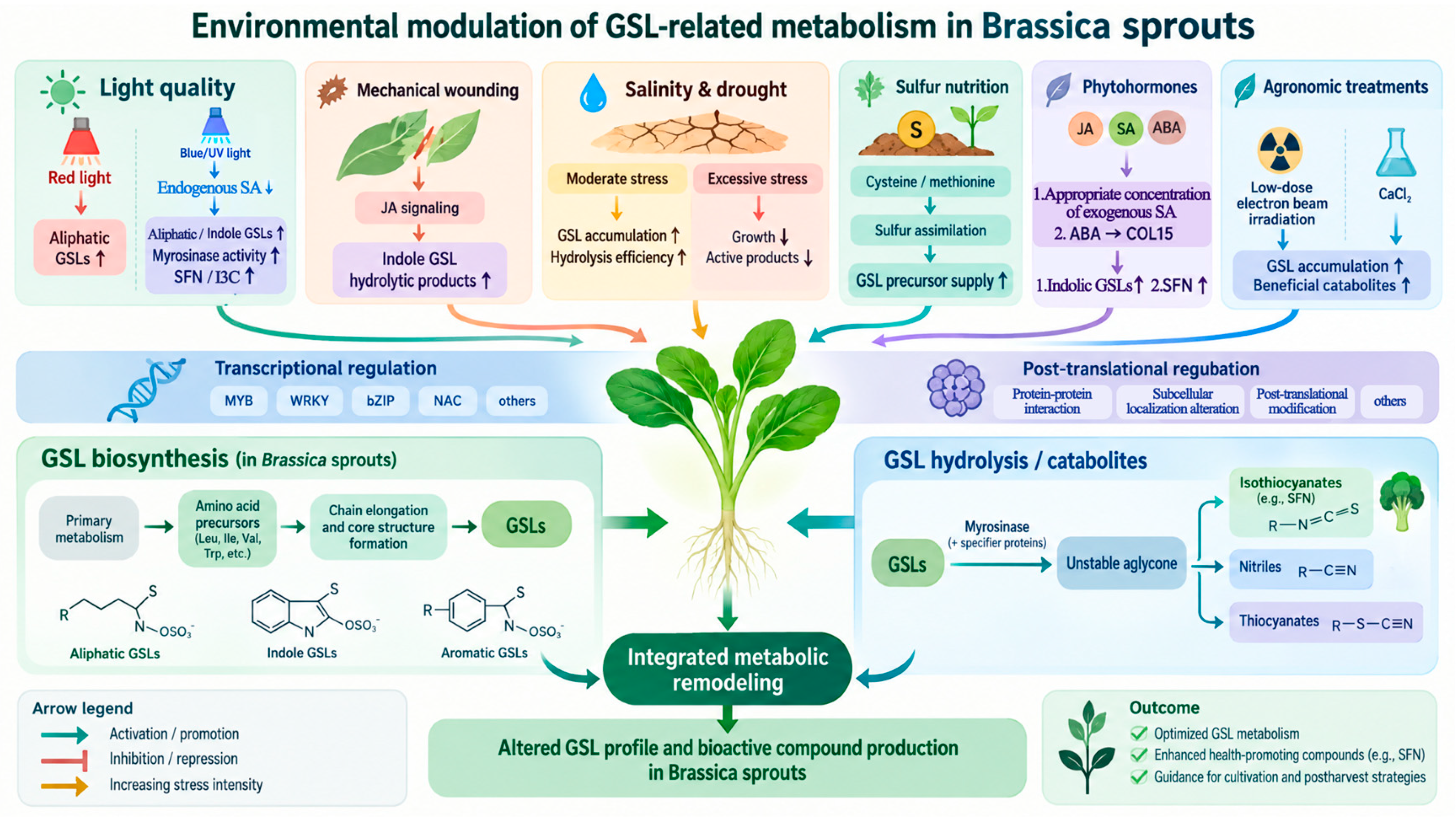
GSLs require substantial inputs of primary metabolites, including carbohydrates and amino acids, for their biosynthesis. Greater resource allocation to defense pathways competes with the investment of materials and energy for cell proliferation and vegetative growth, such that high GSL accumulation is often coupled with suppressed sprout growth and decreased biomass and yield. We highlight unresolved research questions and translational prospects for improving nutritional quality of broccoli sprout germplasm via genetics and agronomic management, providing a comprehensive theoretical reference for subsequent basic research and industrial application of broccoli sprout functional quality improvement.”
https://www.mdpi.com/2223-7747/15/23/3690 “Glucosinolate Metabolism in Brassica Species: Biosynthesis, Hydrolysis, and Layered Transcriptional–Posttranslational Regulation”
There have been many hypotheses this century about broccoli sprouts and not as many well-done scientific investigations. For example, I haven’t curated any I3C studies during 2026. Not sure about what else other than money will light the fire under sponsors for these efforts.
A second review attempted to discuss sulforaphane studies relevant to human health:
“This review provides an integrated overview of the physicochemical, pharmacokinetic, biological, and disease-related properties of SFN, with particular attention given to its molecular mechanisms, safety, formulation-dependent bioavailability, and translational potential. SFN modulates multiple interconnected pathways, including Nrf2-dependent antioxidant responses, NF-κB and MAPK signaling, mitochondrial function, autophagy, proteostasis, epigenetic regulation, immune responses, metabolism, and regulated cell death mechanisms.
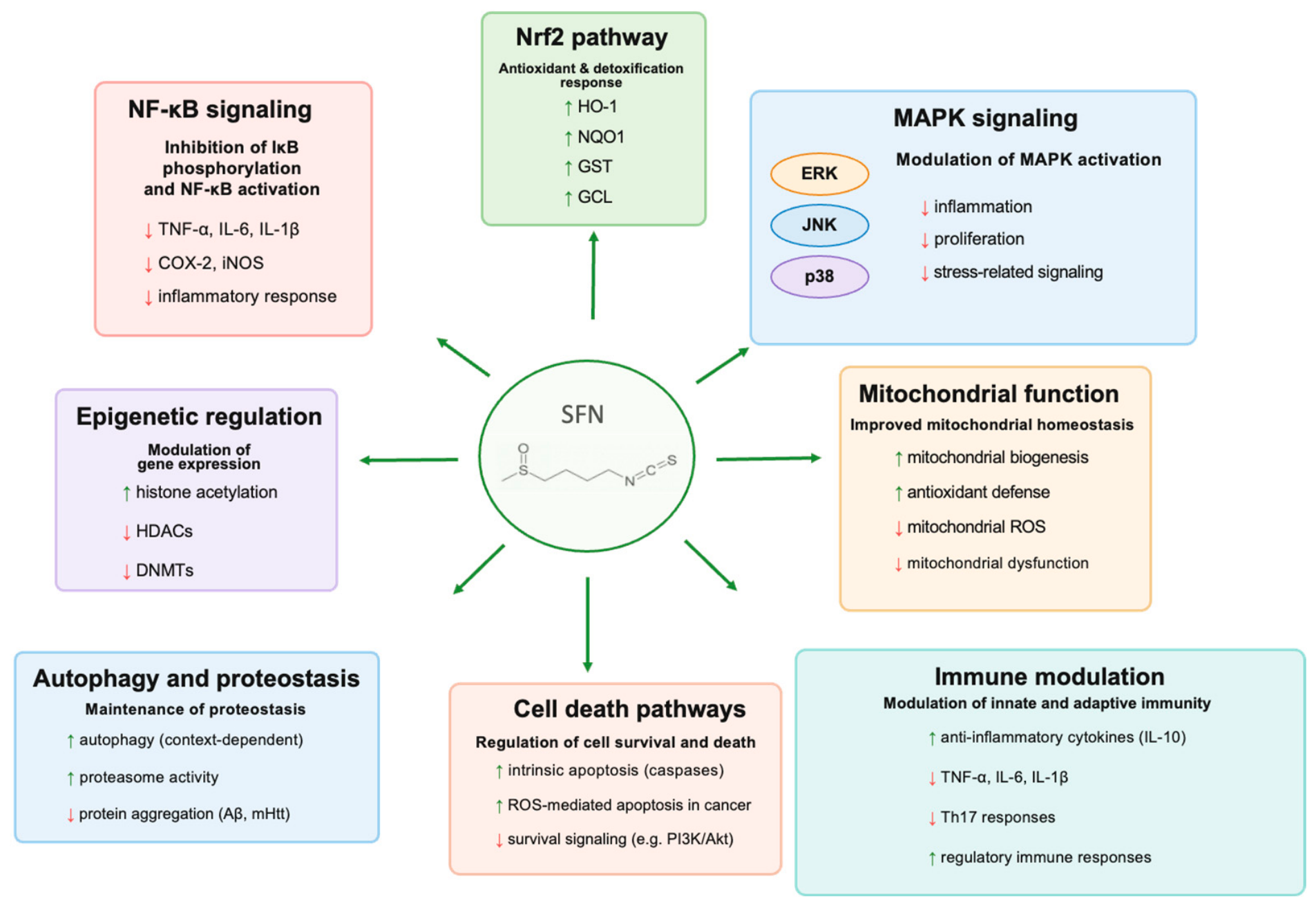
Overall, SFN remains a promising dietary-derived bioactive compound, but its potential as a preventive or therapeutic agent will ultimately depend on a more precise definition of efficacy, exposure, safety, and context-dependent biological responses.”
https://www.mdpi.com/2072-6643/18/23/3939 “Sulforaphane and Human Health: From Biological and Pharmacological Properties to Therapeutic Potential in Disease Prevention and Treatment”
These reviewers made a point to issue warnings about high doses of sulforaphane, but didn’t discuss the biological context of hormesis, which was dumb and not informative for readers. I usually just ignore studies using sulforaphane doses that are too high to be relevant to humans.
I downgraded this review’s rating to Required further work because these reviewers needed to trim down the items they covered to those that they could do well.

