A 2026 rodent experiment investigated effects of eating sprouted quinoa:
“A growing body of evidence has highlighted the effectiveness of whole-grain diets in ameliorating obesity and obesity-associated cognitive decline. Our study not only demonstrates beneficial effects of germinated quinoa flour (GQF) on high fat diet (HFD)-induced cognitive impairment, but also elucidates the underlying mechanisms via a specific gut microbiota–metabolite–brain axis.
Using multi-omics combined analysis, we identified key bioactive mediators, core gut microbiota, bacterial enzymes, and brain response genes involved in improvement of cognitive dysfunction by GQF. We demonstrate for the first time that GQF is more effective than quinoa flour (QF) in preventing obesity-induced cognitive impairment.
Research approaches including fecal microbiota transplantation (FMT), functional validation of core bacteria, supplementation of bioactive mediators, and specific blockade of target molecules were utilized to elucidate the causal mechanisms by which GQF alleviates learning and memory dysfunction through the gut microbiota–ferulic acid (FA)–brain axis in obese mice. We demonstrated that GQF-enriched R. hominis and R. intestinalis promote the in vivo release of bound FA from GQF via feruloyl esterase (FAE) activity, increase FA tissue distribution, and thereby target the FA–mitophagy–synapse signaling axis to ameliorate cognitive impairment.
Liberated FA promotes neuronal growth and synaptic plasticity by activating PINK1/Parkin-dependent hippocampal mitophagy. Consistent increases in synaptic proteins, including BDNF, PSD-95, and SYP, together with enhanced dendritic spine density and improved synaptic ultrastructure, further support beneficial effects of GQF on synaptic function.
We further demonstrate that FA, as a key polyphenol enriched in GQF, is liberated by intestinal Roseburia and subsequently participates in the regulation of hippocampal mitophagy and mitochondrial function, thereby maintaining synaptic integrity and normal cognitive function.
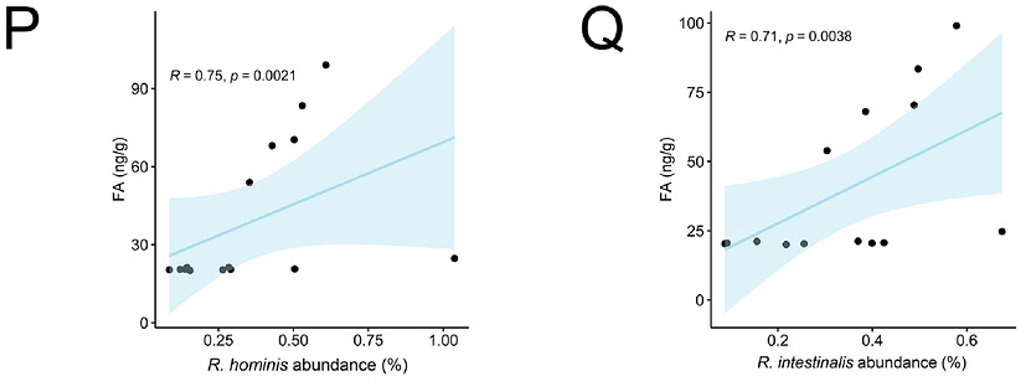
Relative abundances of R. hominis and R. intestinalis showed a positive correlation with brain FA concentrations in GQF-intervened obese mice (Figure 5P,Q). Together, these results indicate that dietary GQF intake promotes microbial FA release by enriching Roseburia, thereby increasing FA availability and distribution in the brain and other peripheral tissues.
These findings highlight the critical role of the gut microbiota‑substrate co‑dependent effects in dietary nutritional interventions, and provide mechanistic insights into novel therapeutic strategies for metabolic-associated neurodegenerative diseases.”
https://advanced.onlinelibrary.wiley.com/doi/10.1002/advs.76686 “Gut Microbial Release of Ferulic Acid From Germinated Quinoa Alleviates Obesity-Associated Cognitive Impairment by Activating Hippocampal Mitophagy Associated with PINK1/Parkin Pathway”
I’ll assert that this July 2026 study’s results may be extrapolated to other sprouted grains, most of which contain bound ferulic acid. However, this study’s findings weren’t included in two mid-2026 reviews on the subject:
- https://www.mdpi.com/2304-8158/15/11/1957 “Sprouted Oats as Functional Ingredients: Biochemical Transformations, Nutritional Enhancement, and Health Implications”
- https://ift.onlinelibrary.wiley.com/doi/10.1111/1541-4337.70574 “Germination as a Strategy to Enhance the Bioactivity of Whole Grains: Phytochemical Remodeling and Health Implications” (not freely available)