A 2026 rodent study investigated effects of 625-635 nm red light:
“We found that periodic exposure to red light significantly increased H3K9ac levels in the tissues and organs of aged mice. Following red light exposure, SIRT4 protein levels in keratinocytes were notably reduced, while glycolysis, fatty acid metabolism, and the tricarboxylic acid (TCA) cycle were significantly activated.
Further mechanistic investigations suggested that the reduction in mitochondrial SIRT4 levels enhances the acetylation of mitochondrial metabolic proteins, particularly malonyl-CoA decarboxylase (MCD), a potent inhibitor of the key rate-limiting enzyme carnitine palmitoyltransferase 1A (CPT1A) in fatty acid oxidation. This process promotes mitochondrial fatty acid oxidation and TCA cycle activity.
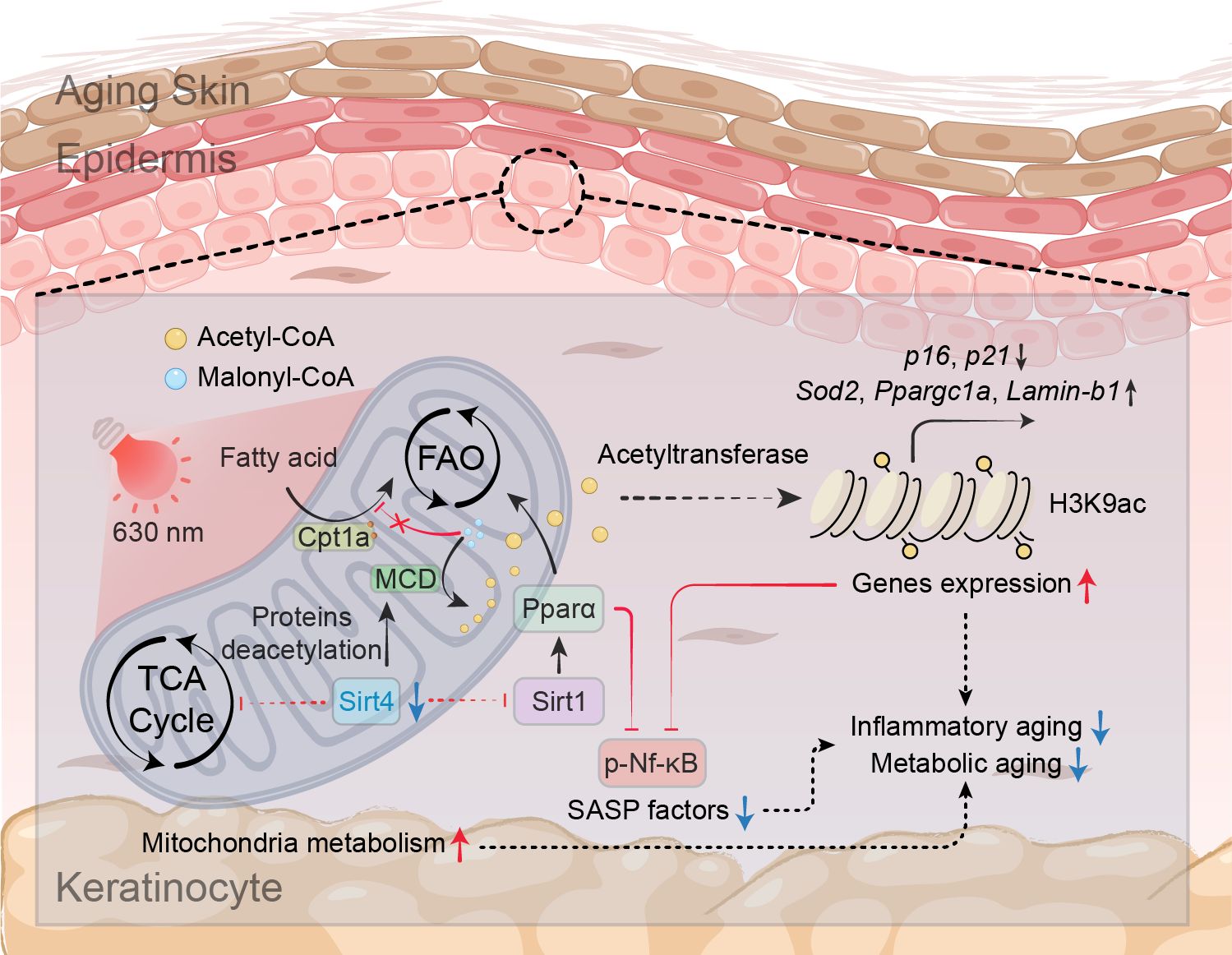
Additionally, the decrease in SIRT4 activates SIRT1 through feedback mechanisms, thereby alleviating its inhibition on PPAR-α in senescent keratinocytes and comprehensively activating the expression of genes related to lipid metabolism. This lipid metabolism activation ultimately facilitates the accumulation of acetyl-CoA within keratinocytes, increases H3K9ac levels, and reshapes the expression patterns of senescence-related genes.
Consequently, it mitigates the dysregulation of genomic expression and excessive inflammatory activation associated with cellular senescence. Ultimately, cellular aging is effectively mitigated through the synergistic regulation of metabolism, inflammation, and genomic expression.
Our study reveals a novel anti-aging intervention strategy targeting SIRT4 downregulation to increase H3K9ac levels. We propose that controlling the abnormal age-related activation of SIRT4 during cellular senescence and developing SIRT4 inhibitors may enable tissue-specific senescence reversal and therapeutic interventions for metabolic diseases.”
https://elifesciences.org/articles/111498#content “Photo-downregulation of SIRT4 mitigates aging in mice by enhancing H3K9ac via fatty acid metabolism”
This paper is a good example of productive peer review. Changes made by these researchers were summarized as:
“We have clarified the wavelength specificity of the red-light response, reanalyzed and more cautiously interpreted the omics data, improved the presentation and quantification of semi-quantitative experiments, revised statistical reporting, corrected gene/pathway annotations, toned down mechanistic claims where direct evidence was insufficient, and expanded the Discussion to integrate recent evidence on red-light-induced fatty acid oxidation and AMPK/ACC signaling.”
Grok’s comparisons of this paper to similar studies included:
The paper adds a novel, keratinocyte-focused SIRT4–fatty-acid–H3K9ac axis that helps explain how red light can sustain metabolic activation and reshape age-related gene expression. It is complementary to the well-documented TGFβ/collagen and classic mitochondrial ATP pathways rather than a replacement for them. Direct head-to-head comparisons of effect size, long-term durability, optimal wavelength/fluence combinations (red vs. NIR or dual), and human translation are still limited—standard caveats for mechanistic mouse PBM work. Overall, it strengthens the case that red light’s benefits involve coordinated metabolic and epigenetic remodeling, not just surface collagen stimulation.

