A 2026 rodent study investigated microglia in four brain areas:
“We identified and benchmarked several reproducible microglial states and a core set of genes that drive microglial activation in the mouse brain. We investigated microglial heterogeneity and examined the impact of aging and parabiosis-mediated exposure to young and old blood on microglial subpopulations across four brain regions: the cerebellum, cortex, hippocampus, and striatum.
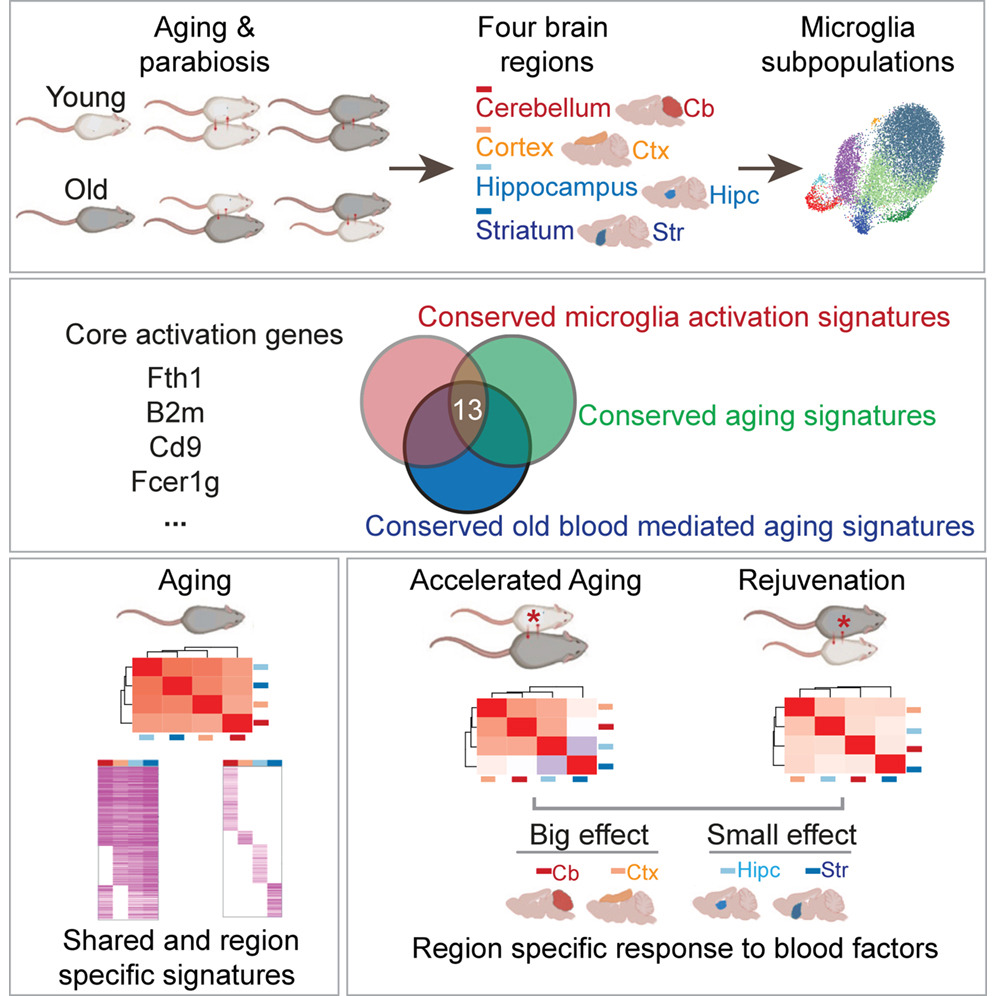
An interesting observation of our study was the selective regional sensitivity of microglia to aging and parabiosis. Young blood seems to have health benefits in slowing down age-related deleterious effects and rejuvenating the brain.
However, blood is complex, and the transfer of young blood may lead to unpredictable outcomes. In our analysis, we focused on genes that were consistent with the presumed rejuvenation effect.”
https://www.cell.com/cell-reports/fulltext/S2211-1247(26)00997-6 “Core activation program and selective regional responsiveness of microglia during aging and parabiosis”
I’ve read but haven’t curated human studies on effects of young blood on oldsters. The primary reason is widespread denial that this decade’s genetic injections had any lasting effects. Although evidence continues to surface every day years later, no evidence has affected beliefs and propaganda.
Belief in this paradigm extends to not separating blood from those who acquiesced to injections from those who refused. Since 80% of people were injected, I view this as hopelessly compromising young human blood research.
So I rely on rodent studies which have better evidence that may or may not translate to humans. This study finding more microglial response in the cerebellum brainstem area is more translatable than in the cortical cerebral area, which evolved much differently in humans. But the primary dataset came from a heterochronic parabiosis study which won’t be replicated in humans.

