Activate Nrf2 with far-infrared light

A 2025 rodent study investigated effects of far-infrared light on Alzheimer’s disease models. I’ll focus on its Nrf2 findings:

“Far-infrared radiation (FIR) is commonly utilized as a complementary treatment of a range of disease, for example, insomnia and rheumatoid arthritis. In this research, we explored how FIR light impacts cognitive functions of TgCRND8 AD mice and elucidated its underlying molecular mechanism.

Infrared radiation is a form of electromagnetic energy that has wavelengths between 750 nm and 1000 μm, which are longer than visible light. International Commission on Illumination categorizes infrared light as three sub-divisions according to the wavelength: (1) near-infrared radiation (0.7–1.4 μm), (2) middle infrared radiation (1.4–3.0 μm), and (3) far-infrared radiation (3.0–1000 μm).

Nrf-2/ HO-1 signaling, a key endogenous antioxidant system, helps mitigate oxidative stress and enhances expression of various endogenous genes. Activation of HO-1 during inflammatory conditions may serve as an adaptive response to reduce cytotoxicity through various mechanisms.

In this study, we applied EFFIT LITE® as the FIR spectrum transmitter which stably radiates an FIR spectrum with a wavelength of 4–20 μm, and the device was put within 1 cm directly above the head of the 3-month-old TgCRND8 mice for 30 min exposure once every day. FIR light notably enhanced cognitive function and spatial memory of TgCRND8 mice after 28-days consecutive treatment.

Underlying molecular mechanisms involve suppression of Aβ deposition, hyperphosphorylation of tau, and neuroinflammation through modulating Jak-2/Stat3 and Nrf-2/HO-1 pathways. Our current experimental findings amply indicate that FIR light is a potential non-pharmacological therapy for AD.”

https://link.springer.com/article/10.1007/s12017-025-08860-2“Far-Infrared Radiation Ameliorates the Cognitive Dysfunction in an Alzheimer’s Disease Transgenic Mouse via Modulating Jak-2/Stat3 and Nrf-2/HO-1 Pathways”


This study measured Nrf2 and its quickly-induced downstream enzyme HO-1 effects of daily far-infrared light exposure for 30 minutes. We’d have to see measurements of Nrf2’s more-slowly induced and longer-lasting downstream xenobiotic detoxifying enzyme NQO1 to compare far-infrared light Nrf2 activation effects with those of natural plant compounds.

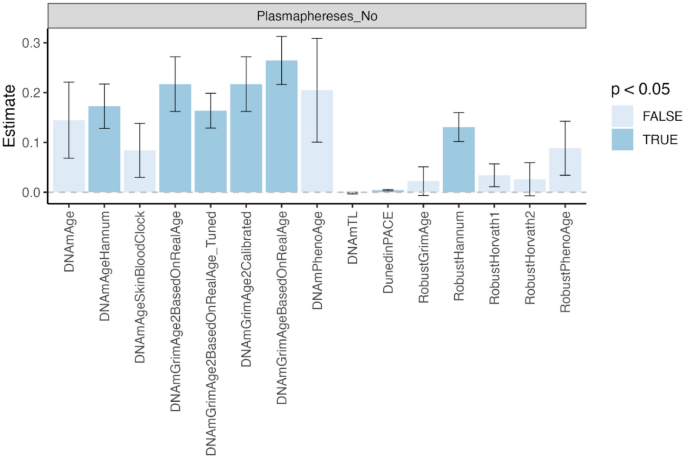
Plasmapheresis doesn’t reduce biological age

A 2025 clinical trial investigated effects of plasmapheresis as measured with epigenetic clocks:

“This study aimed to assess whether plasmapheresis without volume replacement with young plasma or albumin affects epigenetic age and other biomarkers in healthy adults. No significant epigenetic rejuvenation was observed based on epigenetic clock measurements. Instead, plasmapheresis was associated with increases in DNAmGrimAge, the Hannum clock, and the Dunedin Pace of Aging.

  1. The relatively small sample size of 34 finishing participants comprising of first-time plasma donors limits the statistical power and generalizability of our findings.
  2. Our cohort was restricted to individuals aged 40 to 60 years in accordance with Czech regulatory guidelines, which, although intentional to focus on an older population where rejuvenating effects might be most apparent, constrains evaluation of age-related differences across a broader demographic.
  3. The 18-week duration of the study, while sufficient to detect rapid alterations in key biomarkers under an intensive plasmapheresis protocol, may not fully capture the long-term implications of these changes.
  4. Due to our trial taking place during spring and summer months, we cannot fully separate the effects of increased sunlight exposure, outdoor physical activity, and dietary changes from the observed rises in Vitamin D and concurrent shifts in DNAm-based aging metrics. We did not collect objective measures of activity or diet, so these factors remain potential confounders.

The protocol of donating plasma every two weeks, although deemed safe by many countries around the world, is not yet well researched and cannot therefore be marked as benefiting to the donor right now. Further refinement to balance clearance of pro-aging factors with maintenance of systemic homeostasis is needed.”

https://www.nature.com/articles/s41598-025-05396-0 “Human clinical trial of plasmapheresis effects on biomarkers of aging (efficacy and safety trial)”


Broccoli sprouts and your dog

This 2025 opinion paper compared nine broccoli sprouts supplements for dogs:

“Broccoli sprouts are key elements of 9 dietary supplements for dogs. Feeding directions of 6 products correspond with consumption of dry food containing 0.5 to 29 g dried broccoli sprouts/kg. Seven supplements claim to supply sulforaphane and to possess anti-inflammatory and/or anti-cancer effects.

Directions for use of a sulforaphane-producing supplement read as follows: ‘One chewable tablet daily for dogs of all sizes, six months and older. Tablets should be given on an empty stomach at least two hours after a meal or one hour before a meal.’

There was no information found on feeding studies in dogs, addressing the impact of broccoli sprouts on health. In mice, dietary, whole-broccoli sprouts counteracted development of mammary and prostate cancer. Weights of dried broccoli sprouts in these mouse studies were 150 and 260 g/kg dry food, much higher levels than equivalents of feeding instructions for dog supplements. Species contrast and high dose blunt extrapolation of results to dogs.

The Veterinary Clinical Trials Registry of the American Veterinary Medical Association has announced that recruiting has finished for a study entitled “Sulforaphane supplementation in canine lymphoma and evaluation of epigenetic proteomic profiles”. https://veterinaryclinicaltrials.org/study/VCT17004227

https://www.researchgate.net/publication/393656647_Beynen_AC_2025_Broccoli_sprouts_in_dog_nutrition “Beynen AC, 2025. Broccoli sprouts in dog nutrition” (registration required)


The author’s use of ResearchGate is mainly to publish opinion pieces on pet animal nutrition. This doesn’t require high fees of regular journals, but also bypasses peer review.

I appreciate comparisons to rodent studies, which often intentionally overdose, and so have no relevance to humans and other mammals. His 2025 pet nutrition papers include broccoli, glyphosphate, zinc, copper, and PFAS subjects.

Betaine as an exercise mimetic

A 2025 human study investigated effects of long-term exercise:

“Exercise has well-established health benefits, yet its molecular underpinnings remain incompletely understood. We conducted an integrated multi-omics analysis to compare effects of acute vs. long-term exercise in healthy males.

Acute exercise induced transient responses, whereas repeated exercise triggered adaptive changes, notably reducing cellular senescence and inflammation and enhancing betaine metabolism. Exercise-driven betaine enrichment, partly mediated by renal biosynthesis, exerts geroprotective effects and rescues age-related health decline in mice.

Betaine binds to and inhibits TANK-binding kinase 1 (TBK1), retarding the kinetics of aging.

Betaine effectively alleviated senescence phenotypes by reduced senescence-associated β-galactosidase (SA-β-Gal)-positive cells, decreased p21 expression, lowered DNA damage indicator γ-H2A.X, and elevated heterochromatin mark H3K9me3. Betaine treatment also enhanced cellular antioxidant capacity, as evidenced by increased NRF2 phosphorylation and reduced ROS accumulation.

These findings systematically elucidate the molecular benefits of exercise, and position betaine as an exercise mimetic for healthy aging.”

https://doi.org/10.1016/j.cell.2025.06.001 “Systematic profiling reveals betaine as an exercise mimetic for geroprotection” (not freely available) Thanks to Dr. Weimin Ci for providing a copy.