A 2026 re-evaluation of a broccoli sprout clinical trial proposed a model:
“Broccoli sprouts produce sulforaphane (SFN), a dietary isothiocyanate with anti-cancer and anti-inflammatory properties. Human intervention trials observe large variation in metabolite generation and bioactivity with broccoli sprout consumption across individuals.
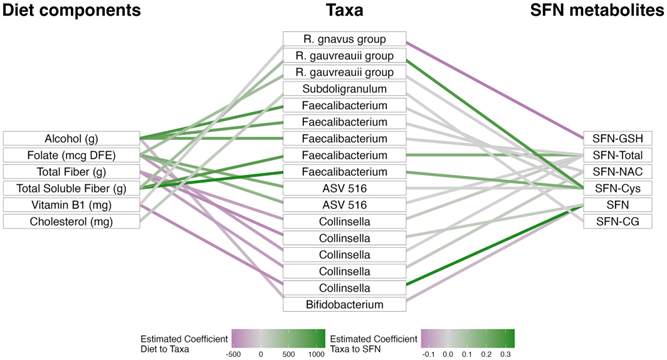
We hypothesize that interactions between pre-intervention diet and personalized gut microbiome composition contribute to this variation. This work does not delve into the mechanism behind these patterns, but points to future candidate taxa that should next be tested in vitro.”
https://onlinelibrary.wiley.com/doi/10.1002/fsn3.72211 “The Gut Microbiome and Diet Interact to Dictate Personalized Response to Broccoli Sprout Consumption”
I’m always fascinated by researcher efforts that ignore simplicity in favor of building complex models. The result is often what this paper did, finding nothing useful to achieve its stated goal of “Personalized Response to Broccoli Sprout Consumption.”
1. This group previously published informative papers such as A pair of broccoli sprout studies and Broccoli sprout compounds and gut microbiota with statements such as: “Bioavailability of ITCs from GLS has been shown to be greatly impacted by processing before ingestion. When ITCs are given preformed, they possess the greatest level of bioavailability and are readily absorbed by humans.” and
“There are two different intervals in time when GLS metabolism occurs in the large intestine: A. Metabolism of GLS directly following consumption when GLS are not absorbed in the small intestine; and B. When GLS are absorbed in the small intestine and go through enterohepatic circulation, returning as GLS in the gut where factors influencing microbial metabolism (such as food matrix, pH, and other compounds present) may be different from the first interval.”
2. This study didn’t address unresolved measurement problems with gut microbiota that they knew or should have known.
- Per Measuring gut microbiota, Part 2: “The fecal microbiome does not represent the overall composition of the gut microbiome. Since fecal microbiome is a result of the gut microbiome rather than the representative microbiome of the GI tract of the host, there is a limitation in identifying causative intestinal microbes related to these phenotypes and diseases by studying fecal microbiome.”
- Their 16S technology measured microbiome relative abundance, which is problematic per Resistant starch therapy: “Microbiome sequencing data are compositional, meaning that gene amplicon read counts do not necessarily reflect bacterial absolute abundances. Instead, read counts are typically normalized to sum to 100%. For this reason, relative abundances of smaller keystone communities (e.g. primary degraders) may increase, but appear to decrease simply because cross-feeders increase in relative abundance to a greater extent.”
I’ve continued to eat broccoli sprouts every day for over six years now. I chew them thoroughly for at least a minute before swallowing to involve small intestine processing that’s bypassed when taking pills. I host all of the large intestine microbiota mentioned in this study, and I’m sure that they don’t participate in broccoli sprouts’ main effects for me.
Why would these researchers bother wasting resources with non-causal, “is associated with,” inconsequential busy work? Why not investigate basic problems such as testing why people have large individual differences in responding to even preformed sulforaphane?

