A 2026 human study investigated the subject:
“This study investigated effects of short-term sulforaphane (SFN) precursor supplementation on maximal exercise-induced muscle damage, oxidative stress and endurance capacity in healthy adults.
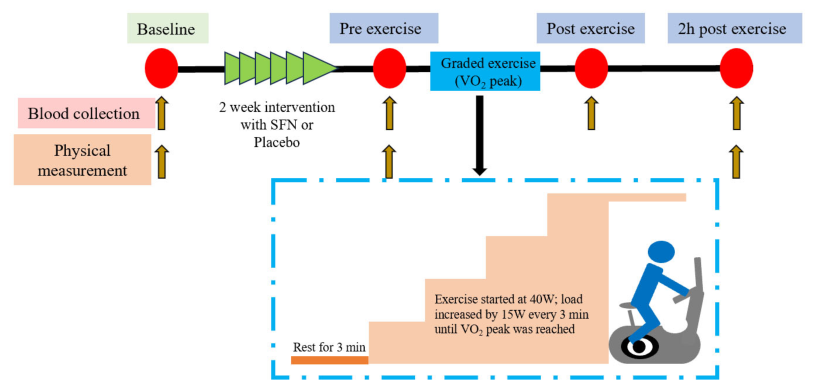
In a double-blind placebo-controlled crossover design, 14 healthy participants (7 males, 7 females; age, 25.07 ± 1.04 years) received SFN glucosinolate capsules (200 µmol/day) or placebo for 2 weeks during the first trial. Test capsules contained TrueBroc® broccoli seed extract, a broccoli seed extract standardized to 13% glucoraphanin, together with mustard seed powder as a natural source of myrosinase to facilitate conversion of glucoraphanin to SFN.
Following a three-week washout period, participants crossed over to the alternate treatment. Participants were recreationally active (were involved in regular activity and considered fit) and free from chronic illness. The maximal exercise test was performed to determine peak oxygen uptake (VO2 peak).
Creatine kinase (CK) and myoglobin (Mb) leak from damaged muscle into circulation following intense exercise and have been used as indirect markers of muscle damage. Derivatives of reactive oxygen metabolites (d-ROMs) and biological antioxidant potential (BAP) tests can be used with small amounts of serum samples. An Oxy-adsorbent test evaluates non-enzymatic antioxidants and their capacity to neutralize ROS.
- Participants were not restricted from consuming cruciferous vegetables during the intervention. As these foods contain SFN and related isothiocyanates, their background intake may have introduced inter-individual variability in redox responses.
- Although the crossover design reduced between-subject variability, the modest sample size may have limited statistical power to detect smaller treatment effects and increased the possibility of Type II errors [false negatives].
- Molecular markers of Nrf2 signaling were not evaluated in the present study.
Short-term SFN supplementation was associated with selective modulation of reactive oxygen metabolites and muscle damage markers, whereas no significant improvement in endurance capacity was observed. SFN intake may be a beneficial, non-invasive strategy to modulate acute biochemical responses to exercise via the antioxidant defense system in physically active individuals.”
https://www.mdpi.com/2072-6643/18/16/2617 “Proof of Principle: Short-Term Sulforaphane Precursor Intake Alters Selected Circulating Oxidative Stress and Muscle Damage Biomarkers Following Maximal Exercise: A Double-Blind Crossover Trial”
Without these researchers measuring a supplement’s conversion into sulforaphane, it was a stretch for them to state that sulforaphane may have had this or that effect. I’ve curated several studies, most recently Add vitamin C to broccoli sprouts? with the same supplement manufacturer, that showed people have large individual differences in metabolizing glucoraphanin into sulforaphane. Their statistical analyses didn’t show what was actually going on with each young person subject.