A 2024 human study investigated broccoli sprouts’ effects as an adjunct to ulcerative colitis treatment:
“A dietary approach with sulforaphane (SFN)-rich broccoli sprouts (BS) mitigates colonic inflammation in human ulcerative colitis (UC) patients treated with mesalazine. Subjects were instructed to take 20 g of raw BS or alfalfa sprouts (AS) daily for 8 weeks, with BS containing 4.4 mg/g glucoraphanin, a precursor of sulforaphane, and AS containing no glucoraphanin.
Our findings indicate that the positive effects of SFN-rich BS may be driven by activation of the Nrf2-dependent antioxidant system, which helps combat chronic oxidative stress.
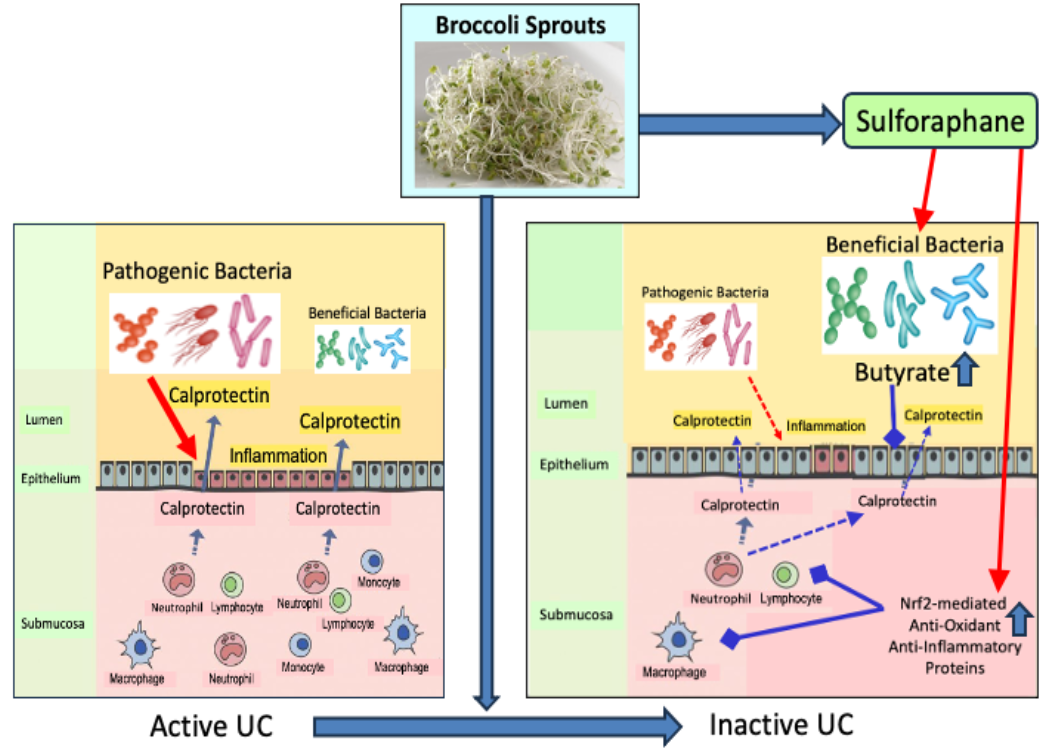
Instead of using glucoraphanin tablets, we used raw BS in our study. Most of the glucoraphanin in BS is converted to biologically active SFN by myrosinase activity in raw BS during chewing BS in the oral cavity. The rest of the glucoraphanin is converted into biological active SFN by myrosinase activity in intestinal microbiota.
Oral intake of BS induces much higher concentrations of systemic SFN compared to taking the same amount of oral glucoraphanin tablets. Another clinical trial using pure SFN, such as via glucoraphanin tablets, instead of using BS, must be conducted.”
https://www.ffhdj.com/index.php/ffhd/article/view/1440/4044 “Dietary intake of sulforaphane-rich broccoli sprouts decreases fecal calprotectin levels in patients with ulcerative colitis”
This study’s daily 20 grams of broccoli sprouts and 88 mg (4.4 mg x 20) glucoraphanin is about what I take, with red cabbage sprouts (which also contain glucoraphanin) and mustard sprouts comprising the other two thirds of total 60-65 grams. Sulforaphane amounts weren’t calculated, as they depend on whether sprouts were eaten with other foods (I’ve eaten them alone since Week 19), how thoroughly sprouts were chewed (I chew each mouthful for at least a minute before swallowing), the presence of certain gut microbiota, sprout age, and other factors.



 Surface Your Real Self