Eat broccoli sprouts to help repair nerve damage

A 2024 rodent study investigated sulphoraphane’s capability to enhance injured peripheral nerve regeneration:

“We provide in vivo evidence for the regenerative potency of sulforaphane (SFN) for peripheral nerve injury. This effect appears to be predominantly based on the ability of SFN to activate the Nrf2 transcription factor and its versatile downstream effector, HO-1, in cells of the peripheral nerve, in particular Schwann cells.

With regard to translational implications, we chose a dosage of SFN in our mouse model that corresponds to a human equivalent dose of approximately 50–100 mg per day. This dosage of SFN is well achievable with commercially available dietary supplements.

nrf2 and ho-1 expression

Regenerative benefits of Nrf2/HO-1 activation in the peripheral nerve were previously established in a study using dimethyl fumarate (DMF). Due to the immunosuppressive effects of DMF and its potential side effects such as gastrointestinal effects and flushes, this drug can only be used to a limited extent to promote nerve regeneration.

Given the ubiquitous expression and versatile actions of HO-1, our findings suggest that SFN may also be beneficial for neuropathies in general. As a downstream effector of IL-10, the protective and regenerative potency of HO-1 may also apply to inflammatory neuropathies in particular.

SFN sustains the Nrf2/HO-1 pathway, promoting nerve regeneration and facilitating Schwann cell functions, which may include survival, proliferation, and autophagy for myelin debris clearance. These findings suggest that SFN could serve as a valuable therapeutic approach for addressing peripheral nerve injuries, neuropathies, and inflammatory neuropathies, potentially offering renewed prospects for patients contending with these debilitating conditions.”

https://www.mdpi.com/2076-3921/13/9/1038 “Enhancement of Heme-Oxygenase 1 in the Injured Peripheral Nerve Following Sulforaphane Administration Fosters Regeneration via Proliferation and Maintenance of Repair Schwann Cells”


A human-equivalent to this study’s daily 10 mg sulforaphane dose is (10 mg x .081) x 70 kg = 57 mg, albeit the mouse dose was injected intraperitoneally. These researchers apparently hedged their human equivalent of “approximately 50–100 mg per day” to account for administration method differences in bioavailability between oral and intraperitoneal.

PXL_20240628_093554057

Fourteen cruciferous microgreens

A 2024 study investigated beneficial properties of cruciferous microgreens grown for 12 days:

“Fourteen microgreens were ranked morphologically, phytochemically, and sensorially: (A) watercress, (B) broccoli, (C) pak choi, (D) red cabbage, (E) tatsoi, (F) red mizuna, (G) green mizuna, (H) white mustard, (I) red mustard, (J) purple-top white globe turnip, (K) red globe radish, (L) cauliflower, (M) white cabbage, (N) rocket.

12 cruciferous microgreens

  • Watercress and pak choi microgreens had the highest levels of phenolic compounds.
  • Red mustard and red cabbage microgreens revealed the major content of glucosinolates.
  • Cauliflower microgreens had the highest ascorbic acid, TPC, and consumer acceptance.
  • Radish and cauliflower microgreens topped the quality indices ranking.”

https://www.sciencedirect.com/science/article/abs/pii/S0963996924008822 “Optimal Brassicaceae family microgreens from a phytochemical and sensory perspective” (not freely available) Thanks to Dr. Florencia Alloggia for providing a copy.


This study determined “optimal” in a very broad sense, which didn’t lend itself to specific recommendations. For example:

  • A twelve-day growing duration and individual cultivars were selected with no references to how they were chosen as optimal;
  • Measurements weren’t taken along the way to discover informative compositional changes from a phytochemical and sensory perspective; and
  • Measurements such as ascorbic acid and phenolics after twelve days also didn’t reflect several of these compounds’ reactivities and purposes in earlier plant growth phases.

PXL_20240729_101428384

A visible act of God

I’ve seen four acts of God in my life. This post is about the third.

The first two happened to me. It’s been one month since we all saw the fourth. The recipient characterized it last night when prompted by Elon Musk:

“It’s very much an act of God. It’s a miracle that it happened, and I’m honored by it, I’m honored by it.”

Forty years ago, when on my third submarine, I was in the control room, standing watch as the contact coordinator. I didn’t have much to do because we were on the surface at nighttime, rolling and pitching in heavy seas, and no other ships were crazy enough to be near us.

The officer on deck KD was alone topside in the sail. The lookout normally stationed with him had been sent below decks because of the seas.

The ship’s captain KS was on the #1 periscope scanning the horizon. The chief-of-the-boat was in the control room monitoring water coming through the latched-open hatch.

After one pitch, a hundred gallons gushed into the control room, followed by the unlatched hatch slamming shut. I remember thinking KD had a minute to live if he wasn’t already drowned.

The COB and the captain immediately started to crank open the hatch. Although there were hundreds of pounds of sea water on top pressing it shut, it couldn’t wait to be drained.

After what seemed like a long time, the COB and captain drenched themselves opening the hatch. They ran up the ladder, unhooked KD’s safety harness, and lowered him thirty feet into the control room.

The ship’s hospital corpsman checked KD’s vital signs as satisfactory, and he and the COB took KD below decks. After closing the hatch, the captain reversed course, and informed the chain of command of his decision.


I was raised to be religious. My first impulse is to not necessarily interpret what I see as coincidental.

Back to July 13: I haven’t understood viewpoints contrary to a visible act of God during this past month. Can people discard what we’ve all seen? Have we been propagandized sufficiently to believe what we’re told and not our lying eyes?


It may seem from studies I’ve curated on this blog that I think there’s something people can individually do about extending our lifespans. But I don’t believe that. And why is almost everybody doing things in their lives that encourage reducing their healthspans that may shorten their putative lifespans?

I don’t have an opinion as to whether an individual’s life has a determinable purpose revealed by an act of God. I didn’t get purposeful revelations the first two times acts of God happened to me like what happened to my namesake on the road to Damascus. It just wasn’t my time to die. I lost track of KD and KS before timely soliciting their opinions.

PXL_20240729_102521615

A heterochromatin loss theory of aging? Or just an unhealthy system?

A 2024 rodent study investigated epigenetic effects of loosening compacted chromatin:

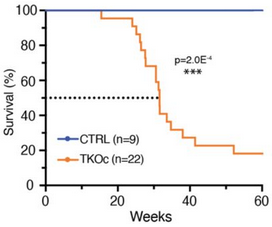
“We show using a novel mouse strain, (TKOc), carrying a triple knockout of three methyltransferases responsible for H3K9me3 deposition, that the inducible loss of H3K9me3 in adulthood results in premature aging. TKOc mice exhibit:

  • Reduced lifespan;
  • Lower body weight;
  • Increased frailty index;
  • Multi-organ degeneration;
  • Transcriptional changes with significant upregulation of transposable elements; and
  • Accelerated epigenetic age.

TKOc survival

Through simultaneous depletion of Setdb1 and Suv39h1/2 methyltransferases, crucial to formation of constitutive heterochromatin, our model analyzes consequential transcription changes including a potential source of genomic instability by activation of endogenous mobile genetic elements, specifically transposable elements.

These findings reveal the importance of epigenetic regulation in aging, and suggest that interventions targeting epigenetic modifications could potentially slow down or reverse age-related decline.”

https://www.biorxiv.org/content/10.1101/2024.07.24.604929v1.full “Loss of H3K9 trimethylation leads to premature aging”


Many of these findings could be restated without viewing them as age-related, i.e.: failure to maintain an adult’s methyltransferase system results in a loss of health. For example, an unhealthy methyltransferase system indicated by parameters like homocysteine levels (not mentioned) can be reversed to healthy function regardless of age. Healthy vs. unhealthy system function wasn’t the paradigm these researchers operated under, though.


PXL_20240726_101120498