I switch things around pretty often, but I haven’t said much about diet and supplement changes since this time last year. Here’s what I’ve done in terms of changes that I’ve since abandoned or reduced, followed by additions or increases that I’ve kept.
Abandoned and reduced items
1. I stopped using Avena sativa oats to grow 3-day-old oats sprouts. I again ran into the same situation where I got < 10% yield.
The first time this happened in 2023, I related to the Montana farmer that degraded seed vitality was probably caused by the way that Amazon handled their oat products. I’m the customer, though, and I won’t make it my problem if the vendor can’t meet expectations.
I switched to sprouting Avena nuda oats based on Sprouting hulless oats. I’ll note that this Illinois farmer doesn’t let Amazon handle their organic Avena nuda oats, and they add on post office shipping costs. They don’t recommend sprouting, probably because of liability, although I’ve had a 91% germination rate over three days. I might have ordered Avena sativa oats directly from the Montana farmer bypassing Amazon if they were also organic.
2. I stopped taking alpha ketoglutarate. In my view, increasing tricarboxylic acid (TCA) cycle intermediate metabolites such as alpha ketoglutarate and CoQ10 should not be the primary way to improve mitochondrial electron transport chain function.
Instead of biochemical considerations, focus on photon modulation, which precedes biochemical reactions. Which means mitochondrial studies should be controlled for light exposures, and very few of them do that, although it’s the way nature works.
This past winter I increased indoor non-LED light exposure within a circadian rhythm framework. I’ll switch back to walking the beach at sunrise from being out in mid-day sun after it gets a little bit warmer.
3. I’ve taken creatine on and off during the past year. There’s a bit of literature on its use for improving methyltransferase system components like homocysteine.
Stopping creatine fits one of the overall patterns that studies demonstrate – people who are initially deficient in the studied item get a benefit, while people who are initially sufficient don’t benefit from treatment. I’ve always tested mid-range for homocysteine, which is desirable.
4. I had some cocoa powder lying around for a year or two, and I used it this past winter to improve the taste of coffee I bought on sale. Cocoa flavanols are supposed to improve various health measures. But I haven’t been provided access to the most recent human studies, so I won’t repeat their results without reading their details.
5. I saw this at Costco, and picked up a package:
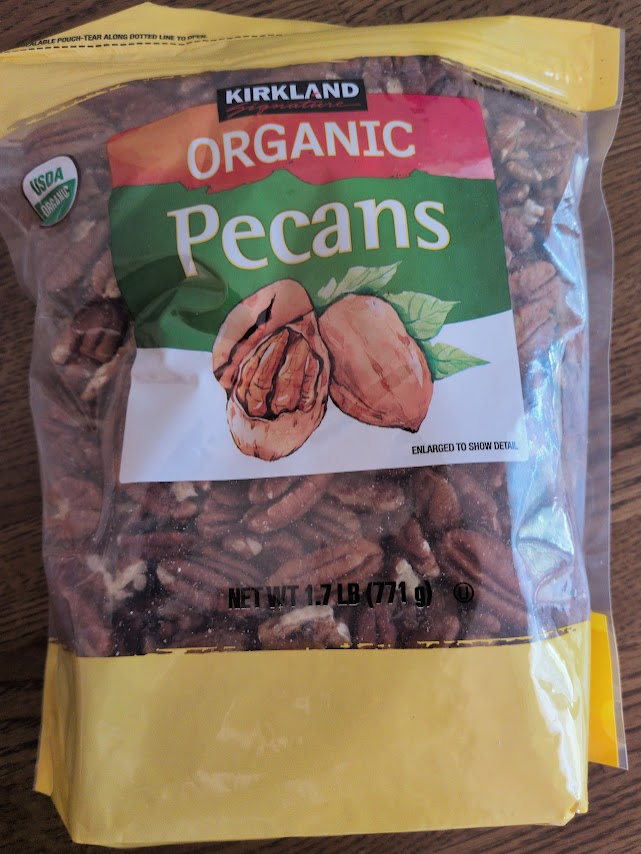
A 2025 review covered pecan research, Pecans and Human Health: Distinctive Benefits of an American Nut. Eating pecans seems to have some health benefits, and they taste alright.
For me, though, the dryness of a chewed pecan bolus creates a swallowing problem that walnuts don’t have. YMMV.
6. I stopped taking 2 g magnesium L-threonate. I’ve always tested high for magnesium without using a specific supplement.
7. I reduced D3 by 25 mcg to a daily 2400 IU. Winter is over.
New and increased items
1. I curated five 2025 ergothioneine studies in Human studies of ergothioneine after stopping mushroom intake via AGE-less chicken soup. I wasn’t thrilled that none of them investigated long-term effects of persistent plasma ergothioneine levels.
This year I decided to start taking the higher 25 mg dose of the first study once a week. That should produce some benefits at a lower ergothioneine blood level than daily doses produce. I’ll check periodically for 2026 research.
2. The only paper I’ve curated on deuterium (heavy hydrogen) is Taurine and mitochondrial health. I started using Icelandic glacier water to make coffee and tea, and for just drinking.
It isn’t advertised as deuterium-depleted water, and it isn’t manufactured as such. But I think any glacier water contains less deuterium than local water. I use local filtered water for sprouting and cooking.
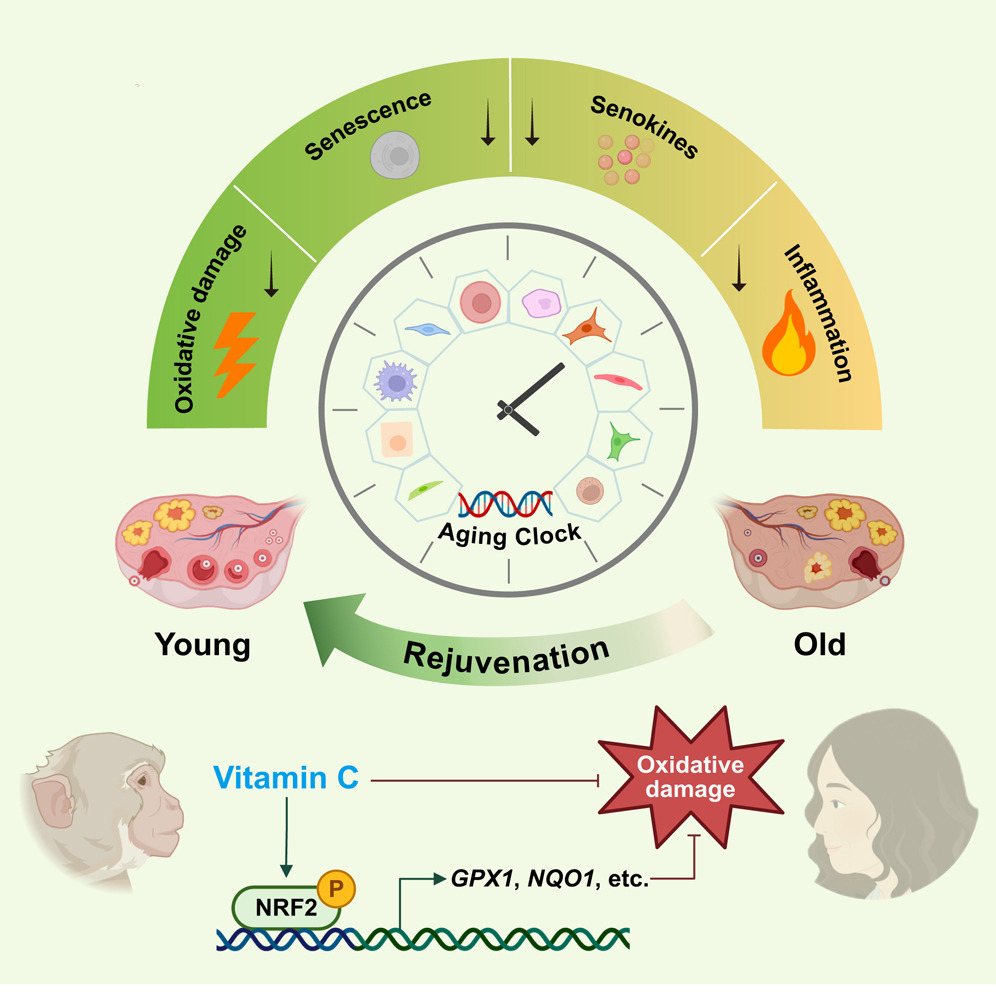
3. Per The return of the free radical theory of aging I started taking extra vitamin C separately from other supplements in the form of Now brand liposomal 1 gram twice daily this past winter. That study found vitamin C to be an anti-aging compound for primates.
Reference 72 of that 2026 paper is a freely available 2025 study https://www.cell.com/cell-stem-cell/fulltext/S1934-5909(25)00339-X “Vitamin C conveys geroprotection on primate ovaries” that used the same vitamin C dose and duration in macaques to find:
“VC slowed aging in various ovarian cell types. Moreover, VC protected human ovarian endothelial and stromal cells (SCs) from aging partially via NRF2 activation. This study establishes a proof-of-concept for delaying primate ovarian aging with a single compound, and provides important insights into preventing and treating degenerative diseases related to ovarian aging.”
4. I restarted taking inulin last year, about 3 grams (a heaping teaspoon) daily after posting Inulin vs. FOS. My 2.5 year-old grandchild takes a level teaspoon daily, as inulin’s beneficial effects aren’t just for old people.
5. I started taking 12 mg astaxanthin twice in the morning. I use Nrf2 activators in the morning because Nrf2 is especially involved in the circadian cycle, as noted in papers such as Broccoli sprouts activate the AMPK pathway, Part 4.
6. I increased daily raw egg consumption from 3 eggs a day to 3 eggs twice daily.
7. This year, Ovega 3 algae oil DHA 420 mg/EPA 140 mg became no longer available AFAIK. I substituted Vegan Omega 3 algae oil DHA 300 mg/EPA 150 mg in the morning and Sports Research Omega 3 fish oil DHA 310 mg/EPA 690 mg in the afternoon.
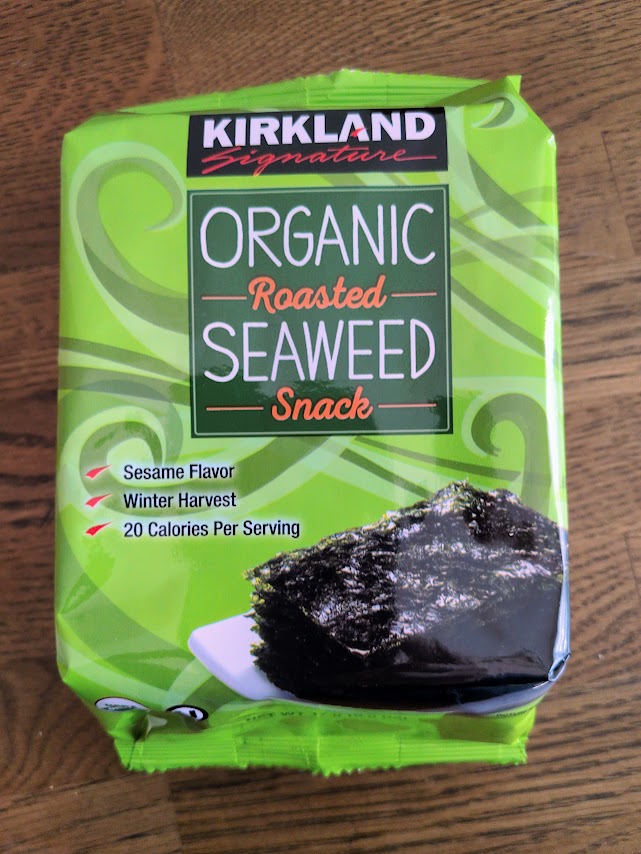
8. I picked up this Korean seaweed in a 10-pack at Costco. The label doesn’t say what its iodine content is. I eat it as a snack whenever I get a salt craving, maybe once a week.
 Surface Your Real Self